
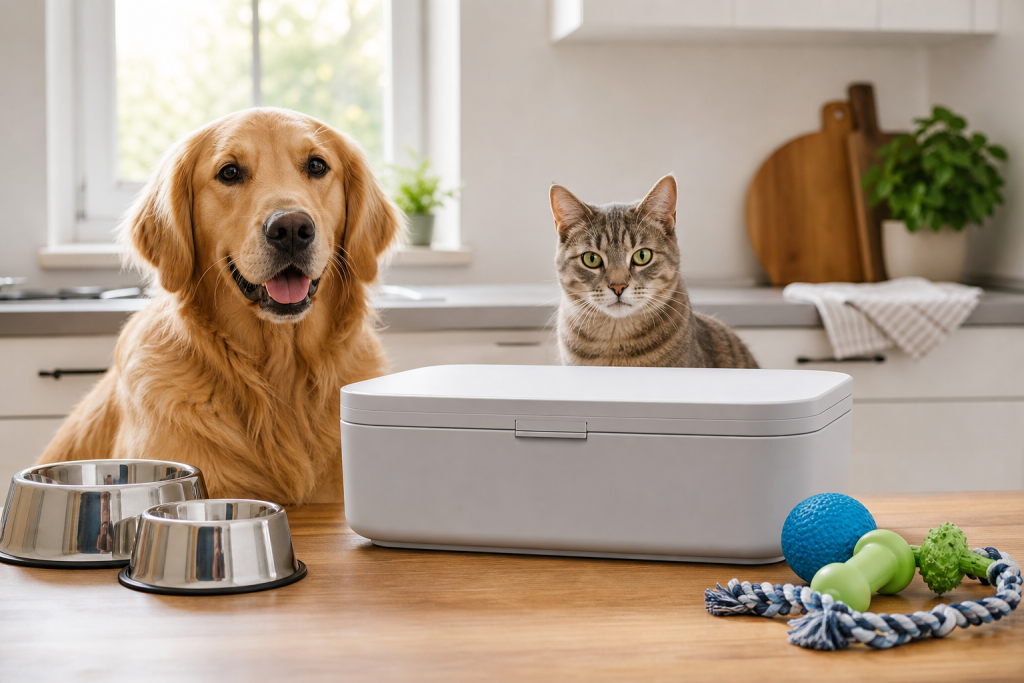
A UV sanitizer deal is only useful if the device fits the items you actually need to clean and if you understand its limits. For pet bowls, toys, collars and travel gear, UV light should be treated as a possible extra step, not a replacement for washing away food residue, saliva, dirt and hair. The mistake is buying the box or wand for the word “sanitizer” before checking safety controls, size, battery details and the cleaning routine it still requires.
These gadgets are easy to notice right now because pet owners are buying more travel gear, summer outing supplies and smart home accessories, while retailers keep pushing small electronics as add-on deals. The safer shopping question is not whether UV sounds high-tech. It is whether the product makes your pet-care routine simpler without adding a false sense of cleanliness or a new hazard at home.
Why this pet-tech deal is tempting now
Summer pet shopping creates more dirty gear. Bowls go into the yard, rubber toys get used outside, collars and harnesses pick up sweat and grime, and carriers come out for road trips, boarding and vet visits. A countertop UV box or portable wand can look like an easy upgrade, especially when it is advertised beside pet bowls, baby items, phones, keys or travel accessories.
The problem is that pet mess is rarely just an invisible surface issue. A bowl with dried food needs washing. A toy with dirt in grooves needs scrubbing. A collar with odor needs cleaning according to its care label. UV light may only reach exposed surfaces, and it cannot clean under debris, inside seams or through opaque material.
The checkout checks that matter most
Start with size. Measure your widest bowl, your longest chew-safe rubber toy and the collar or harness you want to sanitize. A small phone-sized box may not close around real pet gear, while a large cabinet can become too bulky for daily use.
Next, look for physical safety controls. A closed box should have an automatic shutoff if the lid opens, clear instructions, a stable power supply and no reason for people or pets to look directly at the lamp. Be especially cautious with open UV wands. The FDA has warned that some UV wands can expose users to unsafe levels of UV radiation, so a cheap wand with vague labeling is not a smart pet-care shortcut.
Check what the product says about ozone. Do not buy an ozone generator for routine pet-item cleaning. Ozone can irritate airways, and several consumer safety sources advise against using ozone-producing devices in occupied homes. If a listing uses words like “ozone sterilization,” “odor removal by ozone” or “air purification plus UV” without clear safety details, treat that as a reason to slow down.
Then check power and replacement parts. Rechargeable units need battery safety information, a compatible charger and a realistic runtime. Plug-in units need a cord path your pet cannot chew. Some devices also have lamps, filters, trays or adapters that may need replacement. If you cannot find the model number, manual, return policy or replacement part availability before checkout, the discount is weaker than it looks.
Do this before using UV on pet bowls or toys
Clean first. CDC guidance for pet supplies starts with ordinary cleaning methods such as soapy water for hard items, and dishwashers when the item is labeled dishwasher-safe. Disinfecting comes after visible residue is removed. That order matters because UV light is not a magic eraser for grease, kibble dust, saliva or dirt.
Use UV only on items the device maker and the pet-item maker allow. Heat, UV exposure or repeated drying cycles can age some plastics, rubber toys, silicone parts, printed tags and coated fabrics. If the toy is cracked, sticky, flaking or chewed open, replacement is usually a better buy than trying to sanitize it one more time.
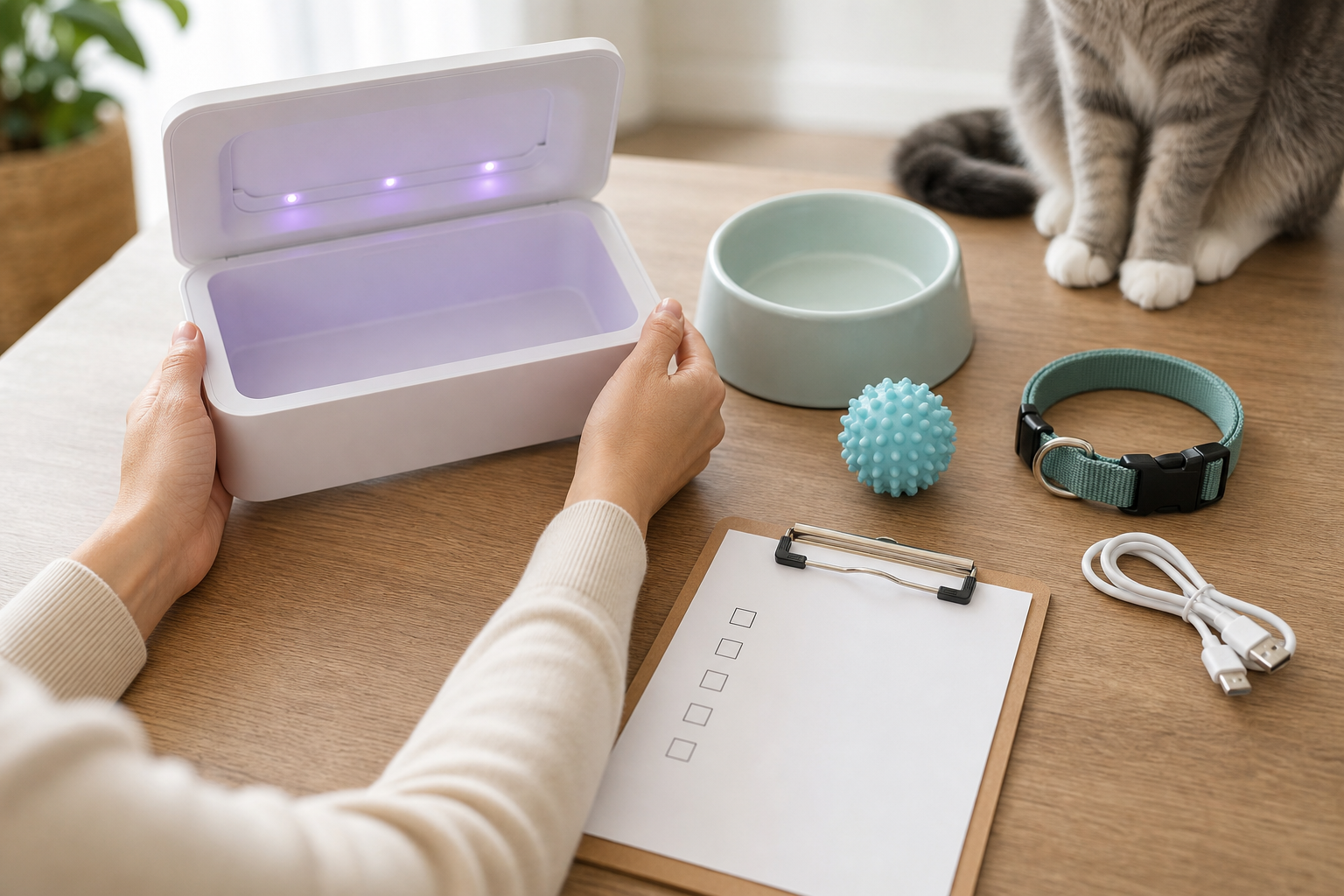
For food and water bowls, stainless steel and ceramic items with intact surfaces are usually easier to wash well than soft, scratched or heavily textured materials. If you feed raw or fresh pet food, cleaning discipline matters even more. Follow food-safety guidance from reliable sources and ask your veterinarian about household-specific risks if anyone in the home is immunocompromised, pregnant, elderly or very young.
When a UV sanitizer deal is not really a deal
A deal is weak if the device only fits one small item, has no manual, hides the lamp type, makes sweeping “kills 99.9%” claims without explaining test conditions, or requires expensive proprietary parts. It is also weak if the return window is shorter than the time you need to test the routine with real pet gear.
Watch for listings that blur the difference between cleaning, sanitizing, disinfecting and deodorizing. Those words are not interchangeable in real household use. A UV box may reduce certain microbes on exposed surfaces under specific conditions, but it does not remove pet hair, wash away food film, fix odor trapped inside fabric or make a damaged toy safe.
If you are buying through a marketplace, confirm the seller name, warranty path and return address. Generic UV devices can look similar across listings, and a low price is less useful if you cannot get support when the charger fails or the lamp stops working.
Travel and battery details shoppers miss
Portable UV boxes and travel sanitizers often use lithium batteries or USB power banks. The CPSC notes that batteries and chargers can present hazards such as overheating, fire, electrical shock and thermal burns. Use the charger specified by the manufacturer, stop using a device that swells, smells odd or gets unusually hot, and do not leave it charging where a pet can knock it down or chew the cord.
If you plan to fly with a rechargeable sanitizer or spare battery, check airline and FAA rules before packing. FAA guidance says spare lithium batteries and power banks belong in carry-on baggage, not checked bags. A pet travel gadget that creates a battery problem at security is not a bargain.
What to avoid
- Open UV wands used near pets, children or your own eyes and skin.
- Any ozone-producing device marketed as a quick fix for pet odors.
- Sanitizing dirty bowls or toys without washing them first.
- Putting fabric, leather, electronics or battery-powered pet accessories into a box unless the instructions clearly allow it.
- Buying a no-name device with no manual, no model number and no clear return policy.
- Using UV treatment as a reason to keep cracked bowls, shredded toys or chewed gear in service.
Smart buying framework
For most pet owners, the best value is boring: dishwasher-safe bowls, easy-to-scrub toys, washable mats and a routine you will actually follow. A UV sanitizer can be considered only after those basics are handled.
Before paying, ask five questions. Does it fit your real pet items? Does it have a closed design and automatic shutoff? Does it avoid ozone? Are the battery, charger, lamp and warranty details clear? Can you return it after testing it with your actual bowls, toys or travel gear?
If the answer to any of those is no, the safer deal may be a second set of bowls, replacement toys, a dishwasher-safe travel bowl or a washable carrier mat instead.
Quick answers
Can a UV sanitizer replace washing pet bowls?
No. Wash first to remove food residue, saliva and dirt. UV, if used at all, should be an extra step that follows the device instructions.
Are UV wands safe around dogs and cats?
Open UV wands deserve extra caution. Do not expose pets, people, eyes or skin to UV light, and avoid any wand with vague safety instructions.
Is ozone good for pet odors?
No for routine occupied-home use. Avoid ozone generators for pet odor control and focus on washing, ventilation, source removal and veterinarian guidance if an odor is linked to a health issue.
What is the most useful feature?
A closed box with an automatic shutoff, clear instructions, enough internal space for your items and a real support path is more useful than a long list of vague germ-killing claims.
Sources
Last checked: 2026-06-30 01:34 Europe/Rome.
- CDC, “About Cleaning and Disinfecting Pet Supplies”: https://www.cdc.gov/healthy-pets/about/cleaning-and-disinfecting-pet-supplies.html
- FDA, “Beware of Ultraviolet Wands That Give Off Unsafe Levels of UV Radiation”: https://www.fda.gov/consumers/consumer-updates/beware-ultraviolet-wands-give-unsafe-levels-uv-radiation
- FDA, “UV Lights and Lamps: Ultraviolet-C Radiation, Disinfection, and Coronavirus”: https://www.fda.gov/medical-devices/coronavirus-covid-19-and-medical-devices/uv-lights-and-lamps-ultraviolet-c-radiation-disinfection-and-coronavirus
- California Air Resources Board, “Air Cleaner Information for Consumers”: https://ww2.arb.ca.gov/our-work/programs/air-cleaners-ozone-products/air-cleaner-information-consumers
- U.S. Consumer Product Safety Commission, “Batteries”: https://www.cpsc.gov/Regulations-Laws–Standards/Voluntary-Standards/Topics/Batteries
- Federal Aviation Administration, “Airline Passengers and Batteries”: https://www.faa.gov/hazmat/packsafe/airline-passengers-and-batteries