
#dog food deals
#Made in USA pet food
#pet food labels
A flag or “Made in USA” line can be useful, but it is not enough reason to buy a dog or cat food deal. The smarter move is to check what the origin claim actually says, then read the AAFCO nutritional adequacy statement, ingredient list, life stage, lot code, bag size and return terms before you stock up. A cheaper U.S.-themed bag can still be the wrong buy if it does not fit your pet, your budget or your storage plan.
That label check matters more right now because U.S.-origin claims are getting fresh scrutiny. In July 2026, the FTC warned companies about questionable Made in USA claims, a reminder that origin wording is a real advertising claim, not just a feel-good badge. For pet owners comparing food deals, that makes the exact wording on the bag more important.
Why the flag on the bag is not the whole deal
The FTC’s Made in USA Labeling Rule says an unqualified claim requires final assembly or processing in the United States, all significant processing in the United States, and all or virtually all ingredients or components made and sourced in the United States. For pet food shoppers, that difference matters because meat, vitamins, minerals, packaging, processing and final manufacturing can come from different places.
Do not treat patriotic packaging, a U.S. brand name or a red-white-and-blue design as the same thing as a clear origin claim. If the front of the bag says “crafted in the USA,” “made in the USA with globally sourced ingredients,” or “packed in the USA,” those phrases may mean different things at checkout. The deal is only useful if the wording matches what you actually care about.
The label checks that matter more than the slogan
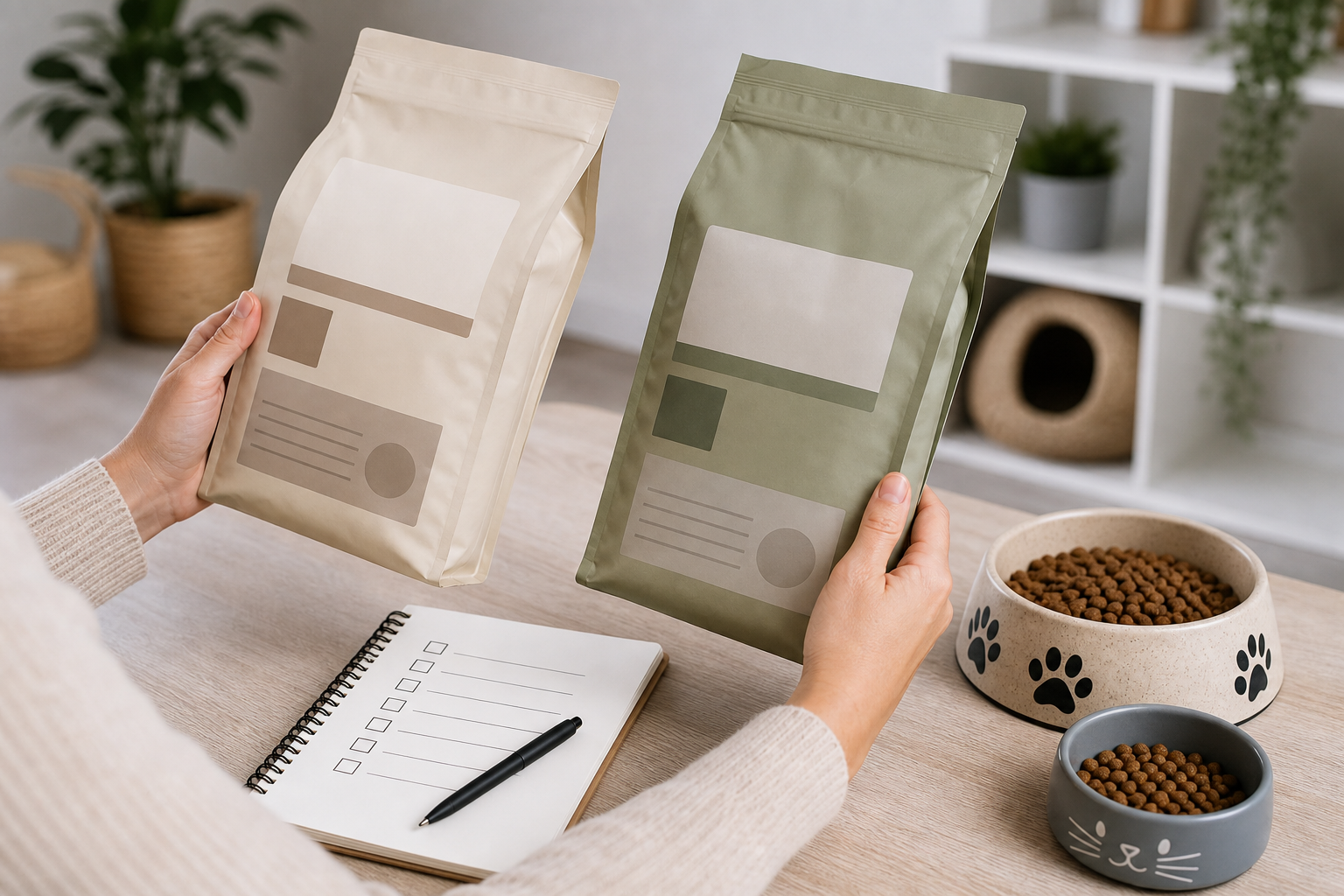
Start with the nutritional adequacy statement. FDA guidance explains that “complete and balanced” pet food claims are tied to AAFCO nutrient profiles or feeding trials. That statement tells you whether the food is intended for growth, adult maintenance, all life stages or another feeding purpose.
Next, read the ingredient list and feeding directions. AAFCO consumer guidance notes that pet food names and claims can emphasize certain ingredients, but the ingredient list and guaranteed analysis still matter. If you are changing your pet’s regular food, also check whether the bag gives transition guidance and whether the serving size changes enough to erase the apparent discount.
Then check the lot code and best-by date before buying in bulk. A big bag or case is not a deal if your pet will not finish it while it is fresh, or if you throw away the packaging before you can identify the product during a recall. Keep the bag, label photo or order record until the food is gone.
How to read a “Made in USA” pet food deal before checkout
Use this order when you compare two bags or cases:
- Exact origin wording: look for “Made in USA,” “made in USA with globally sourced ingredients,” “crafted in,” “packed in,” or similar wording.
- Nutritional purpose: confirm the AAFCO statement matches your dog’s or cat’s life stage.
- Daily cost: compare cost per day, not just cost per pound or can.
- Bag size: ask whether you can use it before the best-by date and before it goes stale after opening.
- Return terms: check whether opened food is returnable and whether online returns involve shipping costs.
- Repeat order terms: if the discount requires Autoship or a subscription, check the price after the first order.
This is especially important for cats, picky dogs, puppies, seniors and pets on veterinary diets. A food that looks like a better value on the shelf can cost more if your pet refuses it, needs a different life-stage formula or has to switch back slowly.
Deal and coupon traps to avoid
Do not use the U.S.-origin claim as a tiebreaker until the ordinary shopping math works. A coupon on a larger bag may still lose to a smaller bag if your pet eats fewer calories per cup, if shipping is higher, or if the discount excludes the formula you need.
Also be careful with marketplace listings. If the retailer page shortens the product name or the photo shows older packaging, click through to the current label details when available. Do not assume that a search-result title or seller description captures the full origin statement, feeding purpose or ingredient panel.
If you are using a first-order discount, check whether the reorder price changes after the first shipment. The “Made in USA” line might help you choose between similar foods, but the subscription math decides whether the deal keeps working next month.
What to avoid
Avoid any article, ad or product page that treats “Made in USA” as proof that a food is automatically safer, healthier or better for every pet. Origin is one useful fact, not a nutrition plan. Ask your vet before switching foods for a pet with allergies, kidney disease, urinary issues, gastrointestinal problems, obesity or any other medical concern.
Do not buy a huge bag only because the label sounds reassuring. Dry food can lose freshness after opening, and wet food cases can become waste if your pet dislikes the texture. Start smaller when you are switching formulas, then buy larger only after your pet tolerates and eats the food consistently.
Quick answers
Does “Made in USA” mean every ingredient is from the United States?
Not always. Read the exact wording. A qualified claim may say the food is made, packed or crafted in the U.S. with ingredients or materials from other places.
Is U.S.-made pet food automatically better?
No. It can be a useful sourcing preference, but it does not replace the AAFCO nutritional adequacy statement, feeding directions, ingredient list, calorie count or your vet’s guidance.
Should I bulk-buy if the label and price look good?
Only if the food matches your pet’s life stage, your pet already eats it well, and you can use it while it is fresh. Keep the lot code and best-by information until the food is finished.
Sources
Sources last checked: October 11, 2026, 07:33 CEST, Europe/Rome.
- Legal Information Institute, 16 CFR 323.2, Made in USA Labeling Rule prohibited acts
- Legal Information Institute, 16 CFR 323.1, Made in USA Labeling Rule definitions
- Federal Trade Commission, FTC warns companies making questionable Made in USA claims
- AAFCO, Reading Labels
- AAFCO, Labeling and Labeling Requirements
- FDA, Complete and Balanced Pet Food