
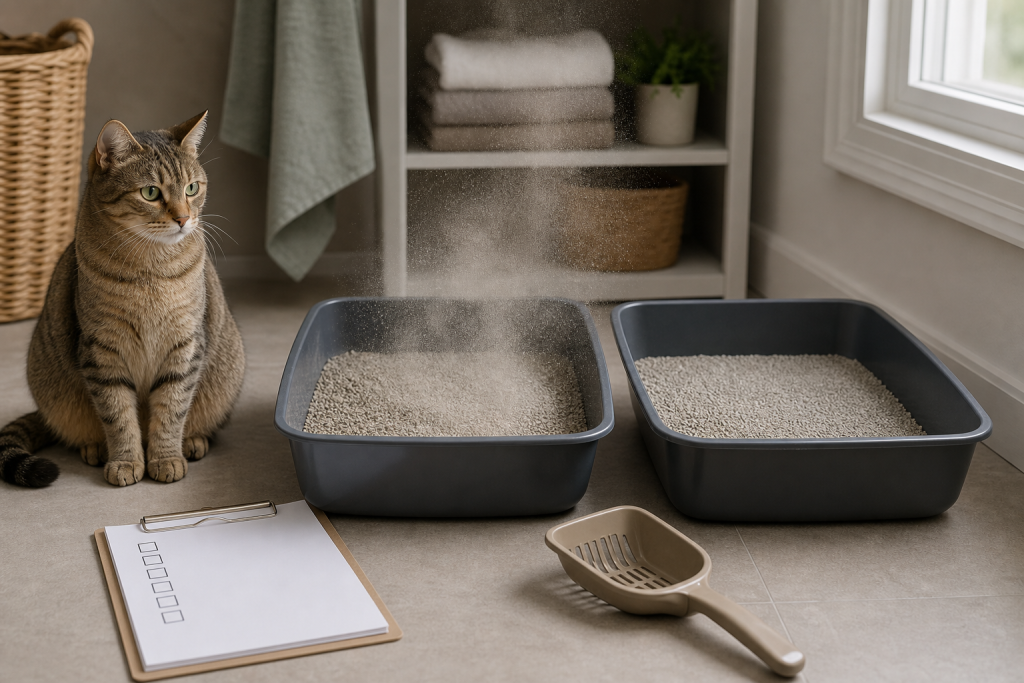
A low-dust cat litter deal can still disappoint if the claim only looks good on the bag. The safer shopping move is to compare dust, scent, texture, tracking, weight and return terms before you buy a large box or start a subscription. If your cat has coughing, wheezing or known respiratory disease, treat litter choice as a vet question, not just a coupon decision.
Cat litter is showing up in current shopping demand because it is a repeat purchase, heavy to ship and easy to buy in bulk when a sale appears. Amazon’s pet-supplies best-seller list continues to put everyday litter near the top of the category, and major retailers prominently market low-dust or dust-free claims on popular clumping formulas. That makes the hidden risk simple: shoppers may chase the biggest bag or strongest discount before checking whether the litter actually works in their home.
Why the dust claim matters now
Dust is not just a cleaning annoyance. Cornell Feline Health Center lists dusty kitty litter among suspected irritants for feline asthma, and International Cat Care also names dusty cat litter as a household irritant to identify for cats with asthma or chronic bronchitis. That does not mean every dusty box causes illness, and it does not mean a litter swap treats a medical problem. It does mean a cat owner should take visible dust, fragrance and coughing seriously and ask a veterinarian if breathing signs appear.
The shopping problem is that “low dust”, “dust free” and “99.9% dust-free” are not the same as a guarantee that your room, scoop, cat and litter box setup will stay dust-free. The claim may be based on a product’s own test method, and a heavy bag can create more dust after shipping, pouring or repeated scooping. Some litters control dust better but track more, clump differently, feel odd under paws or cost more per usable week.
The checkout check before you buy the big box
Start with the smallest reasonable size unless you already know the formula works for your cat. A 40-pound box can look cheaper per pound, but it is not a bargain if your cat avoids it, if the dust bothers someone in the house or if the return terms make a heavy opened item hard to refund.
Before paying, check these details:
- Dust wording: compare “low dust”, “99% dust free” and “99.9% dust free”, but do not treat any phrase as proof that your room will be clear.
- Scent: choose unscented when possible, especially for cats that already dislike litter changes or have respiratory sensitivities.
- Granule texture: fine litter may feel familiar but can track; larger granules may track less but may not suit every cat.
- Box compatibility: automatic litter boxes, sifting boxes and high-sided trays can require specific clumping behavior or granule size.
- Weight and handling: a bulk box may save money but be awkward to pour without dust clouds.
- Return policy: confirm whether opened litter can be returned, whether mail returns are practical and whether store returns are available.
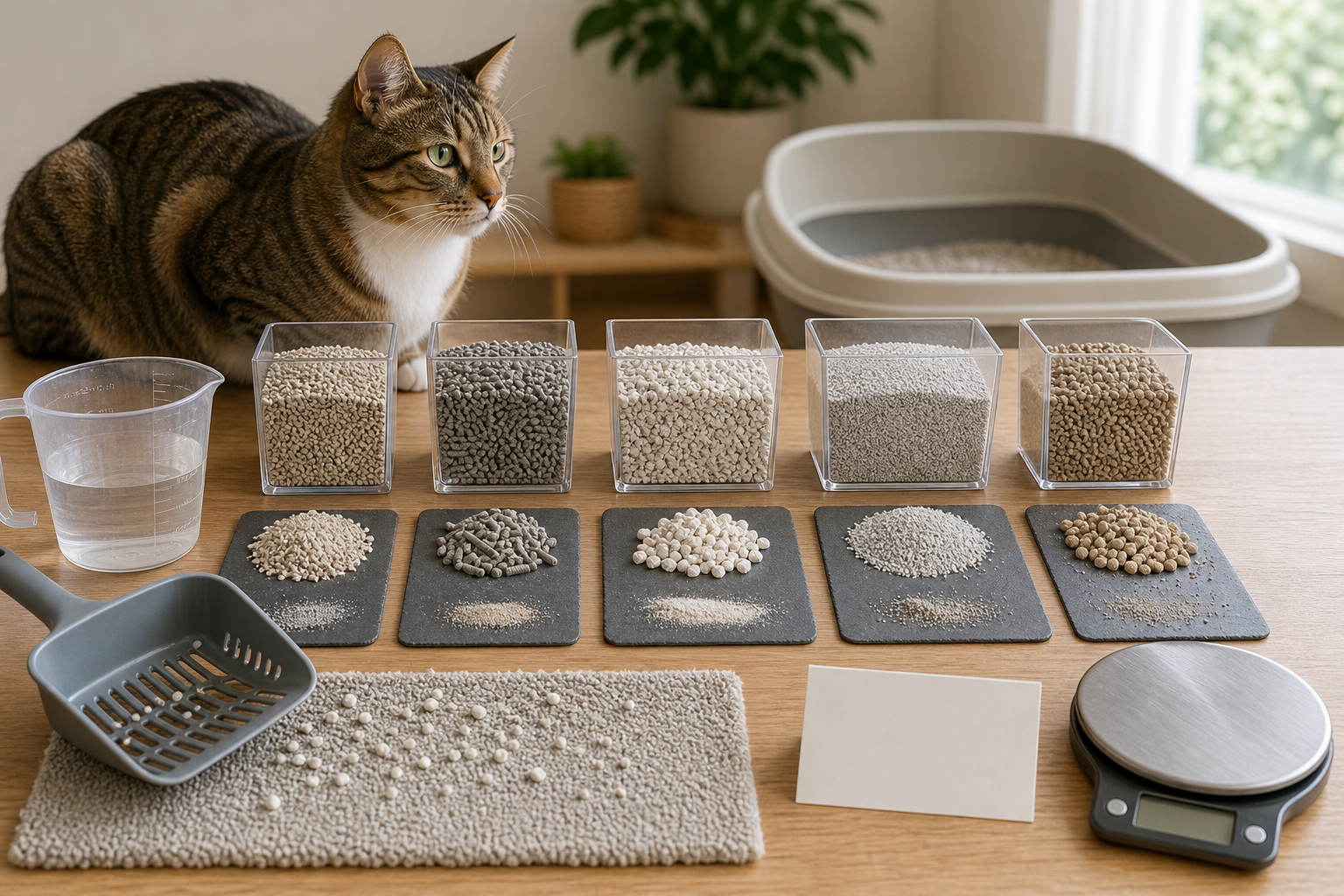
When a litter deal is not really a deal
A litter sale usually needs more math than the headline discount shows. Compare the shipped price per pound, but also compare how long the litter lasts, how much you throw away after scooping and whether the formula requires more frequent full box changes. A cheaper lightweight litter may be easier to carry, but if it tracks through the house or creates dust when poured, the cleanup cost can erase the savings.
Subscription discounts deserve the same skepticism. A first-order deal can be useful for litter because the product is heavy and predictable, but only if the next shipment price, frequency and cancellation controls are clear. Do not set a recurring order until you have tested the litter for at least a normal cleaning cycle and watched whether your cat uses the box normally.
How to test a new low-dust litter safely
Do not replace every litter box in the house at once unless your veterinarian tells you to make an immediate environmental change. For most cats, a gradual switch is easier: keep one familiar box available and test the new litter in another box or mix small amounts over time. Watch for avoidance, digging changes, sudden accidents, excessive grooming, coughing, wheezing or any behavior that suggests the cat is uncomfortable.
If your cat has diagnosed asthma, chronic bronchitis, recent coughing or breathing changes, ask your vet before relying on a product label. A low-dust litter may be one useful environmental change, but it is not a substitute for diagnosis, medication or a care plan.
What to avoid
Avoid buying a bulk pallet, multi-box bundle or long subscription based only on a dust-free claim. Avoid strong fragrance if your cat already objects to litter changes, and be careful with deodorizer-heavy formulas if the real issue is cleaning frequency or box location. Avoid assuming “natural” automatically means low dust, low tracking or safe for every cat.
Also avoid treating online reviews as a lab test. Reviews can reveal repeated complaints about dust clouds, broken bags, scent or tracking, but your home setup still matters. The best evidence is a small test size, normal scooping, your cat’s behavior and a clear return path if the product fails.
Quick answers
Is low-dust cat litter always better?
It is often worth considering, especially in homes where dust or fragrance is a problem. It still has to match your cat’s texture preference, litter box type and your cleaning routine.
Should I buy scented or unscented litter?
Unscented is usually the safer first choice for a cautious switch. Scent can mask odor for people but may make the box less appealing to some cats.
Can changing litter fix feline asthma?
No. Reducing dusty litter may help remove one possible irritant, but coughing, wheezing or breathing trouble needs veterinary advice.
What is the best deal size?
The best deal size is the smallest size that lets you test the litter honestly. Buy bulk only after your cat uses it consistently and the dust, tracking and clumping work in your home.
Sources
- Cornell Feline Health Center, Feline Asthma: A Risky Business for Many Cats.
- International Cat Care, Asthma and chronic bronchitis in cats.
- VCA Animal Hospitals, Inhalant treatment for feline asthma and bronchitis.
- PetSmart product page for Dr. Elsey’s Ultra Unscented Clumping Cat Litter, used only as an example of current low-dust retail wording.
- Amazon Best Sellers in Pet Supplies, used only as a live shopping-demand signal for cat litter demand.
Sources last checked: 2026-07-07 22:37 Europe/Rome.