
#pet stairs
#pet supplies
#pet-mobility
#senior-pets
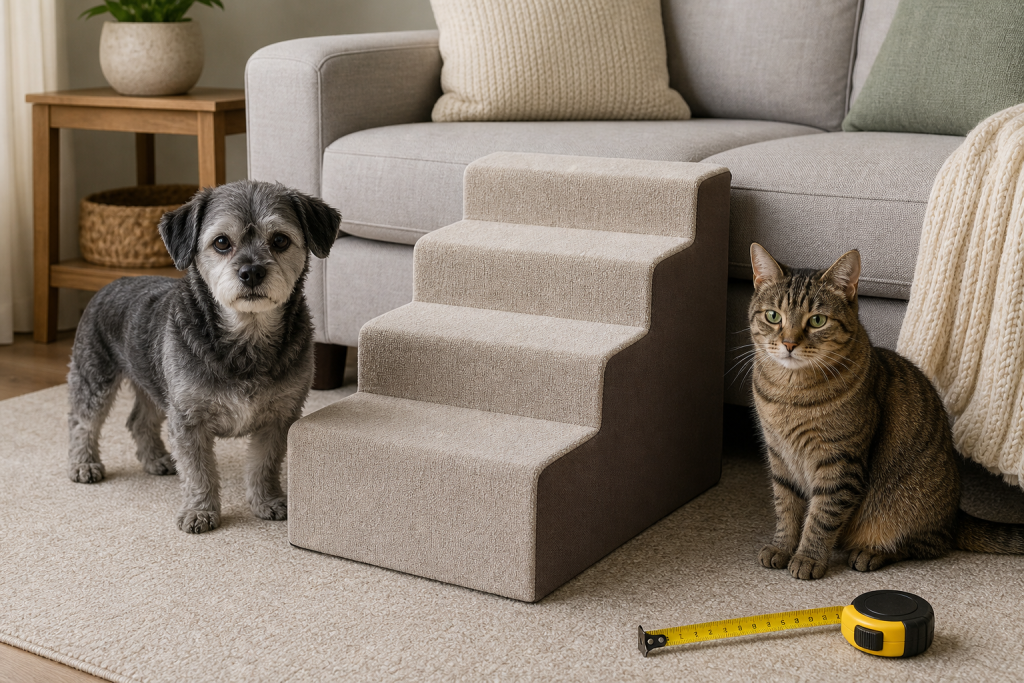
A pet stairs deal is only useful if the steps are shallow, stable and matched to the height your dog or cat actually needs to reach. Cheap stairs can make a sofa or bed harder to use when the treads are narrow, the surface is slippery or the whole set shifts under a hesitant senior pet. Before checkout, measure the furniture, compare step height and tread depth, and make sure the return policy gives you time to test the setup at home.
Pet stairs are getting attention because more owners are trying to make beds, sofas and window spots easier for older pets without buying a full ramp. That can be sensible, but stairs are not automatically gentler for every dog or cat. A small, agile pet may use low steps confidently, while a larger dog, a sore pet or a vision-impaired pet may need a ramp, rugs, supervision or a veterinarian’s advice instead.
Why this matters before you buy
Senior pets often change how they move before owners think of them as “old.” The ASPCA notes that home changes such as stairs, ramps and moving essentials to one level can help senior pets that struggle with beds, couches or household stairs. Cornell Feline Health Center also recommends firm footing for older cats that can no longer jump to a favorite windowsill, chair or sofa.
The shopping mistake is buying by the product photo. A stair set can look soft and sturdy online, but still be too steep, too narrow, too light or too tall for the exact spot where your pet needs it. If the pet avoids the stairs, jumps around them or slips on the cover, the discount has not solved the problem.
The checkout checks that matter
Measure the furniture height first. The top step should land close enough to the sofa, bed or window perch that your pet is not making one last awkward jump. If there is a big gap between the final step and the cushion, the stairs may simply move the risky part higher.
Check the rise and tread depth. Lower rises are usually easier than tall, blocky steps. Deeper treads give pets more room to place their paws, turn and pause. Very narrow treads can be a problem for longer-bodied dogs, larger cats and pets that move slowly.
Look for traction and weight stability. Carpet, textured fabric or a non-slip surface matters more than a cute cover. The base should not slide on wood or tile, and the product should list a weight limit that comfortably exceeds your pet’s weight. If the stairs fold, zip apart or use removable covers, check whether those parts stay secure during use.
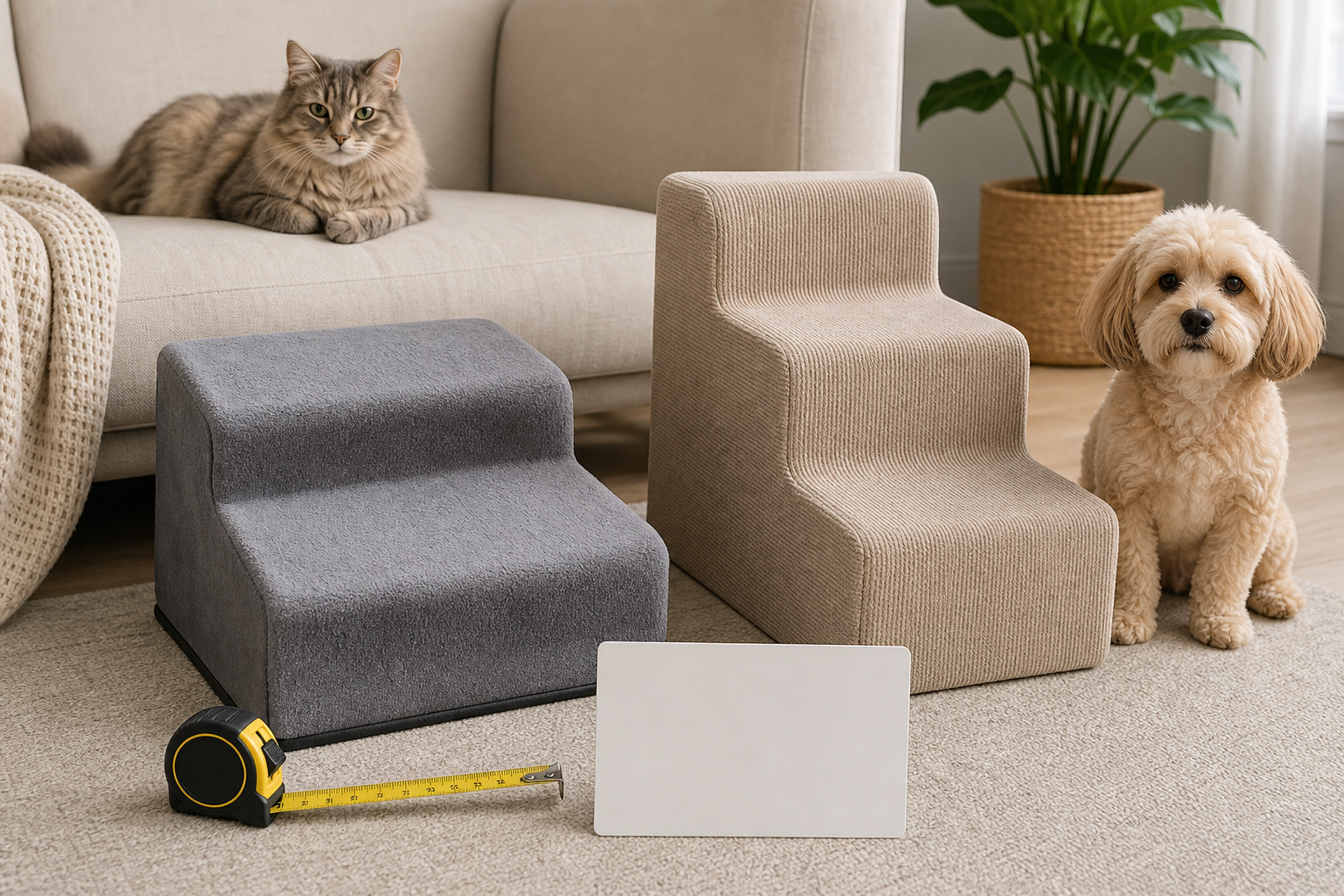
Generated editorial image of unbranded pet stairs being compared for step height and stability. Not a real product photo.
When a ramp may be the better deal
Stairs are not always the safer choice. VCA Animal Hospitals advises that dogs with osteoarthritis may need stair access limited when unsupervised because falls are a concern, and it notes that ramps can reduce stress on the back and leg joints for vehicle access. International Cat Care similarly suggests shallow steps or a gently sloping ramp for some older cats.
That does not mean every pet needs a ramp. It means shoppers should match the aid to the pet, not the sale badge. If your pet has known joint pain, recent surgery, weakness, stumbling, vision changes or sudden reluctance to jump, ask your veterinarian what type of access aid is appropriate before buying several sizes to test.
Deal and coupon checks before paying
Pet stairs are bulky, so the real price is not just the sale price. Check shipping, oversized-item fees, return shipping and whether opened or used stairs can be returned after a home trial. A cheap foam stair set can become expensive if you have to pay to ship back a large box.
Compare the cost per usable setup, not just the coupon. If the stairs need a separate non-slip mat, extra cover or furniture strap to feel stable, include that in the total. If you are buying for multiple rooms, test one set first before ordering a bundle.
What to avoid
Avoid stairs that rely only on “for small pets” language without clear measurements and weight limits. Avoid slick plastic steps unless you know your pet will use them confidently. Avoid tall, narrow stairs for pets that already hesitate, and avoid placing any stairs on a loose rug that can slide.
Do not use pet stairs to push a pet into jumping or climbing when they are showing pain, fear or sudden mobility changes. A product can reduce strain in the right situation, but it is not a diagnosis or treatment plan.
Quick answers
Are pet stairs better than ramps?
Not always. Stairs can work for smaller, confident pets and low furniture. Ramps may be better for some larger, older, sore or vision-impaired pets because they require less stepping motion.
What should I measure before buying pet stairs?
Measure the furniture height, the available floor space, each step’s rise, each tread’s depth and the width your pet needs to stand comfortably.
Can cats use dog stairs?
Some cats can, but the stairs still need firm footing, low steps and a stable base. Older cats may prefer shallow steps or a gentle ramp to reach a favorite perch.
Should I buy foam or wooden pet stairs?
Foam can be lighter and softer, but may shift or compress under heavier pets. Wood or rigid stairs may feel sturdier, but still need traction and a non-slip base.
Sources
Sources last checked: July 7, 2026, 19:35 Europe/Rome.
- ASPCA, 5 Expert Tips for Caring for Senior Pets.
- Cornell Feline Health Center, Loving Care for Older Cats.
- International Cat Care, Special considerations for senior cats.
- VCA Animal Hospitals, Helping Your Dog with Osteoarthritis.