
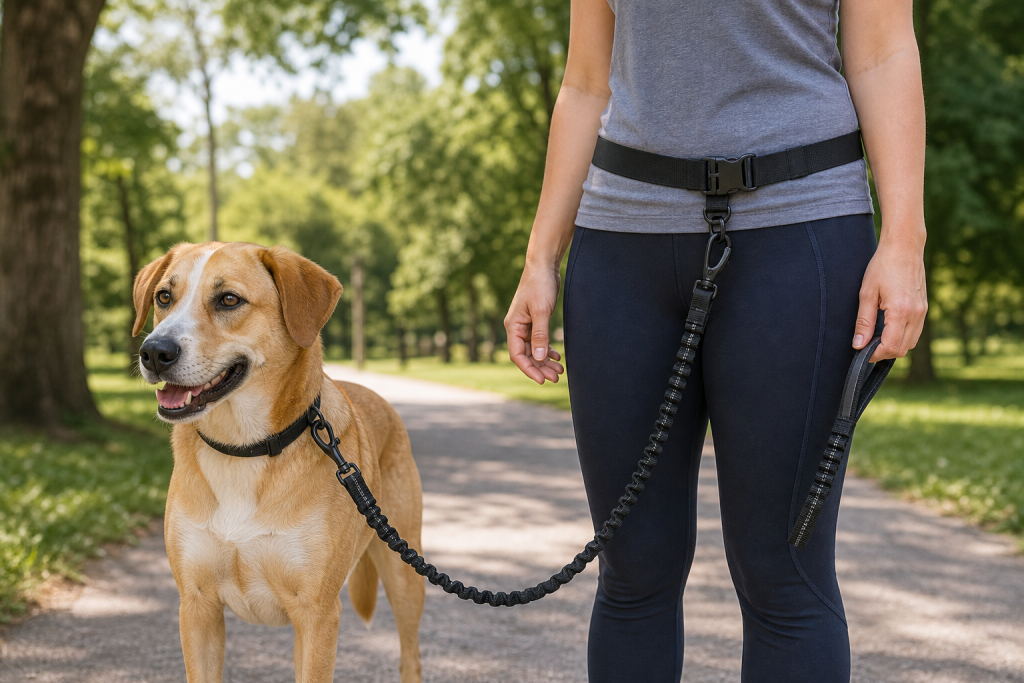
A hands-free dog leash is only a deal if the waist belt, bungee section and backup handle still let you control your dog when something changes fast. The mistake is buying it like a normal leash, then discovering the belt rides up, the clip twists, or the bungee adds too much bounce for a strong puller. Before checkout, check fit, quick-release hardware, leash length, return terms and whether your dog already walks calmly enough for this setup.
This matters now because hands-free leashes are showing up in current dog-walking and running gear searches, and summer walks, hikes and travel stops make the promise of “free hands” feel practical. They can be useful for carrying treats, pushing a stroller or jogging with a trained dog. They are not magic control gear, and a cheap belt can turn a simple walk into an awkward, risky purchase.
Why the deal looks better than it may be
Most listings sell the same idea: clip the leash to your waist, keep your hands free and let the bungee absorb sudden movement. That can help in the right situation, but the product page may not tell you whether the belt fits your body, whether the buckle releases under tension, whether the leash has a traffic handle, or whether the bungee makes your dog harder to keep close on sidewalks.
ASPCApro’s leash-handling guidance still starts with the basics: proper walking equipment, good leash handling, attention to surroundings and a loose U-shape in the leash when possible. A waist leash does not remove those basics. It changes where the force goes when your dog surges, stops, circles behind you or reacts to another dog.
The fit check shoppers skip
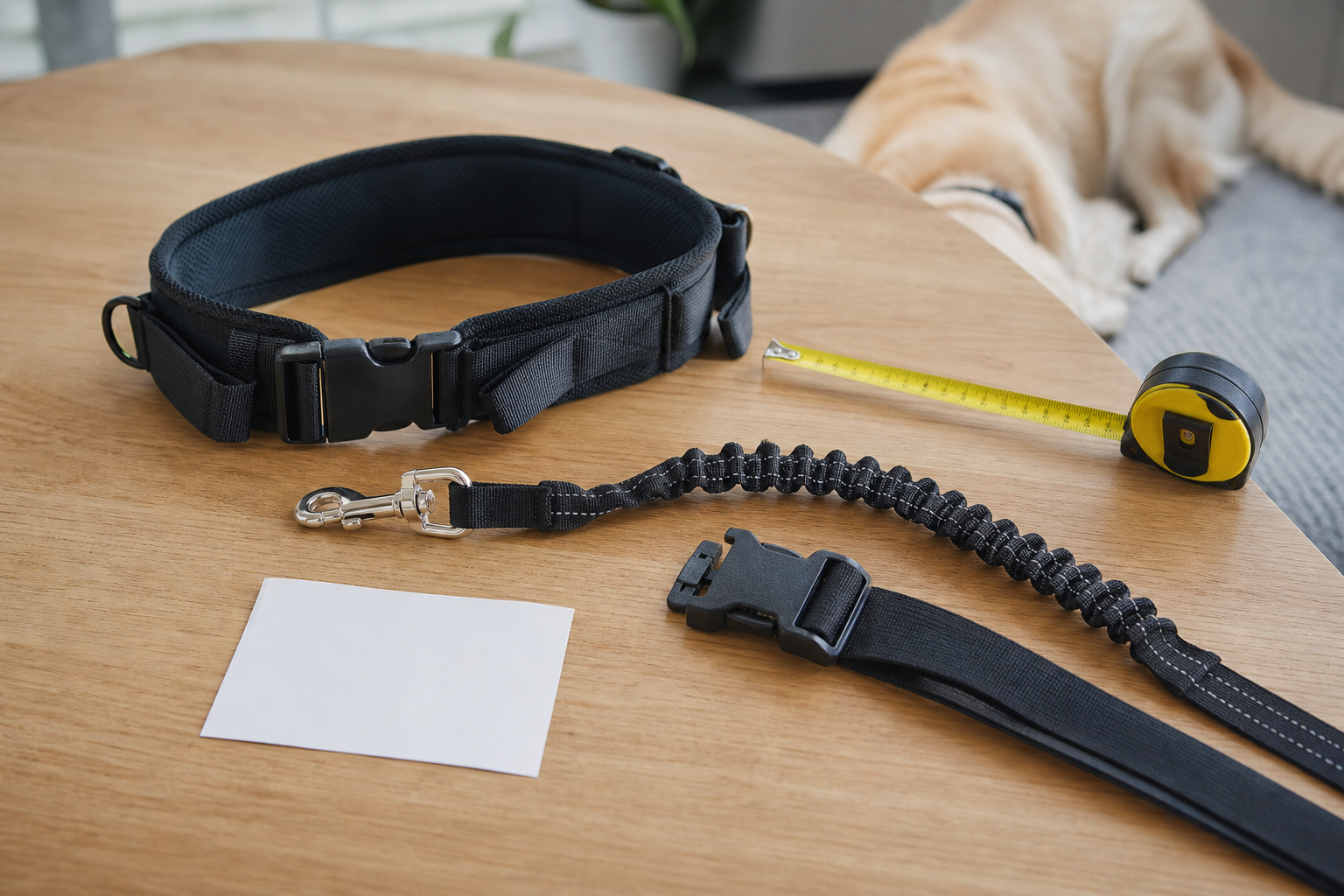
Do not rely only on a “fits most” waist range. Measure over the clothing you will actually wear on walks, runs or hikes. If you use a winter coat, running vest, treat pouch or backpack hip belt, the same waist leash may sit differently than it does over a T-shirt.
Look for an adjustable belt that stays low and stable around the hips rather than sliding into your ribs. A narrow belt can dig in when a dog lunges. A loose belt can rotate, putting the leash connection in the wrong place just when you need control. If the listing shows only a flat product photo and not the belt worn under tension, assume you need a stronger return policy.
What to verify before checkout
- Quick release: check whether the belt has a buckle you can reach quickly with one hand. If the product has no easy release, think carefully before using it around bikes, trail hazards, stairs or busy streets.
- Traffic handle: a short handle near the dog gives you close control at doors, crossings, elevators and crowded paths. A long bungee alone is not enough.
- Bungee length: too much stretch can make timing sloppy with a dog that pulls or changes sides. Shorter, controlled stretch is usually easier for city walking.
- Clip and stitching: look for clear hardware photos, reinforced stitching and a clip that rotates without sticking. Vague “heavy duty” wording is not a spec.
- Dog size and behavior: check whether the seller gives a weight range, but do not treat weight as the only issue. A smaller reactive dog can still create a sudden sideways pull.
- Return terms: confirm whether opened or outdoor-used leashes can be returned. Some gear looks fine indoors and fails only after a real walk.
The deal section: count the control features, not just the price
A lower price can be worth it for a calm, trained dog if the belt fits, the hardware is clear and the leash has a usable handhold. It is less compelling if the only selling points are a pouch, a long stretch cord or a claimed high weight limit with no useful photos.
Before paying, compare the final cart total with the cost of a normal leash plus a separate walking belt or treat pouch. Also check shipping and return shipping. If you are buying for running, hiking or a strong dog, a cheap replacement after one failed walk is not a savings plan.
When a hands-free leash makes sense
It makes the most sense for dogs that already walk politely, respond to cues and can pass people, dogs and bikes without lunging. It can also work well when you need both hands for treats, cleanup bags or a stroller, as long as you still have a way to shorten the leash fast.
It is a weaker choice for a new rescue, a dog still learning leash manners, a strong puller, a dog that darts after wildlife or a handler who would be injured by a sudden hip-level pull. For those cases, start with training, a properly fitted harness or collar and a leash setup your trainer or veterinarian is comfortable with.
What to avoid
- A waist leash with no reachable quick-release buckle.
- A bungee leash with no short traffic handle near the dog.
- Listings that show only lifestyle photos and hide the clip, stitching and belt closure.
- Using a waist leash as a shortcut for a dog that already pulls hard or lunges.
- Wrapping any leash around your hand or fingers for extra grip. Hand-safety experts warn against wrapping leashes around fingers or hands because sudden pulls can injure them.
FAQ
Are hands-free dog leashes safer than regular leashes?
Not automatically. They can be convenient for a trained dog and an attentive handler, but they move pulling force to your waist or hips. You still need control, awareness and suitable walking equipment.
Should a hands-free leash attach to a collar or harness?
For many dogs, a properly fitted harness is the more comfortable walking choice, especially if the leash may tighten suddenly. Ask your trainer or veterinarian if your dog has neck, breathing, mobility or behavior concerns.
Is a bungee leash good for pullers?
It can soften a sudden jolt, but it can also give a puller more spring. For a dog that pulls hard, training and close-control gear matter more than bungee stretch.
What is the first thing to test at home?
Put the belt on over normal walking clothes, clip the leash to a stable object, and gently test whether the belt shifts, the buckle releases and the traffic handle is easy to grab. Do not wait for a crowded sidewalk to learn that.
Sources
Last checked: 2026-07-11 10:35 Europe/Rome.
- ASPCApro, leash handling equipment and walking guidance: How-to Guide, Tips and Videos for Leash Handling.
- American Society for Surgery of the Hand, leash safety and hand injury prevention: Advice from a Certified Hand Therapist: Leash Safety.
- Treeline Review, current hands-free leash testing and feature comparisons: Best Hands-Free Dog Leashes of 2026.
- Amazon Best Sellers, current shopping demand signal for hands-free dog leashes: Best Sellers in Dog Hands-Free Leashes.