
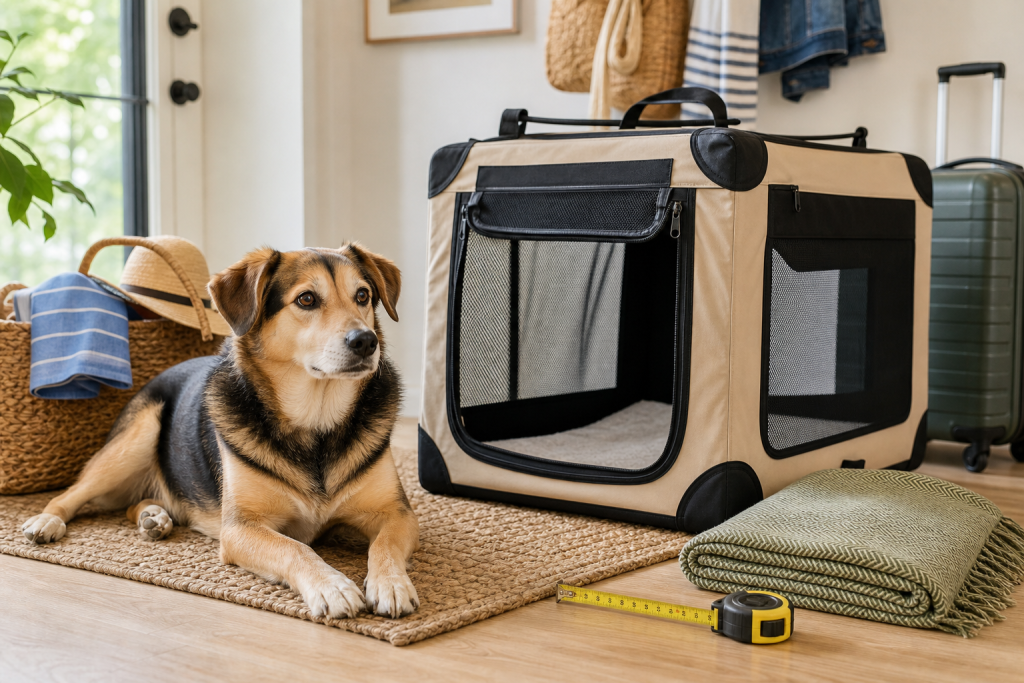
#dog travel crate
#pet travel deals
#soft dog crate
A soft dog crate is only a good deal if it matches how you will actually use it. It can be convenient for a crate-trained dog in a hotel room, at home or during supervised travel, but it is not the same thing as an escape-proof kennel, an airline cargo crate or a crash-tested car restraint. Before you buy one because it folds flat, check the zipper, frame, size, ventilation and return terms.
That distinction matters more in summer, when pet owners are packing for road trips, vacation rentals, campsite stays and visits with family. A soft-sided crate looks lighter and easier than a wire or hard plastic crate, but the wrong one can become an expensive fabric box your dog chews through, overheats in or outgrows before the next trip.
Why soft crates look like a bargain right now
Soft crates usually win the first comparison because they are lighter, quieter and easier to store than a full-size wire crate. Many listings highlight mesh panels, lockable zippers, washable covers and quick setup. For owners with calm, crate-trained dogs, those features can be genuinely useful.
The problem is that “portable” can quietly get read as “safe for every travel situation.” That is where shoppers need to slow down. A foldable soft crate may be fine as a temporary den in a supervised room, but it should not be bought as a shortcut around airline, car-safety or escape-risk requirements.
The checks to make before checkout
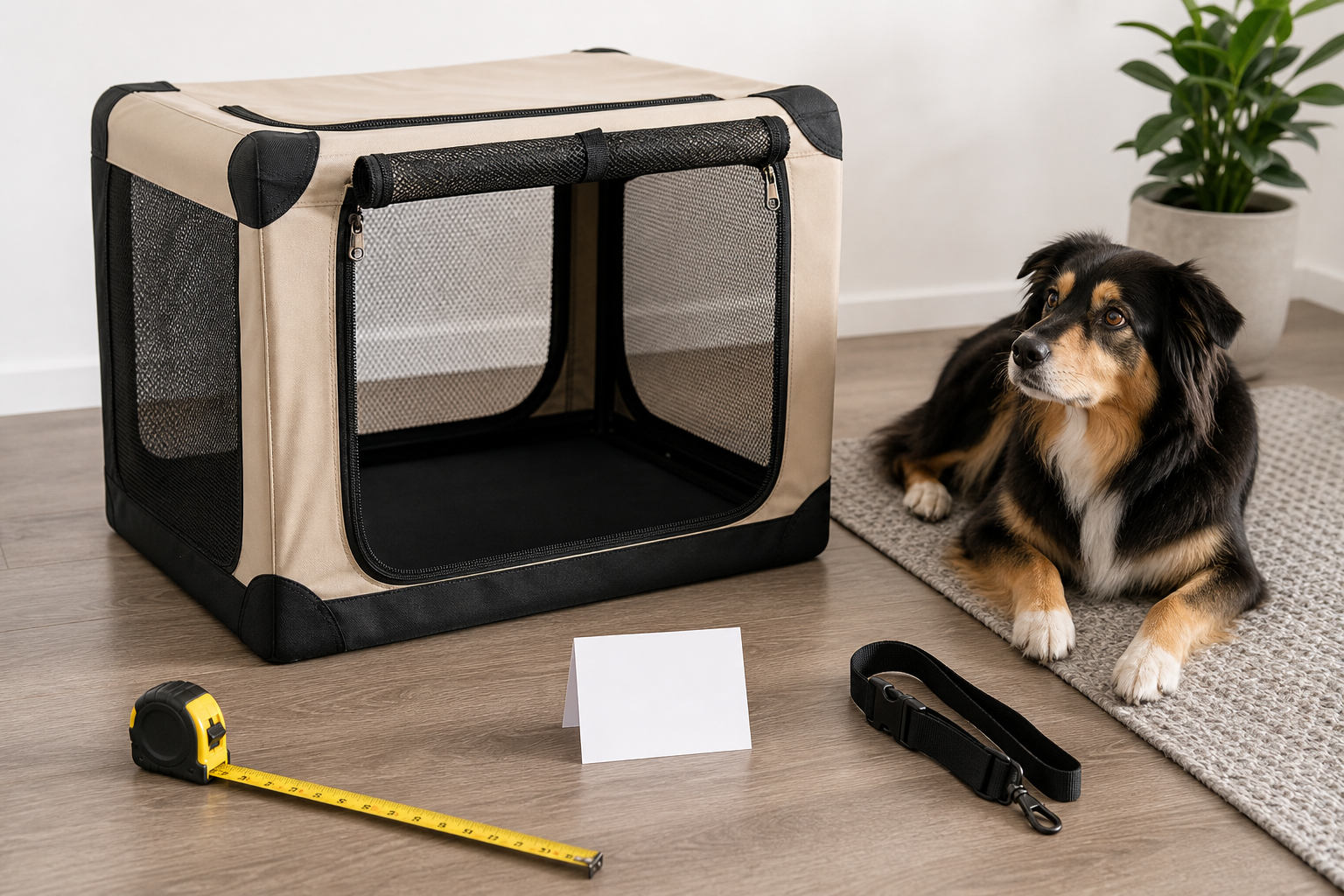
Measure your dog, not just the crate label. Chewy’s crate guide says a dog should be able to enter without crouching and turn around comfortably with the door shut. Breed examples in a listing are not enough. Measure your dog’s standing height and nose-to-tail length, then compare those numbers with the interior dimensions, not only the outside dimensions.
Read the zipper and escape language. Soft fabric, mesh and zippers are convenience features, not guarantees. One Amazon soft-crate listing says plainly that the crate is not chew-proof or intended for escape-prone dogs, and that it is best for calm, crate-trained pets. Treat that as the buying standard, not as a minor footnote.
Check ventilation from more than one side. Mesh panels help airflow, but a crate can still get stuffy if it is tucked against luggage, bedding or a wall. If you are buying for summer travel, look for multiple mesh sides and avoid using thick covers that turn the crate into a heat trap.
Decide whether you need structure or portability. A soft crate that folds easily may not be the right choice for a dog that paws, leans, chews or panics when confined. In that case, a stronger wire or rigid crate may cost more upfront but save you from replacing a torn soft crate after one stressful weekend.
Confirm cleaning and replacement parts. A washable cover is only useful if it can be removed without fighting the frame. Look for clear instructions for the mat, base and fabric panels. If the crate relies on proprietary poles, clips or zipper pulls, check whether replacements are sold separately.
Do not confuse a soft crate with an airline cargo kennel
This is the checkout mistake that can cost the most. Some cabin pet policies may allow certain soft-sided carriers for small pets, but cargo kennel rules are different. American Airlines Cargo lists soft-sided kennels and folding or collapsible kennels among prohibited kennel types, and says accepted kennels must be rigid, leakproof and escape-proof.
Humane World for Animals also advises calling the airline well in advance and asking exactly what carrier type is accepted if your pet will fly in the cabin. If your dog is too large for cabin travel, do not assume a soft travel crate solves the problem. Check the airline’s current kennel page before buying anything.
What about car travel?
A soft crate can keep a calm dog from wandering around a parked vacation rental or supervised campsite setup. That does not make it a crash crate. Humane World for Animals says the safest way for a dog to travel in a car is in a crate anchored to the vehicle by a seat belt or other secure means, and it warns against pets roaming in the car.
If the listing does not clearly explain how the crate anchors in your vehicle, and it does not claim a relevant crash-test standard from a credible source, do not treat it as crash protection. For road trips, a soft crate may be a destination crate, while a separate secured travel setup may still be needed for the drive.
Deal and coupon checks
A soft crate discount can be real and still not be the cheapest option. Before paying, compare the final cart price against these costs:
- the correct size, not the smallest discounted size;
- a washable mat or spare cover if the included pad is thin;
- return shipping if the crate arrives too small or too flimsy;
- replacement costs if your dog chews mesh or bends the frame;
- a separate car or airline-approved setup if the soft crate does not cover those jobs.
Also check whether a promo code excludes travel crates, oversized items or third-party marketplace sellers. A cheap listing with vague sizing, no return clarity and no support information is a riskier deal than a slightly higher-priced crate with clear dimensions and a realistic use case.
What to avoid
Avoid any soft crate sold as “escape-proof” without clear construction details. Avoid sizing by breed alone, especially for deep-chested, long-backed or still-growing dogs. Avoid using a soft crate outdoors in direct sun, in a hot car or under heavy covers. ASPCA hot-weather guidance reminds owners to provide water and shade, avoid over-exercise and keep pets indoors when it is extremely hot.
Most of all, avoid buying a soft crate to manage a problem the crate cannot fix. If your dog has separation distress, destructive chewing or panic around confinement, ask a trainer or veterinarian for help instead of hoping a zipper upgrade will solve it.
Quick answers
Are soft dog crates worth buying?
Yes, for calm, crate-trained dogs and supervised use where portability matters. They are less convincing for chewers, escape artists, cargo air travel or car-crash protection.
Can a soft dog crate be used in the car?
It may be useful after arrival, but do not assume it protects your dog in a crash. Check whether the crate can be secured and whether the maker provides credible safety information.
Can a soft crate go on an airplane?
Only if the specific airline and travel type allow it. Soft-sided cabin carriers are different from cargo kennels, and some cargo rules prohibit soft-sided, folding or collapsible kennels.
What is the easiest detail to miss?
The interior dimensions. Exterior measurements, breed examples and “large” labels can all make a crate look roomier than it feels once your dog is inside.
Sources
Sources last checked: 2026-07-12 10:37 Europe/Rome.