
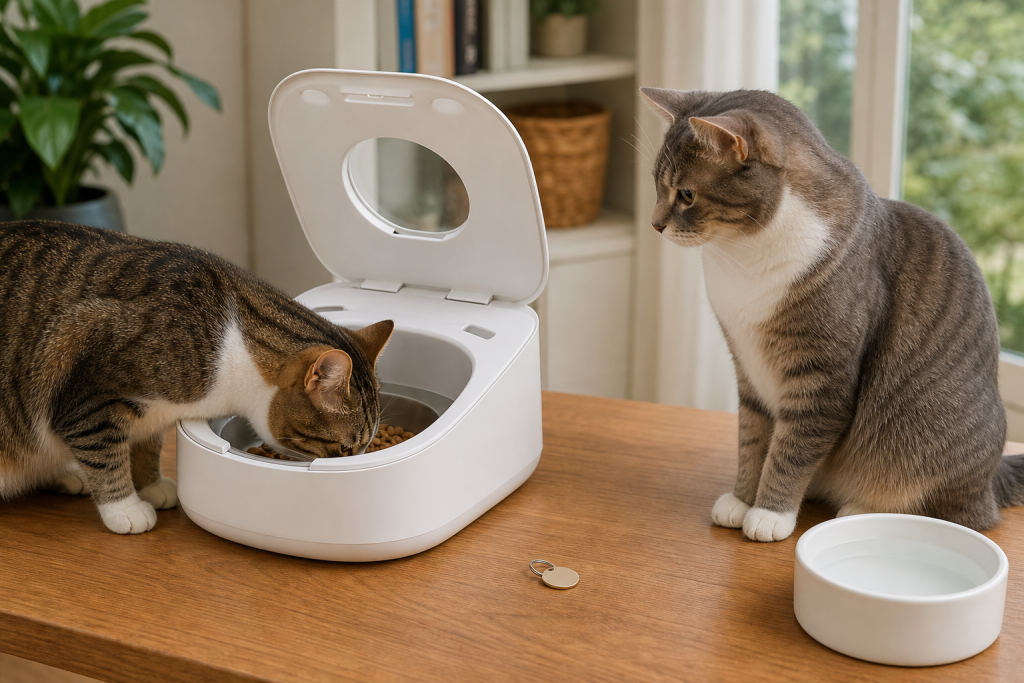
#cat feeding
#microchip feeder
#RFID cat feeder
#smart cat feeder
A discounted RFID cat feeder can be a good buy, but only if you know exactly what opens the lid. Some feeders read an implanted microchip, while others need a proprietary collar tag that can be lost, chewed, outgrown or incompatible with another brand. Before you pay, check the tag system, spare-tag price, return rules and whether every cat in the house can realistically wear the required collar.
Why this matters now
Smart pet feeders are getting more common in multi-cat homes because owners want to stop food stealing, separate prescription diets or track meals without standing in the kitchen. The catch is that “RFID,” “microchip” and “smart feeder” do not always mean the same thing at checkout.
Petlibro’s One RFID feeder, for example, says its reader works with the dedicated collar tag, not implanted microchips or other brands’ tags. Sure Petcare’s SureFeed Microchip Pet Feeder says it is compatible with identification microchips worldwide and also works with SureFlap RFID collar tags. Those are very different buying situations, especially if your cat already has a microchip.
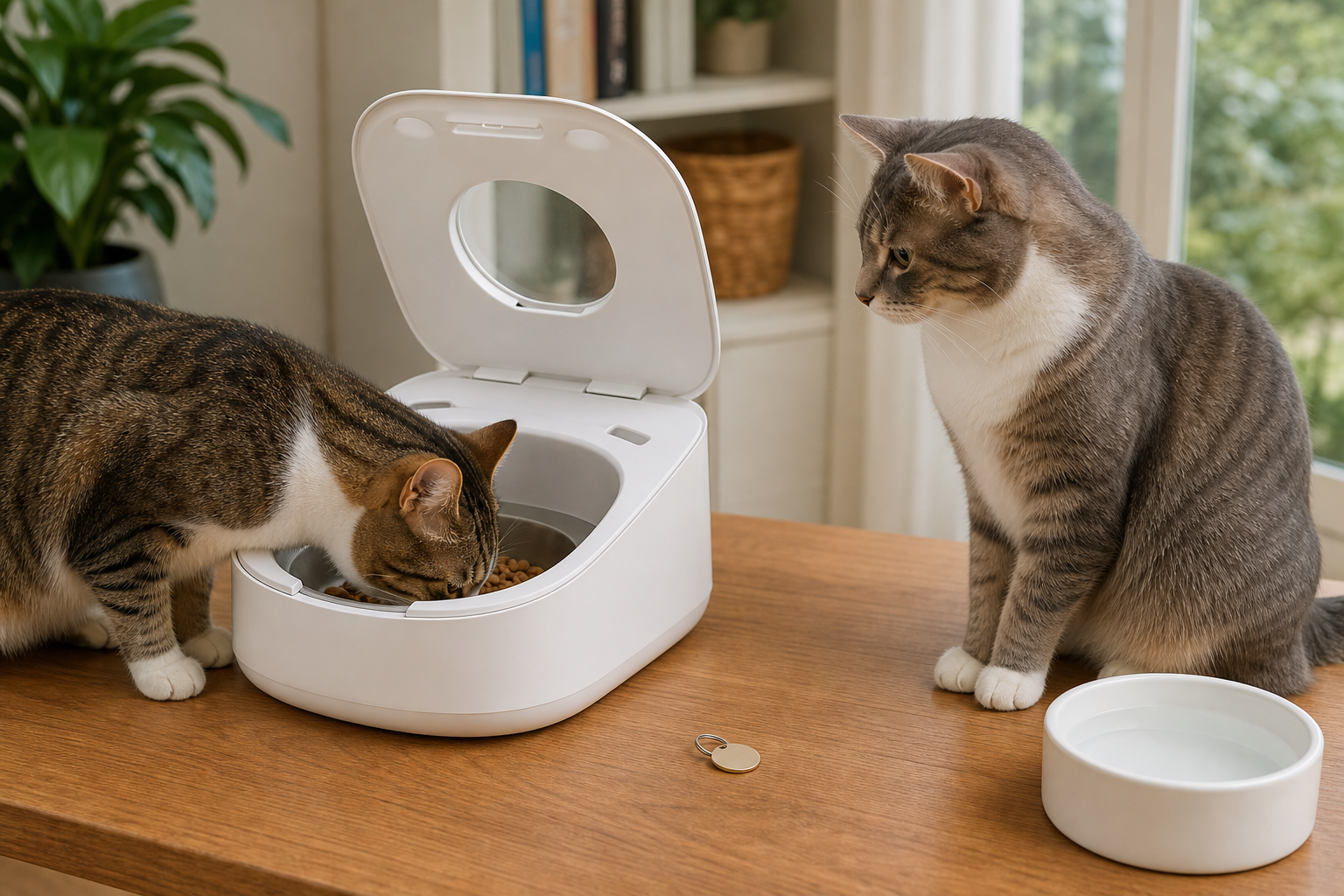
The hidden cost is the tag system
The feeder price is only the first number. If the unit needs a collar tag, ask what happens when the tag disappears under a sofa, gets damaged in water, bothers a collar-sensitive cat or needs to be replaced for another pet.
Petlibro lists a separate RFID Collar Tag accessory, while Sure Petcare lists RFID collar tags among accessories for pets that are not microchipped or have a non-compatible microchip. That does not make either system bad. It does mean the cheapest feeder deal may not be the cheapest setup after spare tags, extra feeders, bowls, mats or app-connected accessories are counted.
Microchip feeder or collar-tag feeder?
Use this distinction before comparing sale badges:
- Microchip feeder: opens for a pet’s implanted identification microchip, when compatible. This can avoid a dangling collar tag, but you still need to confirm the feeder supports your pet’s chip and your region.
- RFID collar-tag feeder: opens for a tag worn on the collar. This can work for unchipped pets, but it adds collar comfort, tag replacement and proprietary compatibility checks.
- App-connected feeder: may add logs, alerts or schedules. Check whether those features require Wi-Fi, an account, cloud service, a hub, batteries or ongoing app support.
AAHA’s microchip FAQ is a useful reminder that an implanted microchip is not GPS and stores only an ID number, while owner contact details live in a registry. That same “what does this actually do?” mindset helps with feeder claims too. A feeder may identify a cat for meal access, but it does not replace diet instructions from your veterinarian.
Checkout checks before you buy
For a multi-cat household, do the math per cat, not per feeder. A one-cat setup may need one feeder and one tag. A two-cat setup may need two feeders, two tags, backup tags and enough counter or floor space to prevent crowding.
Check these details before the sale price wins:
- whether the feeder reads implanted microchips, collar tags or only the brand’s own tag;
- how many pets one feeder can recognize and whether each pet needs a separate feeder;
- the cost and availability of replacement tags, bowls, mats, lids, power cords and batteries;
- whether the tag is light enough for your cat’s collar and safe with a breakaway collar;
- whether the feeder can run a useful schedule if Wi-Fi or the app is down;
- the return window after your cats have actually tried it;
- cleaning rules for wet food, dry food, seals and moving lids.
Deal and coupon section: what to verify before paying
If a retailer shows a coupon, do not assume it applies to accessories. A feeder discount may exclude spare tags, connected hubs, replacement bowls or refurbished units. If a bundle looks cheaper, compare it against the exact parts you would buy separately.
Also check shipping thresholds and return terms after the discount is applied. A feeder that drops below a free-shipping minimum, ships from a marketplace seller or has a shorter electronics return window can erase part of the deal.
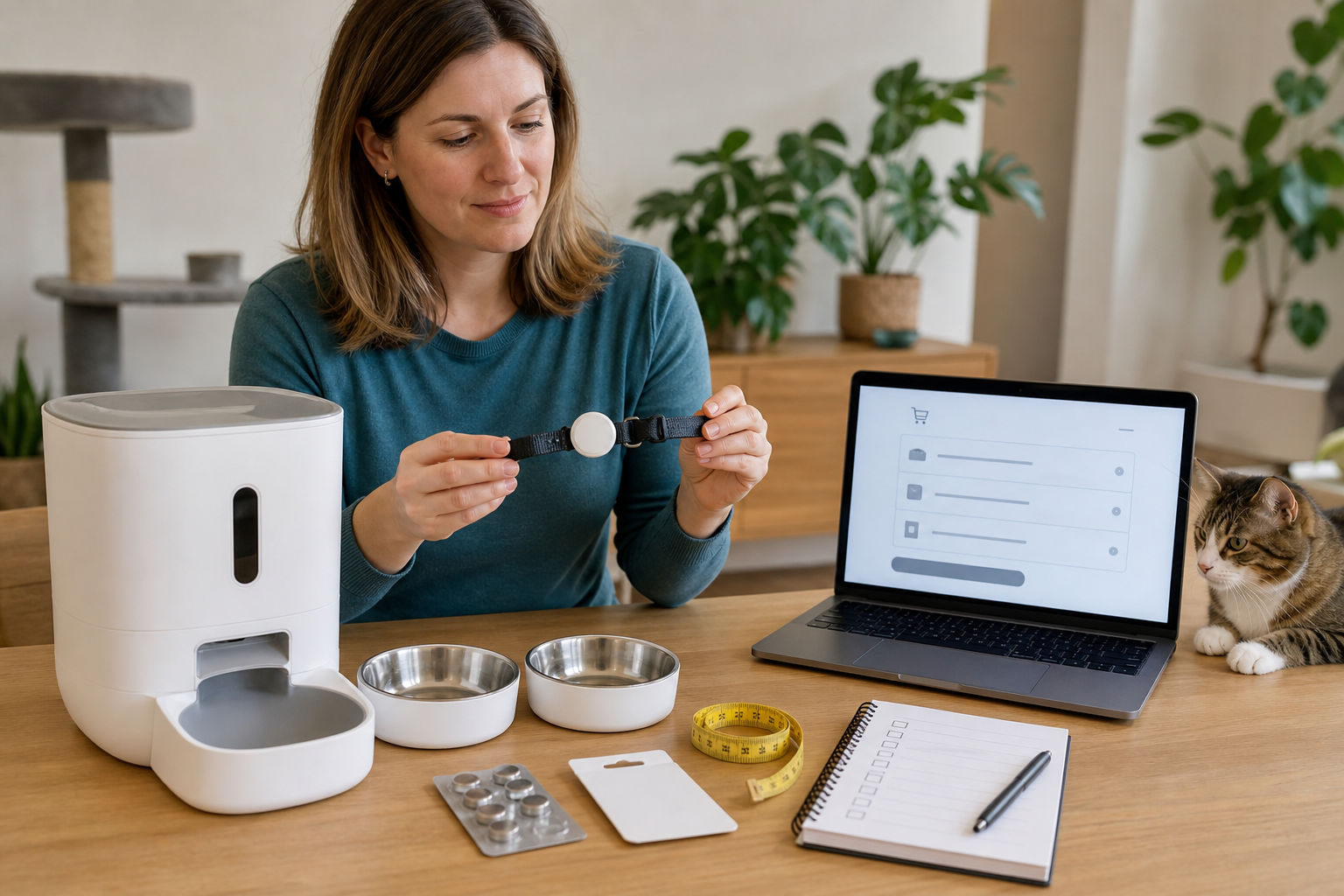
What to avoid
Avoid buying an RFID feeder because the listing uses the word “microchip” somewhere in the title without reading the compatibility text. Marketplace listings and accessory pages can mix terms in confusing ways.
Avoid assuming a feeder will solve bullying, diet stealing or weight problems by itself. It can help manage access to food, but cats may still need separate feeding stations, gradual introduction, vet-guided diet plans and a setup that does not make a nervous cat avoid meals.
Avoid using a non-breakaway collar just to keep a tag attached. If your cat will not tolerate a collar, a tag-only feeder may be the wrong technology even if the price is attractive.
When the deal is actually useful
An RFID or microchip feeder makes the most sense when one pet needs food access that another pet should not have. Examples include different diets, different meal sizes, one fast eater, one grazer or a household where one cat steals from another.
It is less compelling if all cats eat the same food, nobody steals meals and you mainly want a gadget. In that case, a simpler timed feeder or separate feeding rooms may be cheaper and easier to return.
Quick answers
Does an RFID cat feeder read my cat’s implanted microchip?
Not always. Some feeders read implanted microchips, while others require the brand’s collar tag. Check the product FAQ and do not rely on the word “RFID” alone.
Should I buy spare collar tags right away?
If the feeder depends on a proprietary tag and your cat tolerates collars, one spare can prevent the whole system from failing when a tag is lost. Check the return policy first in case your cat rejects the collar.
Can this replace veterinary diet advice?
No. A feeder can control access and timing, but prescription diets, weight plans and medical concerns should still be handled with your veterinarian.
Is a refurbished RFID feeder a good deal?
It can be, but only if the warranty, return period, included tag, power adapter and replacement-part access are clear. A missing proprietary tag can make the cheaper unit less useful on day one.
Sources
Sources last checked: July 12, 2026, 07:33 Europe/Rome.
- Petlibro, One RFID Cat Feeder for Multiple Cats.
- Petlibro, RFID Collar Tag accessory page.
- Petlibro, collar tag pairing support.
- Sure Petcare, SureFeed Microchip Pet Feeder.
- Sure Petcare, product accessories and RFID collar tags.
- AAHA, FAQs for AAHA Universal Pet Microchip Lookup Tool.
- AAHA Trends, Maximizing Microchipping.