
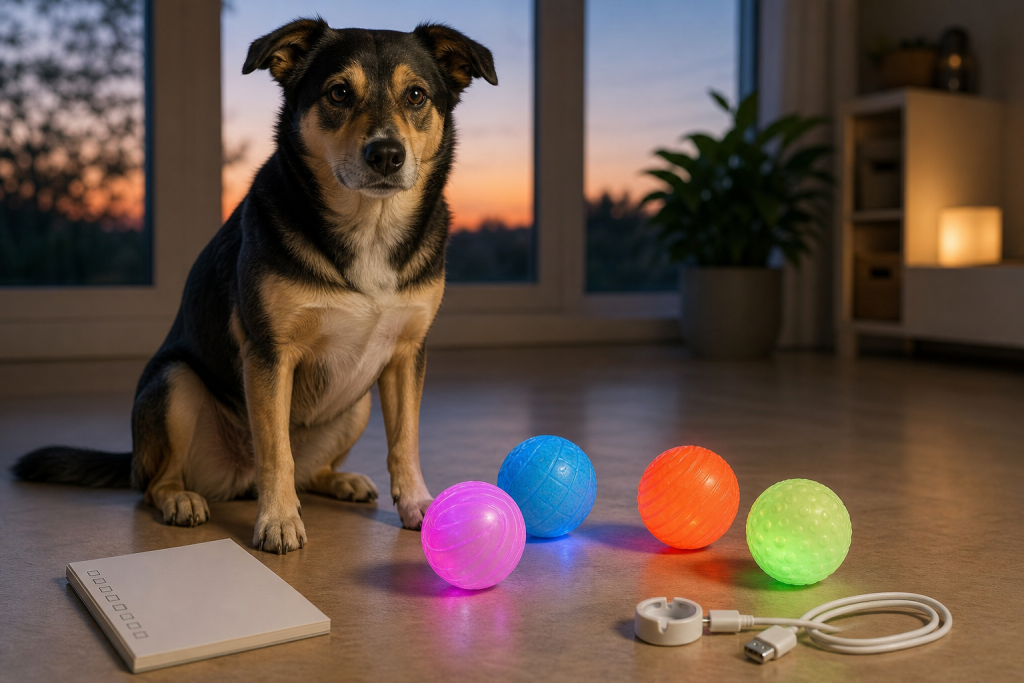
A light-up dog toy is only a good deal if the light system is sealed, the size is safe for your dog, and the battery plan still makes sense after the first few night walks. The cheap mistake is buying the brightest LED ball in the cart without checking whether your dog can crack it open, whether replacement batteries are secure, or whether a rechargeable port leaves a weak spot for heavy chewers.
That matters now because summer heat is pushing many owners toward cooler dawn and evening play, while online marketplaces are full of LED balls, glow toys and rechargeable fetch gadgets. They can be useful for visibility, but they are still chew toys with electronics inside.
Why this deal can fail after checkout
Light-up toys solve one real problem: you can see the toy in low light. They do not remove the normal toy risks. A ball that is too small can become a choking hazard, a thin shell can split around the electronics, and a toy with an accessible button or coin battery is a very different purchase from a plain rubber fetch ball.
The safety concern is not theoretical. The U.S. Consumer Product Safety Commission has repeatedly recalled light-up toys and electronic pet-themed toys when button or coin batteries could be reached too easily. In one May 2026 recall, CPSC warned that swallowed button cell or coin batteries can cause internal chemical burns and death. That recall involved children’s toys rather than dog toys, but the shopping lesson carries over: if a battery compartment can be opened, chewed loose or accessed without a tool, it does not belong in a dog’s toy basket.
Check the battery before the brightness
Before you compare colors or sale badges, read the power details. There are three common designs:
- Replaceable coin-cell battery toys: convenient, but only acceptable if the battery compartment is secured with a screw or another tool-required closure and remains protected after chewing.
- Rechargeable LED toys: fewer loose batteries, but the charging port, cover and seams must be tough enough for your dog’s chew style.
- Glow-in-the-dark toys with no electronics: less flashy, but often simpler for strong chewers because there is no battery, circuit or charging port inside.
ASPCA cautions that batteries can be seriously dangerous to pets when chewed or punctured because alkaline material can burn the mouth, esophagus or stomach. AVMA also lists batteries among household hazards that curious pets may swallow. If your dog destroys toys, the safest “deal” may be a non-electronic glow toy or a supervised-only LED toy that goes away after each session.
Fit the toy to your dog, not the product photo
A product image can make a ball look larger than it is. Check the actual diameter and compare it with the size of toys your dog can safely carry without trying to swallow. Center for Pet Safety has warned that some ball toys can lodge in a dog’s throat, especially when they are smooth, heavy or poorly sized for the dog.
For a fetch toy, ask these questions before buying:
- Is the listed diameter appropriate for my dog’s mouth and breed size?
- Does the toy say “supervised play” or “not for heavy chewers”?
- Are the LED module, battery door and charging cover recessed or exposed?
- Can I inspect the toy after every session without cutting it open?
- Is the toy waterproof or only water-resistant, and does that match where we play?
The checkout math: replacement batteries, charging and returns
A discounted LED toy can become expensive if it needs specialty batteries, loses brightness quickly or cannot be returned after light outdoor use. Some branded LED balls advertise replaceable CR2032 batteries and a stated run time. Others use sealed rechargeable batteries, which may be easier day to day but less useful if the toy stops holding a charge after the return window.
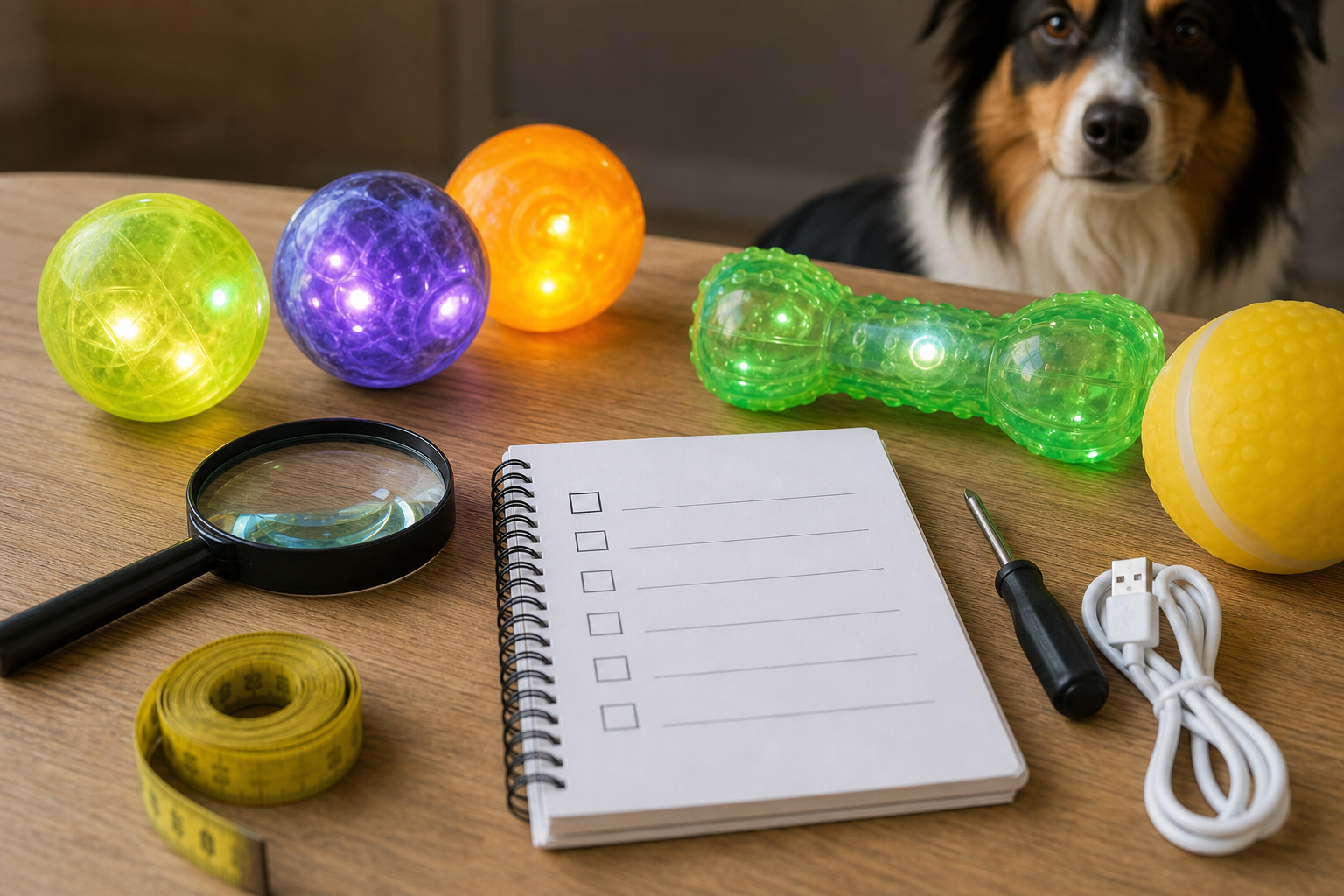
Before paying, verify:
- Battery type, expected run time and whether batteries are included.
- Whether replacement batteries are common and affordable.
- Whether the charging cable is included, and whether the listing warns against fast chargers.
- Return rules for opened pet toys and used electronic items.
- Whether the retailer or manufacturer sells replacement parts or only a full new toy.
Do not count a coupon as savings until the cart shows the final price with shipping, batteries and any replacement pack you already know you will need. A two-pack can be smarter than a single toy only if both toys are the right size and the same safe battery design.
What to avoid
Avoid mystery marketplace listings that do not show the toy’s actual size, battery type or battery-door design. Avoid toys with loose caps, cracked shells, exposed screws, missing warnings or reviews showing chewed-open electronics. Avoid giving an LED ball to a dog that likes to settle down and chew fetch toys after the game.
Also avoid treating the light as a safety device for walking near traffic. A glowing toy can help you find the ball in the yard, but it is not a reflective leash, a lighted collar or a substitute for keeping your dog under control in dark areas.
When a light-up toy is worth buying
It can be worth buying when your dog plays supervised fetch, does not crush balls, and the toy is clearly sized, sealed and easy to inspect. It is less attractive for power chewers, multi-dog tug sessions, unsupervised crate time, muddy dog parks and dogs that swallow pieces of damaged toys.
If you are unsure, start with one well-documented toy rather than a bulk pack of unknown LED balls. Use it for short sessions, inspect it under bright light afterward, and retire it as soon as the shell, seam, charging cover or battery compartment changes shape.
Quick answers
Are light-up dog toys safe?
They can be safe for supervised play when they are the right size and the electronics are securely enclosed. They are not a good fit for dogs that chew toys open.
Are rechargeable LED dog balls better than replaceable-battery toys?
Not automatically. Rechargeable toys remove loose replacement batteries from the routine, but the charging port and sealed battery still need to survive normal play.
Should I let my dog keep an LED toy after fetch?
For most dogs, no. Treat electronic toys as supervised play items and put them away once the game ends.
What should I do if a light-up toy breaks?
Take it away immediately and check whether any pieces or batteries are missing. If you think your dog chewed or swallowed a battery or electronic part, contact your veterinarian or a pet poison hotline promptly.
Sources
- U.S. Consumer Product Safety Commission, ABC Trading recalls toys due to button battery ingestion risk.
- ASPCA, The Dangers of Batteries and Your Pets.
- AVMA, Household hazards.
- Humane World for Animals, How to Pick the Best and Safest Dog Toys.
- Center for Pet Safety, Warning: Ball Toys for Dogs Can Cause Choking.
- Nite Ize, GlowStreak LED Ball product details, used only as an example of published battery and run-time information shoppers should look for.
Sources last checked: July 16, 2026, 07:35 Europe/Rome.