
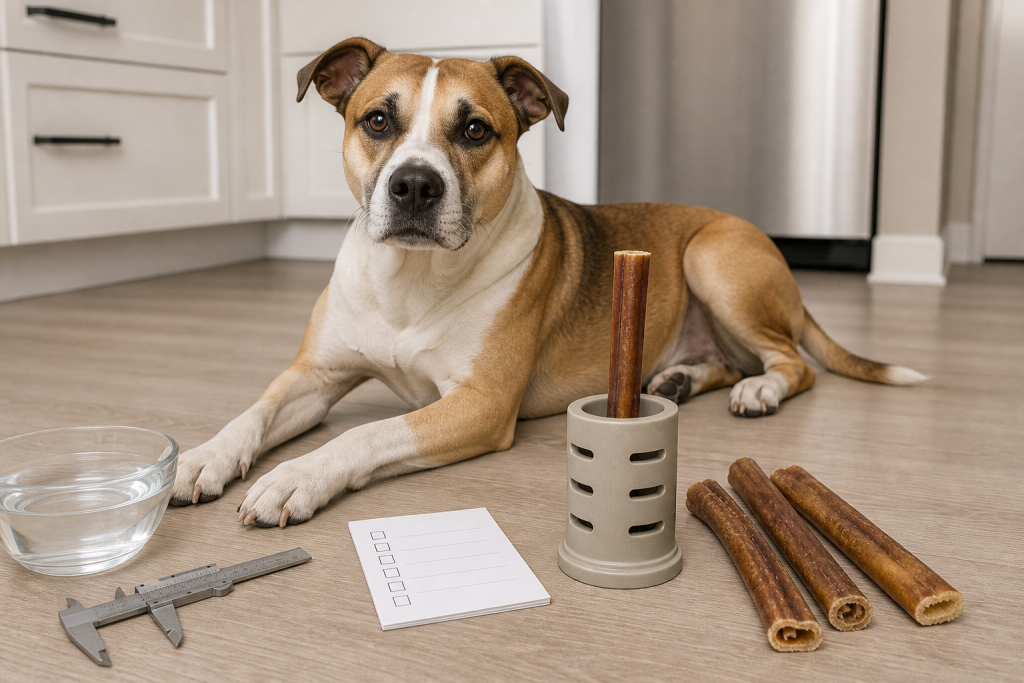
A bully stick holder is only a good deal if it actually locks the chew your dog uses and keeps the small end from becoming easy to gulp. The mistake is buying the holder by dog size alone, then discovering your usual bully sticks, collagen sticks or dental chews are too thin, too thick or too slippery for the clamp. Check chew diameter, supervision warnings, cleaning access and return terms before the discount matters.
That matters now because chew holders are showing up across Amazon pet-supply listings and current dog-shopping searches, while bully sticks and collagen chews remain expensive repeat purchases. A holder can reduce waste and make chew time easier to manage, but it is not a safety guarantee and it does not turn an unsuitable chew into a suitable one.
Why the holder can be the hidden cost
The cheap holder is not always the expensive part. The cost often appears later when the holder only works with one chew diameter, one brand’s stick shape, or a replacement chew your dog finishes faster than expected.
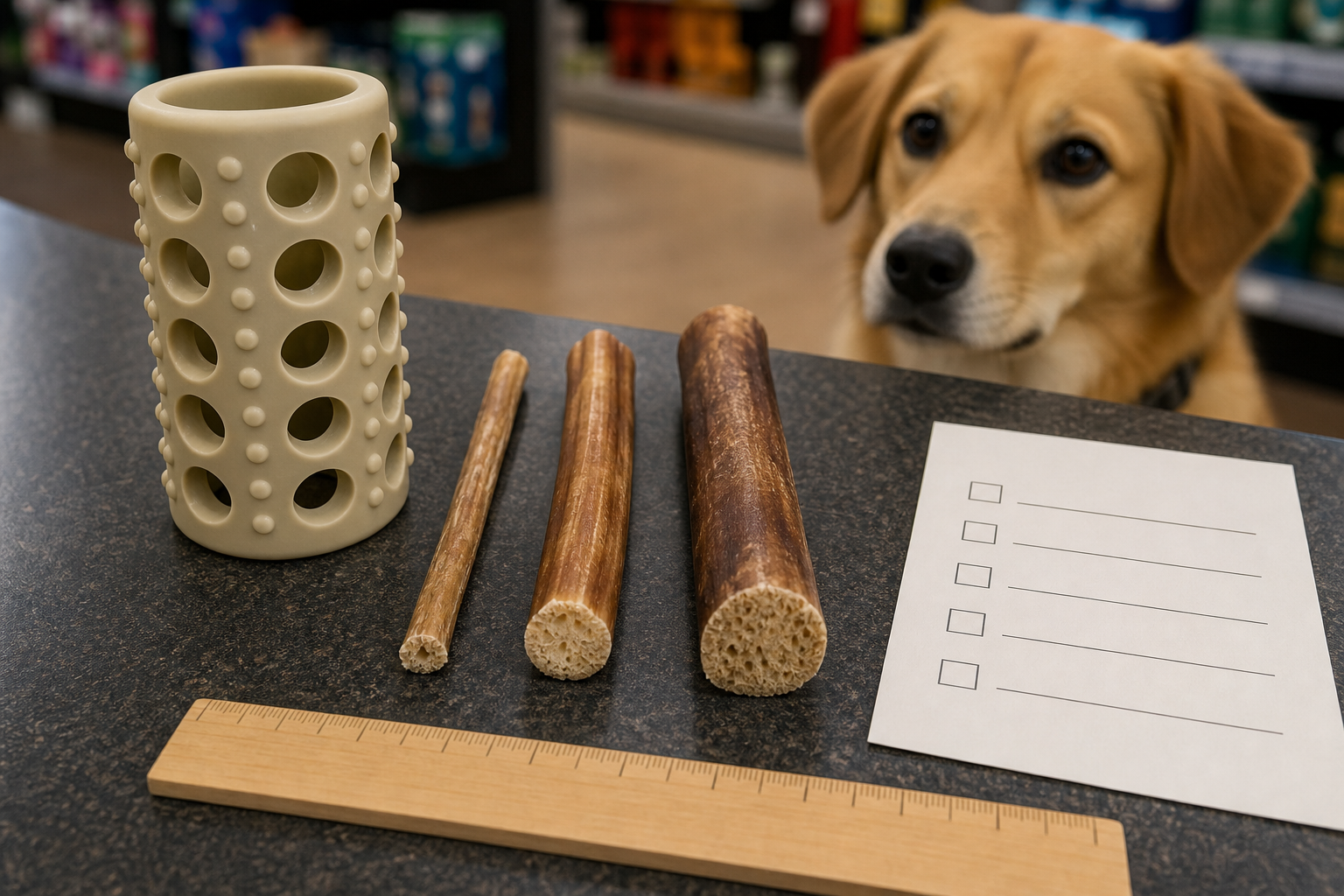
Before checkout, look for the actual opening range or supported chew thickness. A vague claim such as “fits most bully sticks” is less useful than a clear diameter range, size chart or photo showing the lock with different chew widths. If you already buy a specific stick, measure a few pieces at home. Natural chews are inconsistent, so one stick in the bag may fit while another slips.
Also check whether the holder works with flat, braided, curly, collagen or dental-style chews. Some holders clamp round sticks well but struggle with irregular shapes. Others are made as rubber treat toys rather than true clamps, which may be fine for enrichment but less convincing if your main goal is controlling the last nub.
The fit checks to do before paying
Start with your dog, not the product page. A holder that is too small can become another chewable object. A holder that is too heavy or awkward may be ignored. A holder that is too easy to open may not keep the chew secure once saliva softens the stick.
- Measure chew diameter: compare your current bully sticks or collagen chews with the holder’s stated range.
- Match chew style: power chewers, gulpers and dogs who guard high-value chews need extra caution and supervision.
- Check the lock: look for a clear tightening, pin, screw or pressure mechanism, not just a marketing phrase.
- Inspect cleanability: food residue can sit inside holes, slots and threads if the holder cannot be rinsed well.
- Read weight limits: a “small dog” label is not enough if the dog is a strong chewer.
- Confirm the return policy: some hygiene-adjacent pet items may be harder to return once used.
The ASPCA advises choosing chews by species, size and chewing habits, and actively observing dogs while they chew. That is the right lens for holders too. A holder is an accessory for supervised chewing, not permission to leave a high-value chew with a dog and walk away.
Deal and coupon checks
A bully stick holder discount is useful only if it fits the chews you will keep buying. If the holder pushes you into pricier replacement sticks, the “deal” can disappear within a few bags.
When comparing carts, price the holder and the next two months of chews together. Check whether a bundle includes full-size sticks or trial pieces. If an autoship or subscription offer applies, read whether the discount continues after the first order and whether the chew size in the refill order matches the holder.
For marketplace listings, verify the seller name, return window and warranty contact before paying. Do not rely on star ratings alone. Read recent reviews for phrases like “slips out,” “too small for standard sticks,” “hard to clean,” “dog chewed the holder” or “replacement chews don’t fit.” Those complaints tell you more than a coupon badge.
What a holder cannot fix
A holder cannot make every chew safe for every dog. Veterinary sources warn that chews can create choking, obstruction, tooth and contamination risks depending on size, hardness, chew style and how much the dog consumes. AAHA also notes that some animal-based chews, including bully sticks, may carry bacterial contamination risk, especially when coated or treated with flavoring.
FDA safe-handling guidance for pet food and treats is relevant here: wash hands after handling treats, keep pet food and treats away from human food-prep surfaces, and store them properly. If a holder has crevices that trap residue, cleaning becomes part of the purchase decision.
Skip the holder if the product page claims it “prevents choking” as if supervision is no longer needed. Better wording is cautious: helps hold the chew, helps reduce access to the small end, or supports supervised chewing. Absolute safety claims should make you slower, not faster, at checkout.
When to ask your vet
Ask your vet before making long-lasting chews a routine if your dog has dental disease, broken teeth, a history of swallowing objects, digestive issues, a restricted diet or a medical weight plan. Bully sticks and similar chews are treats, not a meal replacement. They can add calories quickly, and the holder does not change that.
If your dog tends to guard chews, swallow large pieces or panic when you approach, focus first on training and safer management rather than buying a stronger clamp. The right product is the one that fits your dog’s real behavior, not the one with the best checkout badge.
Quick Answers
Are bully stick holders worth it?
They can be worth it for supervised dogs who enjoy bully sticks and leave expensive end pieces behind. They are less useful if your dog’s usual chews do not fit securely or your dog tries to destroy the holder.
Can a holder prevent choking?
No product can guarantee that. A holder may help keep the small end less accessible, but you still need to supervise chew time and remove worn, loose or damaged pieces.
What size should I buy?
Use the holder’s chew-diameter range, your dog’s weight and your dog’s chewing style. If the listing does not show a clear fit range, choose a different product or buy only from a seller with a return policy you trust.
Should I buy a bundle?
Only if the included chews are the size and type you want anyway. Bundles can hide the real refill cost if the holder works best with proprietary or unusually thick chews.
Sources
- ASPCA, Position Statement on Dog Chews/Treats.
- AAHA, Don’t Chew On This!.
- Today’s Veterinary Practice, The Benefits and Risks of Chew Treats.
- FDA, Tips for Safe Handling of Pet Food and Treats.
- Amazon pet-supply and bully-stick-holder listing surfaces, used as live shopping-demand and checkout-claim signals, not as product testing.
- Chewy Today’s Deals and Petco return-policy pages, used for current cart, deal and return-context checks.
Sources last checked: July 20, 2026, 07:36 Europe/Rome.