
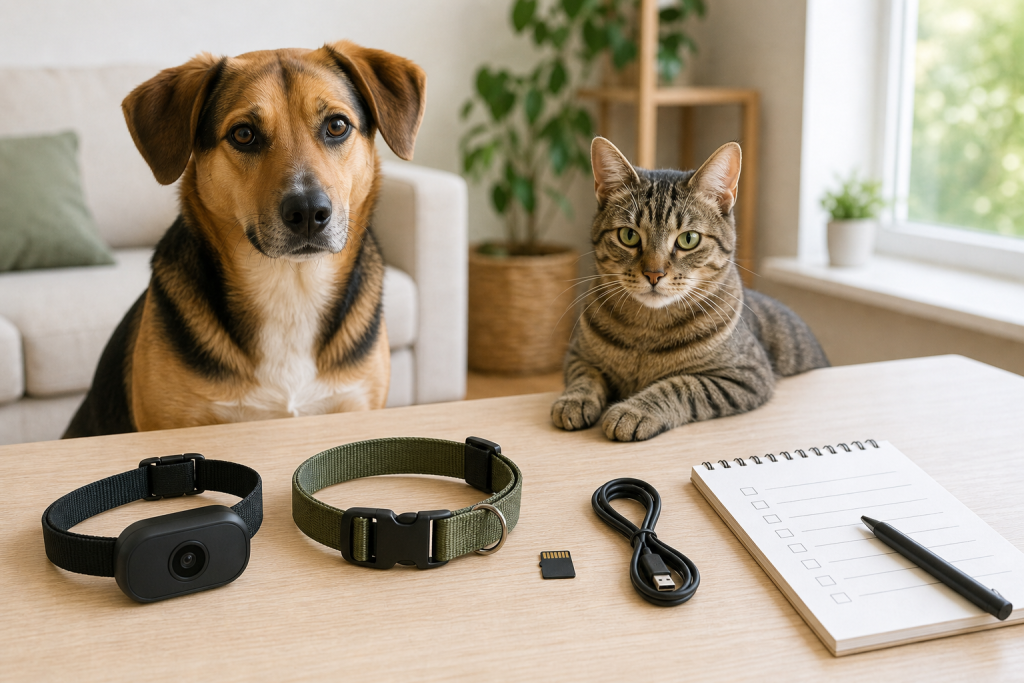
#pet collar camera
#pet tech deals
#wearable pet camera
A cheap pet collar camera can be fun, but it can become a bad deal if it is too heavy, stores video in a way you cannot control, or depends on an app that disappears after checkout. Before buying one for a dog or cat, check the fit, mounting hardware, recording limits, storage method, return window and privacy settings. Treat it as a novelty pet-tech accessory, not as a safety device or a substitute for a microchip, GPS tracker, supervision or veterinary advice.
Collar-mounted cameras are showing up across marketplace listings because they promise a pet’s-eye view of walks, backyard exploring and indoor routines. The problem is that many listings compress several different products into the same pitch: mini action cameras, Wi-Fi pet cameras, collar clips, memory-card recorders and app-connected devices. Those differences matter when the device is attached to a moving animal instead of sitting on a shelf.
Why this matters now
Pet tech is no longer limited to feeders and home cameras. Retailer search pages now surface collar cameras and wearable mini cameras for dogs and cats, often with claims around HD video, wide-angle recording, app viewing, memory cards, long battery life or outdoor use. Those claims are not automatically useless, but they change the checkout question from “Is this cute?” to “Will this actually be comfortable, secure, private and returnable?”
The best use case is narrow: short supervised recording sessions where the camera is light enough for the pet, mounted securely, and used in places where recording is appropriate. If you want lost-pet recovery, real-time location or home monitoring, a collar camera may be the wrong category entirely.
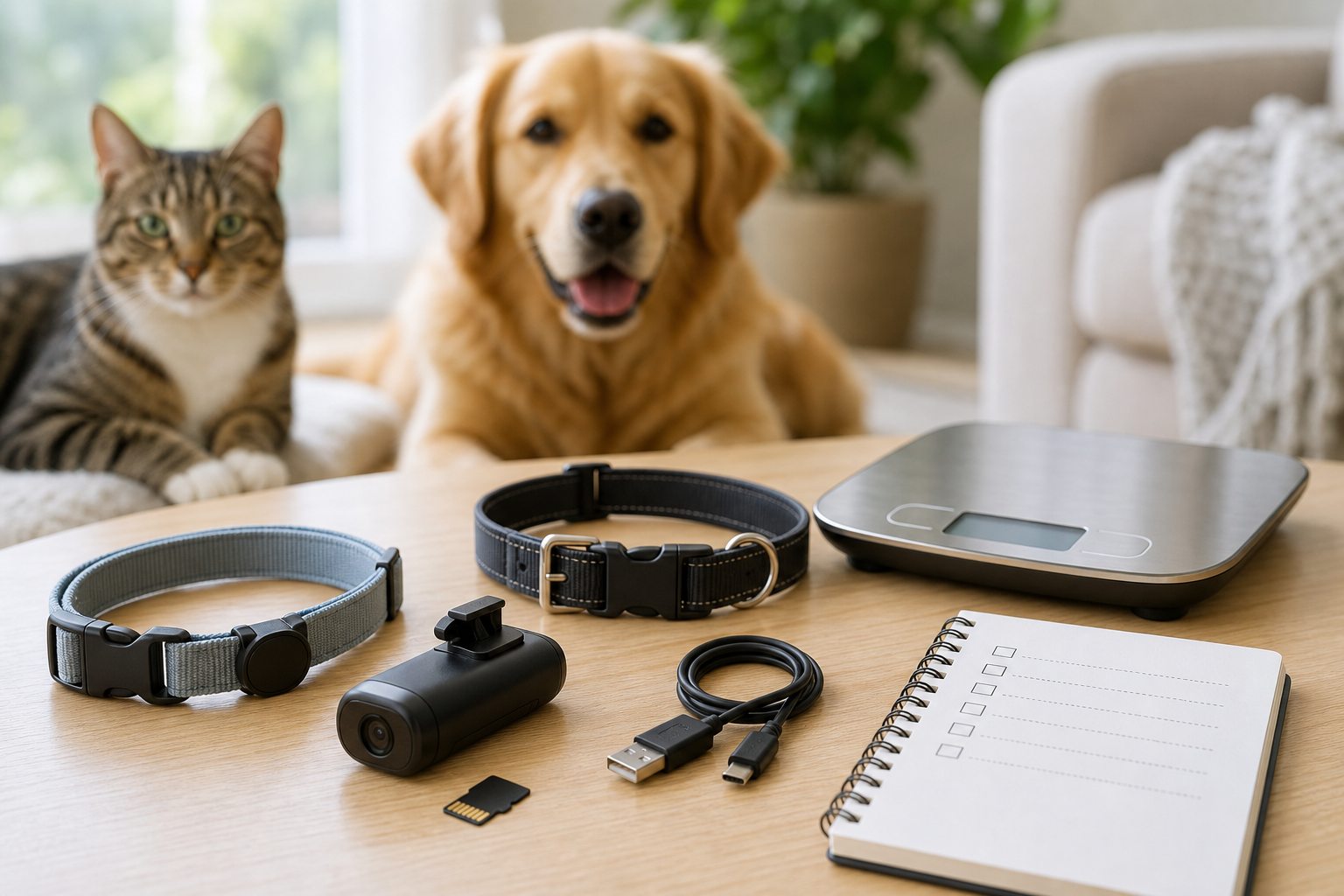
The fit check comes before the camera specs
Start with your pet, not the resolution claim. A collar camera adds weight, bulk and a snag point to gear your dog or cat may already tolerate only barely.
For dogs, measure the neck and check whether the collar still fits correctly after the camera mount is attached. The AKC advises using exact measurements rather than guessing from size labels, and its collar-fit guidance uses the familiar two-finger check: too tight is unsafe, too loose can slip or snag.
For cats, the release mechanism matters even more. Cats Protection says quick-release or snap-opening collars are the safest option because a caught collar is more likely to open. A camera mount that blocks the breakaway action, adds too much pull resistance or turns a lightweight collar into a rigid loop should be a stop sign.
- Check the full camera plus mount weight, not just the camera body.
- Confirm whether the listing is meant for cats, small dogs, medium dogs or only larger dogs.
- Look for rounded edges and a mount that does not press into the throat, jaw or chest.
- Use short supervised sessions first. Do not leave a new camera collar on all day.
- For cats, verify that the collar still releases after the camera is attached.
Privacy is part of the price
A collar camera can capture more than your pet. Depending on where it is used, it may record visitors, neighbors, children, license plates, addresses, voices or private indoor spaces. That makes privacy a buying feature, not a fine-print afterthought.
The FTC’s consumer guidance for internet-connected devices recommends changing default settings, using security features, updating device software and paying special attention to IP cameras because remote video and audio feeds can be vulnerable to snooping. CISA also advises consumers to evaluate security settings and keep connected devices maintained. For shoppers, that means a no-name camera with vague app support should not be treated like a harmless toy just because it is sold in the pet aisle.
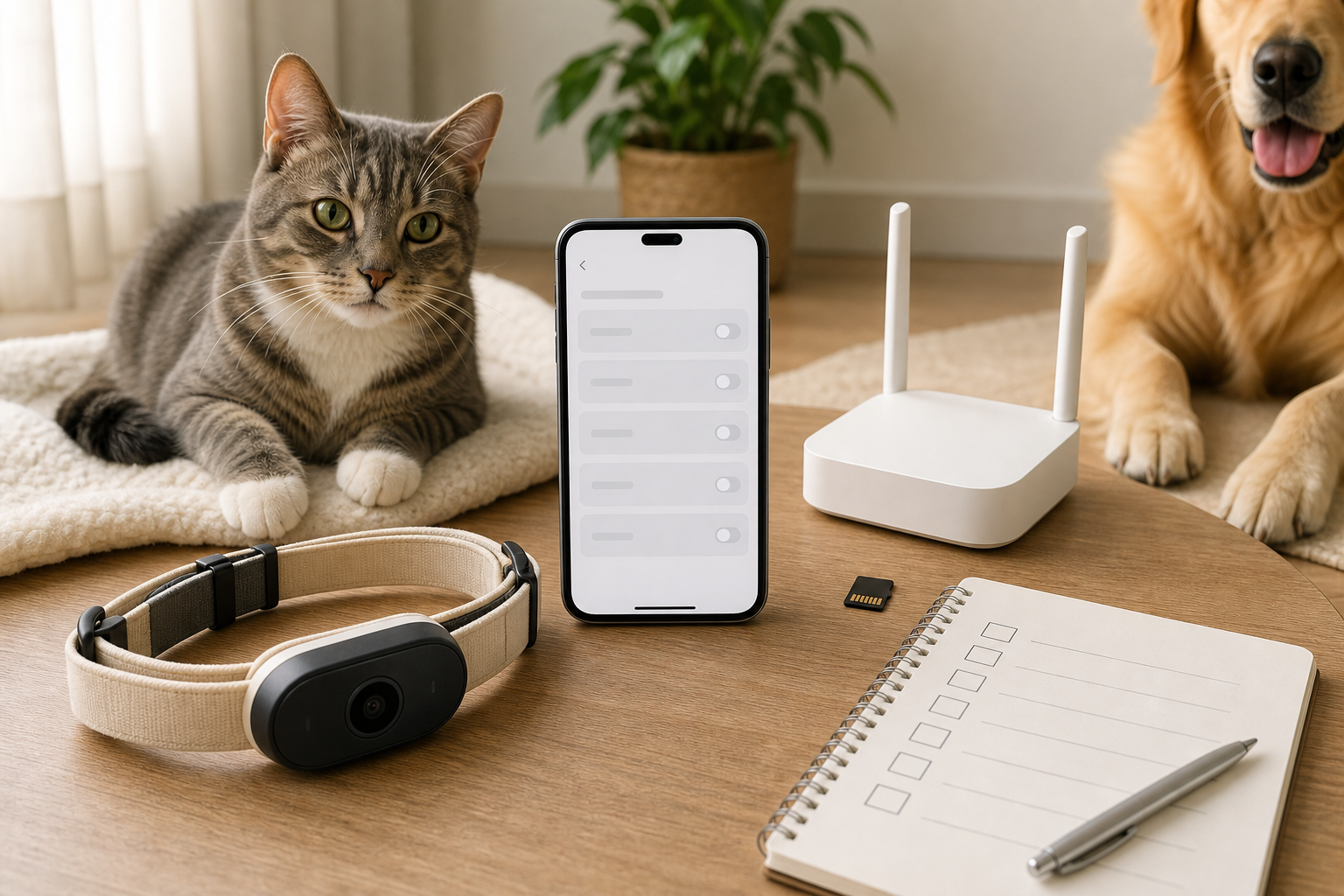
What to verify before checkout
Resolution is usually the loudest claim. It is rarely the most important one. A sharp video file is not much help if the camera bounces, stops after a few minutes, requires an unsupported app or stores footage where you cannot easily delete it.
Storage
Check whether the camera records to a microSD card, internal memory, a phone app, cloud storage or some mix of those. A memory card can be convenient, but you need to know the maximum supported size, whether the card is included, whether old clips are overwritten, and how files are deleted.
Battery and charging
Battery claims often assume ideal conditions. Look for the stated recording time, charging cable type, whether recording while charging is possible, and whether the battery is replaceable. If the listing gives only standby time, assume actual recording time may be shorter.
App support
If the camera needs an app, check the app name before buying. Look for recent updates, clear privacy controls, password support, whether two-factor authentication is available, and whether the app works with your phone’s current operating system.
Mounting
The mount should be pet-specific, not just a generic clip borrowed from action-camera accessories. Insta360’s pet-camera guidance notes that collar or harness filming should use appropriate gear. That is the right way to think about any brand: if the mount is improvised, the deal is not finished.
Returns and replacement parts
Read the return window before opening the box, especially on marketplace listings. Also check whether you can buy replacement clips, cables, collars, mounts or memory-card covers. A discount loses value quickly if one small plastic part breaks and the whole camera becomes unusable.
The deal section: when a discount is not enough
A pet collar camera deal is only useful if the cart includes everything needed for your actual use case. Before paying, compare the final cost of the camera, compatible collar or harness, memory card, shipping, returns and any app or cloud fees.
Do not assume a coupon applies to marketplace sellers, open-box items, app subscriptions or add-on accessories. If a retailer advertises a pet-tech sale, verify the exact seller, return terms, warranty length and whether the promo applies before checkout. Avoid buying only because a listing says “4K,” “spy,” “security” or “tracker.” Those words may describe marketing style more than pet-owner value.
What to avoid
- A camera marketed for cats that does not preserve a quick-release collar function.
- A heavy or rigid device on a small pet’s neck.
- Listings that do not show total weight, storage method, battery recording time or app name.
- Hidden-camera language that encourages recording people without thinking through consent and privacy.
- Any claim that a camera replaces a GPS tracker, ID tag, microchip or supervision.
- Non-returnable marketplace listings with vague warranty support.
Quick answers
Are pet collar cameras safe for cats?
They can be a poor fit for many cats. If you try one, use a lightweight setup, keep the session short and supervised, and make sure the collar remains quick-release after the camera is attached.
Can a collar camera help find a lost pet?
Usually not in the way owners expect. Most collar cameras record video. They do not necessarily provide real-time location, cellular tracking or a recovery network. Keep ID tags and microchip details current, and choose a real GPS tracker if location is the goal.
Is Wi-Fi better than a memory card?
Not automatically. Wi-Fi can make transfers easier, but it also adds app support, password and update questions. A memory card can be simpler if you only want short clips and direct file control.
Should dogs wear collar cameras on walks?
Only if the camera is light, secure and does not interfere with leash handling, harness fit or normal movement. For active dogs, a harness mount may be more stable than a neck-mounted camera.
Sources
Last checked: July 20, 2026, 10:40 Europe/Rome.
- Federal Trade Commission, Securing Your Internet-Connected Devices at Home
- CISA, Securing the Internet of Things
- American Kennel Club, Choosing the Right Collar for Your Dog
- Cats Protection, Choosing a Cat Collar
- Walmart dog collar camera shopping surface, used as live retail availability and listing-claim context
- Insta360 pet camera guide, used for current product-feature and mountability context