
#dog grooming tools
#dog paw safety
#foxtail grass
#summer dog supplies
A foxtail comb or cheap burr-removal kit is useful only for seeds you can still see on your dog. It is not a fix for a grass awn that has already worked into a paw, ear, nose, eye or skin fold. Before you buy one, check whether the kit helps with after-walk inspection, not whether it promises to replace a veterinarian.
Foxtail and grass-awn searches rise in summer because dry seed heads can catch in coats after hikes, park walks and yard time. The shopping mistake is buying a brush, paw washer or tweezers set as if it solves the whole problem. The better deal is a small inspection kit that is easy to use every time, plus a clear plan to stop and call your vet if anything looks embedded, painful or out of reach.
Why this matters now
Late spring through summer is the risky window in many dry, grassy areas. The AKC notes that visible awns should be removed before they burrow, and VCA warns that grass awns can penetrate the skin and move deeper, especially between toes. San Francisco SPCA also flagged foxtails as a spring and summer hazard in a May 2026 reminder, with paws, ears and noses among the common problem spots.
That makes foxtail gear a seasonal shopping category, not just another grooming add-on. Owners may be looking at fine-tooth combs, blunt tweezers, paw-cleaning cups, slicker brushes, grooming wipes, paw trimmers, dog boots and small first-aid pouches. Some of those items are useful, but none of them makes tall dry grass safe or turns an embedded awn into a home project.
The checkout mistake: buying removal tools instead of inspection tools
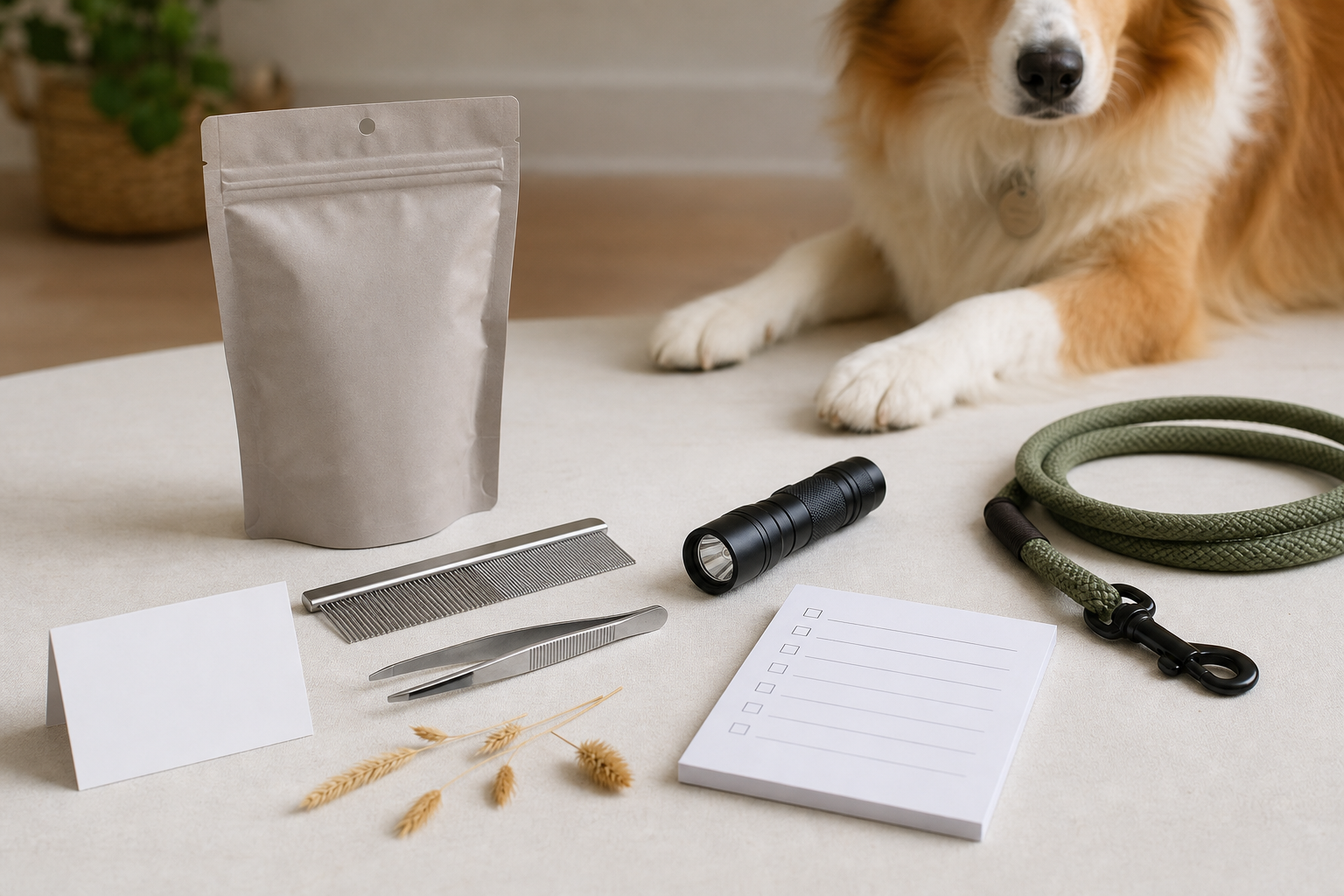
The most useful foxtail kit is boring. It should help you find loose seeds quickly after a walk, separate fur around the toes, check the tail, armpits and belly, and keep simple tools in one place. A flashy kit that focuses on extraction claims can be a worse purchase if it encourages you to pull at something you cannot fully see.
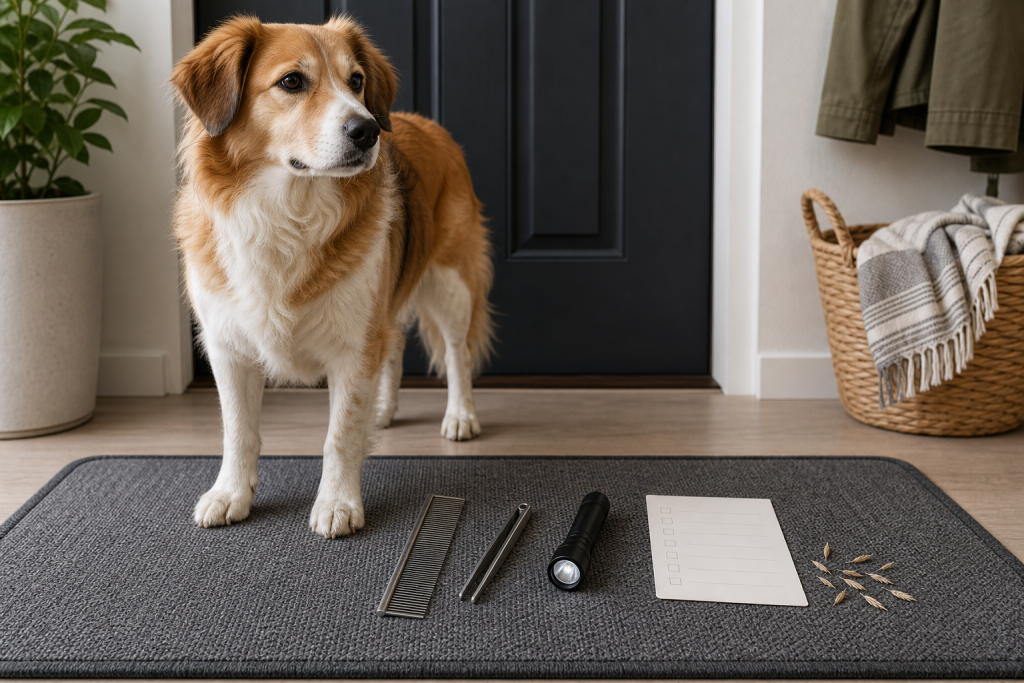
For most shoppers, the core kit is a fine-tooth comb, a small flashlight, plain blunt-tipped tweezers for visible surface debris, a towel or mat for the entryway, and a sealable bag for removed plant material. Long-coated dogs may also need routine grooming around the feet and ears, but clipper or trimmer purchases should be chosen by coat type and your comfort level. If your dog hates paw handling, the most expensive tool can still sit unused.
What to check before buying
Start with the comb. Teeth should be close enough to catch small dry seeds, but not so sharp or rigid that you rake irritated skin. For double-coated or long-coated dogs, a single cheap comb may not reach the undercoat, so compare it with the brush you already use.
Look at the tweezers next. Blunt or rounded tips are safer for visible surface debris than sharp cosmetic tweezers, especially when a dog is moving. Avoid listings that show deep digging, wound work or dramatic “instant removal” claims. Those images are a signal that the seller is blurring grooming with medical care.
Check storage and cleanup. A pouch that clips to the leash is convenient only if it closes securely and keeps dirty tools away from treats. If the kit includes wipes or sprays, read the label before using them on paws, ears or irritated skin. Pet-safe wording still does not mean every product belongs near eyes, inside ears or on broken skin.
Deal and coupon checks
A foxtail kit deal should be judged by usable pieces, not item count. Ten tools are not better than three if half are duplicate combs, sharp picks or mystery wipes. Before paying, compare the kit price with buying a good comb, flashlight and small pouch separately.
Also check the return window. Seasonal items often look urgent when walks are hot and grasses are dry, but you still want time to inspect the comb teeth, pouch closure and tool size before outdoor use. If a coupon requires adding a paw washer, boot set or grooming spray you do not need, the cart may be solving the retailer’s bundle goal instead of your dog’s real risk.
What to avoid
Do not buy any kit that implies you can safely handle embedded foxtails at home. If an awn is in the nose, eye, ear canal, mouth, deep between toes or under red swollen skin, the safer next step is veterinary care. AKC specifically advises a vet visit when a foxtail is embedded and the skin is red or swollen, and it warns against trying to remove one from the eye or nostril yourself.
Skip hard-to-clean paw cups if your dog walks through foxtail-heavy fields. A paw washer can remove mud, but it can also hide the fact that you have not spread the toes and looked closely. Boots can reduce contact in some conditions, but they need fit, traction and heat checks, and they can trap debris if you do not remove and inspect them after the walk.
A practical after-walk setup
Keep the kit by the door you actually use. After walks through dry grass, check paws first, especially between toes and around paw pads. Then check ears, face, armpits, belly, tail and any feathering on legs.
Use the comb for loose coat debris and the flashlight for dark fur or folded areas. If your dog pulls away, limps, shakes their head, paws at their face, sneezes repeatedly, has discharge or seems painful, stop shopping the problem and call your veterinarian. The kit’s job is to help you notice the issue early, not diagnose or treat it.
Quick answers
Is a foxtail comb worth buying?
It can be worth buying if your dog walks in dry grass and you will use it after each outing. It is less useful if it is sold as a deep-removal tool or if your dog’s coat needs a different brush.
Can tweezers remove a foxtail?
Only visible, loose surface material is a reasonable target for simple tweezers. Anything embedded, painful, swollen, near the eye, inside the nose or inside the ear should be handled by a veterinarian.
Are dog boots better than a foxtail comb?
Boots may reduce paw contact for some dogs, but they do not protect ears, nose, belly or coat. They also need fit and heat checks, so they are not a replacement for inspection.
Sources
- American Kennel Club, “Foxtails & Dogs: Why They’re Dangerous” (https://www.akc.org/expert-advice/health/foxtails-theyre-dangerous-dogs/).
- VCA Animal Hospitals, “Prevent these five common summer paw problems” (https://vcahospitals.com/resources/conditions-dog/skin-coat/prevent-these-five-common-summer-paw-problems).
- San Francisco SPCA, “Protecting Your Pet From Foxtails” (https://www.sfspca.org/blog/protect-your-pet-from-the-dangers-of-foxtails/).
- FOUR PAWS, “Awns: Why They Pose a Great Danger to Dogs” (https://www.four-paws.org/our-stories/publications-guides/awns-why-they-pose-a-danger-to-dogs).
- ASPCA, “Hot Weather Safety Tips” (https://www.aspca.org/pet-care/general-pet-care/hot-weather-safety-tips), used for broader summer pet-safety context.
Sources last checked: July 29, 2026, 13:35 Europe/Rome.