
#Pet Emergency Kit
#Pet First Aid
#pet safety shopping
#pet travel supplies
A pet first aid kit deal is only useful if the supplies inside are intact, pet-appropriate and easy to find before you need them. The mistake is buying the biggest-looking pouch without checking expiration dates, missing refills, emergency contacts and whether the kit is built for dogs and cats instead of only people.
That matters now because late-summer travel, camping, storms and heat can push pet owners to buy emergency supplies in a hurry. A ready-made kit can be a smart shortcut, but it should be treated as a starting point, not a finished safety plan or a substitute for veterinary care.
Why This Deal Looks Better Than It Is
Many pet first aid kits are sold by piece count: 40 pieces, 60 pieces, 95 pieces and so on. That number can be misleading if half the count comes from tiny adhesive strips, cotton swabs or duplicate packets you will rarely use for a dog or cat.
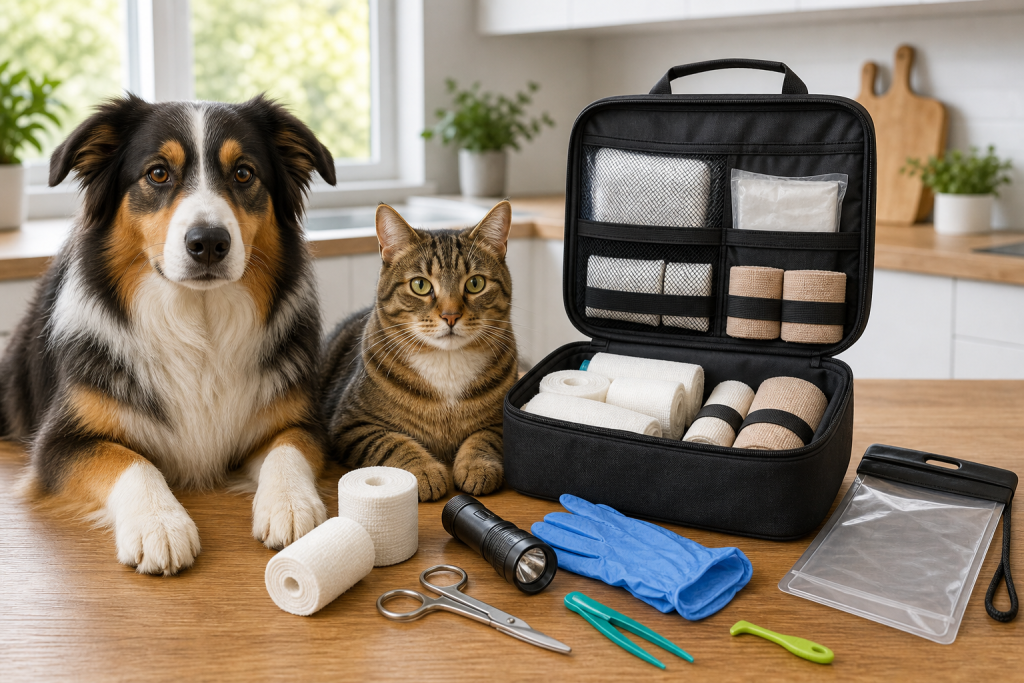
The more useful question is whether the kit covers common practical needs: clean gauze, self-adhering wrap that does not stick to fur, disposable gloves, blunt scissors, tweezers or a tick tool, saline or eye rinse, a digital thermometer, a spare leash, a towel, a waterproof contact card and enough room to add your pet’s records. The American Veterinary Medical Association says many household first aid items can also be used for pets, but the kit still needs pet-specific planning and veterinary follow-up when care is needed.
Ready.gov and the American Red Cross also include a first aid kit as part of broader pet disaster preparation. That is the key distinction: a pet first aid kit handles the immediate supplies you can safely stage, while an evacuation kit also needs food, water, carriers, litter, medications, medical records and current photos.
The Expiration Check Most Shoppers Skip
A sealed pouch can still be stale. The Red Cross notes that many first aid supplies have a shelf life and should be checked for damaged packaging, expiration dates and missing items. That is especially important for saline, antiseptic wipes, cold packs, gloves, tape, bandages and any included topical product.
Before you pay, look for a product page or package photo that shows what is actually inside. If the listing only says “premium emergency supplies” and does not identify the contents, assume you will need to refill or rebuild part of the kit yourself.
For pets, avoid treating any included medication, ointment or chemical product as automatically safe. Keep poison-control and veterinary contact information in the kit, and ask your vet what wound rinse, thermometer type and emergency items make sense for your dog or cat.
What To Verify Before Checkout
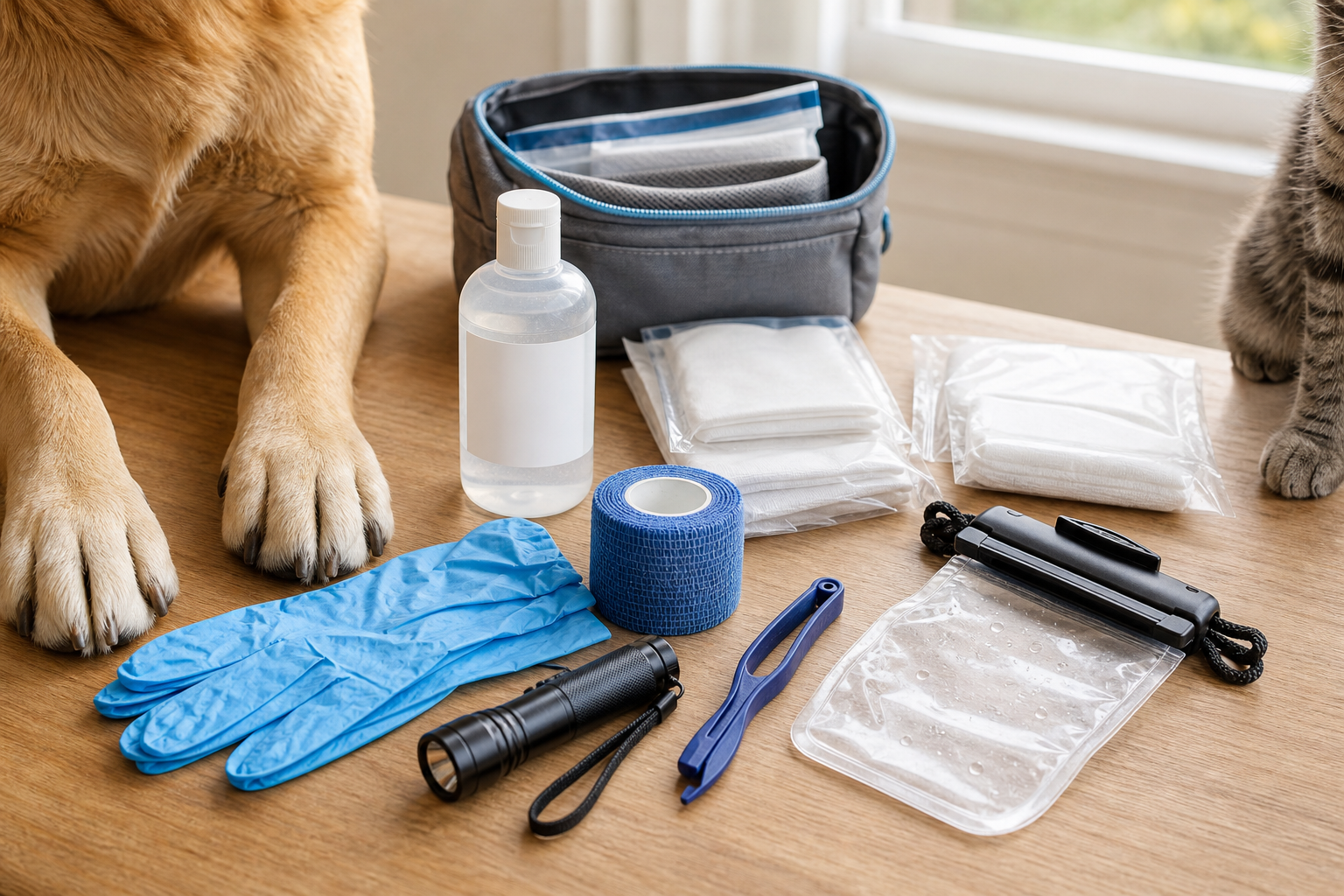
Check the contents list, not only the piece count. A smaller kit with gauze rolls, nonstick pads, gloves, blunt scissors, tweezers, a tick remover and a waterproof pouch may be more useful than a larger kit padded with tiny items.
Look for pet-safe wording where it matters. Bandage wrap, saline, wipes and cleaning products should be appropriate for animals or cleared by your veterinarian. Do not assume a human first aid kit is complete for a dog or cat.
Check the pouch size. A kit that is too small to hold vaccination records, medication notes, emergency phone numbers and a spare leash may be inconvenient in a real trip or storm evacuation.
Watch for single-use gaps. If the kit includes one pair of gloves, one gauze roll or one cold pack, add refills to the cart now. Otherwise the kit can be half-empty after the first minor incident.
Read the return policy. Some medical-style supplies may be harder to return once opened. If the kit arrives with crushed sterile packets, leaking items or missing contents, you want a clear replacement path.
When a Deal Is Actually Useful
A discount is useful when it lowers the cost of a complete, inspectable kit you will keep stocked. It is less useful when the low price hides vague contents, a flimsy zipper pouch, no refill room, no waterproof pocket and no expiration information.
For online deals, compare the kit price against buying the core refill items separately. A prebuilt pouch may still win if it saves time and keeps everything organized. It loses value if you immediately need to buy better scissors, a thermometer, saline, extra gloves and more wrap.
Autoship is rarely necessary for a basic first aid kit, but it can make sense for supplies your household uses often, such as gauze, gloves or pet-safe wipes. Before enrolling, verify the refill interval, cancellation terms, shipping threshold and whether the product is still the same size and count on repeat orders.
What To Avoid
Avoid kits that imply you can handle serious injuries at home. First aid supplies are for stabilizing, cleaning, covering, documenting and getting help, not for replacing a veterinarian.
Avoid loose tablets, unlabeled liquids and mystery ointments in a pet kit. Also avoid relying on adhesive bandages made for human skin as the main bandage solution for a furry leg or paw, because they may not stay where you need them and can be difficult to remove.
Do not store the kit where heat, moisture or curious pets can damage it. A hot car, damp garage or chewable fabric pouch can shorten the life of supplies and make the kit less useful when you finally open it.
A Simple Restock Plan
Open the kit as soon as it arrives. Count the supplies against the listing, remove anything damaged, add your veterinarian’s number and poison-control information, and write a review date on an interior card.
Check it again before hurricane season, road trips, camping weekends and holiday travel. Replace expired or opened items, make sure gloves still fit, confirm the thermometer works and keep medical records in a waterproof sleeve or digital backup.
If your pet has a known condition, takes medication or travels often, ask your veterinarian what to add. That small step can keep a bargain kit from becoming a generic pouch that misses your pet’s actual risks.
Quick Answers
Is a human first aid kit enough for a pet?
It is a useful base, but it is usually not enough by itself. Add pet-specific records, veterinary contacts, a spare leash, pet-appropriate wrap, and any items your veterinarian recommends for your dog or cat.
Should I buy the largest pet first aid kit?
Not automatically. Buy the kit with the clearest contents list, useful refill quantities, durable storage and room for your pet’s documents.
Can first aid kit supplies expire?
Yes. Packaging can be damaged, sterile supplies can age, and liquids or wipes can expire. Check the kit when it arrives and review it regularly.
Does a first aid kit replace emergency veterinary care?
No. It helps you organize supplies and respond calmly while you contact a veterinarian, emergency clinic or poison-control resource when needed.
Sources
- American Veterinary Medical Association, First aid tips for pet owners.
- American Red Cross, Is Your First Aid Kit Expired?.
- American Red Cross, Pet Disaster Preparedness & Recovery.
- Ready.gov, Prepare Your Pets for Disasters.
- California Department of Food and Agriculture, Pet First Aid Kit checklist.
Sources last checked: August 11, 2026, 04:41 CEST, Europe/Rome.