
#dog paw traction
#non-slip dog socks
#senior dog supplies
Non-slip dog socks can be worth buying when your dog is sliding on hardwood, tile or slick stairs, but the cheap set is only a deal if it stays on and puts grip where your dog actually contacts the floor. Before checkout, measure paw width, check whether the grip wraps around the sock, and plan a low-slip route with rugs or runners too. If slipping is new, frequent or paired with pain, weakness or reluctance to move, treat the socks as support gear and ask your vet what else is going on.
Why This Small Deal Matters Now
Late summer and early fall are when many owners start reworking indoor routines: dogs spend more time inside during storms, heat, school schedules and colder mornings, while retailers keep pushing paw protectors, boots and traction socks as simple add-ons. Current shopping pages and recent dog-sock reviews show the same pattern: the products are easy to buy quickly, but the details that decide whether they help are fit, grip placement and how your dog moves on your actual floor.
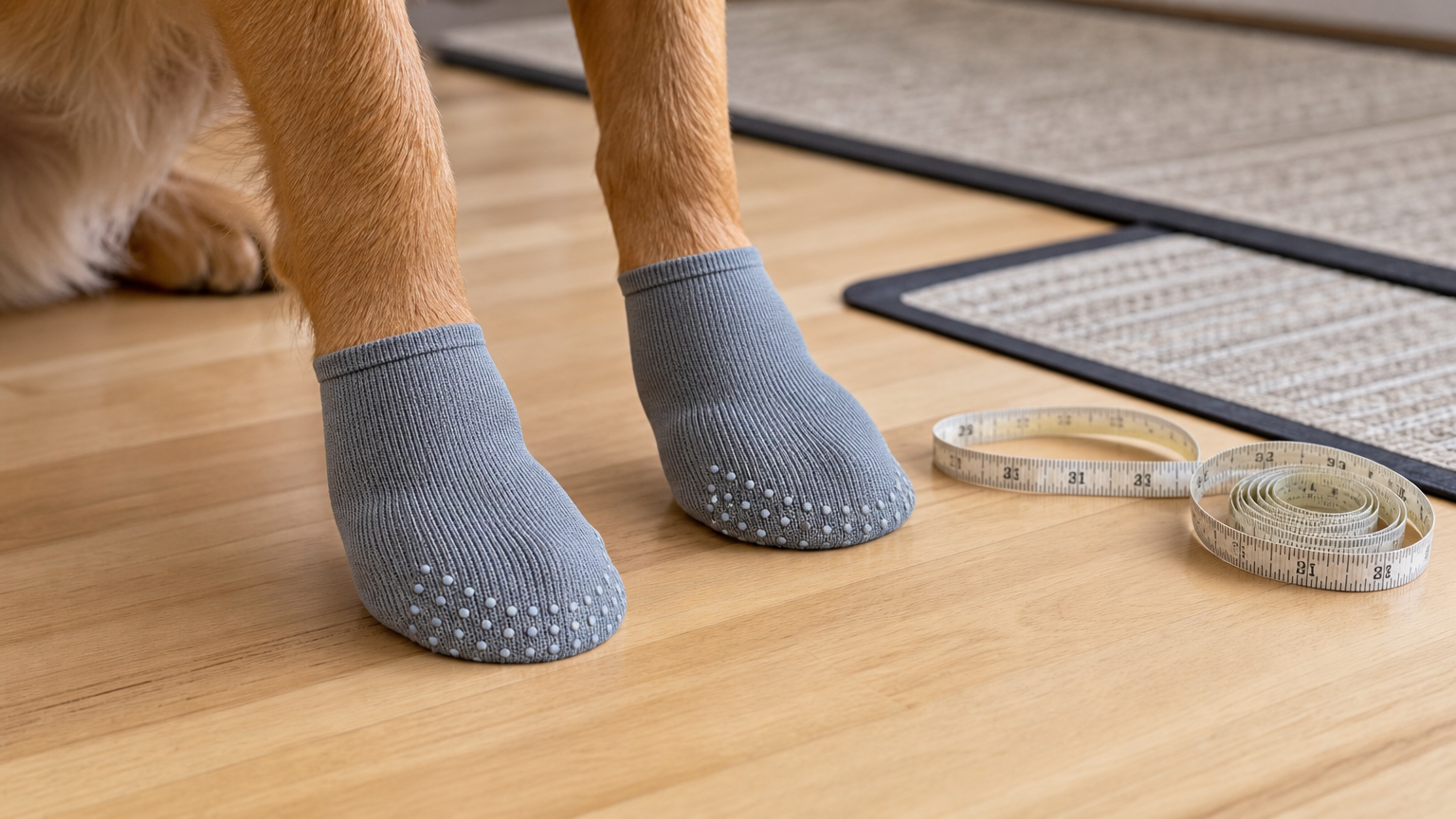
The problem is that “non-slip” can mean several different things. Some socks have small dots only on one side. Some have rubber tread that wraps farther around the paw. Some rely on a strap that may help the sock stay up, but can rub if it is too tight. For a senior dog or a dog recovering from an injury, the difference between those designs matters more than the sale badge.
The Fit Check Most Owners Skip
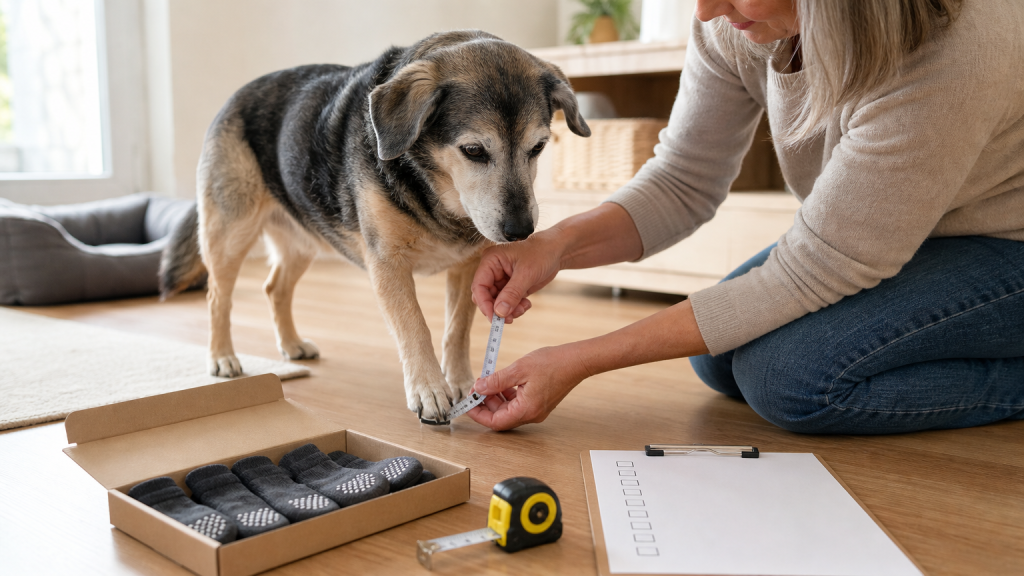
Do not buy dog socks by breed name or body weight alone. Measure the paw your dog puts on the floor, usually the width across the pads while standing, because paws spread under weight. Many dogs also have wider front paws than rear paws, so a four-pack in one size may fit only half the dog well.
Look for a size chart that gives actual paw width, not just “small,” “medium” and “large.” If your dog is between sizes, read the return rules before you guess. A sock that twists, slides down or bunches at the toes can remove the very traction you paid for.
- Measure while your dog is standing, not while the paw is lifted.
- Check whether the product is sold in pairs or sets of four.
- Look for grip on more than one side if your dog twists socks while walking.
- Check the closure style, especially if your dog has thin ankles or thick fur.
- Confirm the sock is meant for indoor floors if your main problem is hardwood or tile.
What Non-Slip Socks Can And Cannot Do
Dog socks can add friction between the paw and the floor, and that can help some dogs feel steadier on smooth surfaces. They are not a cure for arthritis, nerve problems, injury, overgrown nails or weak muscles. The Dog Aging Project’s mobility advice starts with home traction such as rugs and mats because the surface itself often needs to change, not just the dog’s feet.
That is why the cheapest sock bundle can still be the wrong first purchase. If your dog only slips in one hallway, a washable runner with a real non-slip backing may help more than wearable gear. If your dog slips while rising, hesitates on stairs, drags toes or seems painful, a vet visit is more important than trying every traction gadget in the cart.
Deal Math: Count Replacements, Not Just Pairs
A low price per pair is not automatically better. Grippy dots wear down, socks get wet near water bowls, straps lose stretch and dogs sometimes chew or lose one sock at a time. A bargain set that needs replacing every few weeks can cost more than a sturdier product, or more than a few well-placed floor runners.
Before paying, compare:
- Grip layout: dots on one side may fail if the sock rotates.
- Wash rules: machine-washable is useful only if the grip survives washing.
- Replacement access: check whether you can buy the same size again later.
- Return window: your dog may need several short sessions before fit problems are obvious.
- Floor plan: socks for one room may not beat rugs for the whole route to food, water and the door.
When Boots, Rugs Or Paw Care Make More Sense
Outdoor dog boots and indoor traction socks solve different problems. AKC guidance on dog boots focuses on matching the boot to conditions such as hot pavement, snow, ice, rain or rough terrain. Indoor socks are lighter and easier for some dogs to tolerate, but they are usually less protective outside and can become slippery or uncomfortable if wet.
For winter salt, ice and cold, boots or paw protection may be useful for some dogs. ASPCA cold-weather guidance says booties can provide more paw coverage and help keep sand and salt from lodging between toes. Indoors, however, the first upgrade may be simpler: trim excess paw fur, keep nails at an appropriate length with professional help if needed, and cover the slick path with stable mats.
What To Avoid
Avoid any listing that makes traction socks sound like a medical fix. They can be a practical aid, but they should not be used to dismiss pain, sudden weakness or repeated falls. Also avoid tight closures that leave marks, thick socks that change your dog’s gait, and products with vague sizing charts.
Be cautious with scented, heavily dyed or novelty socks if your dog licks paws or has sensitive skin. If a sock gets damp, dirty or twisted, remove it and check the paw. For dogs who chew fabric, unattended wear can turn a traction aid into a chewing problem.
Checkout Checklist
- Measure front and rear paws separately.
- Choose indoor socks for floors, outdoor boots for weather and rough ground.
- Prefer grip that still contacts the floor if the sock rotates slightly.
- Check return terms before opening every pair.
- Buy one test set before stocking up.
- Add rugs or runners on the routes your dog uses most.
- Ask your vet about persistent slipping, limping, pain or sudden mobility changes.
Coupon And Sale Checks
If you see a multi-pack discount, confirm whether all pairs are the same size. That matters for dogs with different front and rear paw measurements. Check the seller name, shipping time and return rules too, especially on marketplace listings where the same photos can appear across many similar products.
Do not let an auto-applied coupon rush the decision. The real deal is the set your dog can wear comfortably after a short introduction, not the listing with the biggest percentage badge. If the product has a strap, inspect it indoors before removing tags or packaging you may need for a return.
Quick Answers
Are non-slip dog socks good for senior dogs?
They can help some senior dogs on slick indoor floors, but they work best as part of a wider plan that may include rugs, nail care, paw-fur trimming and veterinary guidance.
Should my dog wear traction socks all day?
Only if the product is designed for longer indoor wear and your dog tolerates it. Remove socks regularly to check for rubbing, dampness, twisting or chewing.
Are dog socks better than dog boots?
For indoor hardwood or tile, socks may be easier and lighter. For snow, ice, hot pavement or rough trails, properly fitted boots are usually the more relevant product.
What if my dog keeps slipping even with socks?
Stop treating it as a shopping problem only. Persistent slipping can reflect pain, weakness, nail length, paw fur, floor layout or another health issue, so ask your vet.
Sources
- Dog Aging Project: Mobility Tips and Tricks for Senior Dogs
- ASPCA: Cold Weather Safety Tips
- American Kennel Club: Best Dog Boots for Any Weather
- DOK Family: TigerToes Non-Slip Dog Socks, used only as an example of paw-width sizing and grip-position claims
Sources last checked: August 30, 2026, 04:37 CEST, Europe/Rome.