
#community cats
#outdoor cat shelters
#winter cat supplies
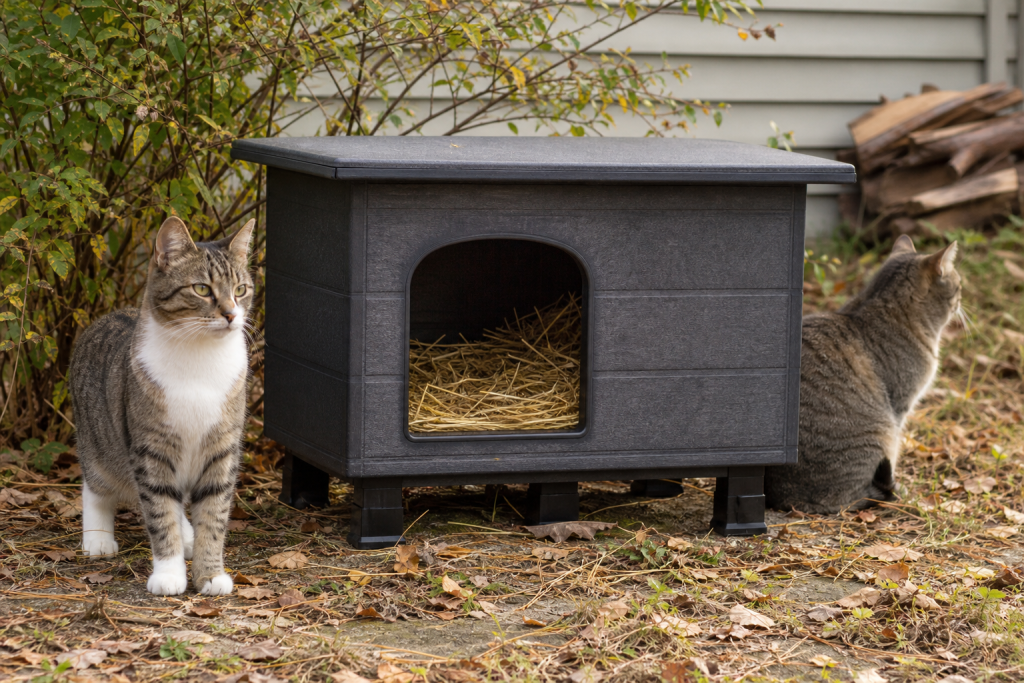
A cheap outdoor cat shelter can fail fast if it is too roomy, sits flat on wet ground or gets packed with blankets instead of dry straw. For community cats and indoor-outdoor cats that spend time outside, the better buy is a small, insulated, weather-resistant shelter that stays dry, blocks wind and can be cleaned or rebedded before winter weather settles in.
The mistake matters now because fall is when outdoor shelters start selling as “winter cat houses,” “feral cat shelters” or “heated cat houses.” The label can make almost anything look useful, but the details decide whether the shelter holds warmth or turns into a damp box.
Why The Blanket Is The Trap
Blankets look cozy in a product photo, but they can absorb moisture and hold cold against a cat. ASPCApro’s winter shelter guidance tells caregivers to line shelters with straw, not hay or blankets, because straw helps cats burrow and stay dry. Humane World for Animals makes the same bedding point in its outdoor-paws fact sheet: straw is the bedding material to use, while towels and blankets can become cold and wet.
That changes the way you should shop. A shelter that includes a plush pad may still be fine as an indoor hideaway, but it is not automatically the right outdoor winter setup. Before you pay extra for a “fleece-lined” or “plush” version, check whether the lining is removable, whether the shelter can accept loose straw and whether the floor will stay above damp ground.
The Shelter Size Check Most Buyers Skip
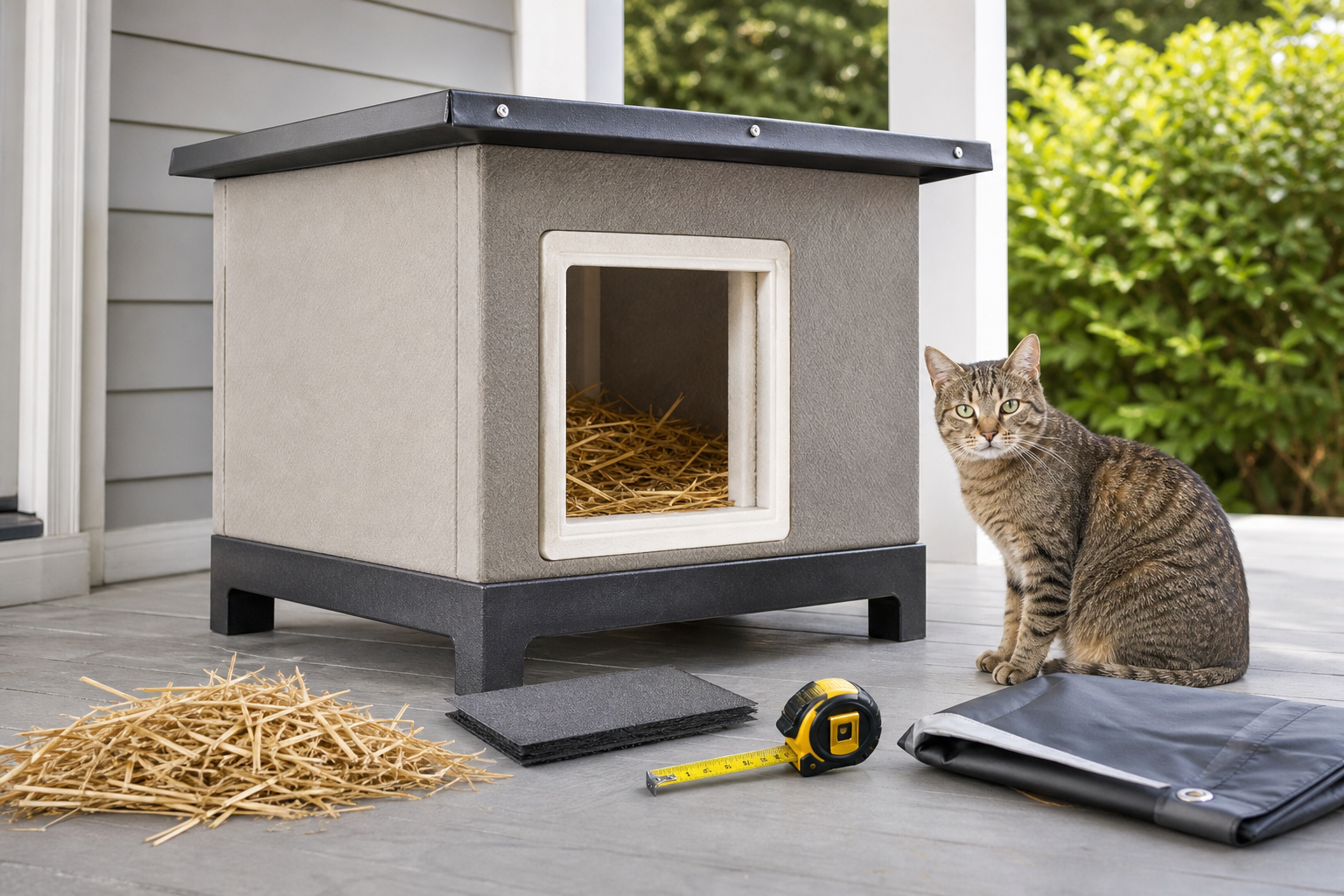
Bigger is not always better. ASPCApro says a shelter should be large enough for a few cats but small enough to conserve body heat. That is the opposite of how many shoppers judge a deal, because a larger box can look like more value in the cart.
Before checkout, look for the inside dimensions, not just the outside footprint. A shelter for one or two cats should let them turn around and settle without leaving a huge empty air space. If you care for multiple cats, two smaller shelters may work better than one oversized house that none of them can keep warm.
What To Check Before Buying
- Elevation: the shelter should sit off the cold, wet ground or be easy to place on a stable riser.
- Water resistance: check roof seams, floor design and whether rain can blow into the entrance.
- Entrance size: the opening should be cat-sized, not a wide dog-house doorway that dumps heat.
- Escape option: if your area has predators or aggressive animals, consider whether a second exit is safer.
- Bedding space: make sure you can add and replace dry straw without dismantling the shelter.
- Cleaning: removable roofs or panels are useful because wet bedding needs to come out quickly.
- Location: confirm you have a sheltered spot away from puddles, snow melt and foot traffic before buying.
If a listing does not show interior dimensions, entrance size or floor details, treat that as a real checkout problem. A coupon cannot fix a shelter that is too exposed, too flimsy or too hard to clean.
Heated Cat Houses Need A Different Standard
Some outdoor cat houses add an electric pad. That can make the listing look more premium, but it also adds cord placement, outlet protection, weather exposure and chewing concerns. If you are buying anything powered, read the manufacturer instructions before use and do not improvise with indoor-only pads or extension-cord setups in wet areas.
For this article, the safer default shopping frame is a non-heated insulated shelter with dry straw. If a cat is old, sick, injured, very young or struggling in cold weather, do not treat a shelter purchase as veterinary care. Ask a vet, shelter group or local rescue for help with that specific cat.
Deal And Coupon Checks
Outdoor cat shelters often look discounted in fall and early winter, but the real cost is not just the box. Add the bedding, riser, weatherproofing supplies, replacement straw and any return shipping before deciding whether the deal works.
- Check whether the coupon excludes outdoor houses, heated items, marketplace sellers or oversized shipping.
- Compare the delivered price, not only the sale badge.
- Read the return policy before assembling the shelter or using it outside.
- Avoid buying a shelter so late that you cannot test placement before the first cold rain or freeze.
- If you care for community cats, ask a local TNR or rescue group whether they already recommend a tested shelter style.
What To Avoid
Avoid shelters sold mainly on cute photos, plush bedding or oversized “mansion” language. Avoid cardboard or fabric products that cannot handle weather unless they are clearly meant for a protected porch or temporary setup. Avoid loose heating hacks, uncovered cords and products that require you to cut, tape or modify the structure before it is weather safe.
Also avoid assuming that food and water placement is solved by the shelter itself. Food can attract wildlife, and water can spill into bedding if it is too close. Keep the sleeping area dry and follow local rescue guidance for feeding stations.
Quick Answers
Is straw better than a blanket in an outdoor cat shelter?
Yes, for cold outdoor shelter bedding, straw is the safer shopping default because it helps cats nest and does not hold moisture like towels or blankets. Replace it when it gets damp or dirty.
Should I buy the biggest shelter on sale?
Not automatically. A shelter that is too large can lose body heat. Check interior dimensions and consider multiple smaller shelters for multiple cats.
Is a heated outdoor cat house worth it?
Only if the product is rated and installed for the conditions where you will use it, and you can manage cords, weather exposure and instructions safely. A non-powered insulated shelter with dry straw is often the simpler first buy.
Sources
Sources last checked: October 12, 2026, 07:34 CEST, Europe/Rome.