
#cat stroller
#dog stroller
#pet deals
#pet stroller
#pet travel
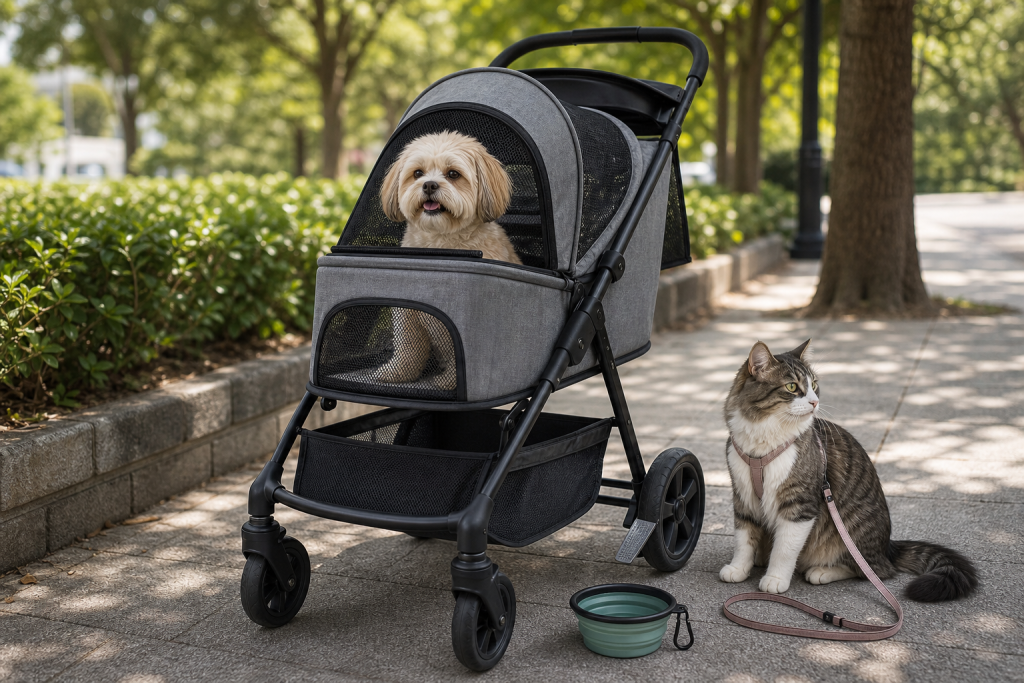
A pet stroller deal fails when the stroller is cheap but too cramped, flimsy or hard to return once your dog or cat refuses it. Before paying, check the usable cabin space, wheel type, brake, ventilation, tether, folded size and return window, not just the headline weight limit.
Strollers are getting more attention because summer travel, senior-pet mobility and city errands all make owners look for ways to bring pets along without carrying them. Used well, a stroller can help a small, older or mobility-limited pet enjoy sights and smells without a long walk. Used badly, it becomes an awkward cart that tips, traps heat, takes up the whole trunk or sits unused after one test ride.
Why This Matters Now
Summer is when more owners are planning short trips, outdoor markets, vet visits, grooming appointments and pet-friendly weekends. Rover’s 2026 summer travel survey says many pet parents still expect to travel while adjusting plans around cost and their pets’ needs. CDC travel guidance also stresses planning ahead, proper identification, water, ventilation and safe restraint when pets are on the move.
That context makes the stroller aisle tempting. A stroller can be useful for a senior dog, a small dog that tires quickly, a cat that needs a calmer ride to the vet or a pet recovering under veterinary guidance. It is not automatically a safer or better purchase than a carrier, harness, crate or short walk.
The Fit Check Most Shoppers Skip
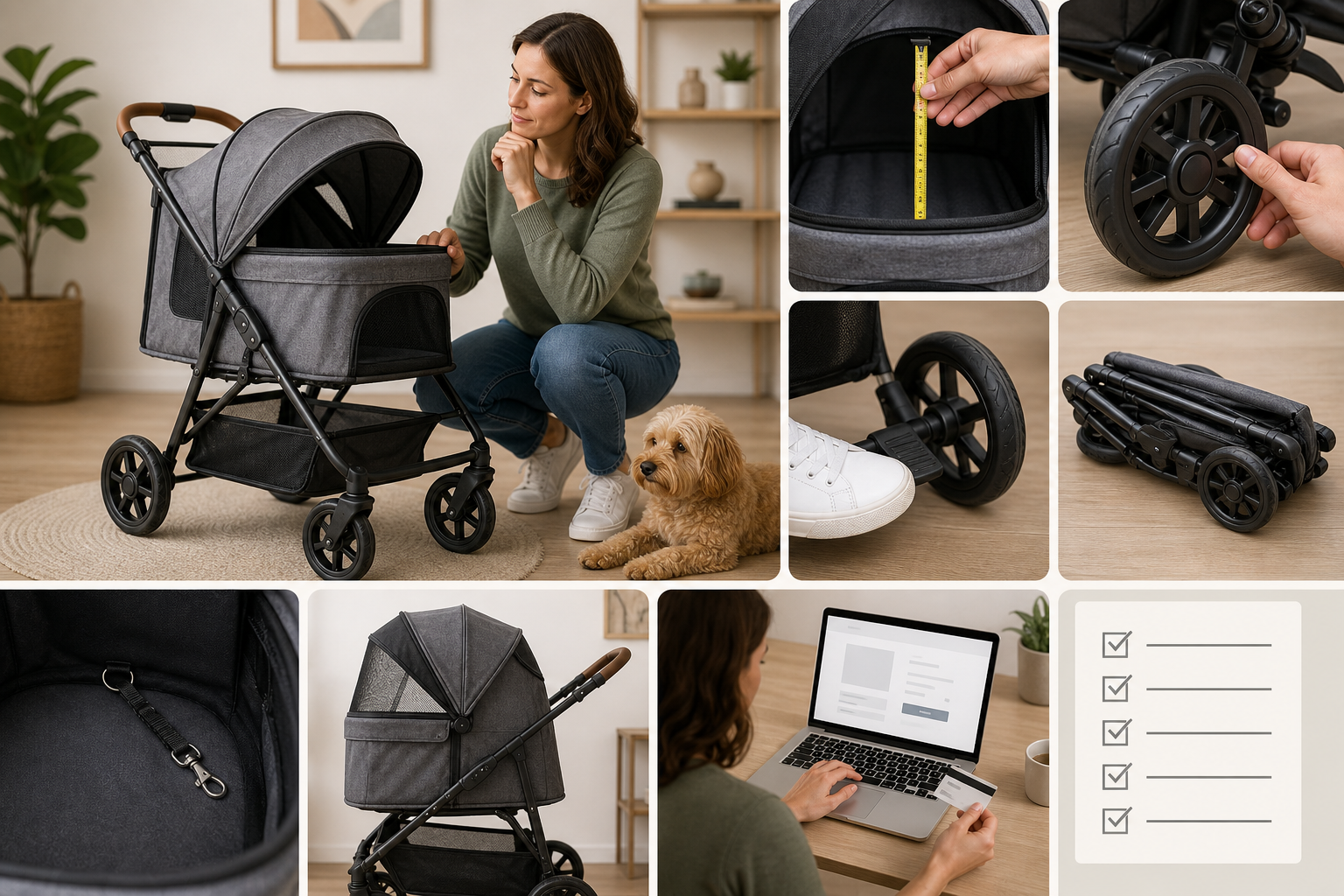
The weight rating is only the start. Your pet also needs enough usable room to sit, lie down and turn around. AKC’s stroller guidance makes the crate comparison clear: if the cabin works like a crate on wheels, the pet still needs real space inside it.
Measure your pet’s length, standing height and comfortable lying position. Then compare those numbers with the interior cabin dimensions, not the box dimensions or the outside frame. If the product page gives only a weight limit and no interior measurements, treat that as a reason to pause.
What To Verify Before Checkout
- Cabin size: Check interior length, height and width, especially for long-bodied dogs, chunky cats and pets that need to lie flat.
- Wheels: Small plastic wheels may be fine for smooth store floors. Uneven sidewalks, grass, gravel and curbs usually need sturdier wheels.
- Brake: Look for a clear parking brake and read the manual language. A stroller that rolls while you load a pet is a bad deal at any price.
- Ventilation and shade: Mesh airflow and a canopy matter in warm weather. A dark, poorly ventilated cabin can heat up fast.
- Internal tether: A short tether or ring can help keep a harnessed pet from jumping out, but it should not attach to a collar or replace supervision.
- Folded size: Check whether it fits your trunk, hallway, apartment storage or public-transit routine.
- Cleaning: Removable pads and wipeable fabric matter if the stroller will be used after grooming, beach trips or vet visits.
- Return terms: Big, assembled gear can be awkward to return. Confirm the window, packaging requirements and whether store return or mail return is available.
The Deal Section: When A Discount Is Actually Useful
A stroller discount is useful only if it lowers the price on a model that fits your pet and your real route. A bigger markdown on a no-name stroller with vague dimensions, no manual, weak wheels or unclear returns can cost more than buying a simpler carrier or waiting for a sturdier model.
Before using a coupon, check whether shipping wipes out the savings. Large pet gear can also trigger oversize handling, slower delivery or return friction. Retailer policies change, so verify the current terms in the cart instead of assuming a pet-supply return will be simple after assembly.
What To Avoid
Avoid buying a stroller because a social video makes it look cute. Avoid models that show only posed photos and hide the cabin measurements. Avoid using a stroller as a substitute for all walking if your pet can still move comfortably, because gentle movement and sniffing can be valuable enrichment.
Also avoid forcing a nervous pet into a stroller for a long outing on day one. Start with short, calm introductions at home. If your pet has pain, breathing problems, panic, recent surgery or a sudden mobility change, ask your veterinarian before changing their routine or relying on a stroller for outings.
Quick Answers
Are pet strollers only for small dogs?
No, but small dogs and cats are usually easier to fit safely. Larger pets need stronger frames, larger cabins and better wheels, and many common strollers will be too cramped.
Can a cat use a pet stroller?
Some cats can, especially if they are already comfortable with carriers and harnesses. Use an enclosed, well-ventilated cabin and introduce it slowly indoors before any public outing.
Is a pet stroller safer than a carrier?
Not automatically. A stroller can help with longer errands, but a carrier may be better for cars, clinics, stairs, flights and crowded spaces. Match the product to the trip.
Should I buy the cheapest stroller first?
Only if it still has the right fit, brake, ventilation, wheels and return terms. The cheapest stroller is expensive if your pet cannot use it comfortably.
Sources
- American Kennel Club, “Strollers for Dogs: Everything You Need to Know”, published September 17, 2024.
- CDC, “Pet Travel Safety”, updated April 15, 2026.
- Rover, “New Rover Data Reveals Pet Parents Will Stay Closer to Home and Forgo Luxury Travel this Summer”, May 5, 2026.
- Pet Gear product manual, stroller safety and use instructions, accessed June 1, 2026.
- Chewy return policy, accessed June 1, 2026.
- Petco return policy, accessed June 1, 2026.
- U.S. Consumer Product Safety Commission recalls and product safety warnings page, accessed June 1, 2026.
Sources last checked: June 1, 2026, 19:31 Europe/Rome.