
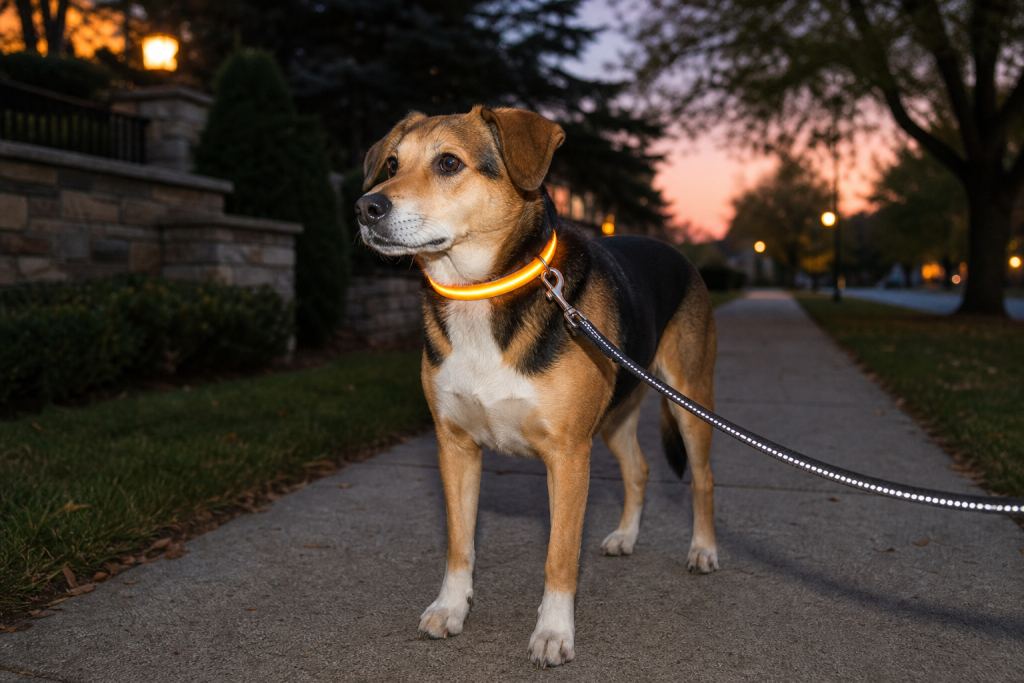
#dog safety gear
#LED dog collar
#light up dog collar
#night dog walking
#pet tech
A cheap LED dog collar is only a good deal if it stays visible for your whole walk, fits safely and has a battery setup your dog cannot chew open. Before checkout, compare runtime, charging, water resistance, brightness modes, return terms and whether the collar is visibility gear only, not your dog’s main restraint.
That matters more right now because summer schedules push many dog walks earlier in the morning or later after sunset. Prime Day and seasonal pet sales can make light-up collars look like an easy add-on, but the cheapest option can go dim, rub the neck, vanish under thick fur or fail after rain.
Why LED collar deals are showing up now
Night visibility is not just a winter problem. Hot pavement, high daytime temperatures and travel routines often move dog walks into dusk, dawn or campground hours. The National Highway Traffic Safety Administration tells pedestrians and drivers to use extra caution at night or in bad weather because pedestrians can be harder to see.
For dog owners, that creates a practical shopping question: should you buy a glowing collar, a clip-on light, a reflective leash, a reflective harness or a full smart collar with an app-controlled light? The right answer depends on your dog, your walking route and whether the product is a visibility aid or a real collar you would trust with leash pressure.
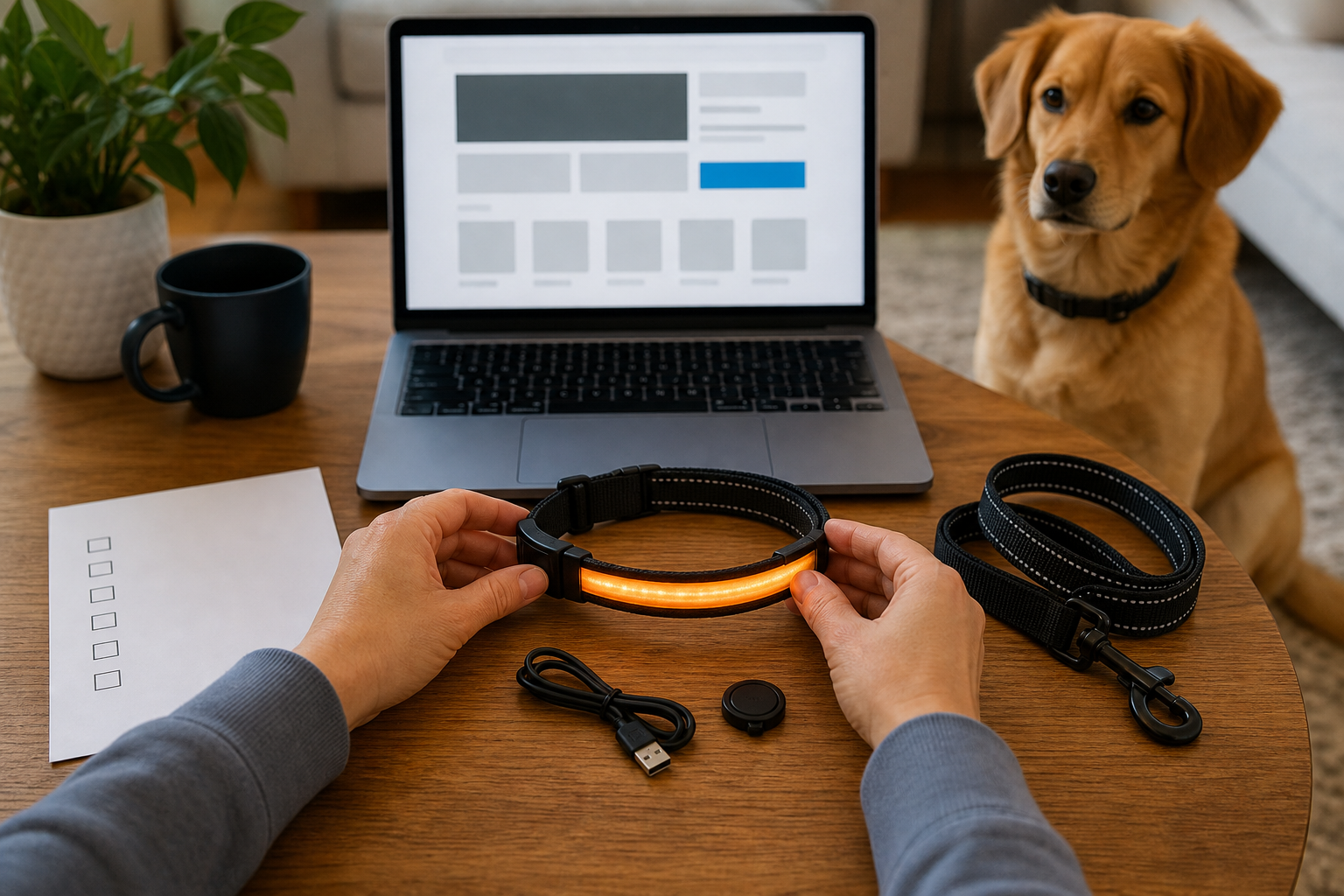
The checkout checks that matter most
Start with the job you need the collar to do. If your dog already wears a secure walking harness, the LED collar can be a lightweight visibility band. If you plan to attach the leash to it, check the buckle, D-ring, width and material like you would with any everyday collar. Many glowing collars are better treated as lights, not as primary walking restraints.
Then check visibility from more than one angle. A small clip-on light can disappear when the dog turns away. A full ring or wide illuminated strip may give better side visibility, but it can also hide under a thick coat. Long-haired dogs may need a lighted harness, reflective vest or leash light instead of a collar-only solution.
Battery design is a real safety and value issue. If the product uses button or coin batteries, look for a secured battery compartment and clear compliance information. The U.S. Consumer Product Safety Commission warns that products with accessible button or coin batteries can create serious ingestion hazards, and its battery guidance explains that consumer products with these batteries have performance and labeling requirements.
Rechargeable collars avoid loose disposable cells, but they introduce a different checklist. Confirm the charging port cover, cable type, expected runtime, charge time and whether the collar still works if the proprietary cable is lost. A sale price is weaker if replacement cables, light modules or battery parts are hard to find.
Do not buy brightness alone
Very bright is not automatically better. A steady, visible glow is usually more useful for neighborhood walks than an aggressive strobe that distracts you, annoys the dog or makes distance harder to judge. If your dog has eye problems, seizure history or unusual sensitivity to flashing lights, ask your veterinarian before using flashing or high-intensity modes.
Also compare weather claims carefully. “Water resistant” may mean splash protection, not swimming, heavy rain or muddy trail use. If your dog loves puddles or camping trips, check whether the collar can be rinsed, whether the charging port seals tightly and whether the warranty excludes water damage.
The deal and coupon section: what to verify before paying
Do not treat a glowing collar as a throwaway cart filler if it is meant for safety. Before using a coupon, check the final cart price against these costs:
- extra batteries, if the collar is not rechargeable;
- replacement charging cable or module availability;
- shipping cost for a low-priced accessory;
- return window after you test fit and brightness at home;
- whether sale items, marketplace sellers or opened pet accessories have different return rules.
For retailer purchases, read the current return policy instead of assuming all pet accessories are handled the same way. Petco’s return page says purchases can generally be returned within its stated window but also notes that Petco can limit returns. Chewy’s return policy is customer-friendly in many cases, but you should still verify the current terms for the exact seller and item before relying on a return.
For Amazon or marketplace listings, be more cautious with unknown brands. A low price is not useful if the listing gives no battery-compartment detail, no size range, no waterproof rating, no real support contact and no return path after the first charge.
What to avoid
Avoid collars that use tiny accessible batteries without a secured compartment. Avoid collars with vague size charts, especially for puppies, deep-chested dogs, thick-coated dogs or dogs between sizes. Avoid attaching a strong puller directly to a novelty-style light collar unless the hardware is clearly built for leash use.
Do not rely on an LED collar as your only safety layer. A reflective leash, ID tag, microchip registration, a normal collar or harness and a route away from heavy traffic still matter. NHTSA pedestrian guidance is about the person on the road too, so make yourself visible with a light or reflective clothing instead of lighting only the dog.
When the pricier collar is the better deal
Paying more can make sense if the collar gives a safer fit, a visible light pattern, stronger weather protection, a replaceable charging cable and a clear warranty. It can also make sense if a lighted harness works better for your dog’s coat than a collar. Paying more does not make sense if the product adds app features you will not use, locks basic functions behind a subscription or replaces a secure walking setup with weaker hardware.
If you are comparing a simple LED collar with a smart collar that has GPS, activity tracking or app-controlled lights, separate the visibility decision from the tracking decision. GPS trackers and smart collars have their own coverage, battery, subscription, privacy and software-support checks. Do not pay for a full smart collar just because you needed your black dog to be easier to see at dusk.
FAQ
Is an LED collar better than a reflective collar?
They solve different problems. Reflective gear needs a light source, such as headlights, to bounce light back. LED gear emits its own light, but it still needs good fit, battery life and safe hardware. Many dogs benefit from both.
Can my dog wear an LED collar all day?
Usually it is better to use it for walks or supervised outdoor time only, unless the product is clearly designed as an everyday collar. Remove it if your dog chews collars, if it rubs the neck or if the battery housing becomes loose.
Should the leash attach to the LED collar?
Only if the collar hardware is designed for leash pressure and fits your dog correctly. Many owners are better off clipping the leash to a normal harness or collar and using the LED collar only for visibility.
What is the biggest buying mistake?
Buying the cheapest glowing collar without checking battery access, fit and runtime. Those details decide whether the deal helps on real walks or becomes another dead accessory in a drawer.
Sources
Sources last checked June 7, 2026, 13:35 Europe/Rome.
- National Highway Traffic Safety Administration, Pedestrian Safety
- NHTSA, night walking visibility guidance
- U.S. Consumer Product Safety Commission, Button Cell and Coin Battery Information Center
- CPSC, Button Cell and Coin Battery FAQs
- American Kennel Club sponsored article, LED collar visibility example
- Amazon, Prime Day 2026 dates
- Petco Return Policy
- Chewy Return Policy