
#cat litter
#cat litter mat
#cat supplies
#litter tracking
#pet deals
A cat litter mat deal can still leave grit on your floor if the mat is too small, too rough for your cat, or too hard to clean once litter and urine get into the grooves. The useful purchase is not the thickest or cheapest mat. It is the one your cat will actually walk across, that fits the exit path from the box, and that you can wash before trapped odor becomes the next problem.
That matters now because cat litter and litter-box accessories are regular add-ons in summer sales, Autoship carts and early Prime Day-style shopping. A mat looks like a low-risk extra, but a bad one can create a new cleaning chore or make a sensitive cat jump over the mat completely.
Why the cheap mat can fail
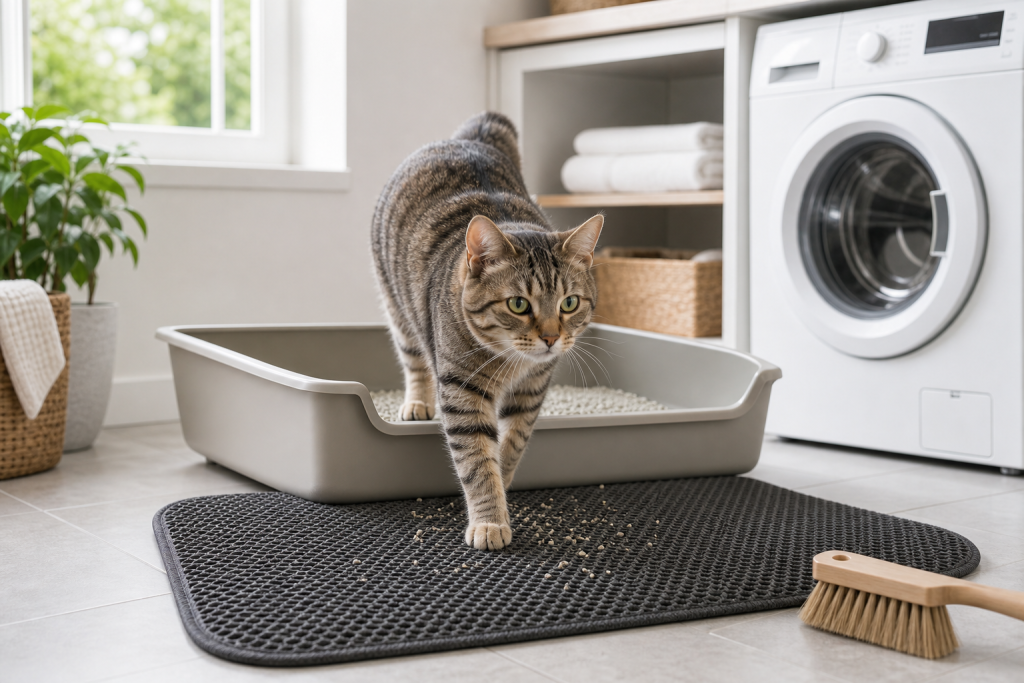
Most litter mats promise to trap scatter, but tracking is not one problem. Some cats kick litter out of the box. Others carry granules in their paws. A covered box, high-sided box, low doorway, automatic litter box ramp or tight laundry-room corner can also change where the litter lands.
That means a tiny mat in front of a large box may catch only the first step. A deep honeycomb mat may trap more granules, but it can be annoying if your cat dislikes the feel underfoot. A plush mat may feel better, but it can hold damp messes and odor if it is not washable enough for your setup.
Check the exit path before checkout
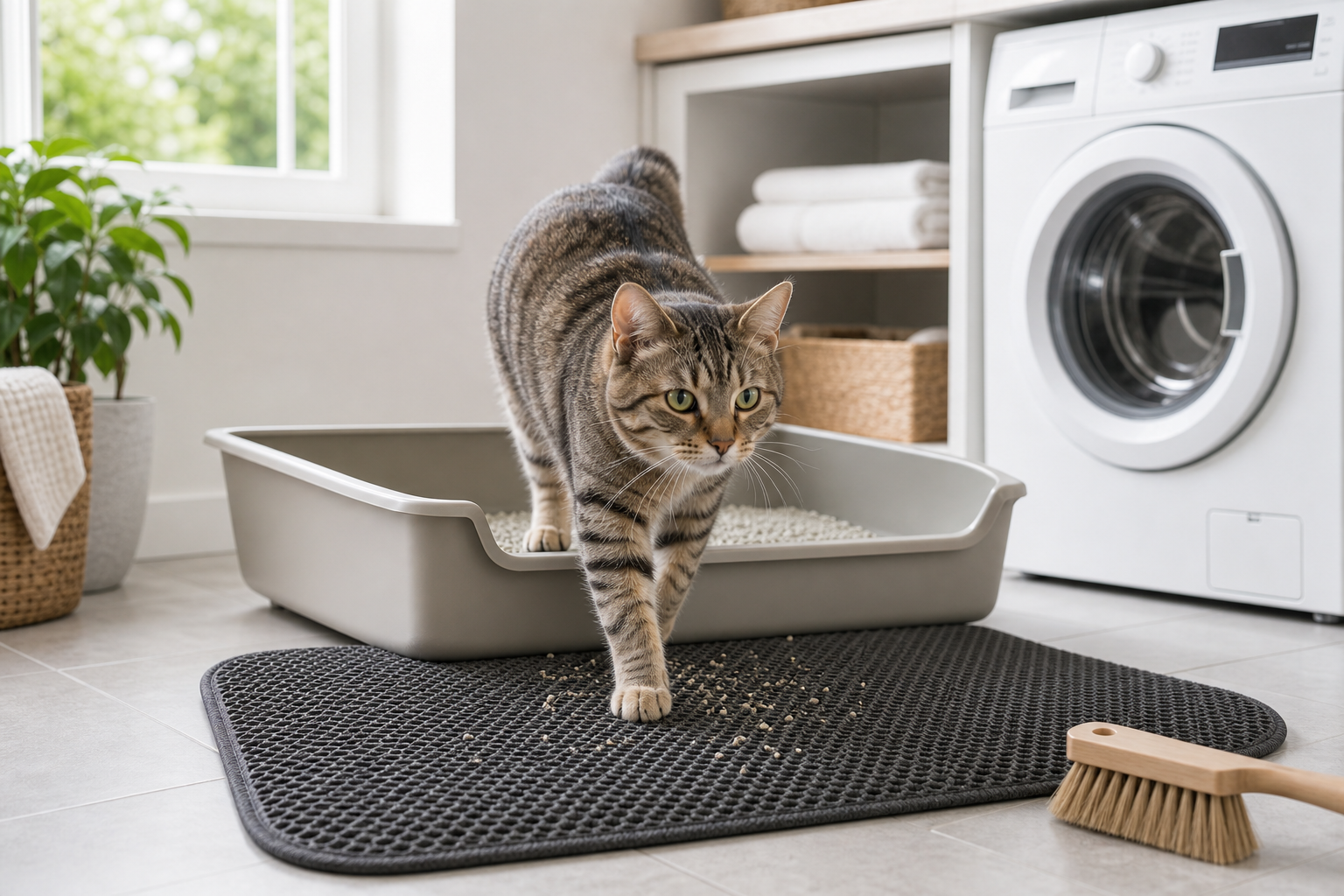
Measure the litter box, then watch how your cat leaves it. If your cat turns sideways, jumps out the back, exits from an automatic litter box ramp or steps around a mat now, a narrow rectangle may not solve the mess.
For most homes, the better buy is a mat that covers the real landing area and still lets the cat approach the box comfortably. If the box sits in a corner, make sure the mat does not block the only easy path in or out. Cornell notes that cats can avoid the box because of the box, the litter or the location, so a mat that changes the feel or access around the box should be treated as part of the litter-box setup, not just a floor protector.
Texture matters more than the product photo
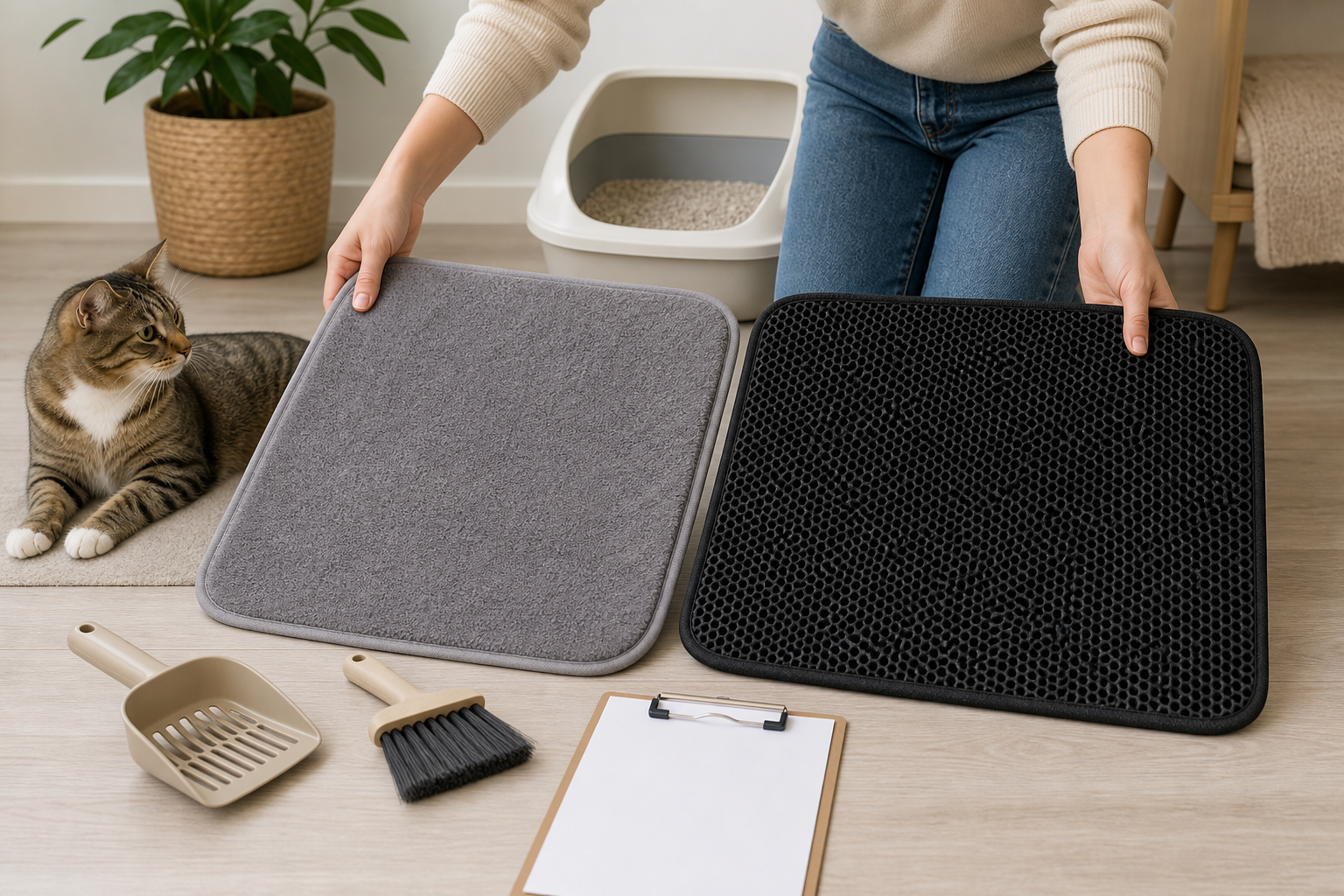
Before buying a multipack or oversized mat, check the surface with your cat in mind:
- Honeycomb or double-layer mats: Often good at catching granules, but harder to empty and wash thoroughly.
- Rubber or silicone-style mats: Usually easy to wipe, but some litter types can cling to smooth or tacky surfaces.
- Mesh or ribbed mats: Can be a middle ground if the surface is not sharp or stiff.
- Fabric or microfiber mats: Softer for paws, but only a deal if they wash and dry easily.
If your cat is elderly, declawed, recovering from a procedure, arthritic, very small or picky about surfaces, prioritize a gentle, low-profile mat and ask your vet if litter-box access changes are part of a broader mobility or elimination concern.
The cleaning test shoppers skip
A litter mat that catches everything is not useful if it is miserable to empty. Look for the cleaning method before you buy: shake out, vacuum, rinse, hose, scrub, machine wash or wipe clean. Then match that to where you live. A huge mat that needs outdoor hosing is less practical in an apartment with no outdoor drain.
If your cat sometimes urinates over the edge of the box, do not buy a mat based only on litter-trapping claims. You need to know whether the backing is waterproof, whether liquid can get between layers, and whether the mat can be cleaned with an appropriate cleaner. Cornell advises neutralizing odors rather than only deodorizing so cats do not keep returning to marked areas.
When a deal is actually useful
A litter mat deal is worth considering when the listing clearly shows dimensions, thickness, material, cleaning instructions and return terms. It is also better when the mat is large enough for your box without forcing the cat to squeeze between walls, doors or appliances.
Before paying, verify these details:
- The exact size, not just “large” or “jumbo.”
- Whether the mat works with your litter type, especially pellets, crystals, tofu, clay or lightweight litter.
- Whether the mat can be washed after urine, hairballs or damp litter.
- Whether the texture is soft enough for your cat’s paws.
- Whether the seller allows returns after the package is opened.
- Whether a multi-pack gives you usable placement options or just extra clutter.
Coupon and shipping checks
Litter mats are often added to a cart to reach a free-shipping threshold or qualify for a pet-supply coupon. That can be smart if you already need the mat. It is not a saving if the mat is the wrong size, has a texture your cat avoids, or costs almost as much to return as it did to buy.
Check whether the coupon excludes marketplace sellers, whether the sale price applies to the size you need, and whether the return window covers opened pet accessories. For Autoship or recurring-cart promotions, make sure you are not subscribing to litter or supplies just to discount a one-time mat.
What to avoid
Avoid mats with vague sizing, strong chemical odor complaints, sharp-feeling ridges, impossible-to-clean pockets or photos that hide the actual thickness. Skip any mat that forces a cat to climb, squeeze or jump in a way that is harder than the current setup.
Also avoid treating a mat as the fix for every litter-box problem. The ASPCA points to basic setup issues such as box cleanliness, box size, access and litter depth. Ohio State’s Indoor Pet Initiative also emphasizes large, accessible litter boxes. If a cat starts avoiding the box, urinating outside it or suddenly changes elimination habits, treat that as a reason to contact a veterinarian rather than a reason to keep buying accessories.
Quick answers
Are honeycomb litter mats better?
They can trap loose granules well, but they are only better if your cat will walk on them and you can clean the trapped litter and moisture out of the layers.
Can I use a bath mat instead?
Sometimes, especially if your cat prefers soft surfaces and the mat washes easily. It may not trap litter as well as a purpose-made mat, and it should not hold odor near the box.
Should the mat go under the litter box?
Only if it does not make the box unstable or harder to enter. Many cats need the mat mainly at the exit path, not buried under the entire box.
What if my cat jumps over the mat?
Try a softer texture, a wider placement area or a different box location. If avoidance appears with other litter-box changes, ask your vet or a qualified behavior professional for guidance.
Sources
Sources last checked June 13, 2026, 19:33 Europe/Rome.
- Cornell Feline Health Center, Feline Behavior Problems: House Soiling.
- ASPCA, Litter Box Problems.
- Ohio State University Indoor Pet Initiative, Litter Boxes.
- Chewy, Cat Litter Mats category page, checked for current product-type and shopping-term context.
- Amazon Best Sellers, Cat Litter Mats, checked as a demand signal only, not as a product recommendation.