
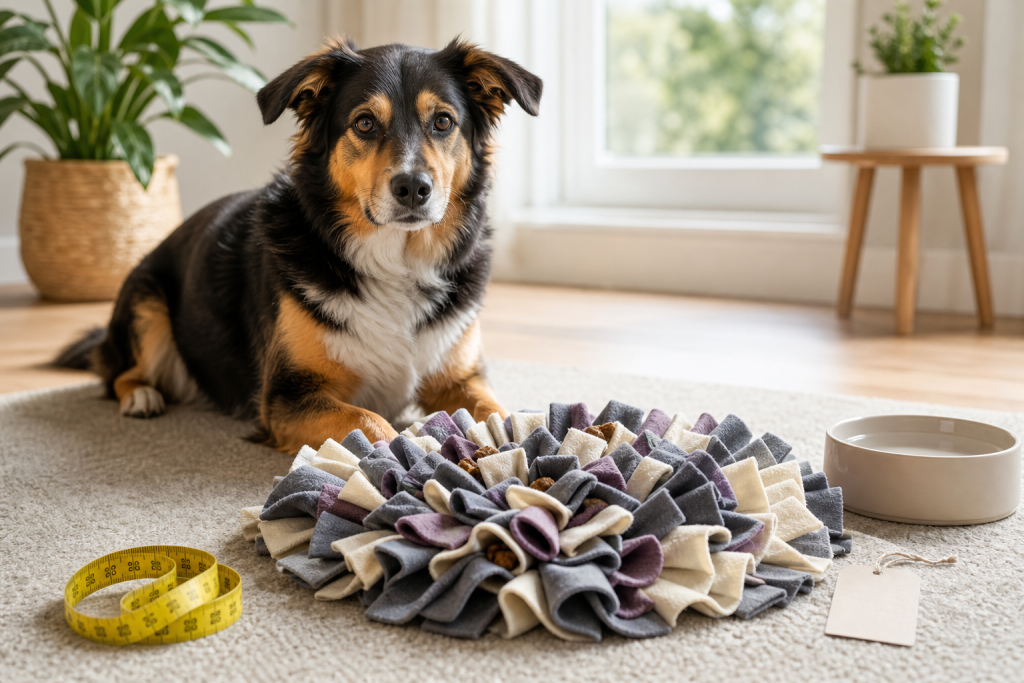
A cheap snuffle mat is only a good deal if your dog will use it safely and you can actually keep it clean. The mistake is buying the most complicated or cheapest fabric mat before checking washability, chew risk, treat size, floor grip and return terms. If the mat traps crumbs, frustrates your dog or turns into a chew toy, the sale price stops mattering.
Snuffle mats are getting extra attention because they sit at the overlap of dog enrichment, slow-feeding and indoor summer activity. Retailers now list pages of fabric foraging mats, and deal events can make them look like an easy cart add-on. The useful question is not whether a snuffle mat is clever. It is whether this specific mat fits your dog, your cleaning routine and the food you plan to hide in it.
Why Snuffle Mats Are Different From Regular Puzzle Toys
A snuffle mat is usually a fabric or fleece mat with strips, pockets or folds where you hide kibble or small dry treats. The American Kennel Club describes the basic idea as encouraging dogs to use their nose to find food, which can turn a meal or treat session into a short foraging game. That can be useful for dogs who need mental enrichment, eat too quickly or need an indoor activity when heat, storms or busy schedules limit outdoor time.
The same design also creates the buying trap. More fabric means more places for food crumbs, saliva and odor to collect. More pockets can mean more frustration for a beginner dog. A mat that looks fun in product photos may be awkward if it slides on tile, bunches under a large dog or has small parts your dog wants to chew.
The Checkout Checks That Matter Most
Start with the difficulty level. A first snuffle mat should be easy enough that your dog can find a few visible pieces quickly. If every treat disappears deep into tight folds, some dogs quit, paw aggressively or flip the whole mat over. A simple mat is not a downgrade if it gets used calmly.
Check the size against your dog and your floor space. A toy-breed mat can be too small for a large dog who noses it across the room. A huge mat can be annoying in an apartment if you cannot shake it out or dry it fully. Foldable and roll-up designs are useful only if they still stay flat during use.
Look closely at the material and backing. The AKC notes that many snuffle mats use soft felt or fleece and recommends machine-washable designs. For shopping purposes, that means you should look for a clear care label, reinforced stitching and a non-slip base. If a listing only says “easy clean” but does not explain how to wash or dry the mat, treat that as a missing feature.
Match the mat to the food. Dry kibble and small dry training treats are easier to use and easier to clean up. Wet food, oily treats and crumbly soft bites can smear into the fabric and may require washing after each use. If your dog eats a prescription diet, has a sensitive stomach or needs controlled calories, use the mat with food your veterinarian has already cleared.
When a Snuffle Mat Is Not the Right Deal
Do not buy one as an unsupervised chew toy. The AKC advises supervision and says snuffle mats are not a good fit for dogs who treat objects as things to chew or swallow. If your dog destroys plush toys, eats fabric, guards food or becomes frantic around treats, a snuffle mat may create a new problem instead of solving boredom.
Skip the most complex mat for a puppy or a dog new to enrichment. Beginner dogs often do better with visible kibble sprinkled on top before you start hiding food deeper. If your dog walks away, growls, scratches hard at the mat or starts ripping fabric, stop the session and use a simpler food toy or a regular bowl while you reassess.
Be cautious with multi-dog homes. Food-search games can trigger competition, especially when treats are hidden and one dog works faster than the other. Use separate spaces if more than one dog will be snuffling.
The Cleaning Detail Owners Underestimate
The CDC says pet items can carry germs and recommends cleaning and disinfecting pet supplies regularly. It gives a simple benchmark: bowls should be cleaned after wet food use and daily for dry food and water, while soft items such as blankets, beds, clothes, plush toys and rope toys can be cleaned and disinfected in a washing machine and dryer.
For a snuffle mat, the practical rule is this: if food and saliva go into it, cleaning is part of the cost. Before buying, check whether the whole mat is machine washable, whether it must air dry, whether the backing can handle laundering and whether the manufacturer warns against heat. If you cannot dry it fully between uses, it may smell musty or hold old food particles.
A second mat can be useful for dogs who use one daily, but only after the first mat proves it fits your routine. Buying a two-pack before testing the design can double the clutter.
Deal And Coupon Checks Before You Pay
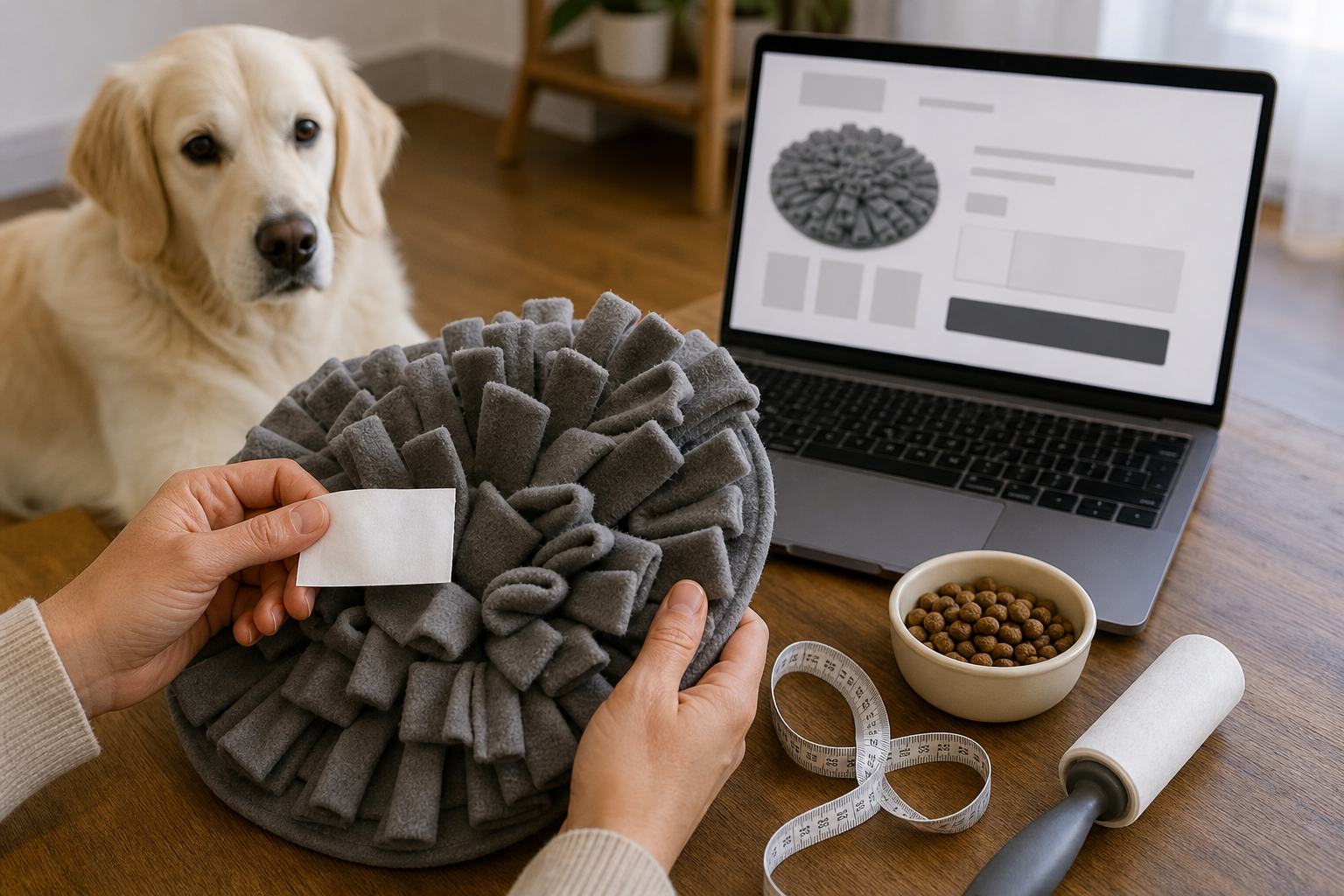
Snuffle mats are often cheap enough to become impulse buys during Amazon, Walmart, Chewy, Petco or PetSmart browsing. That is exactly why the return and shipping math matters. A low item price can be less useful if the mat is excluded from a promo, ships slowly, has unclear return eligibility or costs almost as much to replace after a few washes.
Check these details before checkout:
- Whether the sale applies to the size and color you actually want.
- Whether the mat is machine washable, not just “wipe clean.”
- Whether the listing gives dimensions, not only breed-size language.
- Whether the backing is non-slip and safe for your floor type.
- Whether the retailer return window gives you enough time to test one or two supervised sessions.
- Whether an Autoship or membership discount makes sense for a reusable mat. A recurring discount is usually more useful for food, treats and supplies you replace often.
Chewy’s public deal pages mention Autoship and free-shipping promotions, and its Autoship page describes first-order and recurring savings on eligible items. PetSmart’s promotional terms also show that Autoship offers can have maximum savings caps, eligibility rules and exclusions. Do not assume every toy or enrichment item qualifies. Check the cart total, promo terms and final price before paying.
What To Avoid
- A mat with no cleaning instructions, especially if you plan to use treats daily.
- Loose ribbons, weak stitching or decorative pieces your dog may chew off.
- Deep pockets for a dog who gives up easily or gets frustrated around food.
- Wet food in a fabric mat unless the maker says the mat can be washed after each use.
- Leaving the mat on the floor after the food is gone.
- Counting hidden treats as “extra” calories. Use part of your dog’s normal meal when possible.
Quick Answers
Are snuffle mats good for dogs?
They can be useful for many dogs because they turn sniffing and food searching into a short enrichment activity. They are not ideal for destructive chewers, dogs who swallow fabric or dogs who become tense around hidden food.
Can a snuffle mat replace a slow feeder bowl?
Sometimes, but not always. A snuffle mat can slow dry kibble eating, but a washable slow feeder bowl may be easier to clean for messy eaters or wet food.
How often should you wash a snuffle mat?
Follow the manufacturer’s care label. If food, crumbs or saliva build up, wash it more often. The CDC’s broader pet-supply guidance is to clean pet items frequently and clean more often when items look dirty, smell bad or are used by a sick pet.
Should puppies use snuffle mats?
Only with supervision and a simple setup. Puppies explore with their mouths, so avoid loose or fragile designs and remove the mat as soon as the session ends.
Sources
- American Kennel Club, “Everything You Need to Know Snuffle Mats for Dogs,” updated March 10, 2026.
- CDC, “About Cleaning and Disinfecting Pet Supplies,” February 18, 2026.
- Chewy, Today’s Deals and Autoship & Save pages.
- Petco, Return Policy.
- PetSmart, Promotional Terms.
- Walmart, Snuffle Mats in Dog Toys category page, used as current shopping-demand context.
Sources last checked June 14, 2026, 16:33 Europe/Rome.