
#cat DNA test
#cat genetics
#pet DNA tests
#pet tech
A cat DNA test deal is only useful if you know what the kit can and cannot tell you before you activate it. Most shoppers should treat the results as clues about ancestry, traits or genetic risk, not as proof of breed identity or a veterinary diagnosis. The checkout mistake is buying the cheapest kit without checking the result tier, privacy settings, sample rules and whether a vet consult is included for any health finding.
Cat DNA kits are showing up in pet-tech searches because they promise a fun answer to a common question: “What is my cat?” They can be interesting, especially for owners of rescue cats, but cats do not map neatly to breed labels the way many dog shoppers expect. That makes the fine print more important than the sale badge.
Why This Matters Before You Buy
Many pet owners are trying to make smarter purchases while pet costs keep rising. A DNA kit looks like a one-time gift or a Prime Day-style impulse buy, but the real value depends on what the lab report includes and how you plan to use it.
UC Davis Veterinary Genetics Laboratory offers many feline genetic tests, yet its cat pricing page explicitly notes that its genetic marker and parentage option is not a breed test. That is a useful caution for shoppers: a credible genetic test can answer a specific question without proving every ancestry claim a consumer expects.
Commercial kits vary. Wisdom Panel Complete for Cats says it screens for more than 70 breeds and populations, includes genetic health screening and offers a consult for certain at-risk health findings. Basepaws says its cat breed and health report covers breed, health, trait and oral-health information. Those inclusions are not identical, so two boxes that look similar on a deal page may not answer the same questions.
The Checkout Checks That Matter
Start with the report tier. Some kits focus on ancestry, while others add health markers, traits, blood type, oral-health information or access to a genetics consultation. If you are buying because of a health-related promise, check exactly which markers are included and whether the company tells you to discuss findings with a veterinarian.
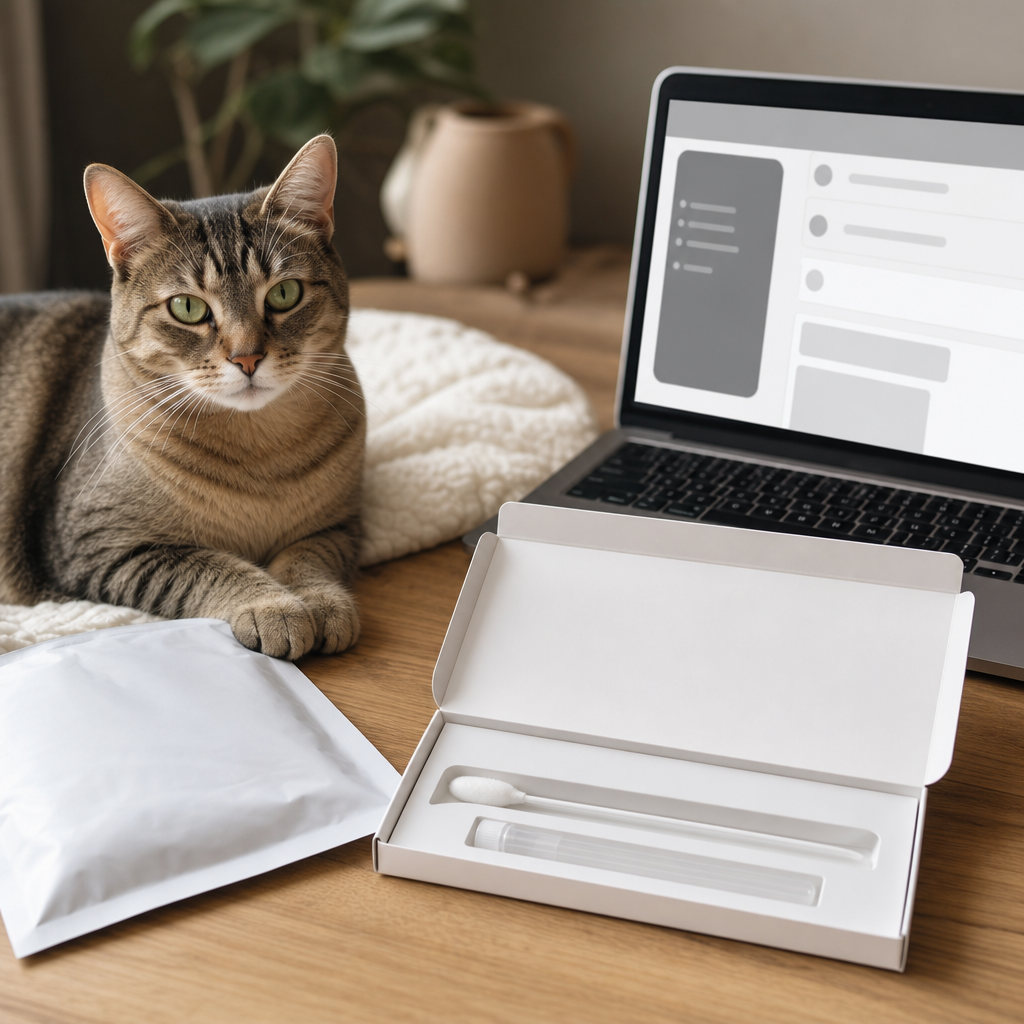
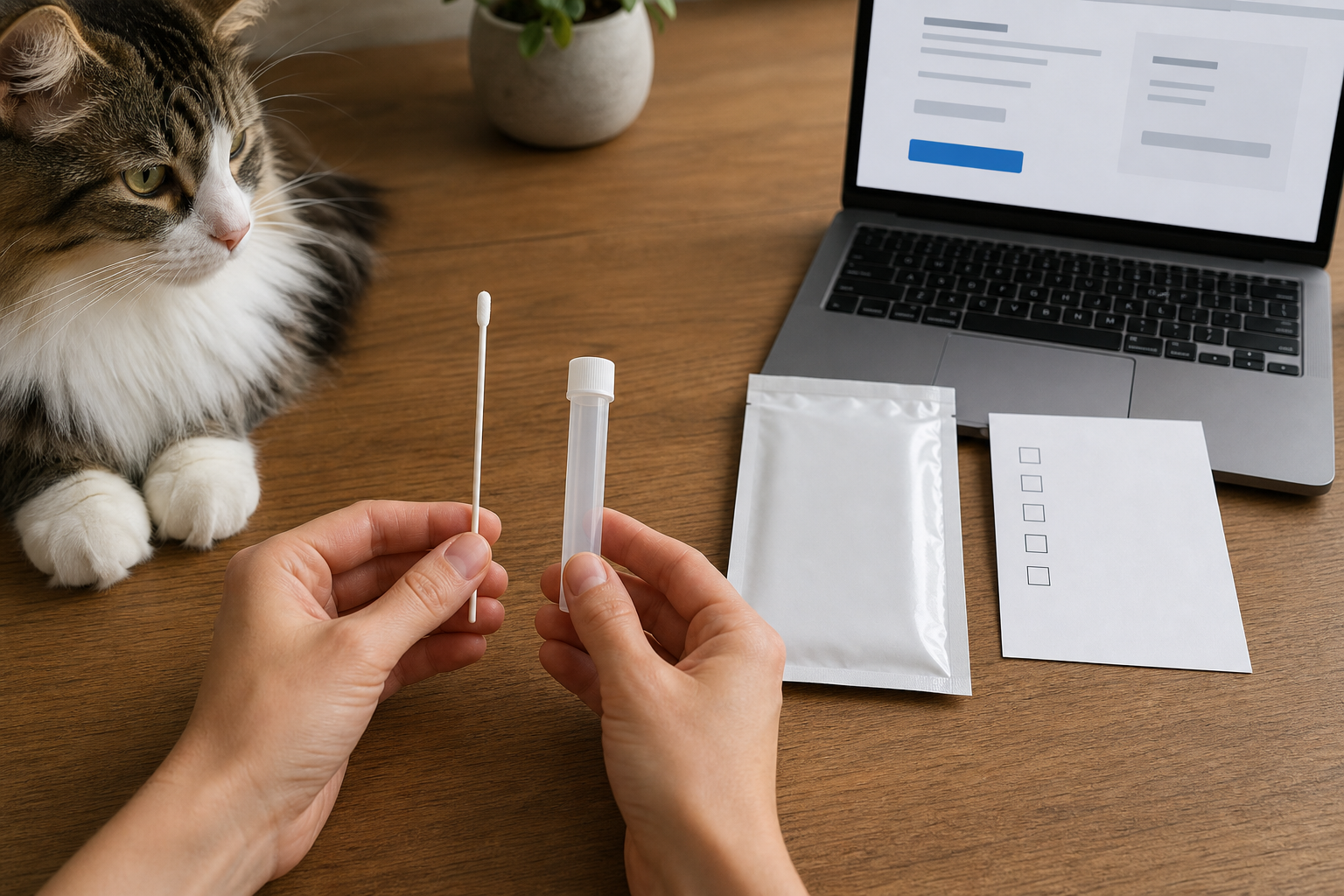
Next, check the sample process. UC Davis says cat DNA tests are commonly performed from cells brushed from the cat’s cheeks and gums. Commercial kits may include their own swab, stabilizing tube, return mailer and activation code. A discount is weaker if the kit has unclear replacement support for a failed sample or if you miss a required online activation step.
Look at turnaround time and shipping terms before gifting the kit. If the test is meant for a birthday, adoption anniversary or holiday, a lab timeline is different from a normal toy or treat delivery. Also check whether returns are blocked after activation, after opening the kit or after mailing the sample.
Finally, read the privacy controls. The FTC’s consumer guidance for DNA test kits recommends helping the recipient set privacy choices, using a strong unique password and checking whether multifactor authentication is available. Even though that advice is written for people, the same buying habit is useful for pet DNA accounts because the account may connect your name, address, payment data, pet profile and genetic report.
When a Deal Is Not Really a Deal
A sale price can be misleading if the cheaper kit excludes the result you actually wanted. For example, a basic ancestry or trait report may be entertaining, while a more expensive tier may include health screening or a genetics consult. Do not assume every box called a “cat DNA test” includes the same report.
Watch for bundle math. A two-kit discount only helps if both cats can be swabbed correctly, both accounts can be managed, and you actually want reports for both animals. If you are testing one indoor cat out of curiosity, a bulk deal may just create an unused activation code.
If a retailer advertises a coupon, verify the terms in the cart before paying. Pet DNA kits may be treated differently from ordinary supplies once opened or activated. Check return windows, sample replacement support, shipping charges and whether a sale applies only to a specific version of the kit.
What to Avoid
Do not buy a kit because you expect it to settle a veterinary question on its own. Genetic health screening can flag risk, but it does not replace an exam, lab work or advice from your veterinarian. If your cat has symptoms, behavior changes, appetite changes, litter-box changes or pain signs, a shopping guide is the wrong tool. Contact your vet.
Avoid treating breed percentages as an identity certificate. Many cats are not from closed breed lines, and different companies use different reference panels. That does not make a report useless, but it means shoppers should read ancestry language as probabilistic context, not as a pedigree document.
Be careful with privacy defaults. Before activation, check whether the company lets you control research participation, marketing emails, data sharing, sample storage, report sharing and account deletion. If those choices are hard to find, consider that part of the product experience.
Simple Buying Framework
Buy a cat DNA kit if you want an interesting profile, understand its limits and are comfortable managing a genetic-data account. Pause if the only reason is a vague health promise, a dramatic breed reveal, or a discount countdown that does not show the exact report tier.
The better checkout question is not “Which kit is cheapest?” It is “Which kit answers my question, protects my account and tells me what to do if the sample or health result needs follow-up?”
FAQ
Can a cat DNA test prove my cat’s breed?
Not in the same way a pedigree record can. A test may compare your cat’s markers with a company reference panel, but many cats have mixed or unknown ancestry. Treat breed results as clues, not legal or registry proof.
Can I use a cat DNA health result instead of a vet visit?
No. Health markers can be useful conversation starters, but they are not a diagnosis. Ask your veterinarian how to interpret any health-related result for your specific cat.
Is a cheaper cat DNA kit a bad idea?
Not automatically. It may be fine for curiosity, but compare the report tier, privacy controls, sample replacement policy, return terms and whether support is included before choosing by price.
Sources
Sources last checked June 17, 2026, 16:33 Europe/Rome.