
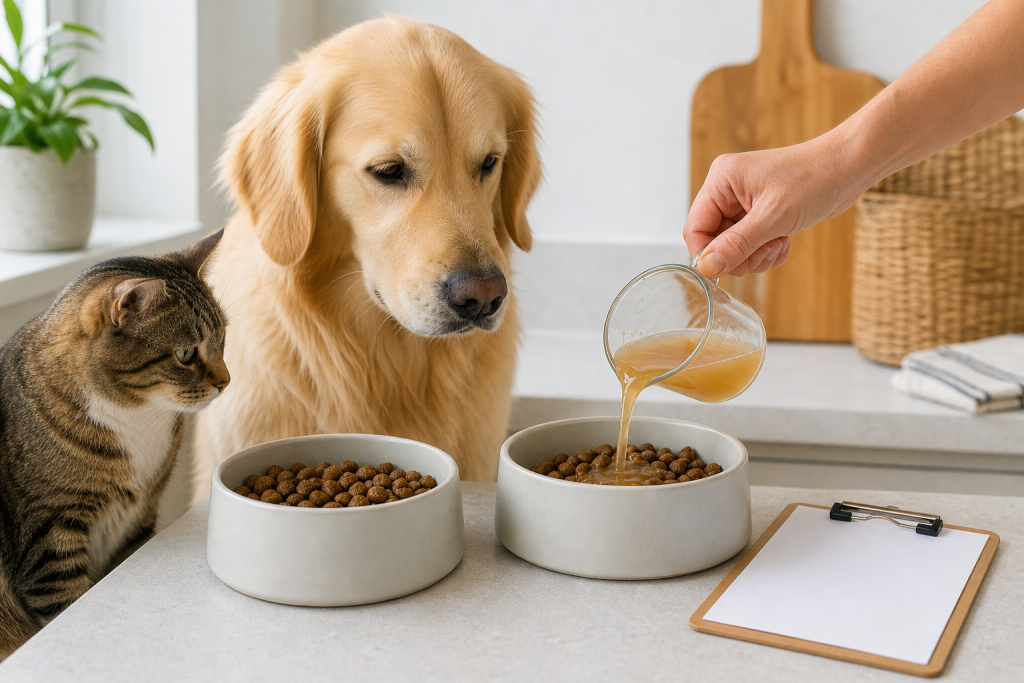
#bone broth for pets
#cat food toppers
#dog food toppers
#pet food toppers
A bone broth topper deal is only useful if the carton is made for pets, fits your dog or cat’s diet and does not quietly add too much sodium, fat or extra calories. Before you buy a multipack, check the ingredient list, feeding directions, storage rules and whether the product is a treat or a complete food. The wrong broth can turn a cheap bowl upgrade into waste, stomach upset or a vet question.
Bone broth toppers are popular because they make dry food smell better and add moisture without changing the whole diet. They are also showing up in deal roundups and pet-food aisles as shoppers look for small add-ons during summer sales and Prime Day-style promotions. That timing makes the checkout mistake easy: buying the largest bundle before you know whether your pet will tolerate it, whether the label is clean enough and how quickly the opened container must be used.
Why broth toppers are not all the same product
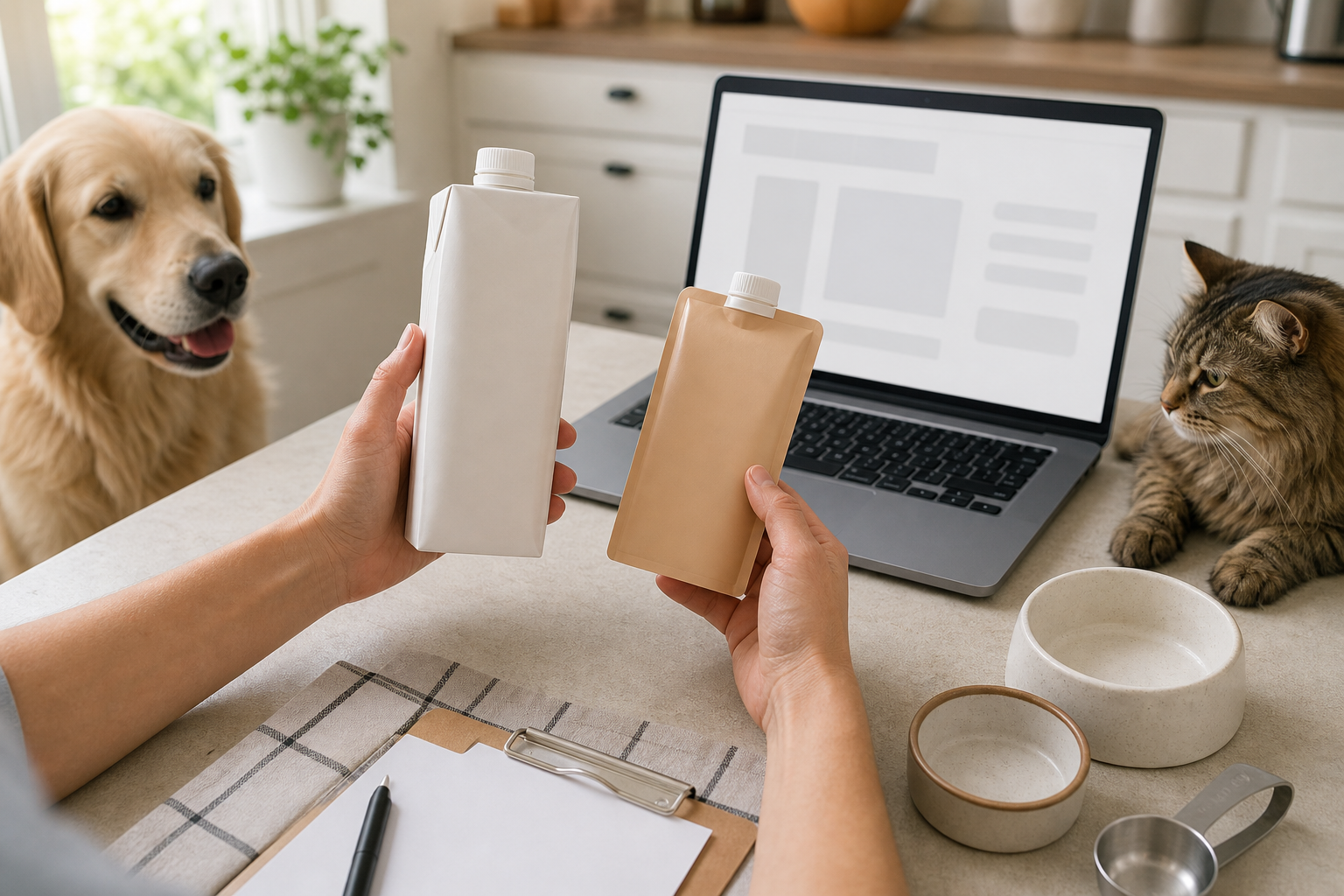
Some broths are sold as pet toppers, some are treats, some are mixers and some human broths are simply not a good substitute. AAFCO explains that treats and chews are generally not intended to provide complete and balanced nutrition. FDA guidance on complete and balanced pet food is also a reminder that the label matters: a product meant as an add-on should not silently replace a proper daily diet unless it is formulated and labeled for that role.
The first checkout check is the ingredient panel. Plain pet broth may be simple, but human-style broths can include onion, garlic, concentrated seasonings or high sodium. Merck Veterinary Manual notes that raw, cooked or concentrated onion and garlic forms can cause toxicosis in cats and dogs. That does not mean every pet broth is risky. It means the discount is not the deciding factor. The ingredient list is.
The buying checks to make before you add it to the cart
Start with species and life stage. A product marketed for both dogs and cats should still have feeding directions that make sense for your pet’s size, age and normal food. If your pet has kidney disease, heart disease, pancreatitis, food allergies, a sodium restriction or any prescribed diet, ask your veterinarian before using a broth topper regularly.
Next, check the guaranteed analysis and serving size. A broth can look light because it is liquid, but the calories, sodium and fat still count. If the label gives a daily amount, compare it with how much food your pet already eats. If the instructions are vague, treat that as a reason to buy a single carton first rather than a case.
Packaging matters too. Shelf-stable cartons are convenient until opened. Refrigerated or frozen options may have shorter windows. Powdered or dehydrated broth can be cheaper per serving, but only if you will measure it correctly and seal it well. If the product needs refrigeration after opening, check whether your household will finish it before the stated deadline.
When the deal is not really a deal
A multipack can be smart for a pet that already tolerates the product. It is a poor first purchase for a picky cat, a dog with a sensitive stomach or a household that only uses broth occasionally. The best first buy is often the smallest size, even if the unit price is worse.
At checkout, verify the seller, shipping temperature if relevant, return policy and expiration or best-by information. For marketplace listings, avoid confusing a pet-safe broth with a human pantry broth because the photos look similar. If a coupon applies only to subscription orders, calculate the second shipment before judging the discount. A cheap first carton can become expensive if autoship starts before you know whether your pet actually likes it.
Safety details owners often miss
Do not use broth to hide a sudden appetite change without asking a veterinarian. A topper can make food more tempting, but it should not be used to explain away repeated refusal to eat, vomiting, diarrhea, weight loss or unusual thirst. The article is about shopping, not diagnosis.
Handle pet food add-ons cleanly. The CDC advises washing hands before and after handling pet food or treats, and supervising children so they wash their hands too. Use clean bowls, close containers properly and throw away leftovers according to the label. If you are using a raw or freeze-dried raw broth-style product, the handling bar is higher. FDA and CDC both warn that raw pet foods can carry pathogens that may affect pets and people.
Finally, remember that broth is not a hydration guarantee. It can add moisture to a meal, but pets still need fresh water. In hot weather or during travel, do not treat a topper as a substitute for water access, shade, airflow and sensible routines.
What to avoid
- Human broth with onion, garlic, heavy seasoning or unclear ingredients.
- Large subscription bundles before a single-container trial.
- Products that imply health benefits without clear feeding directions.
- Replacing a complete diet with a topper unless the label and your veterinarian support that plan.
- Using broth to mask a pet’s new appetite or digestive problem.
Quick answers
Can dogs and cats have bone broth?
Many pets can have pet-formulated broth in small amounts, but the label and your pet’s health history matter. Avoid onion, garlic and high-sodium human broths, and ask your veterinarian if your pet has a medical condition or special diet.
Is bone broth a complete meal?
Usually no. Most toppers and treats are not intended to be complete and balanced daily diets. Check the nutritional adequacy statement before using any product as more than a meal add-on.
Should I buy the biggest pack on sale?
Not for a first trial. Buy the smallest practical size, confirm your pet tolerates it and check how fast opened containers must be used.
What is the best checkout test?
Read the ingredient list, serving directions, storage rules, seller name and subscription terms before paying. If any of those are unclear, the discount is weaker than it looks.
Sources
Sources last checked June 23, 2026, 01:35 Europe/Rome.
- AAFCO, Treats and Chews.
- FDA, Complete and Balanced Pet Food.
- FDA, Pet Food.
- CDC, About Pet Food Safety.
- Merck Veterinary Manual, Garlic and Onion Toxicosis in Animals.
- American Kennel Club, Benefits of Bone Broth for Dogs.
- Chewy, Slurp-Worthy Bone Broth for Dogs and Cats Recipe.