
#cat carrier
#dog carrier
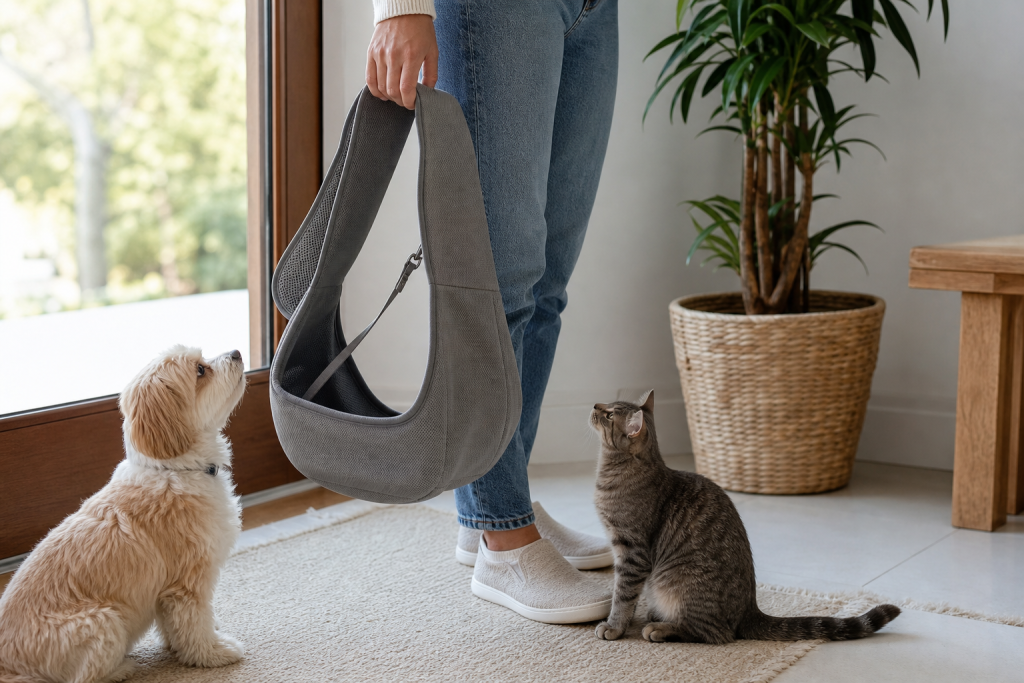
#pet sling carrier
#pet travel
A cheap pet sling carrier can be a bad deal if it does not match your pet’s real weight, body shape and escape risk. The biggest mistake is treating a sling like a normal shoulder bag, then discovering that the strap digs in, the bottom sags, or the safety clip is not enough for a nervous dog or cat. Before checkout, check support, closure, ventilation, return terms and whether a hard-sided carrier would be safer for the trip.
Pet sling carriers are popular because they look simple: soft fabric, hands-free carrying and a lower price than many structured backpacks or travel carriers. They can be useful for very small dogs, some cats, short errands, lobby waits and calm pets that already tolerate being carried. They are not a shortcut for every pet, and they are usually not the right choice for car restraint, airline use, long walks in heat or a pet that twists, jumps or panics in soft bags.
Why This Matters Now
Summer travel, vet visits, outdoor markets and crowded pet-friendly stores all push owners toward lightweight carriers. Search demand also tends to rise when owners see slings promoted as convenient, cute and hands-free. The problem is that many listings hide the important details in small specs: maximum weight, strap width, opening size, closure type, cleaning instructions and whether the carrier has a supportive base.
Travel guidance from veterinary and safety sources keeps coming back to one idea: pets should be secure, contained and protected from escape. The FDA’s travel-training guidance says cats are safest kept in carriers during travel stops to reduce escape risk, and AVMA travel guidance emphasizes secure carriers and preparation for dogs and cats. A sling can help in the right narrow use case, but it should not be treated like a universal travel crate.
The Checkout Checks That Matter
Start with the listed weight limit, then add a margin. If a sling says it is for pets up to 10 or 15 pounds, a pet near the upper limit may still feel unstable if the bottom has little structure or the strap puts all the weight on one shoulder. For stocky pets, long-bodied breeds, senior pets or pets recovering from a procedure, ask your vet whether a sling is appropriate before relying on one.
Look for a wide, adjustable shoulder strap. A narrow strap can make the carrier feel unusable after a few minutes, especially if the pet shifts from side to side. If the listing does not show strap width, adjustment range or how the sling sits across the body, assume you may need an easy return.
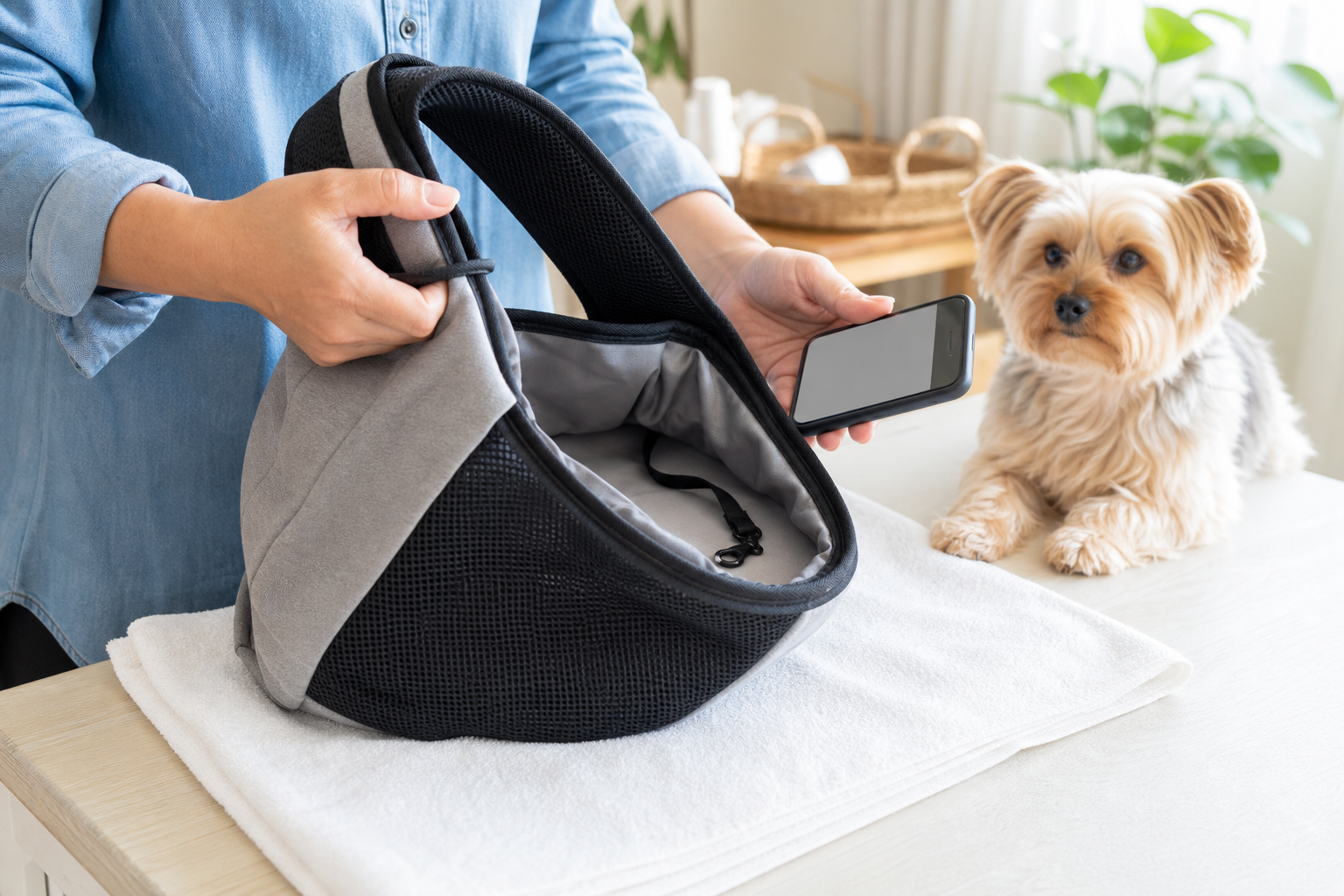
Check the bottom support. Some soft slings are closer to fabric hammocks, while others include a firmer base or more structured shape. A hammock-style sling may be fine for a relaxed small dog on a short indoor errand, but it can leave a pet curled awkwardly if the fabric collapses. Cats often prefer a more enclosed, stable carrier because it gives them a predictable space.
Do not trust a safety tether by itself. Many slings include a short strap that clips to a collar or harness, but that does not make the bag escape-proof. A nervous pet can still climb, twist or fall if the top is too open. For cats and wiggly dogs, a zip, drawstring or covered opening may matter more than the tether alone. Never clip a tether in a way that could put pressure on the neck if the pet jumps.
Ventilation is another deal breaker. Soft fabric can feel cozy in product photos but too warm in real use, especially during summer errands. Mesh panels, a loose fit around the opening and breathable materials help, but they do not make a sling safe for hot cars, long sun exposure or crowded events where your pet cannot cool down.
When a Sling Is the Wrong Carrier
Skip the sling if you need a secure car carrier. Pets should not ride loose on a lap or in a soft sling while a vehicle is moving. Use an appropriate carrier or restraint system instead, and check the travel rules for your route before buying.
Skip it for airline cabin travel unless the airline explicitly accepts that exact style and dimensions. Most airline pet rules focus on an approved carrier that fits under the seat and keeps the pet contained. A casual shoulder sling that works for walking into a store may fail at check-in.
Skip it for a pet that bites, scratches, panics, bolts or has breathing or mobility concerns unless your veterinarian or qualified trainer agrees it is suitable. Short-nosed pets, very young animals, frail seniors and pets with orthopedic pain may need a different setup.
Deal And Coupon Checks Before You Pay
A sling carrier discount is only useful if you can return it after a real fit check. Before buying, confirm the return window, whether opened soft goods are returnable, who pays return shipping and whether marketplace sellers follow the retailer’s main policy. Chewy’s return policy is notably broad, while other retailers and third-party sellers may be stricter.
Compare the deal by usable features, not just price. A slightly more expensive sling with a wide strap, washable liner, breathable panels and a secure top may be cheaper than a bargain model you stop using after one vet visit. If the coupon only applies after a minimum spend, do not add filler items unless you actually need them.
For cats and escape-prone dogs, consider whether the better deal is a structured carrier instead. A sling that looks cheaper can waste money if you later need to buy a carrier with a rigid base, full zipper and better containment.
What To Avoid
- Listings that show no clear maximum pet weight or dimensions.
- Open-top slings for nervous cats or jumpy small dogs.
- Thin shoulder straps if you will carry the pet for more than a few minutes.
- Claims like “airline approved” without dimensions and airline-specific proof.
- Using a sling as a car restraint.
- Buying final-sale or marketplace listings before testing whether your pet accepts the carrier.
Quick Answers
Are pet sling carriers safe?
They can be safe for some small, calm pets during short supervised outings, but only when the fit, support, closure and ventilation match the pet. They are not automatically safe for cars, flights, heat or escape-prone pets.
Can cats use sling carriers?
Some calm cats may tolerate a sling, but many cats do better in a structured carrier that fully contains them. For travel stops, the FDA advises keeping cats in carriers to reduce escape risk.
Should I buy by weight limit alone?
No. Weight limit is only the first screen. Also check body length, shoulder support, bottom structure, closure, cleaning and whether your pet can turn, settle and stay contained without struggling.
Is a sling good for vet visits?
It can help with a tiny calm dog or a pet that already accepts the sling. For cats, anxious pets or animals that may need to be examined safely, a more structured carrier is often the better choice.
Sources
Sources last checked June 28, 2026, 07:35 Europe/Rome.
- American Veterinary Medical Association, Traveling with your dog or cat.
- U.S. Food and Drug Administration, Travel Training for You and Your Pets.
- Chewy, How to Choose the Best Dog Carrier.
- Chewy product examples for sling carriers, including listed weight limits and safety features: OWNPETS Sling Dog & Cat Carrier and KATZIELA Expandable Sling Dog & Cat Carrier.
- Chewy, Return Policy.
- American Airlines, Pets travel information, used as an example of airline-specific carrier requirements.