
#adventure cat
#cat harness
#cat leash
#pet deals
#pet travel
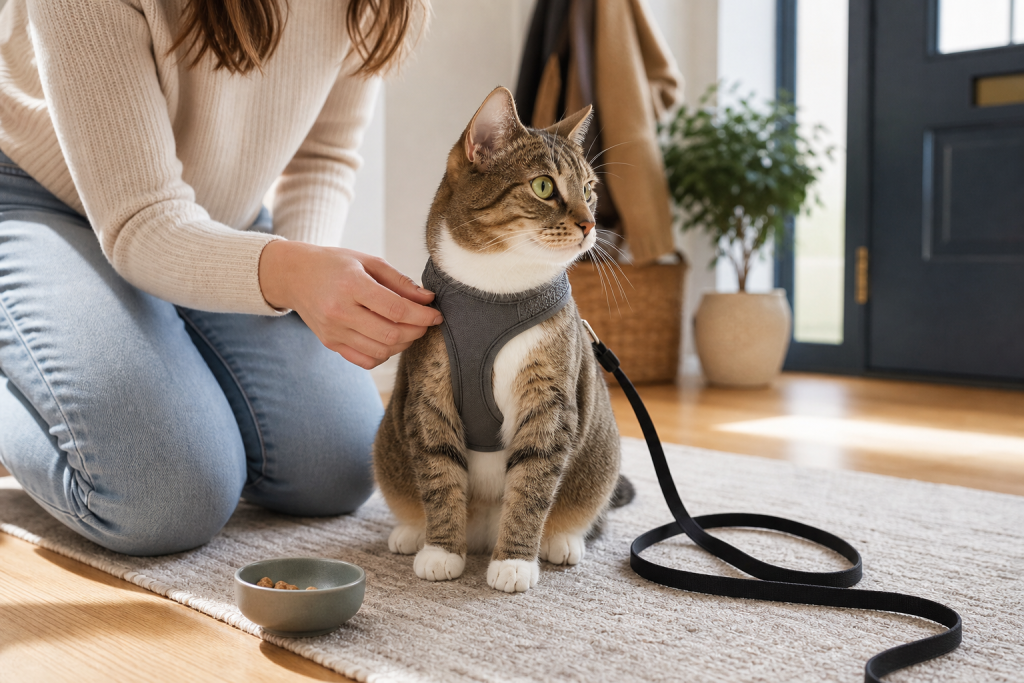
A cat harness deal is only worth considering if the harness fits your actual cat, not just the product photo. No cat harness is truly escape-proof, so the smarter checkout question is whether it is secure enough to test indoors, comfortable enough for gradual training and returnable if your cat hates it.
Cat harnesses are getting more attention as warm-weather travel, patios, cat backpacks and “adventure cat” content push indoor cat owners to shop for safer outdoor options. That does not mean every cat should be walked like a dog. It means shoppers should treat the harness as a fit-sensitive safety item, not a cute add-on tossed into the cart because it is discounted.
Why this matters now
June is when many owners start planning road trips, park visits, balcony time and supervised garden sessions. Retailers also tend to surface more travel and outdoor pet gear around summer, so a low price on a harness-and-leash set can look like an easy upgrade.
The risk is that cats are built differently from dogs. They can back out of gear, freeze when restrained or panic in a new place. Cats Protection says some cats cope with harnesses, but many find restraint stressful and should be introduced gradually before going outside. SPCA New Zealand is even more direct: it supports harness walks only when the equipment is appropriate, well-fitted and secure, and the activity stops if the cat shows signs of stress.
The claim to question: “escape-proof”
“Escape-proof” is a shopping phrase, not a guarantee. SPCA New Zealand states that no harness is escape-proof, which is the detail owners should remember before trusting a product title, marketplace badge or influencer clip.
A better standard is escape-resistant under calm, supervised, indoor testing. That means the neck opening does not slip over the head, the chest panel does not twist, the leash ring does not pull the harness into the throat and your cat can move without flattening, rolling or trying to bolt.
Before you pay, check whether the product page gives real measurements for the neck, chest and body length. A size label like small or medium is not enough. Cats with narrow shoulders, long bodies, thick coats or kitten-to-adult growth can land between sizes, and a bargain set becomes expensive if it cannot be adjusted safely.
What to check before buying a cat harness
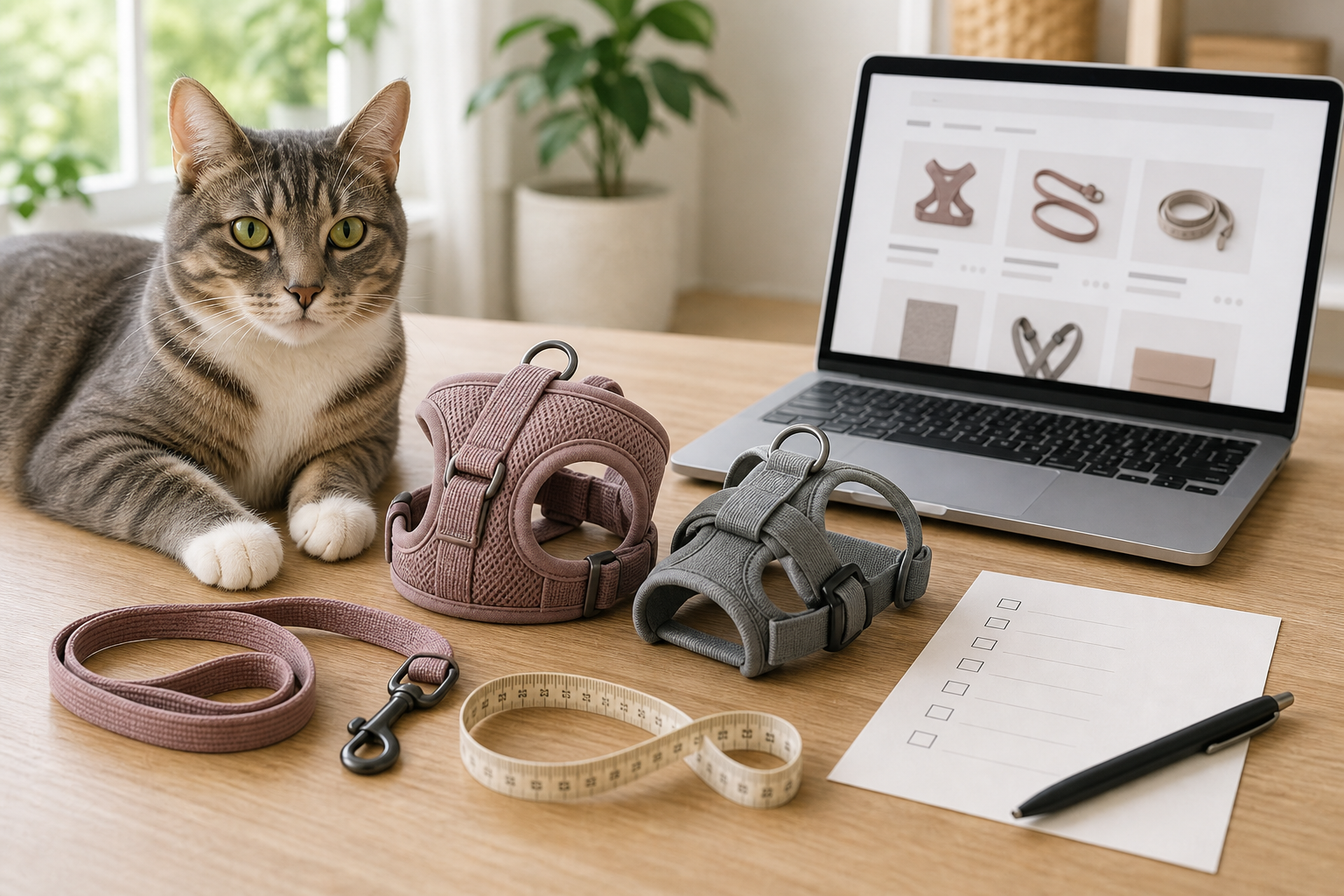
Measure before browsing. Use a soft measuring tape around the chest behind the front legs and around the lower neck or shoulder area where the harness will sit. Compare those numbers with the brand’s size chart, not with your cat’s weight alone.
Look at the shape. Vest-style harnesses may feel more secure for some cats, while lighter H-style or step-in designs may be less bulky. The safer choice is the one your cat can wear calmly after slow indoor practice. A stiff harness that looks secure online may be useless if your cat panics or refuses to move.
Check the leash attachment. The leash should attach to the harness, not the collar. SPCA New Zealand notes that cats’ necks are delicate, so a leash clipped to a collar is the wrong place to put pulling force.
Inspect closures and adjustment points. Buckles, hook-and-loop closures, sliders and seams should be easy for you to handle but difficult for the cat to loosen. If the product images hide the underside, skip it or find a listing with clearer photos.
Think about heat and ventilation. A thick vest may be a poor summer choice for a long-haired cat or a hot climate. Cats Protection recommends shade and caution around sun and hot weather, especially for cats that spend time outdoors.
Plan the first two weeks. The first purchase should include time, treats and indoor sessions. Cats Protection advises gradual introduction and positive associations before outdoor use. Do not buy a harness on Friday and expect a relaxed park walk on Saturday.
The deal and coupon checks
A cat harness is one of those products where the cheapest option can be the most expensive if the return terms are poor. Check the return window before paying, especially if the listing uses marketplace sizing, final-sale language or bundled accessories.
Chewy’s posted return policy says items can be returned within 365 days if you and your pet are not satisfied, with some conditions. Petco’s return page says purchases can generally be returned within 60 days, with refund details varying by timing and method. PetSmart’s return policy says online purchases can be returned in store for the purchase price, but the product must be in its original packaging, and its coupon policy says coupon rules can change without advance notice.
Those details matter because the most important test happens after delivery. You may need to open the package, check the stitching, adjust the fit and do short indoor sessions before you know whether the harness is usable. If a discount wipes out returns or locks you into a bundle of extra leashes, bells or low-quality collars, it may not be a good deal.
What to avoid
- Do not trust “escape-proof” as a literal promise.
- Do not clip the leash to a collar instead of the harness.
- Do not take a cat outside before indoor harness practice.
- Do not leave a harnessed cat unattended in a yard, balcony, car, stroller or backpack.
- Do not buy a hot, enclosed or poorly ventilated accessory just because it photographs well.
- Do not skip microchip and ID checks. ASPCA says outdoor cats should have ID, and an implanted microchip can help if a cat is lost.
- Do not force the issue if your cat shows stress. Some cats are happier with a screened window, catio, carrier outing or indoor enrichment instead.

A simple checkout framework
If you are comparing two harness deals, choose the one with clearer measurements, better adjustability, breathable materials, visible closures and a return policy you can actually use. The product should also leave room in your budget for a backup ID tag, treats for training, a carrier or backpack for emergencies and parasite prevention advice from your veterinarian if outdoor time becomes routine.
That is the practical way to shop this category. You are not buying a magic anti-escape device. You are buying a piece of gear that may make supervised outdoor time safer for the right cat, in the right place, after patient indoor practice.
FAQ
Is any cat harness really escape-proof?
No. Some designs may be more escape-resistant than others, but SPCA New Zealand says no harness is escape-proof. Test indoors before relying on any harness outside.
Should I buy a cat harness by weight?
Weight can help narrow the size range, but it is not enough. Measure your cat’s chest and neck area, then compare those numbers with the size chart for that exact product.
Can I walk a cat with a collar and leash?
Do not use the collar as the leash attachment point. SPCA New Zealand says leashes should attach to the harness because cats’ necks are delicate.
What if my cat freezes or rolls over in the harness?
Stop and go back to slower indoor introduction, or skip harness walking entirely. Cats Protection notes that many cats find restraint stressful, so a harness is not the right enrichment tool for every cat.
Sources
Sources last checked June 8, 2026, 04:37 Europe/Rome.
- Cats Protection, “Keeping cats safe outside” and harness guidance: https://www.cats.org.uk/help-and-advice/home-and-environment/keeping-cats-safe-outside
- SPCA New Zealand, “Cats in Harnesses and on Leashes”: https://www.spca.nz/advocacy/position-statements/article/cats-in-harnesses-and-on-leashes
- ASPCA, “General Cat Care”: https://www.aspca.org/pet-care/cat-care/general-cat-care
- Chewy return policy: https://www.chewy.com/app/content/return-policy
- Petco return policy: https://www.petco.com/content/petco/PetcoStore/en_US/pet-services/help/help-easy-returns.html
- PetSmart return policy and coupon policy: https://www.petsmart.com/help/returns-and-refunds-H0008a.html and https://www.petsmart.com/help/payment-H0004e.html