
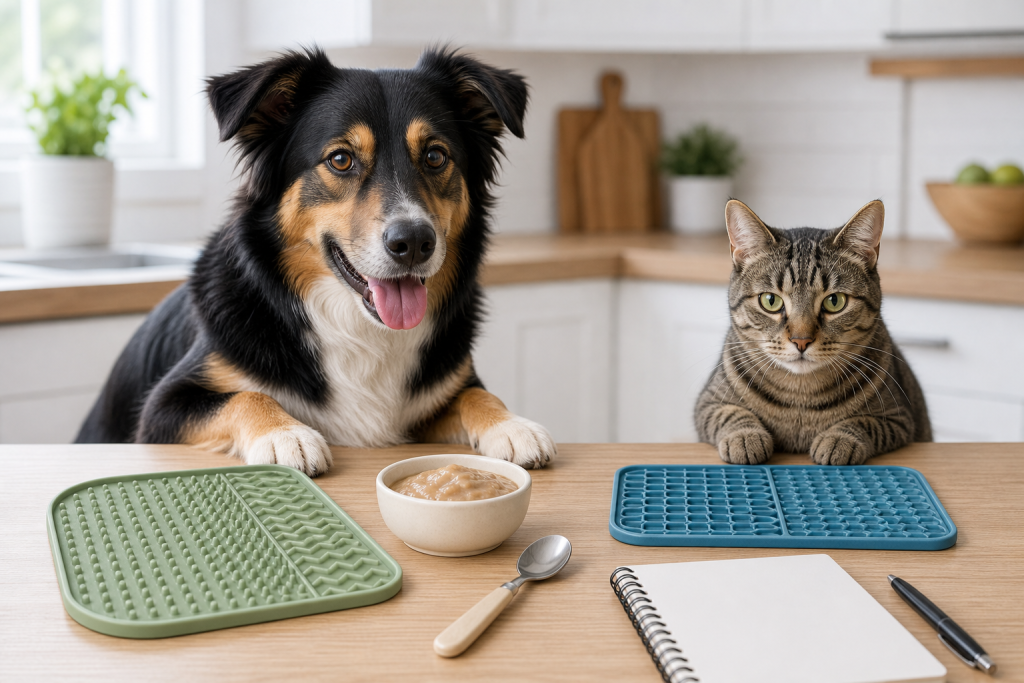
#cat enrichment
#Dog enrichment
#Lick mats
#pet deals
#pet supplies
A cheap lick mat is only a good deal if your dog or cat will use it safely and you can clean it completely after every sticky spread. The mistake is buying a multipack for the cute patterns, then discovering the grooves are too deep, the suction cups fail, or the mat turns into a chewed-up food trap after one frozen session.
Lick mats are popular because they are inexpensive, easy to bundle into pet-supply sales and useful for turning a small amount of soft food into a longer enrichment moment. That does not make every mat equally practical. Before you add one to a Prime Day cart, Autoship order or pet-store coupon basket, check the material, cleaning instructions, suction design and the food you plan to smear on it.
Why lick mats are showing up in so many carts
Pet owners are spending more carefully in 2026, but they are still buying small enrichment products that feel useful without a big upfront commitment. Lick mats fit that pattern: they are cheaper than many electronic toys, they can slow down a snack, and they are often sold in two-packs or seasonal bundles.
The useful part is real when the mat is matched to the pet. The ASPCA notes that food puzzles can slow a dog down and add mental stimulation, and the CDC says feeding mats and treat toys should be cleaned frequently because pet food and treats can carry germs. Put those two points together and the buying decision becomes simple: a lick mat should be easy to supervise, easy to wash and hard for your pet to destroy.
The checkout checks that matter
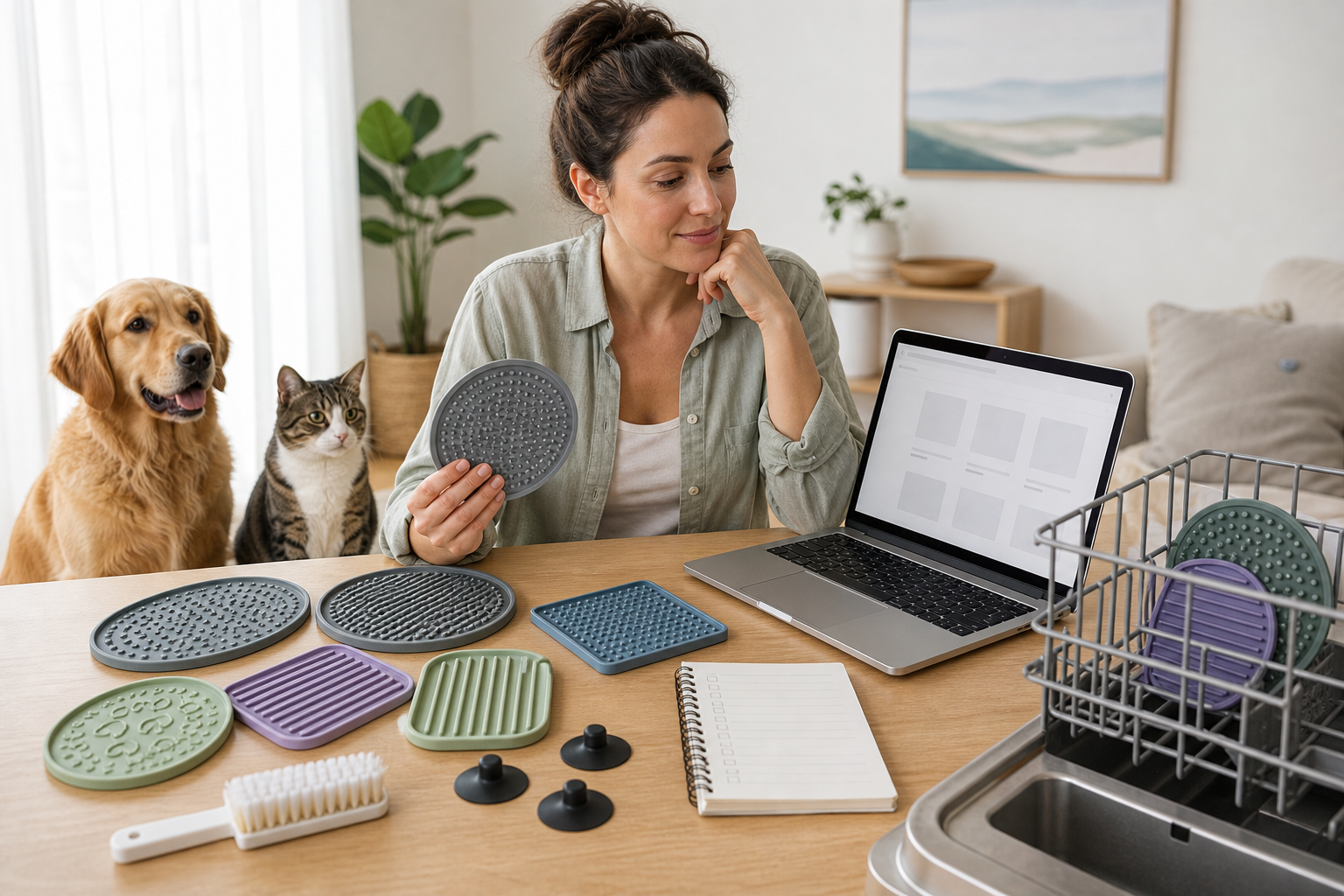
Start with the material. Many lick mats are described as silicone, rubber or plastic, but the listing should tell you more than the color. Look for food-contact wording, dishwasher instructions and whether the mat is freezer-safe if you plan to freeze wet food, canned food or a pet-safe spread.
Next, look at the pattern. Very deep grooves can make a snack last longer, but they can also hold residue after washing. Very shallow grooves are easier to clean, but some pets finish them in seconds. If you are buying for a flat-faced dog, a kitten, a senior cat or a pet with dental or mouth sensitivity, ask your vet before making the mat part of a routine.
Suction cups are worth checking too. A mat that sticks to tile may not stick to textured floors, stainless bowls, wood cabinets or a bathtub wall. If the main selling point is bath distraction, grooming distraction or crate use, confirm where the suction cups are located and whether reviews mention the same surface you plan to use.
Finally, compare size to the pet. A tiny mat can be frustrating for a large dog. A huge mat can encourage owners to spread too much food for a small cat. The deal price is less important than whether the mat lets you use a controlled amount of your pet’s normal food or treats.
The food spread can make the deal worse
The mat is not the only purchase. Many owners buy peanut butter, yogurt, canned food, toppers or soft treats to use with it. That is where a cheap mat can turn into an expensive snack habit.
Check ingredients before using human foods. The FDA warns that xylitol can be dangerous for dogs and may appear in products such as some peanut butters and other sweetened foods. Fatty table scraps are also a poor choice. If your pet has pancreatitis history, food allergies, kidney disease, diabetes, weight concerns or a prescription diet, ask your veterinarian what is appropriate before using a lick mat.
For everyday use, the least wasteful choice is often a small portion of your pet’s normal wet food, softened kibble or another vet-approved food you already buy. Count it as part of the day’s food, not a free extra.
Deal and coupon checks before you pay
Multipacks can be useful if you have more than one pet or want a spare while one mat dries. They are not automatically better. A four-pack of flimsy mats that curl in the dishwasher is worse than one sturdy mat that actually gets used.
Before paying, check the final cart after coupons apply. Some retailer promotions exclude marketplace sellers, clearance items or certain brands. PetSmart says its coupon policy can change, and Petco’s return policy gives a general 60-day window for many purchases, but return details can vary by item and condition. If the listing is from a third-party marketplace seller, read that seller’s return terms separately.
If you are adding lick mats to hit a free-shipping threshold, compare the total order against what you already planned to buy. A low-cost add-on is not a deal if it pushes you into extra spreads, more treats or a bundle your pet ignores.
What to avoid
Avoid any mat that your pet can chew apart during normal supervised use. Lick mats are not chew toys, and broken pieces can create a hazard. If your dog tries to rip, fold or swallow the mat, remove it and choose a different enrichment option.
Avoid hard-to-clean patterns if you plan to use sticky foods. If you cannot see into the grooves or bend the mat enough to wash it properly, old food can stay behind.
Avoid using a lick mat as a substitute for training, exercise, veterinary care or separation-anxiety help. It can be a useful enrichment tool, but it cannot diagnose a behavior issue or make an unsafe situation safe.
Avoid unsupervised first use. Watch how your pet interacts with the mat, then decide whether it belongs in the regular rotation.
Quick answers
Are lick mats better for dogs or cats?
They can work for either, but dogs and cats use enrichment differently. Choose the mat size, texture and food amount for the individual pet, not the package photo.
Can you freeze a lick mat?
Only if the product instructions say it is freezer-safe. Freezing can make the activity last longer, but it also makes cleaning and ingredient choice more important.
Should a lick mat go in the dishwasher?
Only if the maker says it is dishwasher-safe. Even then, inspect the grooves after washing and replace the mat if it warps, cracks or holds food residue.
Is peanut butter safe on a lick mat?
Some plain peanut butter may be fine for some dogs in small amounts, but always check the label for xylitol and ask your vet if your pet has health or weight concerns. Cats usually need a different approach.
Sources
Last checked: June 9, 2026, 01:47 Europe/Rome.
- FDA, Tips for Safe Handling of Pet Food and Treats.
- FDA, Potentially Dangerous Items for Your Pet.
- CDC, About Pet Food Safety.
- ASPCA, Canine DIY Enrichment.
- SaleHoo, Lick Mat: Market Trends, Suppliers and 2026 Sales Outlook, used only as a demand signal.
- Petco, Return Policy.
- PetSmart, Coupon Policy.