

#flea and tick products
#insect repellent for pets
#pet bug spray
#pet supplies
#summer pet safety
A pet bug spray deal is only useful if the product is labeled for the exact animal you plan to use it on. Human insect repellent, especially products with DEET, should not be treated as a cheaper substitute for dogs or cats. Before you buy, check the species, weight or age limits, active ingredients, return terms and whether your veterinarian would rather have you use a flea and tick preventive instead.
Why this matters right now
Summer shopping pushes pet owners toward sprays, collars, wipes and yard products that promise relief from mosquitoes, fleas and ticks. That is understandable, because the CDC says ticks are most active during warmer months, and pets can bring ticks into the home after outdoor time. The checkout mistake is assuming every “natural,” “family safe” or “outdoor” repellent is also safe to apply to a pet.
The safest buying question is not “Does this repel bugs?” It is “Is this product labeled for my pet, my pet’s species, my pet’s size and the way I plan to use it?”
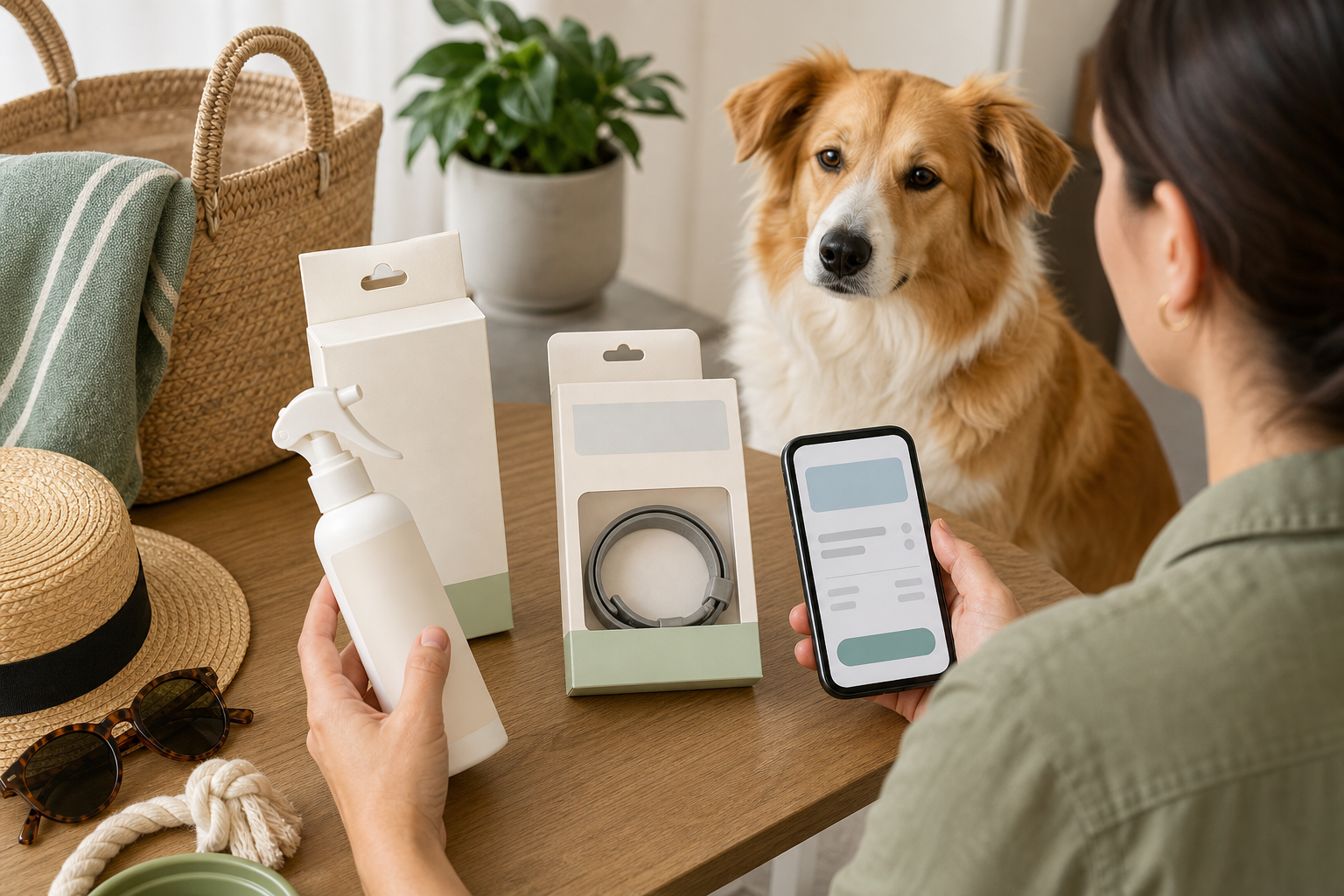
The label check that matters more than the discount
Start with the front and back label, not the sale badge. The ASPCA warns against applying sunscreen or insect repellent to pets unless the product is specifically labeled for animal use, and says misuse of DEET-containing repellent can lead to neurological problems. That means a human camping spray, a citronella product, a yard insecticide or a dog-only flea product is not automatically safe for your cat or puppy.
- Species: Confirm the product says dog, cat or both. Do not use dog products on cats unless the label explicitly allows cat use.
- Weight and age: EPA guidance says flea and tick products should match the species and size or weight listed on the label. Kittens and puppies may have minimum age or size limits.
- Health limits: Look for restrictions for weak, aged, medicated, sick, pregnant or nursing pets. Ask your veterinarian before using a product on pets with medical histories or prior sensitivities.
- Application area: A spray for bedding, clothing or a yard is not the same as a topical product meant for an animal’s skin or coat.
- Dry time and separation: In multi-pet homes, make sure pets cannot lick each other until any topical product is used exactly as directed.
What to verify before paying
A cheap bottle can become expensive if you cannot safely use it, return it or pair it with your existing flea and tick plan. Before checkout, verify these details:
- Approval or registration language: FDA explains that some flea and tick products are FDA-approved animal drugs, while others are EPA-registered pesticides. The label should make the product’s regulatory status clear.
- Active ingredients: Do not buy based only on “plant-based” or “chemical-free” wording. Read the full active ingredient panel and warnings.
- Cat household risk: CDC says cats are extremely sensitive to a variety of chemicals and owners should not apply tick prevention products to cats without first asking a veterinarian.
- Use case: A mosquito-repellent wipe for short supervised outdoor time is different from year-round flea and tick prevention.
- Return policy: If the label excludes your pet after you read the fine print, you need to know whether opened products can be returned.
Deal and coupon checks
Do not let a promo code push you into buying a multipack before your veterinarian has confirmed the product fits your pet. For flea and tick products, EPA recommends consulting a veterinarian about the best way to protect pets and whether certain applications are needed. That advice matters more than a larger cart discount.
When a retailer advertises pet bug spray, flea collars or tick products, check whether the discount applies only to a specific size, species, scent or subscription order. If the deal requires Autoship, calculate the later refill price and cancellation terms. If the product has a short seasonal use window, do not buy more than you can use before expiration or before your pet’s weight changes.
What to avoid
- Do not apply human bug spray to your dog or cat unless your veterinarian has specifically cleared that exact use.
- Do not use DEET products as a pet shortcut. The ASPCA specifically flags misuse of DEET-containing repellents as a concern.
- Do not apply dog flea or tick products to cats. EPA warns that some pesticides are more toxic to one species than another.
- Do not assume “natural” means lick-safe, cat-safe or puppy-safe.
- Do not use yard sprays, citronella candles, insect coils or tiki torch products as pet-body repellents.
Quick answers
Can I use my own mosquito repellent on my dog?
Do not treat a human repellent as pet-safe by default. Use only products labeled for animal use, and ask your veterinarian if your dog is young, senior, pregnant, nursing, medicated, sick or sensitive to topical products.
Is pet bug spray the same as flea and tick prevention?
No. A spray or wipe may be for short-term nuisance insects, while flea and tick preventives are regulated products with specific species, weight and use directions. Ask your veterinarian what your pet actually needs for your area.
What if my pet reacts after I apply a product?
Follow the product label and contact your veterinarian promptly. EPA says to keep the package and product container because the instructions, manufacturer contact information and registration details may be needed if an adverse reaction occurs.
Sources
Last checked: June 12, 2026, 13:35 Europe/Rome.