
#cat food
#dog food
#pet deals
#pet food safety
#pet food storage
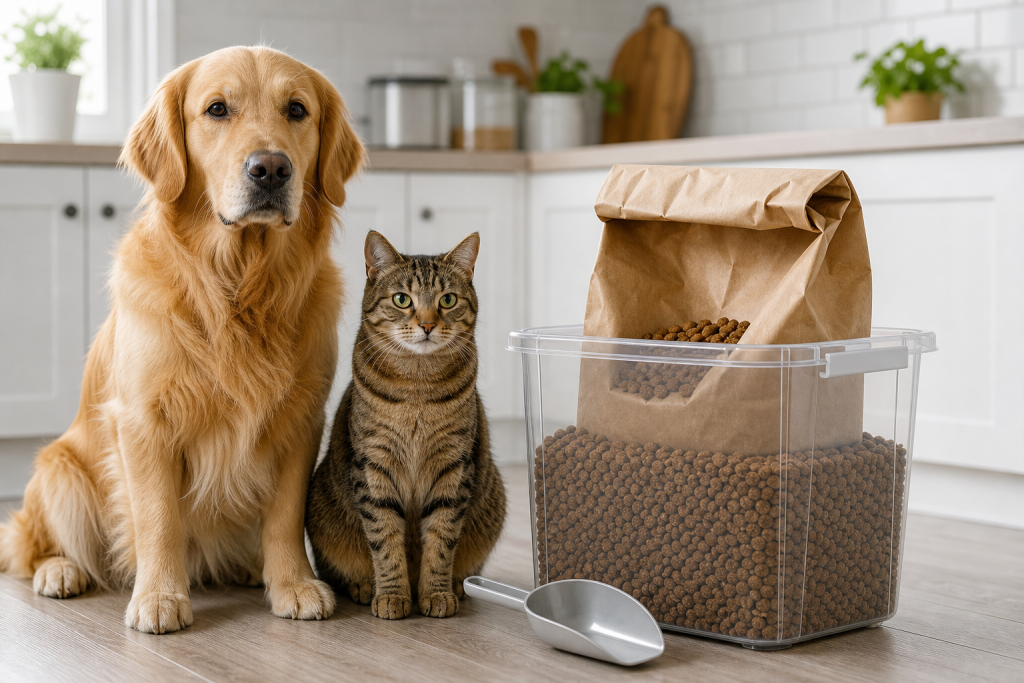
A cheap pet food storage bin can become an expensive mistake if it separates the food from the bag, lot code, best-by date and storage directions you may need later. The safer buy is a container that fits the original bag inside, seals tightly, cleans easily and does not force you to pour anonymous kibble into plastic. That sounds fussy until a recall, stale-food problem or return question depends on the information printed on the package.
Pet owners are buying more bulk food, autoship orders and pantry organizers, but dry food storage is one of those checkout details that looks simple and quietly matters. The FDA maintains pet food recall and withdrawal information, and its consumer guidance tells owners to keep the package until the food is finished because package codes can help identify affected products. The point is not to panic over every bag of kibble. It is to buy storage gear that protects freshness without deleting the paper trail.
Why the bin matters now
Pet food prices and shipping thresholds make larger bags tempting, especially for multi-pet homes. A bigger bag can be a good value only if the food stays clean, dry and traceable until the last meal. If the storage bin is too small, hard to wash or awkward to seal, the deal can turn into wasted food.
The FDA advises storing pet food in a secure location and keeping it in its original container when possible. The CDC also emphasizes safe handling around pet food and bowls because dry and wet pet foods can carry germs that make people or pets sick. Those official recommendations make the storage container a shopping decision, not just a kitchen organization purchase.
The detail owners miss before checkout
The most useful feature is not the biggest capacity claim on the product page. It is whether the full pet food bag can sit inside the bin after the top is rolled or clipped closed. That preserves the label, feeding directions, ingredient panel, lot code and best-by date while the outer container adds a second barrier against moisture and pests.
If you do pour food directly into a container, keep the empty package or photograph the lot code, UPC, product name, size and best-by date before discarding it. That is a backup, not the ideal setup. A photo will not make a dirty or damp bin safe, and it may not help if you forget which photo matches the remaining food.
What to check before buying a storage bin
- Bag-in-bin fit: Check the dimensions, not only the pound capacity. A 30-pound food claim does not guarantee your brand’s bag shape will fit with the top folded closed.
- A real seal: Look for a gasket or tight-locking lid that reduces moisture and pests. A loose flip lid is easier but may not be enough for garages, basements or humid kitchens.
- Food-contact material: Choose a container intended for food storage, and avoid bins that smell strongly of plastic or are marketed only for general garage storage.
- Cleaning access: Wide openings and removable lids matter. Old crumbs and oils can linger in corners, especially with high-fat foods.
- Scoop storage: A scoop should stay clean and dry. Leaving it on the floor or buried in loose food can undo the point of the container.
- Pet access: If your dog can nose open the lid or your cat can knock the bin over, the bargain is not secure enough for your home.
- Return terms: Confirm whether the retailer accepts returns if the bin arrives cracked, smells odd, warps or is too small for your actual bag.
When a bigger bin is not a better deal
Buying the largest container on sale can encourage oversized food orders that your pet cannot finish while the food is still fresh. Pet food labels usually include storage directions, and the food maker’s packaging is part of the product information. If you need a bin because the bag is too large for your normal storage space, reconsider whether the larger bag is really saving money.
For cats, small dogs and pets on prescription or veterinarian-directed diets, a smaller bag may be smarter than a bulk deal. Diet changes, appetite changes and health conditions can make a giant bag risky. If your pet is on a therapeutic diet or has a medical condition, ask your veterinarian before changing food size, formula or feeding routine just to hit a discount threshold.
Deal and coupon checks before paying
A storage-bin coupon is useful only if the container solves the actual problem. Before applying a code, compare the bin’s inside dimensions with the pet food bag you buy most often. Then check shipping cost, return window, replacement-lid availability and whether the product page shows the lid, gasket and wheels clearly.
Do not treat a bundle as a better deal just because it includes a scoop. A cheap scoop is easy to replace. A cracked lid, flimsy latch or too-small container is the part that can waste the whole purchase. If reviews repeatedly mention broken wheels, weak hinges or a plastic smell, the discount may not be worth the return hassle.
What to avoid
- Do not dump new food into a bin that still has old crumbs or oily residue inside.
- Do not mix a new bag with an old bag unless your veterinarian or the food maker’s transition directions call for it.
- Do not store pet food in sunlight, heat, damp garages or places where pests are already a problem.
- Do not throw away the bag before saving the lot code and best-by date.
- Do not use an unbranded mystery container if you cannot tell whether it is suitable for food contact.
Quick answers
Should dry pet food stay in the original bag?
When possible, yes. The original bag keeps important product information with the food, including the lot code and best-by date. A sealed outer bin can still help with pests and moisture.
Is an airtight container enough to keep kibble fresh?
It helps, but it is not magic. The food still needs to be stored according to the package directions, away from heat, moisture and contamination.
What if the food bag does not fit inside the bin?
Use a larger bin or save the full package information before discarding the bag. The better fix is buying a container sized for the bag you actually use.
Can I use the same bin for dog food and cat food?
You can use the same style of bin, but avoid mixing foods. Clean and dry the container thoroughly before changing products.
Sources
Last checked: 2026-06-02 04:35 Europe/Rome.