
#pet cleaning
#pet stain remover
#pet urine blacklight
#UV flashlight
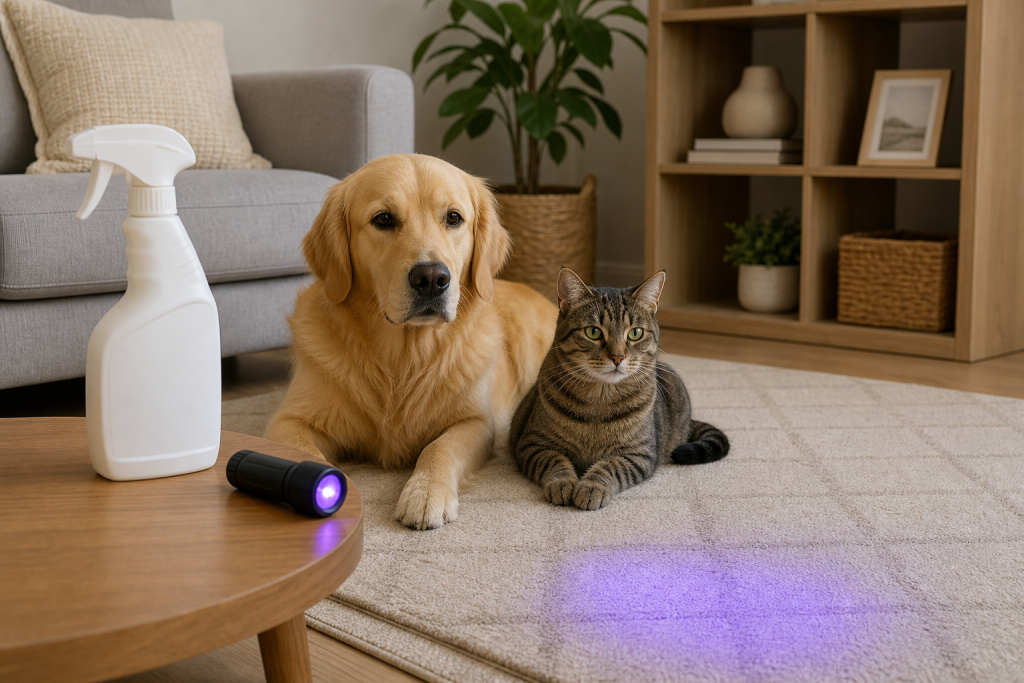
A cheap pet urine blacklight is only a deal if it helps you find the mess without making you buy the wrong cleaner, extra batteries or a second flashlight. The trap is treating the glow as proof that every mark is fresh urine, then spending more on sprays or gadgets instead of checking the surface, cleaner type, battery compartment and return terms before checkout.
Pet stain searches stay busy in summer because puppies, senior pets, closed-up rooms, rugs and travel routines can all reveal old odor problems. Retailers also bundle UV flashlights with stain removers, so the product can look like a quick fix when it is really a locating tool, not a cleaning solution.
What a blacklight can and cannot do
A UV flashlight can help you scan carpets, upholstery edges, baseboards and litter-box areas for spots you missed in normal light. Chewy’s current listing for a VILA urine-detection torch, for example, describes a 51-LED UV flashlight intended to identify potty spots and dried urine locations. That shows there is real shopping demand for the tool, but it does not mean every glowing patch is the same problem.
The smart way to use one is as a map. Mark the area, confirm it matches an odor or accident history, then choose the cleaner for the material. ASPCA guidance for litter-box accidents says to clean accidents thoroughly with an enzymatic cleanser designed to neutralize pet odors. Humane World also points owners toward enzymatic cleaner when pet soiling remains visible or smelly after washing.
The checkout mistake that raises the cost
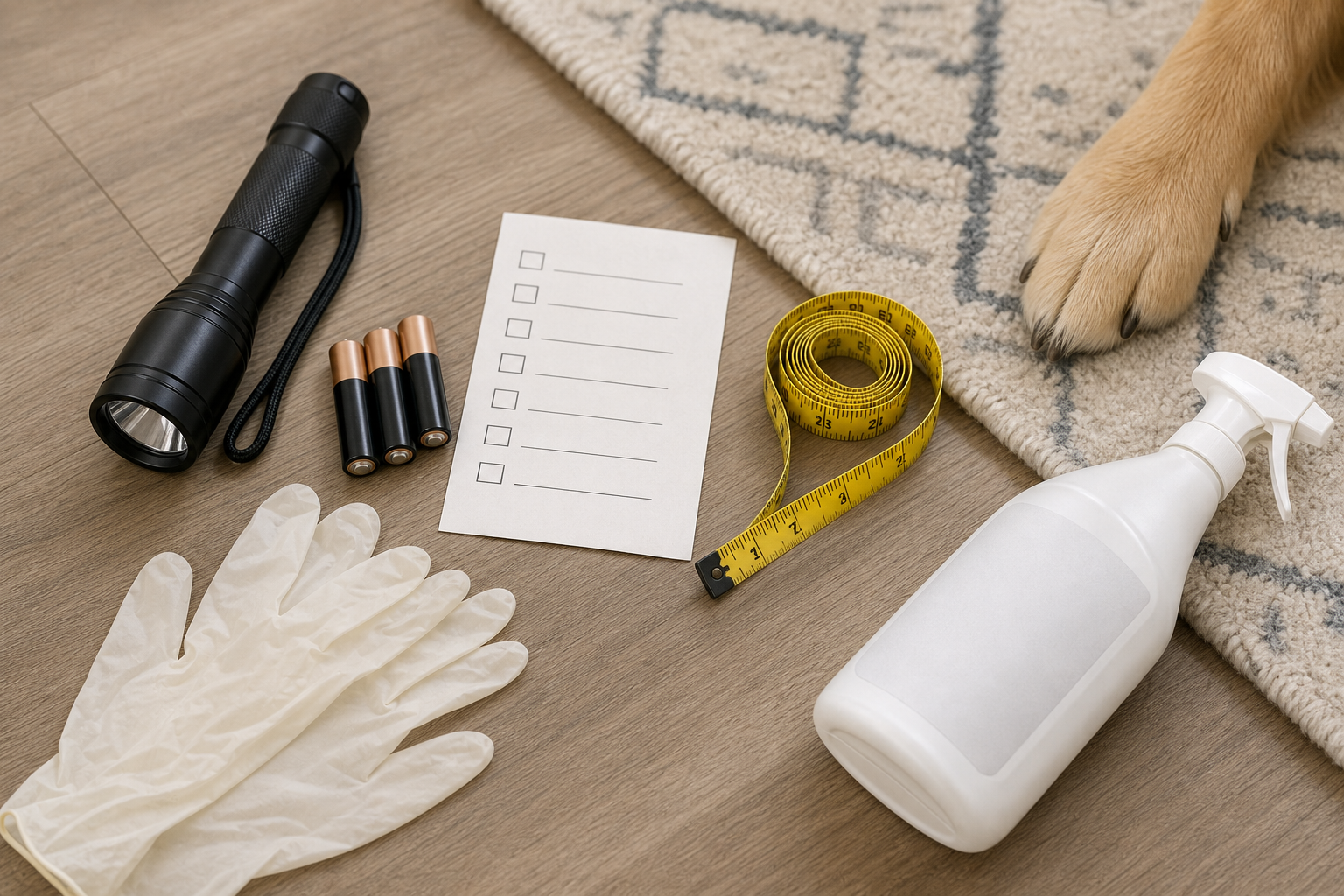
The common mistake is buying the lowest-price UV flashlight without checking the whole kit. Before you pay, look for the wavelength or product purpose, the battery type, whether batteries are included, whether the housing is sealed well enough for storage near cleaning supplies, and whether the return policy still applies after you open the package.
Also check the cleaner bundle. A flashlight bundled with a small bottle can be more expensive than buying a better light and a full-size enzymatic cleaner separately. Compare cost per ounce, not just the kit price. If the product page leans on dramatic stain photos but gives little information about surface compatibility, dwell time or whether the cleaner is enzymatic, treat that as a reason to slow down.
What to verify before buying
- Dark-room performance: UV lights are easier to use in a dark room. If you can only scan during the day, a weak bargain light may disappoint.
- Battery format: AA or AAA batteries are easy to replace, but the cost adds up. Rechargeable models can be convenient, but only if the charging cable and replacement battery are standard.
- Safety instructions: Avoid listings that treat UV as a toy or omit basic warnings about eyes and skin.
- Cleaner type: For pet urine odor, look for an enzymatic cleaner that is labeled for the surface you need to clean.
- Surface risk: Test cleaners on a hidden area before using them on wool rugs, upholstery, hardwood seams or dyed fabric.
- Return terms: If the light is too weak or the cleaner damages a surface, the useful return window matters more than a small coupon.
The deal section: when a bundle is worth it
A blacklight bundle is useful when you are housetraining a puppy, troubleshooting a cat litter-box problem, moving into a home with old pet odor or checking a rug before a deep clean. It is less useful if the cleaner bottle is tiny, the light uses odd batteries, the product has no safety notes or the listing makes it sound like UV light removes odor by itself.
Do not assume a coupon makes the best kit cheapest. Add the cleaner ounces, batteries, shipping threshold and possible refill bottle to the cart math. If you already have a good enzymatic cleaner, a simple flashlight may beat a kit. If you need both, a bundle can be reasonable, but only after the cleaner size and surface directions are clear.
Safety checks owners should not skip
Do not shine UV light into your eyes, your pet’s eyes or anyone else’s eyes. The FDA has warned that some UV wands intended for disinfection can expose users or nearby people to unsafe UV-C radiation, with possible skin or eye injury after only brief exposure. A pet urine flashlight is not the same thing as a UV-C disinfecting wand, but the broader lesson still matters: read the safety instructions and avoid products that give no radiation or use guidance.
Battery safety matters too. The CPSC says consumer products with button or coin batteries must meet federal safety requirements, including secured battery compartments for many products. If a cheap detector uses button cells, check for a screw-secured compartment and keep spare batteries away from pets and children. For AA or AAA models, make sure the cap closes firmly and do not leave loose batteries in a drawer with treats or toys.
What to avoid
Avoid any listing that claims the light proves a room is clean, removes odor, disinfects surfaces or replaces a proper cleaner. Avoid fake-looking before-and-after photos with no cleaner instructions. Do not use ammonia-heavy household cleaners around repeat pet urine spots unless a reliable source specifically supports that use for your surface, because strong smells can make the area more confusing for pets and people.
If a cat suddenly starts urinating outside the litter box, the purchase decision is only one part of the problem. Cleaning helps, but repeated or sudden house soiling can have medical or behavior causes, so ask your vet if the pattern is new, frequent, painful-looking or paired with other symptoms.
Quick answers
Does a UV flashlight prove a stain is pet urine?
No. It can point you to suspicious areas, but other residues can glow too. Treat the glow as a clue, then confirm with odor, location and cleaning history.
Should I buy the cheapest blacklight?
Only if it lists useful details, has clear safety instructions and uses batteries you can replace easily. A weak light with odd batteries can cost more after one frustrating cleaning session.
Do I still need an enzymatic cleaner?
Usually, yes. The blacklight helps find spots. An appropriate cleaner does the cleaning work.
Sources
Sources last checked: July 13, 2026, 01:40 Europe/Rome.
- Chewy, VILA Pet Urine Detector UV Black Flashlight product listing: https://www.chewy.com/vila-urine-detection-torch-small-pet/dp/536614
- ASPCA, Litter Box Problems: https://www.aspca.org/pet-care/cat-care/common-cat-behavior-issues/litter-box-problems
- Humane World for Animals, How to remove pet stains and odors: https://www.humaneworld.org/en/resources/how-remove-pet-stains-and-odors
- FDA, Do Not Use Ultraviolet (UV) Wands That Give Off Unsafe Levels of Radiation: https://www.fda.gov/medical-devices/safety-communications/do-not-use-ultraviolet-uv-wands-give-unsafe-levels-radiation-fda-safety-communication
- CPSC, Button Cell and Coin Battery Business Guidance: https://www.cpsc.gov/Business–Manufacturing/Business-Education/Business-Guidance/Button-Cell-and-Coin-Battery
- CPSC, Button Cell and Coin Battery Safety Education Center: https://www.cpsc.gov/Safety-Education/Safety-Education-Centers/Button-Cell-Coin-Battery-Information-Center