
#pet deals
#pet hair cleanup
#pet tech
#robot vacuum pet hair
#smart home pets
A robot vacuum deal can be a poor buy for pet owners if the model only looks powerful on paper. Pet hair exposes weak brush design, small bins, poor obstacle avoidance, expensive replacement parts and unclear app support. Before paying for a discounted robot vacuum, check whether it can handle your pet’s coat, your flooring and the daily maintenance you are actually willing to do.
That matters right now because spring and early summer shedding can make daily cleanup feel endless, and robot vacuums are heavily promoted as a hands-off fix. The better question is not “Which model has the biggest suction number?” It is whether the whole system, including rollers, filters, dock, app, warranty and returns, fits a home with dogs, cats, toys, bowls and fur on the floor.
Why Pet Hair Changes the Robot Vacuum Math
Pet hair is not just ordinary dust. It wraps around brush rolls, fills small dustbins quickly, sticks to rugs and collects near furniture legs, bowls and beds. The American Kennel Club notes that dogs may shed seasonally or year-round depending on coat type, and heavy shedding periods can require frequent brushing. ASPCA guidance also treats shedding as normal for cats and dogs, while advising owners to ask a veterinarian about bald patches, excessive hair loss or skin changes.
That is the first buying lesson: a robot vacuum is a maintenance tool, not a replacement for grooming. If your pet is blowing coat, matting, scratching or losing hair in patches, spend the money on the right grooming supplies or veterinary advice before treating a gadget as the fix.
The Feature Pet Owners Misread
Suction ratings are easy to compare, so they dominate product pages. They are also incomplete. A robot vacuum with a high suction claim can still disappoint if the roller tangles, the bin fills during one room, the filter leaks fine dust back into the room or the robot gets stuck on food bowls and soft toys.
For pet homes, look at the practical chain:
- Brush design: rubber or anti-tangle rollers can be easier to clear than bristled rollers in long-hair homes, but still need inspection.
- Dustbin and dock: a self-empty dock can help with daily shedding, but bags, filters and dock parts become recurring costs.
- Obstacle avoidance: pet toys, bowls, cords and washable pads are normal floor clutter. A robot that cannot navigate them may need more babysitting than expected.
- Filter claims: if allergies matter in your home, check whether the vacuum has a sealed filtration path, not just a filter buzzword.
- Floor mix: hair pickup on hard flooring does not guarantee the same result on rugs, deep carpet or textured mats.
What To Check Before Checkout
Start with your pet, not the discount. A short-haired cat in an apartment has a different cleaning problem from two double-coated dogs and a high-pile rug. Make a quick list of coat length, shedding level, rug height, thresholds, stairs, pet bowls, cords and toy clutter before comparing models.
Then check these details before the cart page:
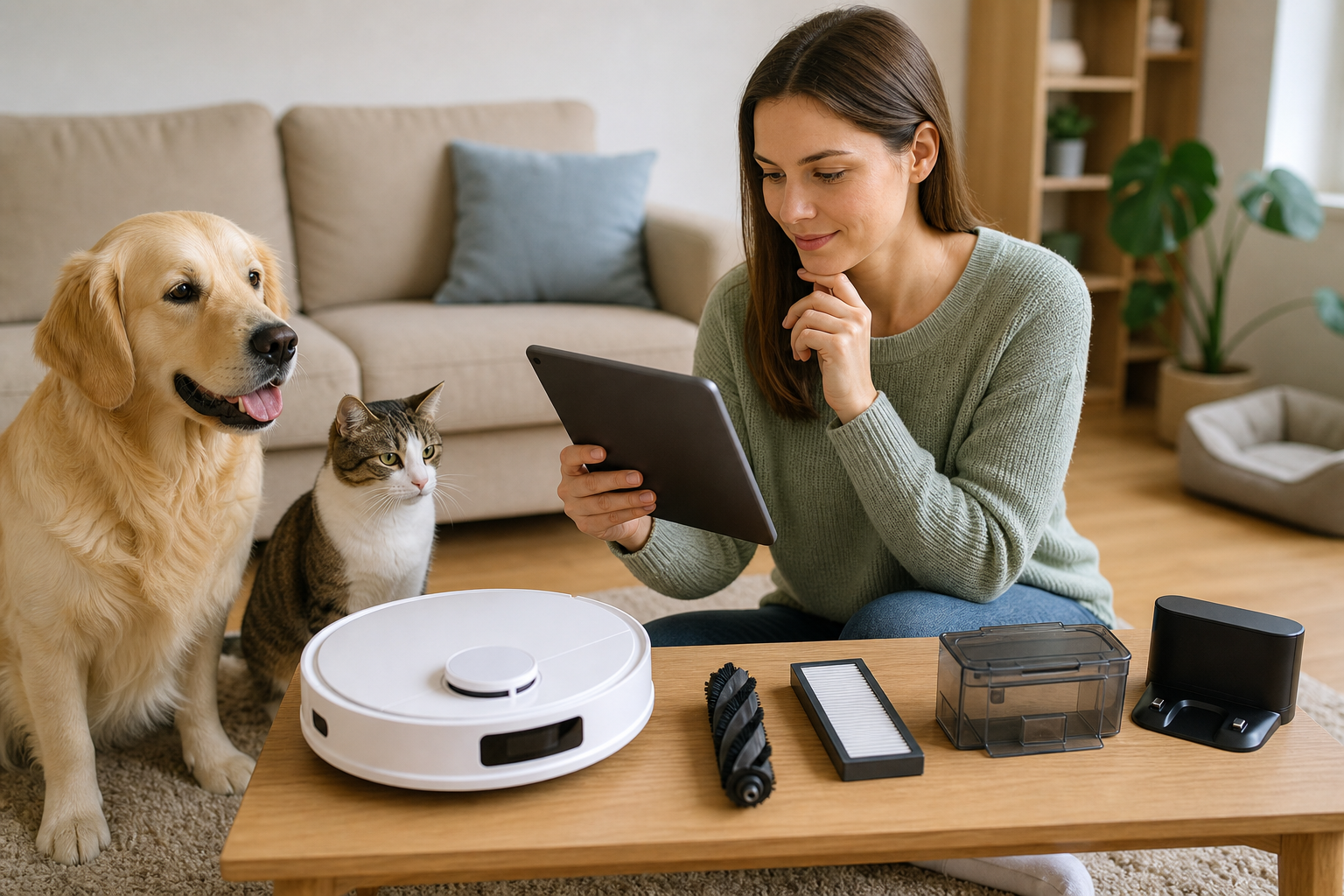
- Replacement parts: price and availability for rollers, side brushes, filters, dust bags, mop pads and batteries.
- Cleaning schedule: whether the robot can run quietly enough when pets are calm, and whether your pet needs a slow introduction.
- Manual cleanup: how often the roller, wheels, sensors and dock need hair removed.
- No-go zones: whether app mapping can protect food bowls, litter boxes, pet beds, cords and delicate rugs.
- Return window: whether the retailer accepts returns after the vacuum has been tested on real floors, not just opened.
- Warranty and support: who handles repairs, what parts are covered and whether support is available in your country.
If the product page hides replacement-part costs or makes the app sound essential without explaining support, treat the sale price as incomplete.
The Privacy And App Support Check
Robot vacuums are often smart-home devices. Some use cameras, mapping, cloud accounts, remote control or room-by-room cleaning data. The Federal Trade Commission has warned that many smart-product pages do not clearly explain how long software updates will continue, even though updates can affect features and security.
Before buying, search the manufacturer’s support pages for update policy, app requirements, account deletion, map deletion and offline behavior. If the vacuum has a camera, check whether images are processed locally or in the cloud, whether the camera can be disabled and whether the app offers two-factor authentication. A cheap robot that depends on an unsupported app can become an expensive manual vacuum with a battery.
Deal And Coupon Checks That Matter
A coupon can still be useful, but it should not choose the robot for you. Compare the final cart price against the cost of six to twelve months of bags, filters and brushes. If the model needs proprietary consumables, a small checkout discount may disappear after the first refill order.
Also check whether the deal applies to a current model or an older version with weaker obstacle avoidance, shorter battery life or fewer available parts. Refurbished and open-box units can make sense when the warranty is clear, but they are riskier if the battery, dock or sensors are excluded. Avoid any listing that uses vague “pet edition” wording without explaining the actual brush, bin, filter or obstacle features.

What To Avoid
Do not buy a robot vacuum for pet accidents unless the product clearly says how it detects and avoids wet messes, and even then, supervise early runs. A robot that drags a mess through the house is not a cleaning shortcut.
Do not rely on a robot vacuum as an allergy solution. The EPA says source control and ventilation are the most effective ways to improve indoor air, with filtration as a supplement. AAFA also recommends damp cleaning and HEPA filtration for pet-allergy households. A robot can help reduce loose hair, but it cannot remove every allergen or replace medical advice for allergy symptoms.
Do not ignore your pet’s reaction. Some pets are relaxed around moving devices, while others chase, bark at or hide from them. Start with short supervised runs, keep cords and toys picked up, and use no-go zones around feeding and resting areas.
Fast Answers
Is a robot vacuum worth it for pet hair?
It can be worth it as a daily maintenance cleaner, especially on hard floors and low rugs. It is less convincing if you expect it to replace grooming, deep carpet cleaning or regular roller maintenance.
Should pet owners pay extra for a self-empty dock?
Often yes for heavy shedders, but only after checking bag costs, dock size and return terms. The dock saves effort, but it adds consumables and another part that can fail.
Is HEPA enough?
No. Look for a sealed system and realistic cleaning habits. A HEPA-style filter inside a leaky dust path is not the same as a well-sealed vacuum, and allergy concerns should be discussed with a health professional.
What is the biggest checkout mistake?
Buying the discount instead of the maintenance system. If replacement rollers, filters, bags, app support and returns do not check out, the cheaper robot may cost more in time and frustration.
Sources
Last checked: 2026-06-01 01:33 CEST, Europe/Rome.
- American Kennel Club, Dog Shedding: What to Expect and How to Manage It
- ASPCA, Dog Grooming Tips
- ASPCA, Cat Grooming Tips
- Asthma and Allergy Foundation of America, Allergic to Your Pet?
- U.S. EPA, Air Cleaners and Air Filters in the Home
- FTC Consumer Advice, How long will your smart device get software updates?
- Tom’s Guide, Best robot vacuums in 2026, tested