
#dog stroller
#pet stroller
#pet travel
#senior dogs
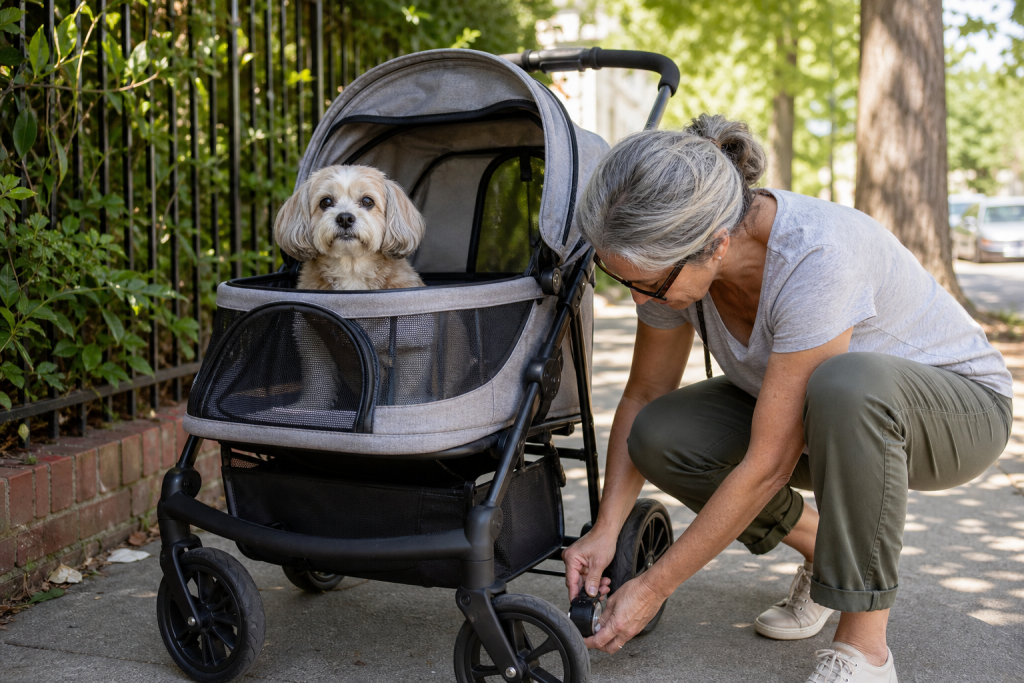
A pet stroller deal can go wrong when the stroller is cheap but unstable, cramped or hard for your dog or cat to enter. Before buying, check the interior dimensions, wheel size, brake design, entry height, ventilation and return policy, not just the advertised weight limit. A stroller is useful for some senior, small or recovering pets, but it should make outings safer and easier, not create a rolling escape risk.
Pet strollers are getting more attention because owners are trying to keep pets included on summer walks, shopping trips and low-impact outings. That does not make every discounted stroller a smart buy. The wrong model can tip on curbs, trap heat under a dark canopy, rattle over pavement or leave a nervous pet with too many ways to push out.
Why This Matters Now
Summer is when stroller listings look especially tempting. Owners want to avoid hot pavement, protect older joints and keep small pets close in crowds. Chewy’s dog stroller category describes strollers as a controlled space for busy or unfamiliar areas and notes that shoppers should check both weight limit and dimensions for fit.
The seasonal angle matters because a stroller can solve one problem while creating another. The ASPCA advises giving pets fresh water, shade and indoor time when it is extremely hot. A mesh stroller in the shade can help during a short outing, but a closed canopy in direct sun is not a heat-safety plan.
The Weight Limit Is Not Enough
A 30-pound limit does not mean a 29-pound dog will be comfortable. Look for the interior floor length, width and height, then compare those numbers with your pet’s real resting posture. Your pet should be able to sit naturally, turn around and lie down without being pressed into the canopy or side panels.
Also check where the weight sits. A tall, narrow stroller can feel fine on a smooth store aisle and still become awkward on cracked sidewalks or sloped driveways. If your dog leans to one side, stands up suddenly or rides with a bag hanging from the handle, the stroller’s balance matters as much as the listed capacity.
What To Check Before Checkout
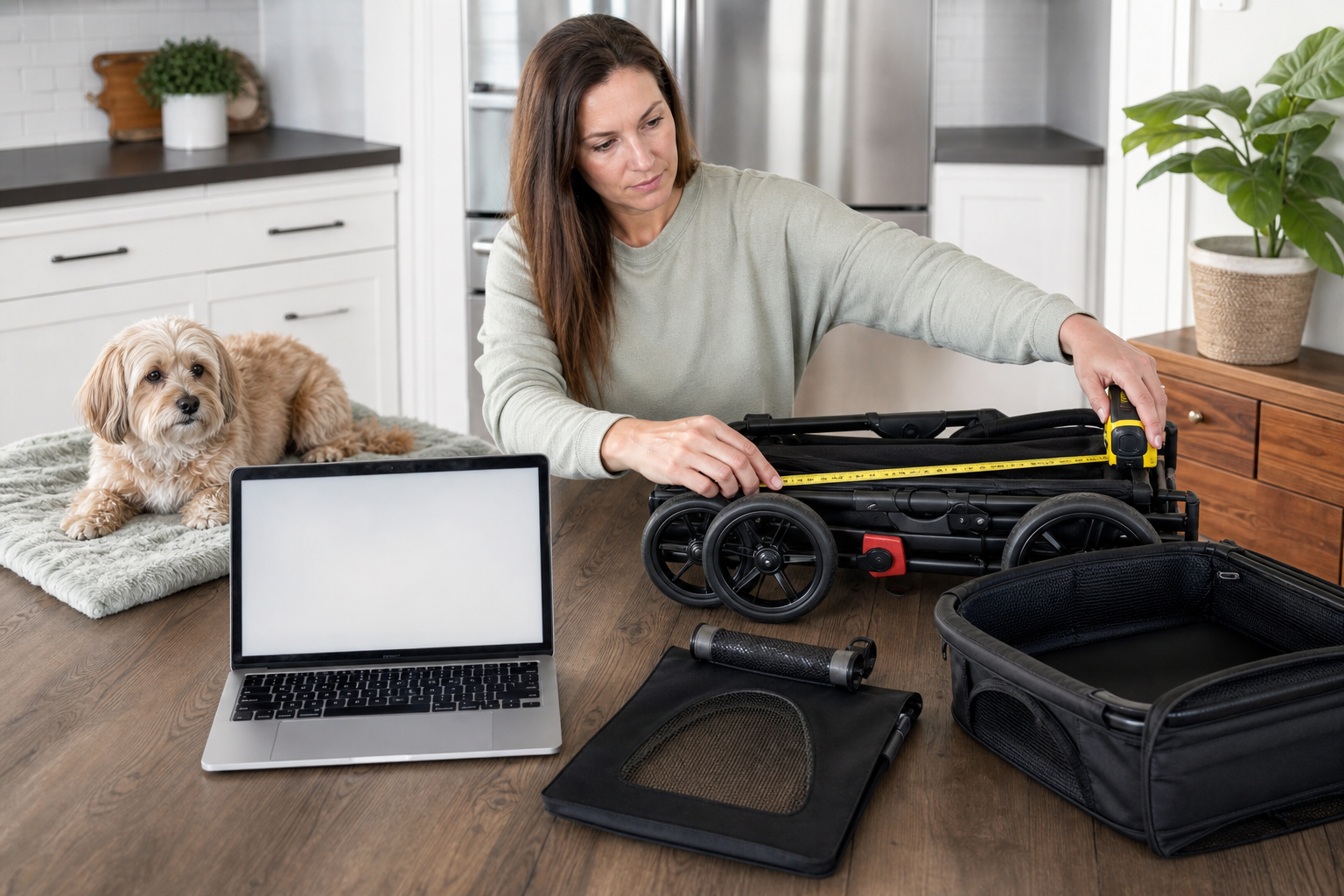
Start with the stroller’s footprint. Measure your hallway, car trunk and storage space before assuming a folding model will fit. Some stronger strollers fold down, but not flat enough for small apartments or compact cars.
Next, look at entry height. A senior dog with sore hips, a short-legged breed or a post-surgery pet may struggle with a basket that requires lifting or jumping. A low opening, wide door or ramp-style entry can matter more than a fancy cup holder.
Wheel size deserves attention. Tiny plastic wheels are easier to store, but they can chatter on uneven pavement. Larger wheels can ride more smoothly, but they add bulk and may push the stroller into a higher shipping-return cost bracket.
Check the brake before you trust the stroller on a slope. You want a brake you can engage quickly, confirm visually and release without fighting it. If the product page has reviews mentioning rolling, weak brakes or wobbling front wheels, do not treat the discount as compensation.
Finally, review the interior tether. A tether is not a substitute for supervision, but it can help keep a pet from launching out when the canopy is open. Attach it to a well-fitted harness rather than relying on a collar for a pet that pulls, panics or coughs easily. Ask your veterinarian for guidance if your pet has breathing, spinal, joint or recovery restrictions.
Deal And Coupon Checks
Pet strollers are bulky, so shipping and return terms can decide whether a sale is real. Check whether the stroller qualifies for free shipping before and after any coupon is applied. Some carts calculate thresholds after discounts, which can change the final total.
Look for restocking fees, return-window limits and whether the seller requires the original box. A stroller that arrives wobbly or too small is not a bargain if return shipping costs nearly as much as the markdown.
Be careful with marketplace listings that copy the same photos across different brand names. If the listing does not clearly show the interior dimensions, brake, wheel type and canopy closure, pause before buying. A low price should not be the only specification you can verify.
Safety Mistakes To Avoid
Do not use a stroller as a way to keep walking in dangerous heat. It can protect paws from pavement, but it can also reduce airflow if the canopy is closed. Bring water, stay in shade and cut the trip short when conditions are hot or humid.
Do not assume a pet stroller is an airline carrier. The CDC reminds travelers to keep pets in carriers and follow airline policies when flying, with pets secured below the seat when hand-carried. A wheeled stroller frame may help in an airport, but airlines usually judge the actual carrier, not the stroller attachment.
Do not buy a jogging stroller just because it says “jogger” in the title. Confirm that the manufacturer actually rates it for jogging, that the front wheel can lock if needed, and that the pet compartment remains stable at speed. If the page is vague, treat it as a walking stroller.
Do not use a stroller to replace all exercise for a healthy dog. The AVMA’s healthy-weight guidance emphasizes physical activity as part of weight management. A stroller is best as a support tool for tired, senior, small, recovering or heat-sensitive pets, not as a reason to skip appropriate movement.
A Practical Buying Checklist
- Measure your pet while sitting and lying down, then compare those numbers with the interior dimensions.
- Check weight limit, stroller weight and folded size.
- Look for wide mesh panels, shade and a canopy that closes securely without trapping heat.
- Prefer brakes that are easy to engage and confirm before letting go.
- Match wheel size to your real route: smooth store floors, city sidewalks, gravel paths or park trails.
- Confirm the entry style for senior, short-legged or recovering pets.
- Read return terms before checkout, especially for oversized shipping.
FAQ
Are pet strollers only for senior dogs?
No. They can help senior pets, small pets, recovering pets and some anxious pets in crowded places. The key is buying for a real use case, not just because the stroller is discounted.
Can cats use pet strollers?
Some cats can, but escape control matters. Look for secure closures, strong mesh and an interior tether used with a well-fitted harness. Test indoors before any outdoor trip.
Is a stroller safer than walking on hot pavement?
It can protect paws during a short shaded outing, but it does not remove heat risk. Avoid extreme heat, offer water and watch your pet closely.
Should I buy the cheapest stroller first?
Only if it fits the pet, route and return terms. Cheap wheels, weak brakes or a cramped basket can make a low price expensive after one frustrating walk.
Sources
Sources last checked: 2026-07-06 01:30 Europe/Rome.
- Chewy, dog stroller shopping category and stroller fit guidance: https://www.chewy.com/b/dog-strollers-1466
- ASPCA, Hot Weather Safety Tips: https://www.aspca.org/pet-care/general-pet-care/hot-weather-safety-tips
- CDC, Pet Travel Safety: https://www.cdc.gov/healthy-pets/travel/index.html
- AVMA, Your Pet’s Healthy Weight: https://www.avma.org/resources-tools/pet-owners/petcare/your-pets-healthy-weight
- The Spruce Pets, The 5 Best Dog Strollers of 2026, Tested and Reviewed: https://www.thesprucepets.com/best-dog-strollers-4151725