

#dog and cat supplies
#flea and tick prevention
#new world screwworm
#pet safety
#pet wound care
A wound spray or discounted parasite product is not the thing to reach for first if you are worried about New World screwworm. The useful shopping move is to keep routine parasite prevention and pet-safe wound supplies organized, but suspicious wounds, maggots or infestations need prompt veterinary and official reporting guidance. Before buying anything online, check whether the product is actually labeled for your pet, whether it appears on current FDA guidance, and whether your veterinarian wants something different for your dog or cat.
That matters now because New World screwworm has moved from a distant livestock headline into a live U.S. pet-owner search topic. USDA APHIS updated its current-status page on July 7, 2026, and the Associated Press reported on July 9 that confirmed U.S. cases in Texas and New Mexico include infections in dogs. For shoppers, the risk is not just the parasite itself. It is the temptation to treat a scary headline like an ordinary flea, fly or first-aid aisle problem.
Why the checkout mistake is so easy to make
New World screwworm is a fly whose larvae feed on living tissue after eggs are laid in wounds or moist openings. APHIS tells animal owners to report suspicious wounds, maggots or infestations immediately. That is a different situation from buying a general pet itch spray, a hot-spot product, a flea comb or a bargain bottle of outdoor fly repellent.
The checkout page can blur those lines. A product may say “wound,” “insect,” “fly,” “parasite,” “flea and tick” or “for animals,” but those words do not automatically mean it is appropriate for screwworm concern, safe for cats, safe near an open wound, or approved for the exact use implied by a marketplace listing.

What to check before buying any wound, fly or parasite product
Start with the species label. Dog-only parasite products can be dangerous for cats, and a product made for livestock, horses, birds or facilities may not belong on a dog or cat without veterinary direction. If the listing is vague, do not let a sale badge decide for you.
Next, check the active ingredient and the exact claim. “Repels flies” is not the same as “treats screwworm.” “Supports wound care” is not the same as a veterinary plan for larvae in tissue. FDA’s New World screwworm animal-drug page lists emergency use authorizations and conditional approvals for specific products and species, so that page is a better reference than a seller’s keyword-stuffed product title.
Also check how the product is used. Some items are meant for intact skin, some for environmental use, some for routine flea control, and some only under veterinary supervision. If the directions tell you to avoid eyes, mucous membranes or broken skin, that matters in exactly the kind of wound scenario that makes owners search in a panic.
The deal section: when a discount is not the useful part
A coupon can be reasonable for routine supplies, especially if you already know the product your veterinarian recommends. It is less useful when the product choice is uncertain. For this topic, the better “deal” is avoiding a cart full of wrong products: livestock spray for a house cat, a flea product dosed for the wrong weight, an unverified marketplace bottle, or a wound wash that delays care.
Before paying, verify these details:
- The product is labeled for your pet’s species, age and weight.
- The seller is reputable and the package photos match the current manufacturer label.
- The directions do not conflict with the wound or body area you are worried about.
- The product is not being represented as a guaranteed screwworm cure unless that claim is backed by current FDA guidance and your veterinarian.
- Autoship makes sense only for routine prevention, not for a product you are buying because of a suspected infestation.
Routine prevention is different from emergency shopping
Veterinary and public-health sources keep pointing owners back to routine prevention, wound checks and fast reporting. That does not mean every flea or tick product is interchangeable, and it does not mean a product sitting in your cart can replace a veterinary exam. It means the normal monthly prevention conversation with your vet is worth having before a crisis.
If you live in or travel through affected areas, add a practical shopping check to your usual pet-supply routine. Keep your pet’s parasite prevention current, keep a clean cone or recovery collar if your vet has recommended one for wound protection, and keep basic pet first-aid supplies in date. Do not build a home “screwworm kit” from random marketplace listings.
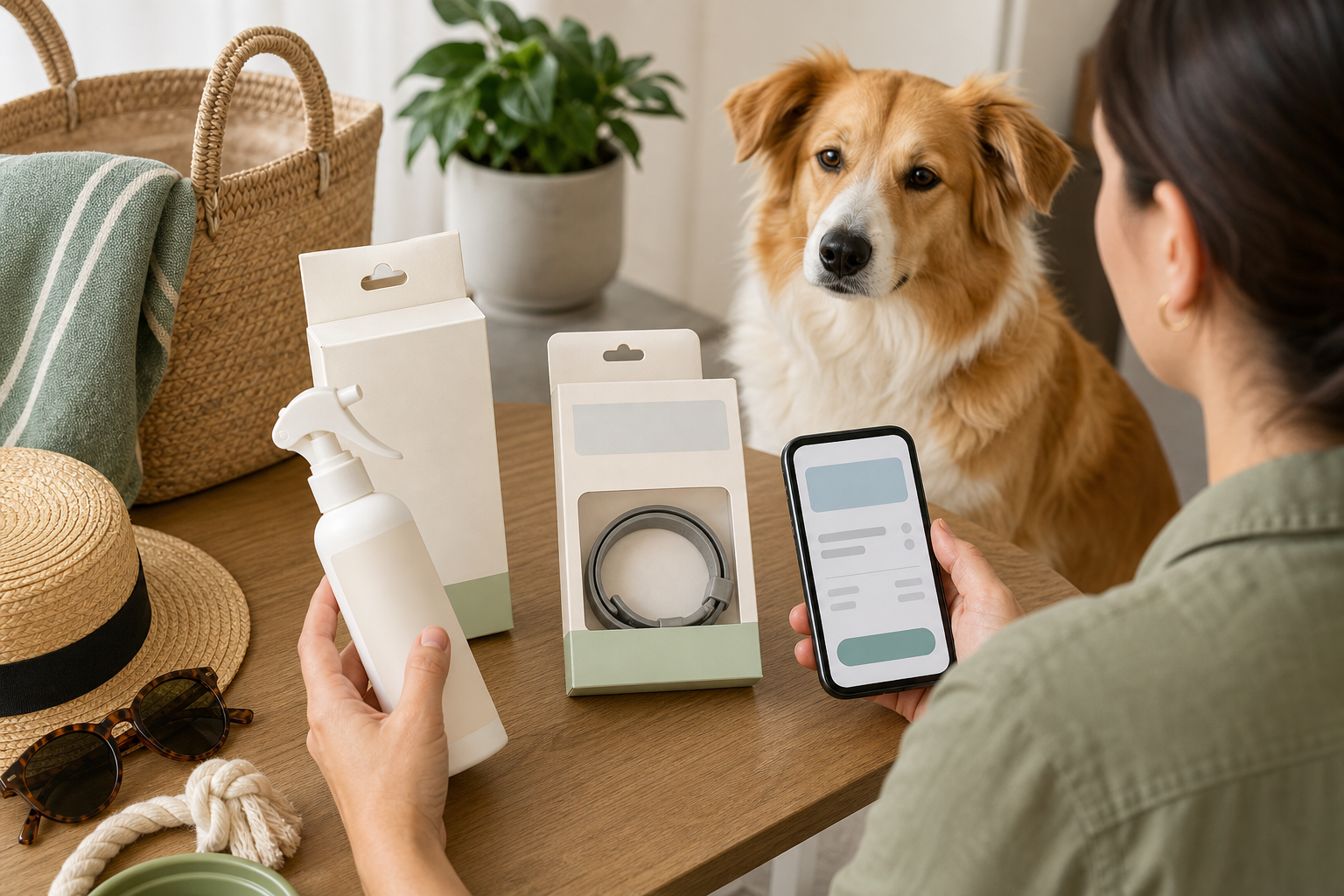
What to avoid
Avoid buying products that make broad parasite claims without a clear species label. Avoid using dog products on cats unless the label and your veterinarian say it is appropriate. Avoid livestock or barn products for household pets unless a veterinarian has specifically directed that use. Avoid marketplace listings that use official-sounding words but do not show the manufacturer, active ingredient, lot details or full directions.
Most of all, avoid waiting for an online order if the concern is a suspicious wound, visible maggots, foul odor, pain, restlessness or a rapidly worsening skin problem. This article is shopping guidance, not a diagnostic tool. Ask your veterinarian or local animal-health authority what to do next.
Quick answers
Should I buy a wound spray because of New World screwworm news?
Only if it is a normal pet first-aid product you already have a reason to keep and it is labeled for your pet. A suspected screwworm case needs veterinary and official guidance, not a checkout experiment.
Are flea and tick products enough?
Routine parasite prevention can be part of risk reduction, but product choice depends on your pet, species, age, weight, health and location. Ask your veterinarian before changing products because of a headline.
Can cats use the same products as dogs?
No, not automatically. Cat safety is a separate label check every time, especially with parasite products and insecticides.
What should shoppers in affected areas verify?
Verify current APHIS status updates, FDA animal-drug guidance, your vet’s recommendation, the product label, the seller, the return terms and whether the item is routine prevention or an actual veterinary-directed treatment.
Sources
Sources last checked: July 9, 2026, 07:35 Europe/Rome.
- USDA APHIS, Current Status of New World Screwworm.
- USDA APHIS, New World Screwworm Prevention for Animals.
- FDA, Animal Drugs for New World Screwworm.
- AVMA, New World screwworm.
- Associated Press, What to know about protecting pets from the New World screwworm fly.