

#flea and tick products
#heartworm prevention
#mosquito repellent
#pet bug spray
#summer pet supplies
A mosquito repellent deal is only useful for pets if the label is meant for the animal in front of you. Do not spray a human bug repellent, DEET product, citronella oil blend or patio mosquito candle on a dog or cat just because it is on sale. The safer checkout move is to separate human mosquito protection, pet-labeled flea and tick products, and veterinarian-guided heartworm prevention before you pay.
That matters more in summer, when mosquito, flea and tick products crowd the same sale pages and search results. The packaging can sound similar, but the intended user, active ingredient, dose, species and application directions are not interchangeable.
Why this deal is easy to misread now
Summer shopping pushes several categories into one mental bucket: bug spray, flea and tick treatment, yard spray, patio candles, collars, wipes, shampoos and heartworm preventives. A cart that looks like “mosquito protection for pets” can actually contain products for humans, outdoor spaces or only one animal species.
EPA guidance for flea and tick products is blunt about species and size. Use a product only on the animal species and weight range named on the label, and do not apply dog products to cats or cat products to dogs. AVMA gives similar caution for preventives: read labels, follow directions and talk with a veterinarian when choosing parasite protection.
The checkout check most owners skip
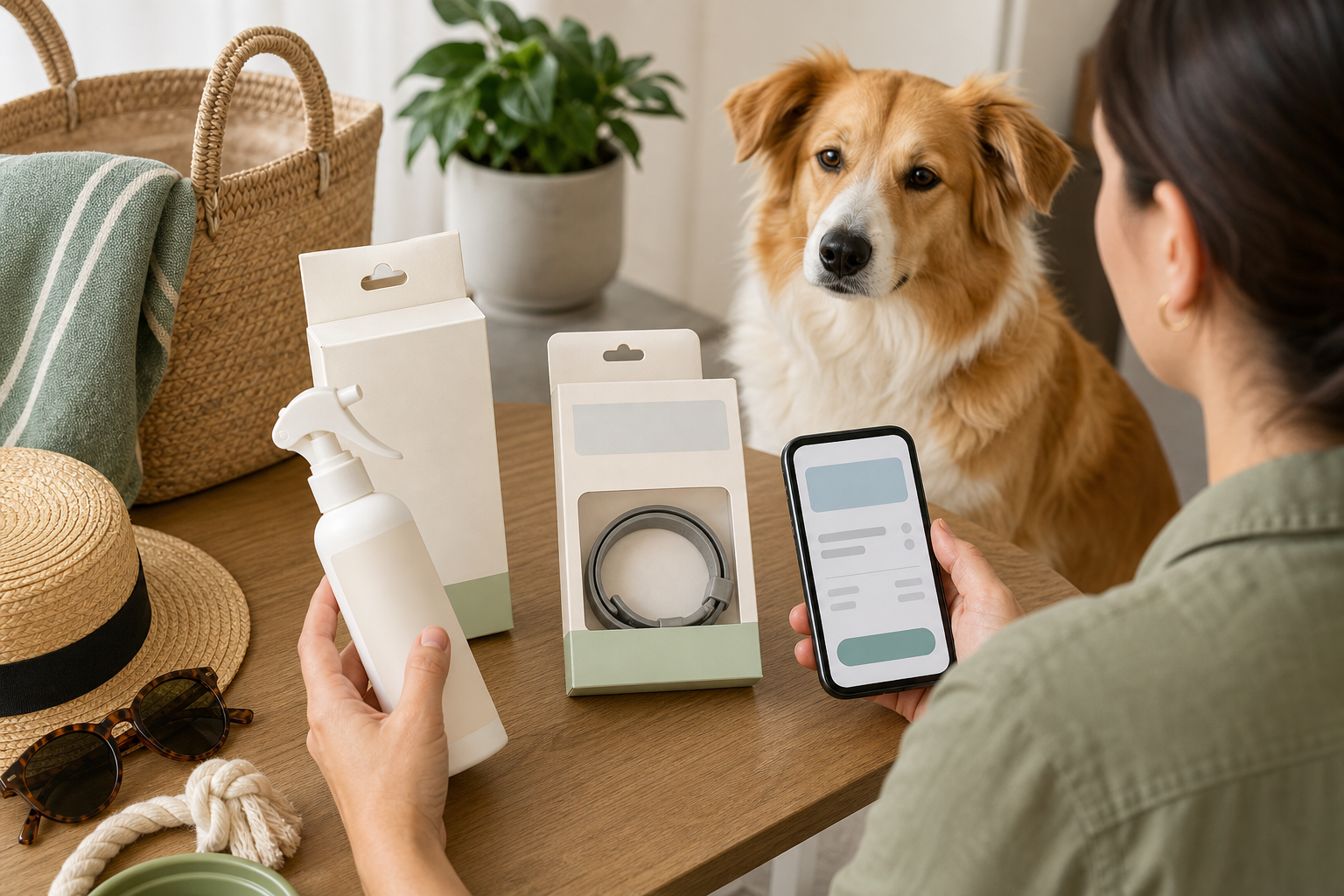
Before buying any mosquito, flea or tick product for a pet, read the front label and the directions panel as if they are two separate claims. The front may say “pet,” “natural,” “outdoor,” “family” or “plant based.” The directions tell you who it is actually for and how it can be used.
- Species: Look for dog, cat or both. If the label does not clearly say it is for your pet’s species, do not treat it as pet-safe.
- Weight or age: Flea and tick products are often sold by weight band. Kittens, puppies, senior pets and medically fragile pets may need veterinary guidance before use.
- Application site: A yard product, candle, diffuser, wristband, room spray or human skin repellent is not the same thing as a product meant to go on a pet.
- Active ingredient: Do not assume “natural” means harmless. Essential oils can be a problem for pets, especially in concentrated form.
- Regulatory clue: FDA notes that flea and tick products may be FDA-approved animal drugs or EPA-registered pesticides. An EPA-registered pesticide label should show an EPA Registration Number.
DEET, citronella and essential oils are not shortcut pet products
Human insect repellents are made for human skin and clothing. EPA’s repellent tools are useful when people are choosing mosquito and tick protection for themselves, but that does not make the same bottle suitable for a dog or cat.
The riskiest shopping mistake is buying a familiar human mosquito spray and using it directly on a pet. Another common mistake is assuming citronella candles, citronella oil, essential-oil sprays or “botanical” patio products are gentle enough for animals. ASPCA warns that concentrated essential oils can harm pets through skin contact, coat exposure or direct application, and cats are often especially sensitive.
If mosquitoes are the reason you are shopping, also remember what a repellent cannot do. Mosquitoes can transmit heartworm disease, and the American Heartworm Society says heartworm has been diagnosed in all 50 states. A spray or candle should not be treated as a replacement for a veterinarian-recommended heartworm prevention plan.
How to judge a pet mosquito product deal
A lower price is not enough. For pet bug products, the deal only works if the item fits your pet, your home and the actual pest problem.
Check the exact animal. A product that is safe for one dog is not automatically safe for a cat in the same house. If your dog and cat groom each other, sleep together or share furniture, ask your veterinarian before using products that could transfer by contact.
Check what the product claims to control. Mosquitoes, fleas and ticks are different problems. Some products repel; some kill after contact or bite; some support environmental control. Do not buy a mosquito-labeled patio product expecting it to handle fleas on a pet.
Check whether it is a supplement, grooming item or pesticide. Wipes, shampoos and sprays can be marketed with similar summer language. The use directions and active ingredient panel matter more than the sale badge.
Check the subscription. If a retailer pushes monthly delivery, make sure the repeat interval matches the product’s actual label directions. Do not schedule repeated pesticide or topical-product shipments just because the first cart looks cheaper.
Check return rules before opening. Pet pest products, health items and opened sprays may have tighter return rules than toys or beds. If the label turns out to be wrong for your pet, the better outcome is catching that before the seal is broken.

What to avoid
Avoid any listing that hides the full label, directions, species, weight band or active ingredient. If the marketplace image is only a lifestyle photo, look for the manufacturer page or a readable label before buying.
Avoid using dog flea and tick products on cats. EPA specifically warns against swapping products between species because some pesticides are more toxic to one species than another.
Avoid “set and forget” patio solutions around pets. Candles, oils, diffusers, yard sprays and foggers may have ventilation, contact, drying-time or access instructions. Keep pets away according to the label, and do not let a low price replace those directions.
Avoid treating a mosquito spray as medical prevention. For heartworm risk, missed doses, young pets, pregnant pets, sick pets or pets with prior reactions, use your veterinarian as the decision point.
Fast answers
Can I use my own mosquito repellent on my dog?
Do not apply a human mosquito repellent to a dog unless the label specifically says it is for that use. When in doubt, ask your veterinarian before applying anything to your pet’s skin or coat.
Are citronella products safe around pets?
Do not assume they are safe. Citronella and essential-oil products vary widely, and concentrated oils can be hazardous to pets. Follow the exact product label and keep direct application off pets unless the product is clearly labeled for that animal.
Does a mosquito spray replace heartworm prevention?
No. Heartworm prevention is a veterinary decision, not a patio-spray or coupon decision. Ask your vet which prevention schedule fits your pet and region.
What should I buy first for summer bugs?
Start with your veterinarian’s flea, tick and heartworm guidance, then buy only products whose label matches your pet’s species, weight, age and use case. Sale items come after that check, not before it.
Sources
Sources last checked: July 9, 2026, 19:33 Europe/Rome.
- U.S. EPA, Repellents: Protection against Mosquitoes, Ticks and Other Arthropods.
- U.S. EPA, Controlling Fleas and Ticks on Your Pet.
- FDA, How can I tell if a flea and tick product is approved by FDA or registered by EPA?
- AVMA, Safe use of flea and tick preventive products.
- AVMA, Heartworm disease.
- American Heartworm Society, Heartworm Basics.
- ASPCA, The Essentials of Essential Oils Around Pets.