
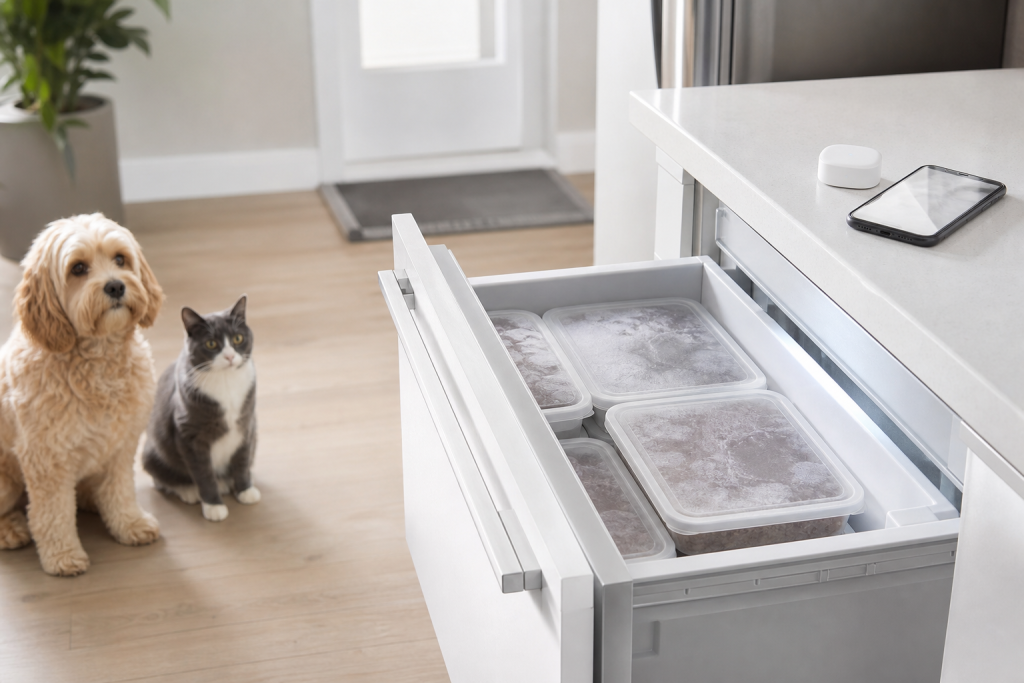
#fresh pet food
#pet food storage
#pet tech deals
#smart freezer alarm
A freezer alarm is only a good deal for fresh, frozen or raw pet food if it can warn you before the food sits too warm for too long. The cheap device in the cart may be enough for a nearby garage freezer, but it may fail the real job if it has weak range, no battery backup, no app alerts or unclear temperature history. Before stocking up on food to save money, check the alarm as carefully as the food subscription.
This matters now because summer heat, storms, travel and bulk fresh-food deliveries all make cold storage less forgiving. Frozen dog food, fresh refrigerated rolls, raw pet food and high-value subscription boxes can turn into wasted money if a freezer door is left open or power drops while nobody is home. A smart temperature alarm can help, but it is a monitoring tool, not permission to ignore storage directions.
Why a Freezer Alarm Belongs in the Pet Food Budget
Fresh pet foods often need refrigeration, and raw frozen pet foods need careful cold storage until they are thawed and used. The CDC says fresh pet foods need to be refrigerated because they use fewer or no preservatives, and it tells owners to follow storage instructions on pet food labels. For raw pet food, CDC guidance is more cautious: it does not recommend feeding raw pet food to dogs and cats, and if owners choose to use it, the agency says to freeze it until ready to thaw and use it.
That makes the freezer or refrigerator part of the purchase. If you buy a discounted multi-week shipment, a warehouse-club freezer pack or a raw-food bundle, the savings depend on keeping the food within the right temperature range. A small alarm can be cheaper than replacing a thawed order, but only if it is reliable enough for the place where you store the food.
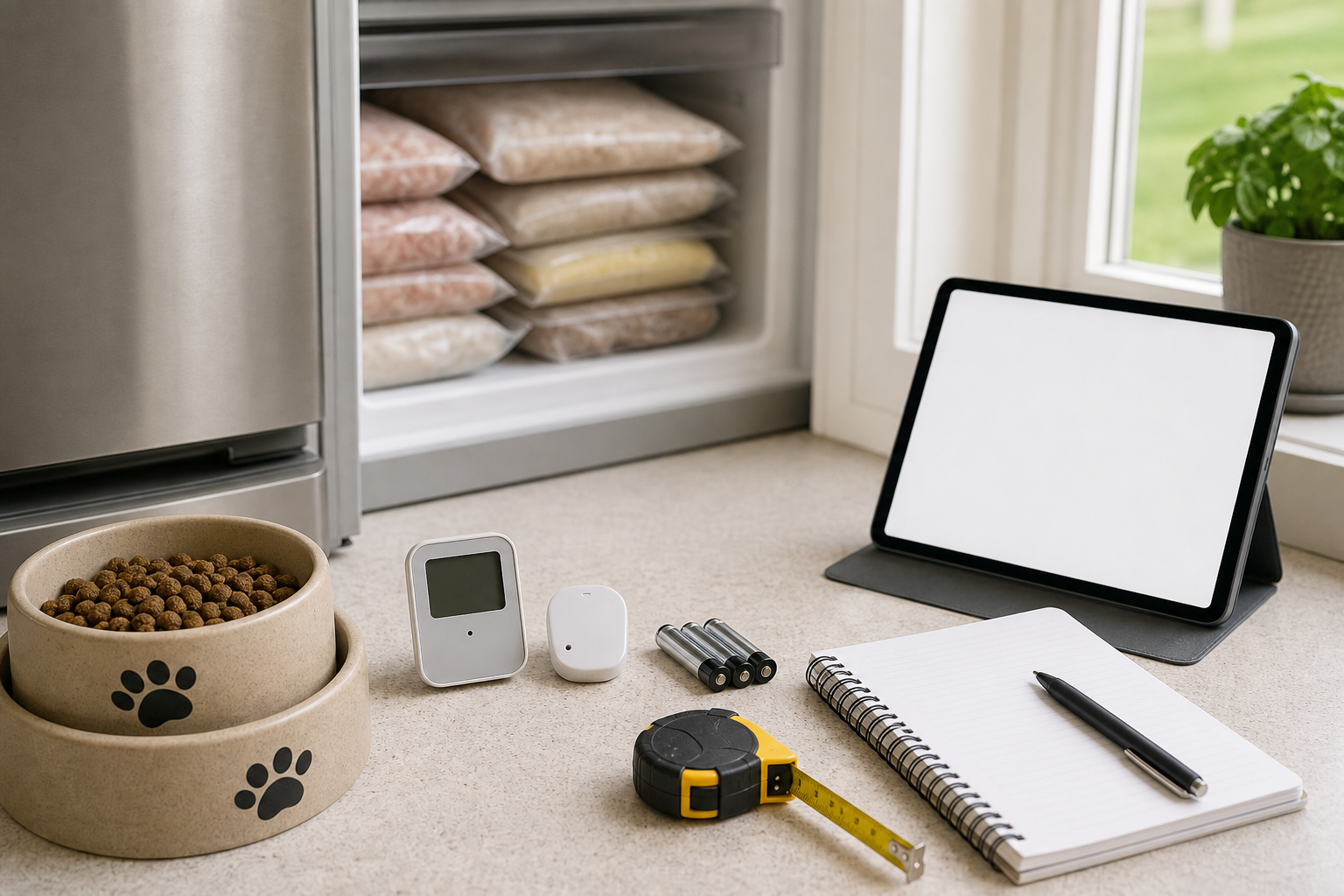
The Device Checks to Make Before Checkout
Do not buy by the lowest price alone. A basic thermometer tells you what the temperature is when you look at it. A useful alarm warns you when you are not looking.
Check these details before paying:
- Alert type: Decide whether you need an audible alarm, phone push alerts, email, text alerts or all of them.
- Connection: Confirm whether the device uses Wi-Fi, Bluetooth, a hub, cellular service or only a local display.
- Range: A basement, garage or detached freezer can be too far from the router for a bargain sensor.
- Battery backup: If the power fails, the alarm still needs a way to keep sensing and alerting.
- Temperature history: A log helps you see how long the freezer was warm, not just that it is cold again now.
- Probe placement: Some sensors sit inside the freezer, while others use a wired probe. Make sure the cord will not stop the gasket from sealing.
- App support: Read recent reviews for delayed alerts, login problems and abandoned apps.
- Recurring cost: Check whether alerts, cloud history or multiple sensors require a paid plan.
If the freezer is in the same room and you are home most of the day, a loud local alarm may be enough. If the freezer is in a garage, rental unit, RV or basement, app alerts and battery backup become more important. If you travel often, a sensor that only beeps inside an empty house is not much of a safeguard.
Know the Temperature Numbers Before You Trust the App
The FDA advises consumers to keep appliance thermometers in refrigerators and freezers and to check that the freezer is at or below 0 degrees F and the refrigerator is at or below 40 degrees F. It also says appliance thermometers can help determine whether food is safe after a power outage. For pet owners, that guidance is useful because fresh pet food is still food that depends on cold storage.
Set the alert thresholds before you fill the freezer. Do not leave the alarm at a factory default you have not checked. If the device allows a delay, understand what it means. A short delay can avoid false alarms when you open the drawer, but a long delay may hide a door that failed to close.
Test the alarm with the freezer empty or lightly stocked. Move the sensor to the real shelf or drawer where pet food will sit, then confirm that the phone alert arrives quickly enough. If the sensor cannot hold a signal before you add food, it is not ready for a large food order.
Deal Math: The Alarm Is Not the Only Cost
A freezer alarm deal can look cheap because the listing shows only the first sensor. Add the hub, extra probes, replacement batteries, cloud plan, shipping, return shipping and any sensor you need for a second freezer. If you buy fresh pet food in bulk to hit a discount threshold, include the alarm cost in the first order’s math.
The right comparison is not “alarm versus no alarm.” It is the first-year cost of the alarm versus the value of the food you are protecting and the likelihood that you will actually respond to alerts. A low-cost local alarm can be sensible for a kitchen freezer. A more expensive Wi-Fi or cellular setup may make sense for a garage freezer with several weeks of food inside, but only if the app, batteries and support are dependable.
What to Avoid
Avoid any listing that promises food safety without explaining accuracy, alert method or placement. Avoid fake-looking review claims that sound like lab testing when the product page gives no accuracy range. Avoid using one sensor to monitor two appliances unless the manufacturer clearly supports that setup.
Do not assume a smart alarm makes thawed food safe again. The device can warn you, but it cannot reverse time, re-freeze safely or decide whether a specific pet food should be discarded. Follow the food label, the manufacturer’s storage guidance and official food-safety rules. If your dog or cat has eaten food you suspect was spoiled or mishandled and you are worried about symptoms, contact your veterinarian.
Where Fresh and Raw Pet Food Shoppers Should Be Extra Careful
Fresh refrigerated pet food usually has shorter storage windows than kibble or canned food. Freshpet, for example, tells shoppers to store its food at 40 degrees F or below and to use a refrigerator thermometer if they are unsure of the temperature. That is brand-specific guidance for Freshpet, but the broader lesson applies to any refrigerated pet food: read the label before you assume your fridge is cold enough.
Raw pet food deserves even more caution because official sources warn about germs such as Salmonella and Listeria. If you choose to buy raw despite that risk, a freezer alarm is only one part of the safety setup. You still need sealed containers, separation from human food, refrigerator thawing, handwashing and cleaning of surfaces and bowls.
Quick Answers
Is a smart freezer alarm worth buying for pet food?
It can be worth buying if you store expensive fresh, frozen or raw pet food in a freezer you do not check often. It is less useful if it only beeps locally and nobody is home to hear it.
Does a freezer alarm replace a thermometer?
No. The best setup is a reliable thermometer plus an alarm. The thermometer helps you verify the real appliance temperature, and the alarm tells you when something changes.
Should raw pet food buyers use a freezer alarm?
If they choose to buy raw food, an alarm can help monitor cold storage, but it does not remove the food-safety risks. CDC and FDA guidance should still shape storage, thawing and cleaning habits, and owners should talk to a veterinarian about diet decisions.
What is the checkout mistake to avoid?
Do not buy the cheapest sensor before checking alert range, battery backup, app reviews, temperature history, subscription costs and return terms. Those details decide whether the alarm protects the food or just adds another gadget to the kitchen.
Sources
Sources last checked: 2026-07-09 16:33 Europe/Rome.