
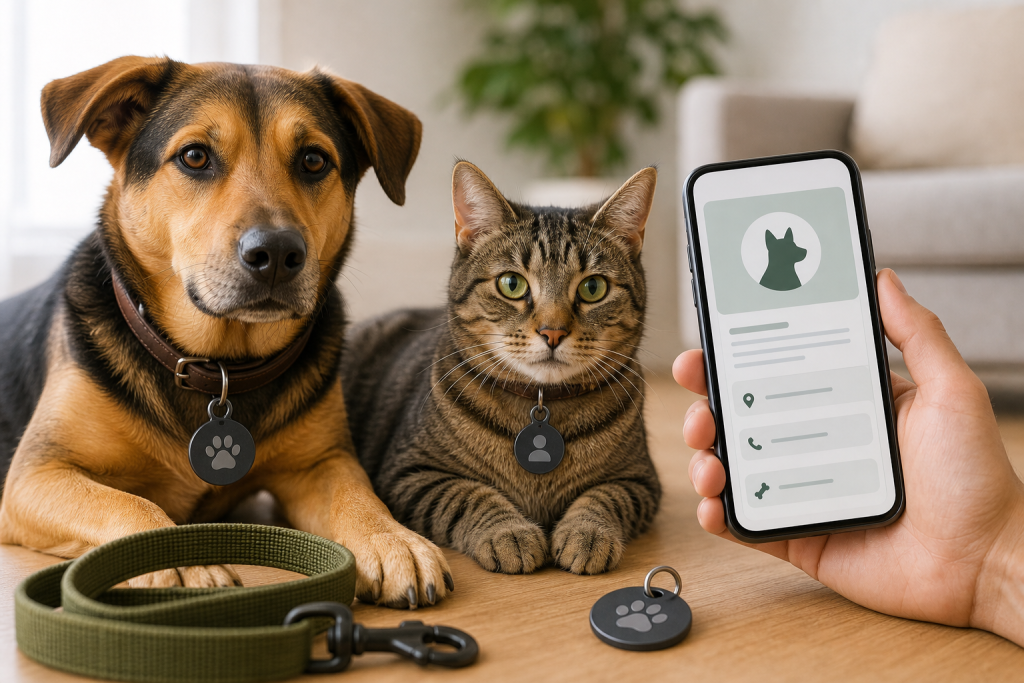
A QR pet tag can be a smart backup ID, but it does not track your dog or cat in real time. It usually works only after someone finds the pet and scans the tag, so the cheap “no subscription” deal can disappoint if you expected a live map. Before buying, check what stays free, what data a stranger can see, whether the tag has readable backup text, and whether the collar is safe for your pet.
Why This Pet-Tech Deal Is Showing Up Now
QR and NFC pet ID tags are easy to find in current shopping results because they promise more information than a tiny engraved tag. Some listings also sit beside GPS trackers, AirTag holders and smart collars, which makes the comparison confusing at checkout.
The useful part is real enough: a digital profile can hold extra contacts, medical notes, photos or travel information, and some services can alert you when the tag is scanned. The limit is just as important. A scan alert is not the same thing as active GPS tracking, and a profile is only helpful if the finder has a phone, signal, time and willingness to scan it.
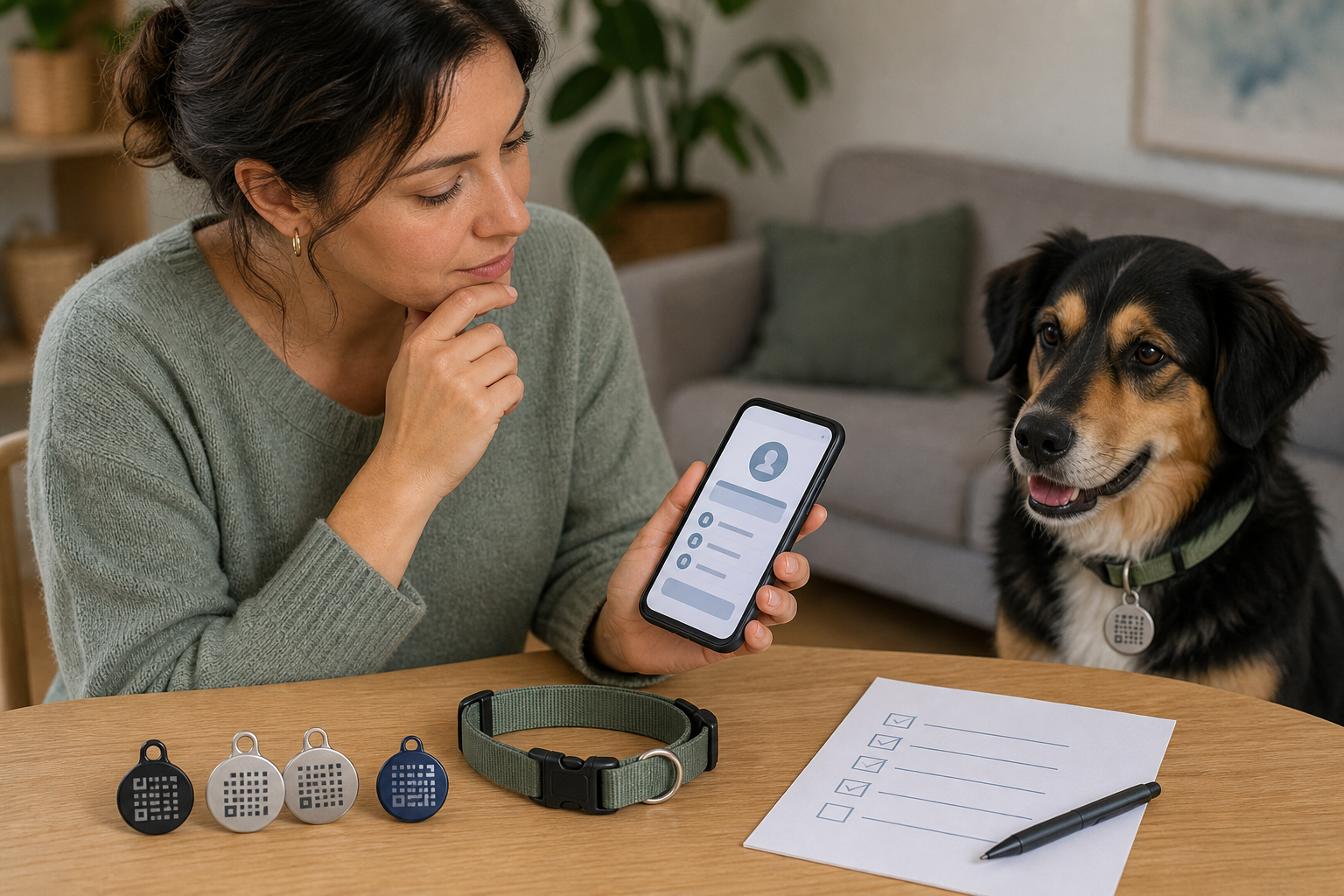
The Checkout Mistake: Buying a Scan Tag Like It Is a Tracker
A QR tag is passive. It sits on the collar and points a scanner to a web profile. That can be very useful for reunions, but it does not follow your pet through a park, send an escape alert by itself or show where your pet is unless the service receives a scan event.
That distinction matters when the listing uses words like “smart,” “location alert,” “GPS scan notification” or “anti-lost.” Read the fine print. If the tag has no battery, no cellular plan and no radio network, assume it is an ID tool, not a live-location tool.
What to Check Before You Pay
- Free versus paid features: Confirm whether profile editing, multiple contacts, photo uploads, scan alerts, lost-pet posters, hotline support or extra pets require a subscription.
- Backup engraving: A finder should be able to call or text you even if the QR page is down, the tag is scratched or the finder does not want to scan a code.
- Profile privacy: Check whether your full address is public, whether you can hide fields, and how quickly you can change phone numbers or travel contacts.
- Company dependence: If the tag’s profile only works through one website, ask what happens if that service changes plans, removes free features or shuts down.
- Collar safety: Dogs need a secure, comfortable fit. Cats should use a safety or breakaway collar so the tag does not turn a snag into a dangerous situation.
- Durability: Look for clear material, water-resistance and warranty terms. A cheap tag that becomes unreadable after a few months is not a deal.
- Return rules: Personalized tags are often harder to return. Check this before entering your pet’s name, phone number or custom profile details.
A Better Way to Compare QR, Engraved and GPS Options
Use the job you need done as the filter. If your pet rarely leaves your home but could slip out a door, a sturdy engraved tag plus an updated microchip may be enough. If you want extra medical notes or multiple contact options, a QR or NFC tag can add flexibility.
If you need live escape alerts, route history, rural coverage or tracking during hikes, compare true GPS or radio trackers instead. Those devices usually cost more because batteries, cellular service, satellite links or dedicated receivers add real operating costs.
Deal and Coupon Checks
A QR tag discount is only useful if the tag works after the first year. Check whether the sale price covers one tag, a multi-pack, activation, replacement rings, engraving, shipping and any premium profile features you actually want.
Be careful with bundle math. A multi-pet bundle can be a good value if every pet needs a tag, but it can waste money if the service charges per profile or if you still need traditional engraved backup tags. If a coupon excludes personalized items, custom engraving or subscription upgrades, the final cart may not match the ad.
What to Avoid
- A tag that claims or implies live tracking but has no battery, cellular service or dedicated location hardware.
- A QR-only tag with no readable phone number on the metal or plastic itself.
- A public profile that exposes more personal information than a finder needs.
- A cat setup that adds weight to a non-breakaway collar.
- A marketplace listing that uses a generic app screenshot but does not name the profile service or explain ongoing costs.
- A tag bought as a substitute for registering or updating a microchip.
Quick Answers
Is a QR pet tag the same as GPS?
No. A QR tag links to information when someone scans it. GPS tracking needs active location hardware and usually a battery, app and service plan.
Should my pet still have a microchip?
Yes. A collar tag is visible and fast, while a microchip is a more permanent backup. Keep the chip registration current, because lookup tools do not update owner details for you.
What information should go on the tag?
At minimum, include a current phone number in readable form. Put sensitive details, medical notes and travel contacts in the digital profile only if the service lets you control what is public.
Sources
Sources last checked July 20, 2026, 22:34 Europe/Rome.
- American Veterinary Medical Association, Microchipping FAQ
- American Veterinary Medical Association, Microchips Reunite Pets with Families
- AAHA, Microchip Registry Lookup Tool
- American Humane Society, Identification Tags and Microchips
- Federal Trade Commission, Securing Your Internet-Connected Devices at Home
- PetHub, digital pet ID tag feature descriptions, used as current product-feature context, not endorsement
- Amazon new releases in dog ID tags, used only as a live shopping-demand signal