
#cat food storage
#dog food storage
#pantry moth traps
#pet food storage
A pantry moth trap is not a full fix for bugs in dry dog or cat food. It can help you spot and reduce adult moth activity, but it will not remove eggs or larvae already hiding in kibble, packaging seams or pantry cracks. Before you buy a multi-pack of traps, check the food bag, storage container and cleanup plan first.
This matters now because summer pantry problems often collide with bulk pet-food buying. Warm storage areas, open kibble bags, bird seed, treats and rarely cleaned bins can make a cheap dry-food deal feel expensive fast. A trap can be useful, but only if you treat it as one tool, not the whole solution.
Why pet food attracts pantry moth attention
Pantry moths are usually discussed as a flour, cereal or rice problem, but dry pet food belongs in the same risk group. University of California IPM says bulk goods such as pet food should be stored in containers with tight-fitting lids, not in plastic bags. Colorado State University also notes that bulk items such as bird seed and dog food should be inspected and stored away from the pantry area when possible.
The shopping mistake is assuming the problem starts only after you open the bag. Pantry pests can arrive through dry goods, hide in packaging or spread between nearby foods. If you buy a large bag because the unit price looks better, the savings depend on whether you can store it tightly, use it before it goes stale and keep the label information in case of a recall.
What a pantry moth trap can and cannot do
Most pantry moth traps use a sticky surface and pheromone lure to attract adult moths. That makes them useful for monitoring and catching some adults, especially when you are trying to confirm whether moths are still active. It does not mean the trap has cleaned the bag, killed larvae inside food or made contaminated kibble safe to keep.
The National Pesticide Information Center warns against misusing mothballs around food areas and notes that gases from mothballs may pose risks to people or pets when used improperly. For pet owners, that is the key checkout point: a pantry moth product should be meant for food-storage monitoring, not a closet moth product, and it should not introduce pesticide exposure around bowls, scoops, treats or curious pets.
The checkout check before you buy traps
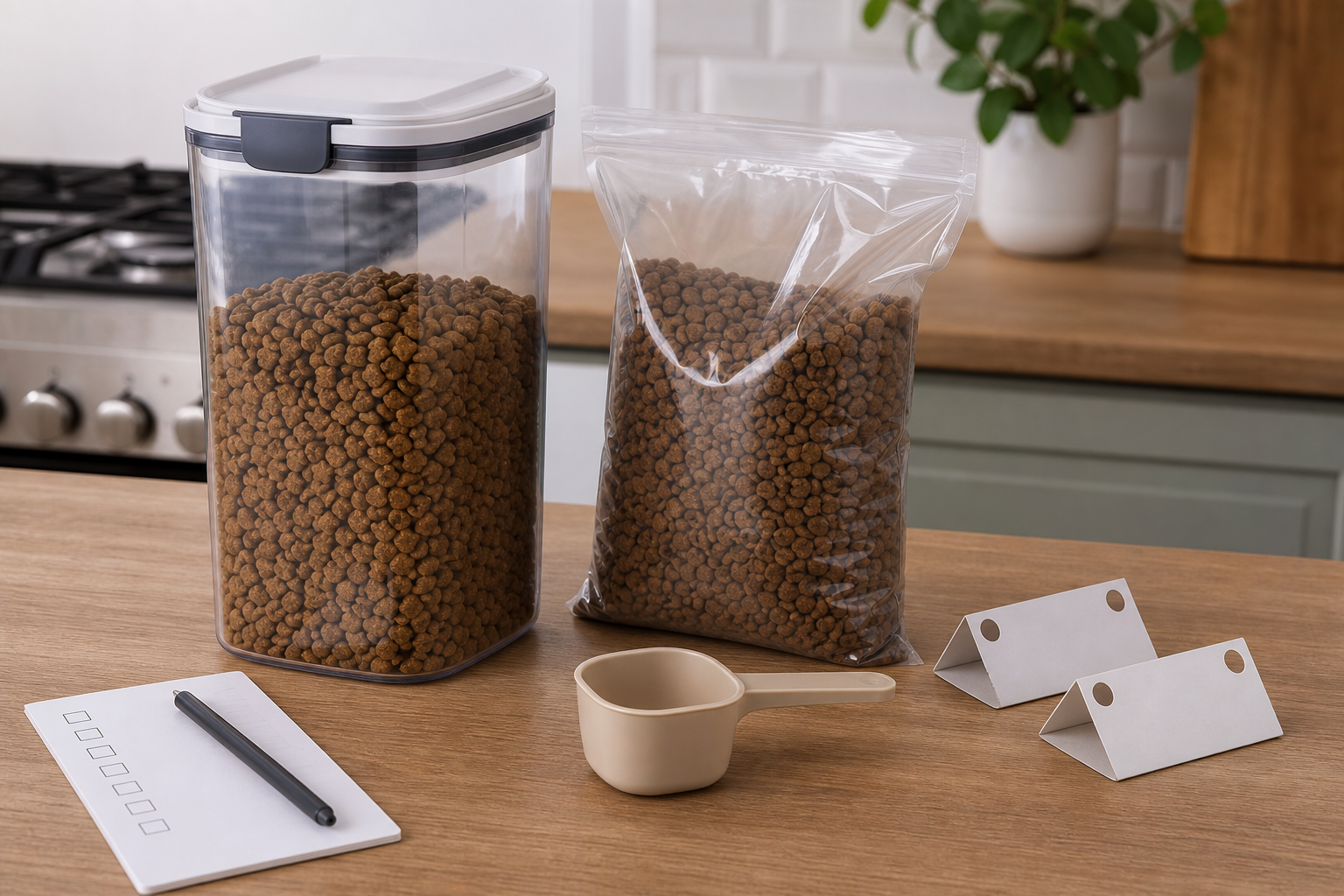
Start with the bag size. If you buy a 30 or 40 pound bag for one small pet, you may save less than you think if the food sits open for weeks in a warm room. The FDA says dry pet food and unopened canned food should be stored in a cool, dry place under 80 degrees Fahrenheit, because excess heat or moisture may break down nutrients.
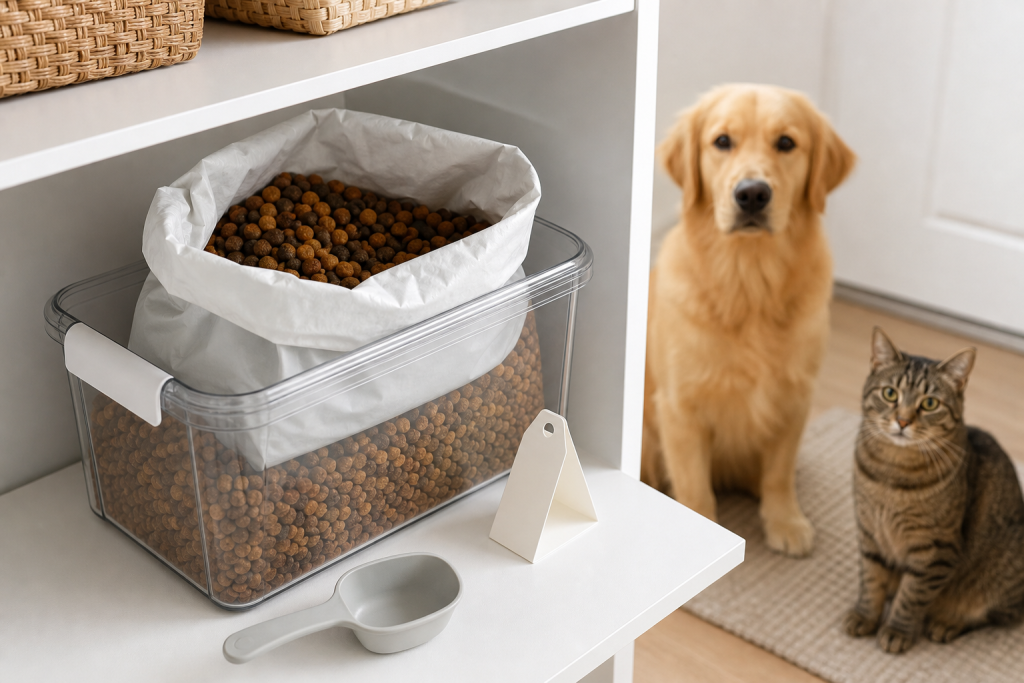
Next, check the container. A bargain trap pack will not help much if the kibble is still sitting in a loosely rolled bag or a thin plastic package. A better setup is the original pet-food bag, rolled or clipped closed, placed inside a clean bin with a tight-fitting lid. Keeping the original bag also preserves the lot code, best-by date and manufacturer information you may need if a recall or quality question appears later.
Then check the cleaning step. The FDA specifically advises washing and drying the storage container between bags to remove residual fat and crumbs. That detail is easy to skip, but old kibble dust can leave odor, oils and debris behind. If your storage bin has wheels, hinges, a gasket or a scoop holder, check whether you can actually clean those parts before buying a bigger one.
When a trap deal is worth adding to the cart
A pantry moth trap is a reasonable add-on when you have already removed suspect food, cleaned the shelf and sealed remaining dry goods. It can also be useful if you store dog food, cat food, bird seed or treats near flour, grains, cereals or nuts and want an early warning that moths are still present.
Before paying, verify these details:
- The trap is for pantry or food moths, not clothes moths.
- The package explains where to place traps without putting them in a pet’s reach.
- The lure life and replacement interval are clear.
- The sticky surface is enclosed or positioned so pets cannot step on it.
- The deal price still makes sense after shipping, multi-pack quantity and replacement timing.
Be careful with vague “pet safe” wording. A trap may be lower risk than sprays or mothballs, but it still needs to be kept away from pets, food bowls and loose kibble. If the listing does not clearly say what moth type it targets or where it can be used, do not let the sale badge make that decision for you.
What to do before opening another pet-food bag
Inspect the outside of the bag before it goes into storage. Look for holes, webbing, clumped crumbs, unusual odor or moving larvae. If anything looks wrong, do not pour the food into a bin where it can contaminate the container and hide the original packaging details.
If you already found moths, do not rely on the trap alone. UC IPM recommends cleaning shelves, bins and storage areas regularly, washing old containers before refilling them and not mixing old and new food. Oregon State University’s Solve Pest Problems guide also recommends looking for webbing, larvae, moths or beetles in food storage areas and checking packaging for tiny holes.
For health questions, call your veterinarian. This article is shopping guidance, not veterinary diagnosis. If your pet ate food that looks contaminated, smells off or came from a recalled lot, ask your vet or the manufacturer what to do with that specific product.
Coupon and deal checks
Pantry moth traps are often sold in multi-packs, and that can make the per-trap price look attractive. The better question is whether the pack matches your actual use. A large pack may expire, dry out or sit unused if you only need to monitor one pantry after cleanup.
Also check whether the retailer allows returns on pest-control products after opening. Some stores treat opened pest products differently from ordinary pet supplies. If you are buying pet food and traps together to reach a free-shipping threshold, make sure the trap purchase is solving a real problem, not just padding the cart.
Quick answers
Can pantry moth traps save an infested bag of dog food?
No. A trap can catch some adult moths, but it does not clean or restore contaminated food. Keep the bag details, contact the seller or manufacturer if needed and ask your vet if your pet may have eaten suspect food.
Should dry pet food stay in the original bag?
Usually, yes. The original bag keeps the lot code, best-by date and product identity available. Place the bag inside a clean, tight-lidded container rather than dumping kibble straight into an old bin.
Are mothballs safe near pet food?
No. Do not use mothballs around pet food or food-preparation areas. NPIC says mothballs are only allowed for airtight containers and their gases may pose risks if used improperly.
Do traps replace cleaning?
No. Traps can help monitor adult moths, but cleanup, inspection and tight storage are the practical fixes that protect the next bag.
Sources
Sources last checked: July 21, 2026, 04:40 Europe/Rome.
- FDA, Proper Storage of Pet Food and Treats
- University of California IPM, Pantry Pests
- Colorado State University, Indian Meal Moth
- Oregon State University, Insects in Stored Food
- National Pesticide Information Center, Pantry Moths
- Amazon Best Sellers, Dog Food Storage, used only as a live shopping-demand signal
- Food & Wine, airtight storage container deal coverage, used only as a current pantry-storage demand signal