
#cat litter box
#litter box enclosure
#litter box odor
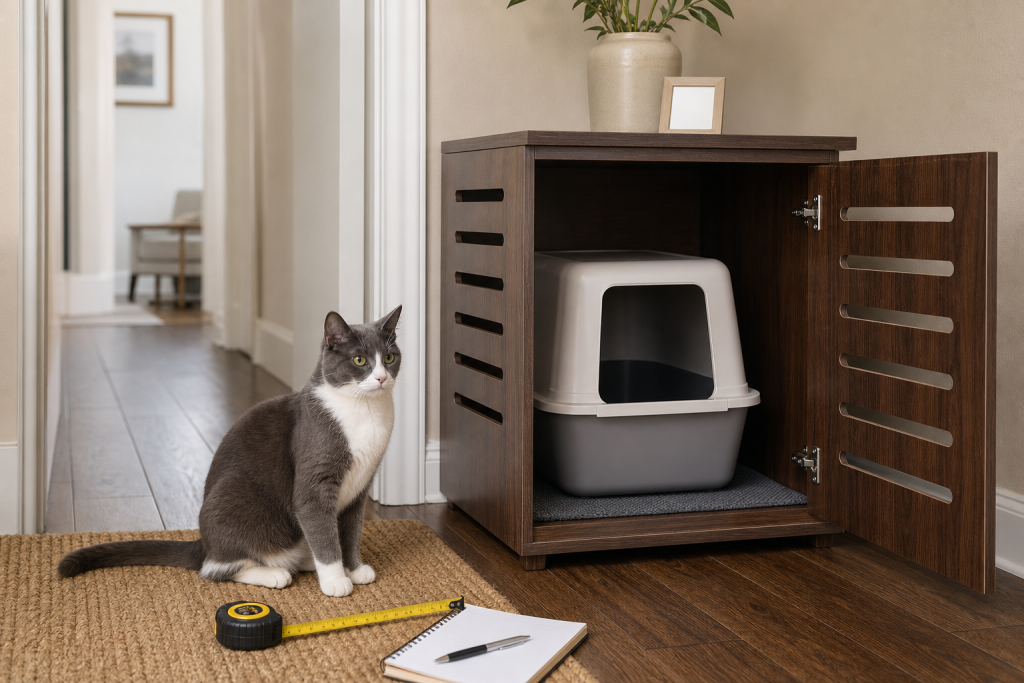
A litter box enclosure is only a good deal if your cat will actually use it and you can clean it easily. The mistake is buying the cabinet for how it looks, then discovering the opening is cramped, the box is hard to scoop, odors build up inside, or the return window closes after assembly. Measure the litter box, check ventilation and access, and treat furniture-style claims as comfort checks, not guarantees.
Cat litter box furniture is having a shopping moment because it promises to hide the box in plain sight. Real Simple highlighted Amazon litter box enclosures on July 25, 2026, and Amazon and Walmart both show active dedicated shopping sections for hidden litter box furniture. That demand makes sense for small homes, open-plan living rooms and dog-cat households, but the cheapest cabinet can turn into an expensive mistake if it solves the owner’s decor problem while creating a toileting problem for the cat.
The hidden cost is usually space, not the sticker price
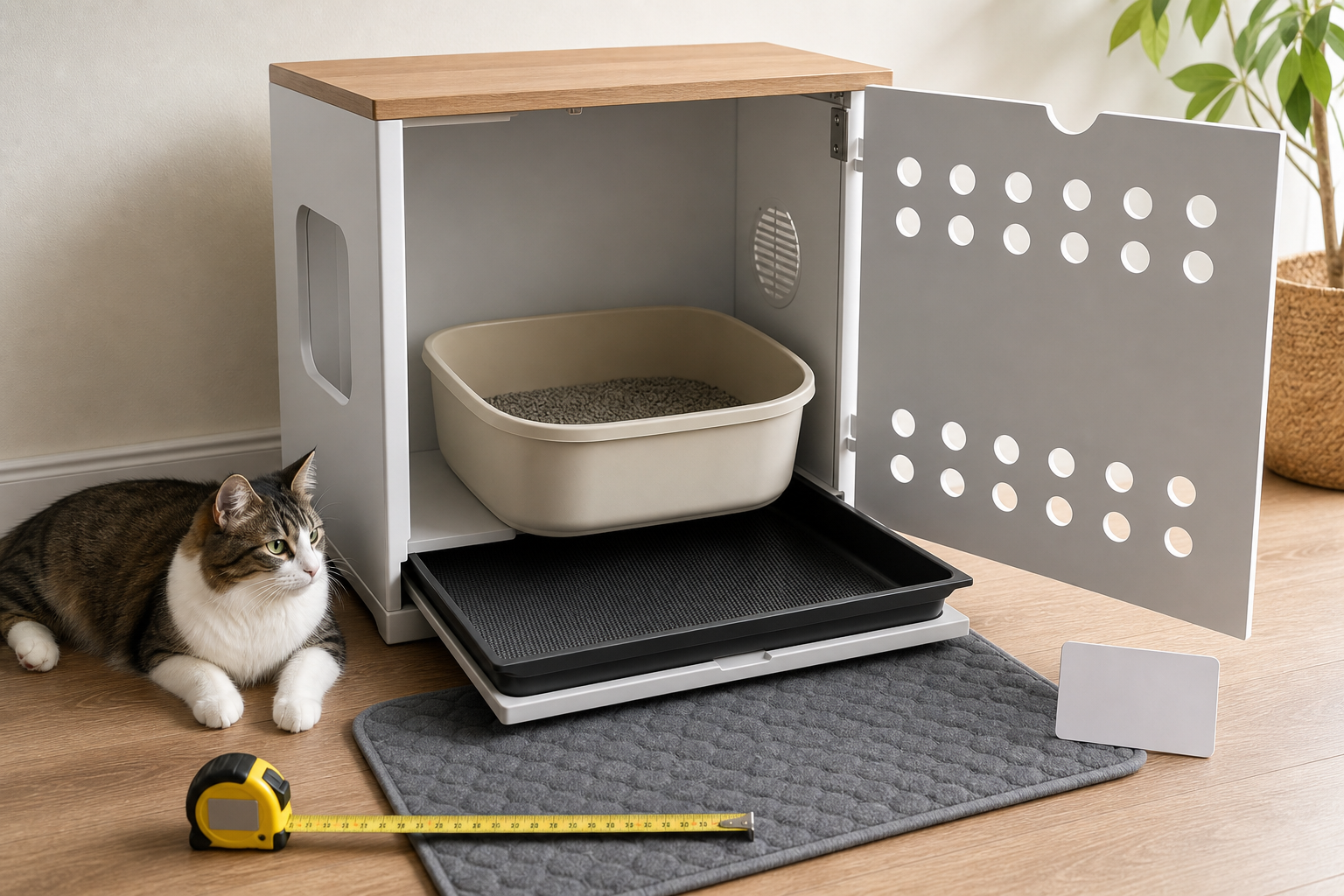
The key measurement is not the outside width of the cabinet. It is the usable interior clearance after hinges, divider panels, raised lips, side entrances, mats and litter-box handles take up room. Your cat needs enough space to step in, turn around, dig and leave without brushing against every wall.
Before checkout, compare the cabinet’s interior dimensions with the actual litter box you use now. Add room for the litter scoop angle, your hand, a trash bag or liner if you use one, and the cat’s body size. If the listing says it fits “most” boxes but does not give clear interior dimensions, treat that as a return-risk warning.
Covered and hidden are not the same as cat-friendly
Reliable cat-care sources keep returning to the same basics: cats need clean, accessible litter areas with enough quiet and enough choice. International Cat Care recommends enough trays for the household, generally one per cat plus a spare. Ohio State’s Indoor Pet Initiative says boxes should be easy to access, cleaned daily and placed away from things that may suddenly startle a cat.
A cabinet can work for some cats, but it adds friction. The entrance may be on the wrong side for your room. The route may force a cat past a dog, a noisy washer, a busy hallway or a child gate. Some cats accept a covered setup, while others avoid it when odors, narrow access or trapped heat make it feel unpleasant.
Use this checkout checklist before buying
Check the interior width, depth and height, not just the product’s decorative footprint. Confirm whether your current tray slides in and out without tilting, especially if it is high-sided, stainless steel, top-entry or automatic.
Look for real cleaning access. A wide front door or pull-out base is more useful than a tiny side opening that looks cute in photos. If you have to remove shelves, lift a heavy lid or pull the whole cabinet away from the wall to scoop, the enclosure may make daily cleaning less likely.
Check airflow from more than one side. Slits, round holes or open side panels help, but a single small cat-shaped cutout may not be enough if the cabinet is deep and closed. If the listing promises odor control, look for the replaceable filter size, ventilation layout and cleaning instructions before trusting the claim.
Check the weight rating and anchoring hardware. Some litter cabinets double as benches, sideboards or TV stands, but not every listing is clear about what the top can safely hold. If the cabinet has doors, shelves or drawers, CPSC’s Anchor It guidance is a useful reminder to secure furniture that could tip, especially in homes with children.
When a deal is not really a deal
The cart price is only the first cost. Add shipping, oversize surcharges, return shipping, assembly time, tools, odor filters, replacement mats and any second litter box you may need if your cat rejects the enclosed one. A low price can disappear fast when the item arrives flat-packed, damaged or too small for the tray you already own.
For marketplace listings, verify the seller name, return address, return window and who pays return shipping after assembly. Read the lowest useful reviews for repeated complaints about chemical smell, flimsy hinges, swelling particleboard, poor screw alignment or cats refusing the entrance. Do not rely on a coupon badge unless the final cart shows the discount and all conditions.
What to avoid
Avoid any enclosure that hides a dirty box so well that you are likely to forget daily scooping. Animal Humane Society advises avoiding covered litter boxes for many cats because some are reluctant to use them, while RSPCA notes that trays should be spot-cleaned daily and fully changed regularly. A prettier cabinet does not reduce that work.
Avoid a cabinet that turns the only litter box into a dead-end tunnel. Multi-cat homes need choices, and a hidden box can become a guarded resource if one cat can block the entrance. Also avoid placing the enclosure near appliances, loud vents, strong smells or food and water bowls.
Be careful with powered add-ons. Some listings include outlets, lights or space for automatic litter boxes. For those, check cord routing, splash protection, manufacturer clearance rules, warranty language and whether the device needs open air around sensors or waste drawers. A furniture enclosure should not interfere with the product’s safety instructions.
Quick answers
Is a litter box enclosure bad for cats?
Not always. It can work if it is roomy, clean, easy to enter and placed in a calm area. If your cat avoids covered boxes, has mobility issues or already has litter-box stress, ask your vet or a qualified behavior professional before making the box harder to access.
Should I buy one for odor control?
Buy it for layout and dog-proofing first, not as a substitute for cleaning. A closed cabinet can trap odor inside, so ventilation and daily scooping matter more than the product photo.
What size should I choose?
Choose the enclosure around the litter box your cat already uses comfortably. Leave extra clearance for turning, scooping and sliding the tray out. If the listing does not publish interior dimensions, skip it or buy only with easy returns.
Sources
- Real Simple, “Hide Your Litter Box, Not Your Style, With These Chic Litter Box Enclosures That Look Like Accent Furniture”, published July 25, 2026.
- Amazon Best Sellers, Cat Litter Box Enclosures, used as current shopping-demand context.
- Walmart, Cat Litter Box Furniture pages, used as current retailer-demand and marketplace-context examples.
- International Cat Care, indoor soiling and litter tray guidance.
- Ohio State University Indoor Pet Initiative, basic indoor cat needs and litter box placement guidance.
- Animal Humane Society, preventing and solving litter box problems.
- RSPCA, how to use a cat litter tray.
- CPSC Anchor It campaign and furniture tip-over safety guidance.
Sources last checked: July 25, 2026, 22:36 Europe/Rome.