

#airline pet carrier
#IATA pet travel
#in-cabin pet travel
#pet travel deals
IATA’s new in-cabin pet travel guidance does not mean every airline now has the same pet policy, and it does not make an “airline approved” carrier label enough by itself. It does mean pet owners should expect airlines to focus more on clear eligibility, booking steps, check-in checks, boarding rules and arrival procedures. Before you buy a discounted carrier or pay a pet fee, match the bag, the pet, the route and the airline’s own policy.
The timing matters because summer pet travel is already crowded, hot and policy-heavy. On July 15, 2026, the International Air Transport Association released operational guidance for in-cabin pet transport, aimed at making the process more predictable for airlines and passengers. IATA said many travelers still struggle with uncertainty around pet eligibility, airline policy and the overall process, which is exactly where a cheap carrier deal can become expensive.
What changed, and what did not
The most important shopper point is simple: IATA guidance is not the same thing as one binding rule for every ticket. Airlines still decide which pets they accept, how to book them, what documents they require, how many animals can be in the cabin, what carrier dimensions apply and where the carrier must stay during the flight.
What the new guidance does is give airlines a more consistent operating playbook, from booking through check-in, boarding, the flight and arrival. That makes it useful for shoppers because the weak spots are now easier to name. If a carrier listing only says “airline approved” but does not show dimensions, ventilation, closure type, under-seat flexibility and return terms, it is not giving you enough information.
The carrier deal mistake to avoid
A sale carrier can look like the cheapest part of flying with a dog or cat, but it is the one item that can break the whole plan at the counter. American Airlines says carry-on pets are limited to cats and dogs that meet size, age and destination requirements, and the pet has to stay in the carrier under the seat in front of you for the whole flight. CDC travel guidance also tells owners to keep pets in carriers and never place a pet in an overhead bin.
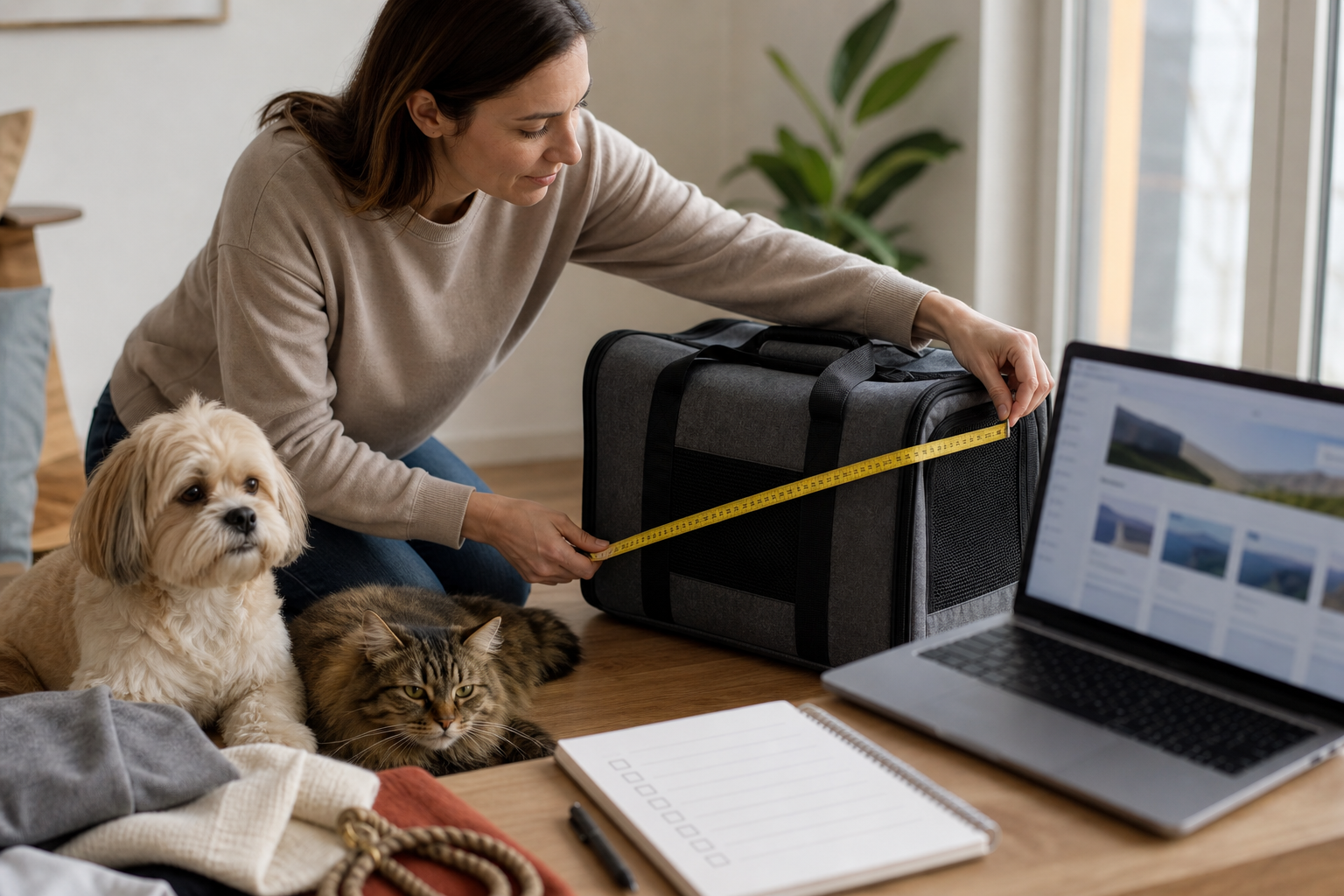
Before checkout, verify these details against the airline page for your exact route:
- Maximum carrier length, width and height, including wheels, pockets and collapsed expansion panels.
- Whether soft-sided carriers are allowed, required or simply easier to fit under the seat.
- Whether the pet must be able to stand, turn around and lie down without the carrier bulging open.
- How the carrier closes, because weak zippers, loose mesh and flexible doors can become escape risks.
- Ventilation on multiple sides, especially for warm-weather travel.
- Weight limits that include both the pet and carrier, if the airline applies one.
- Whether the airline allows the pet on your destination, aircraft type and connection.
Why “airline approved” is a weak shopping claim
“Airline approved” is often a marketing phrase, not proof that the bag works on your flight. Under-seat space can vary by aircraft, airline pet policies change, and some routes or destinations have extra restrictions. A carrier that worked for one owner on one domestic flight may fail for another owner on a different plane, a connection, an international itinerary or a summer heat restriction.
American’s own pet page shows how route rules can vary. It lists destination limits, CDC dog-entry requirements for travel to the United States, restrictions on some international regions and rules for carry-on pets. That is the kind of official page to check before trusting a marketplace title.
What to verify before paying a pet fee
Do not buy the carrier first and solve the ticket later. The better order is airline policy, reservation availability, carrier fit, document timing, then checkout.
- Confirm pet availability before booking. Airlines may limit cabin pets per flight, and availability is not guaranteed just because seats are available.
- Check the route. Some destinations, international segments and aircraft types can block carry-on pets.
- Read the document rules. CDC says owners should check destination regulations and required documentation before traveling. Health certificates and vaccination records can be time-sensitive.
- Measure your pet, not just the bag. A carrier that fits under the seat still fails if your dog or cat cannot fit safely inside it.
- Check heat and cargo rules if your pet is not flying in cabin. American Airlines Cargo says it does not accept warm-blooded pets when forecast ground temperatures are above 85 degrees Fahrenheit on a route.
- Keep the return window alive. Buy early enough to test fit at home, but not so early that the return period expires before the trip.
The deal and coupon check
A coupon on a pet carrier is useful only if the bag survives the airline check. Compare the final price after shipping, return fees and any restocking limits. PetSmart, for example, says online purchases can be returned in store for the purchase price minus shipping, delivery fees, gift wrap and other charges, while mail returns can have a return shipping fee deducted from the refund.
For marketplace listings, be more skeptical. Check whether the seller is the brand, the retailer or a third party. Read the most recent reviews for zipper failures, mesh tearing, odor, sagging bottoms and size complaints. If the listing’s dimensions conflict between the title, photos and product details, skip it.
Safety checks owners should not skip
Do a home test before the trip. Let your pet enter the carrier calmly, close it for short sessions, then check whether the frame collapses, the door bows outward or the bottom sags. If your pet panics, chews through mesh, cannot turn around or seems too cramped, the deal is not safe enough for travel.
Do not use sedatives or travel supplements just because a flight is stressful. Ask your veterinarian before using any calming product, especially for older pets, flat-faced breeds, pets with breathing issues or pets with a medical history. For heat, breathing, anxiety or international-document questions, a carrier review cannot replace veterinary advice or the airline’s official instructions.

Quick answers
Did IATA create one new pet travel rule for all passengers?
No. IATA released operational guidance for airlines. You still need to follow the airline’s own pet policy, the route rules and any government entry requirements.
Is an “airline approved” carrier enough?
No. Treat that phrase as a starting claim, then verify exact dimensions, pet fit, ventilation, closure strength, route eligibility and return terms.
Should I buy the cheapest carrier for one trip?
Only if it fits your pet, fits the airline’s current rules and can be returned if it fails a home test. A rejected carrier can cost more than the discount saves.
What should I check first, the carrier or the ticket?
Check the airline’s pet policy and availability first. Then buy a carrier that matches that specific flight and gives you time to test it before travel.
Sources
Sources last checked: July 26, 2026, 22:33 Europe/Rome.
- IATA, “IATA Guidance Supports Clearer and More Consistent In-Cabin Pet Travel,” July 15, 2026
- IATA, Operational Guidelines for In-Cabin Pet Transport, Edition 1, released July 15, 2026
- CDC, Pet Travel Safety, updated April 15, 2026
- American Airlines, Pets travel information
- American Airlines Cargo, Summer Safety Measures for pets and animals
- PetSmart, Return Policy