
#dog paw safety
#pet shopping mistakes
#pet-safe ice melt
#winter pet supplies
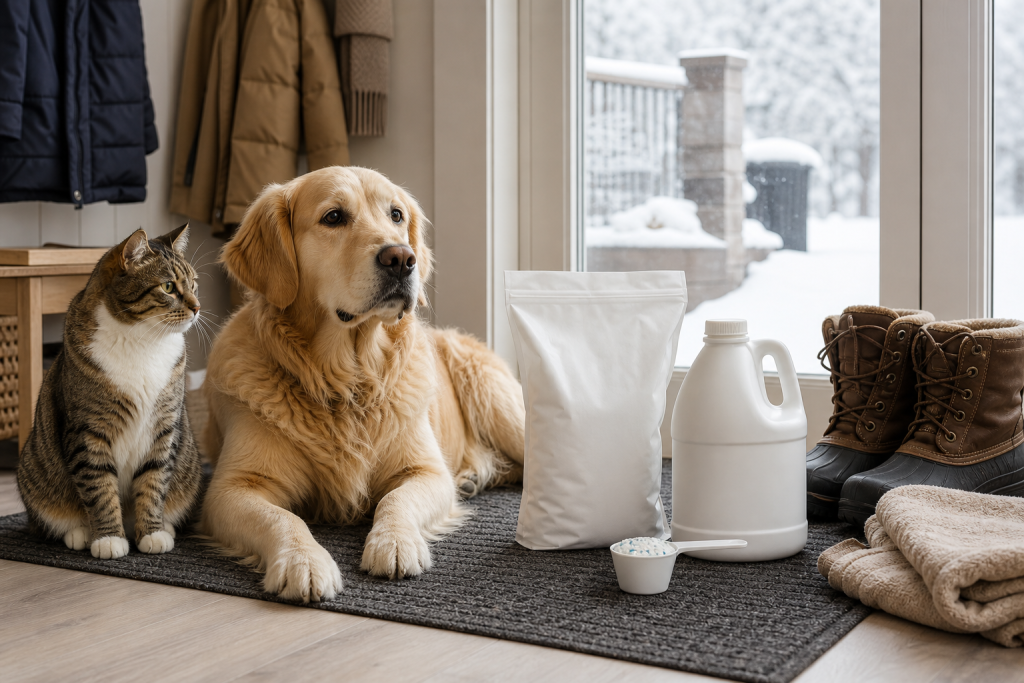
A pet-safe ice melt deal is only worth buying if the label, storage plan and paw-cleanup routine all make sense. Many products marketed for pets can still irritate paws or upset a dog or cat if they lick residue from their feet. Before you stock up, compare the active ingredients, the working temperature, how much product the label says to use and whether you can store the bag where pets cannot reach it.
Ice melt is starting to show up in carts well before the first serious freeze because shoppers want a safer entryway before winter weather arrives. That early-buying window is useful, but it also makes a vague “pet-friendly” claim easy to overvalue. The smarter checkout move is to treat ice melt like a safety product, not a simple bulk commodity.
Why This Matters Before Winter
The ASPCA says common ice melts may contain sodium chloride, potassium chloride, calcium chloride or magnesium chloride, and pets can be exposed when they lick paws after walking through treated slush. Poison Control also notes that ice-melting chemicals can irritate paws and skin, and swallowing residue can cause mouth irritation or stomach distress.
That does not mean every shopper should leave the walkway icy. Slips are a real risk for people and pets. It does mean the cheapest giant bag may be the wrong deal if you need a product for steps, a small patio, a dog run, a shared apartment entrance or a route your cat can access.
The Label Claim Owners Misread
“Pet-safe” is not the same as harmless, edible or maintenance-free. Pet Poison Helpline explains that ice melts vary by ingredient, and even products often labeled for pet use can still cause irritation or stomach upset if enough residue is swallowed. The useful question is not whether the front of the jug has a paw icon, but what the product is made from and how carefully you will use it.
- Check the active ingredient. Calcium chloride can be a stronger irritant, while urea or magnesium chloride products may be marketed as gentler but still need caution.
- Check the working temperature. A safer formula that does little in your usual winter conditions can lead to over-application.
- Check the application rate. Poison Control warns that more product is not better. Overusing it can increase residue without improving the deal.
- Check surface fit. Some formulas may be unsuitable for certain concrete, decking, metal steps, landscaping or indoor mats.
- Check storage. A bargain tub becomes a bigger risk if it sits open in a mudroom, garage corner or porch bin where pets can sniff or chew it.
Buying Checklist Before You Pay
Start with the area you actually need to treat. A front step and a short dog-potty path do not require the same quantity as a long driveway. If you are buying online, compare cost per pound, but also check whether the product is a jug, shaker bottle, resealable pail or loose bag. Packaging matters because controlled spreading and sealed storage are part of the safety plan.
For dogs, think through the whole walk: treated porch, public sidewalk, apartment lobby, elevator and the spot where you wipe paws. For cats, focus on access. A product stored near litter, food, garage shelves or a back-door cat flap can become more interesting than you expect.
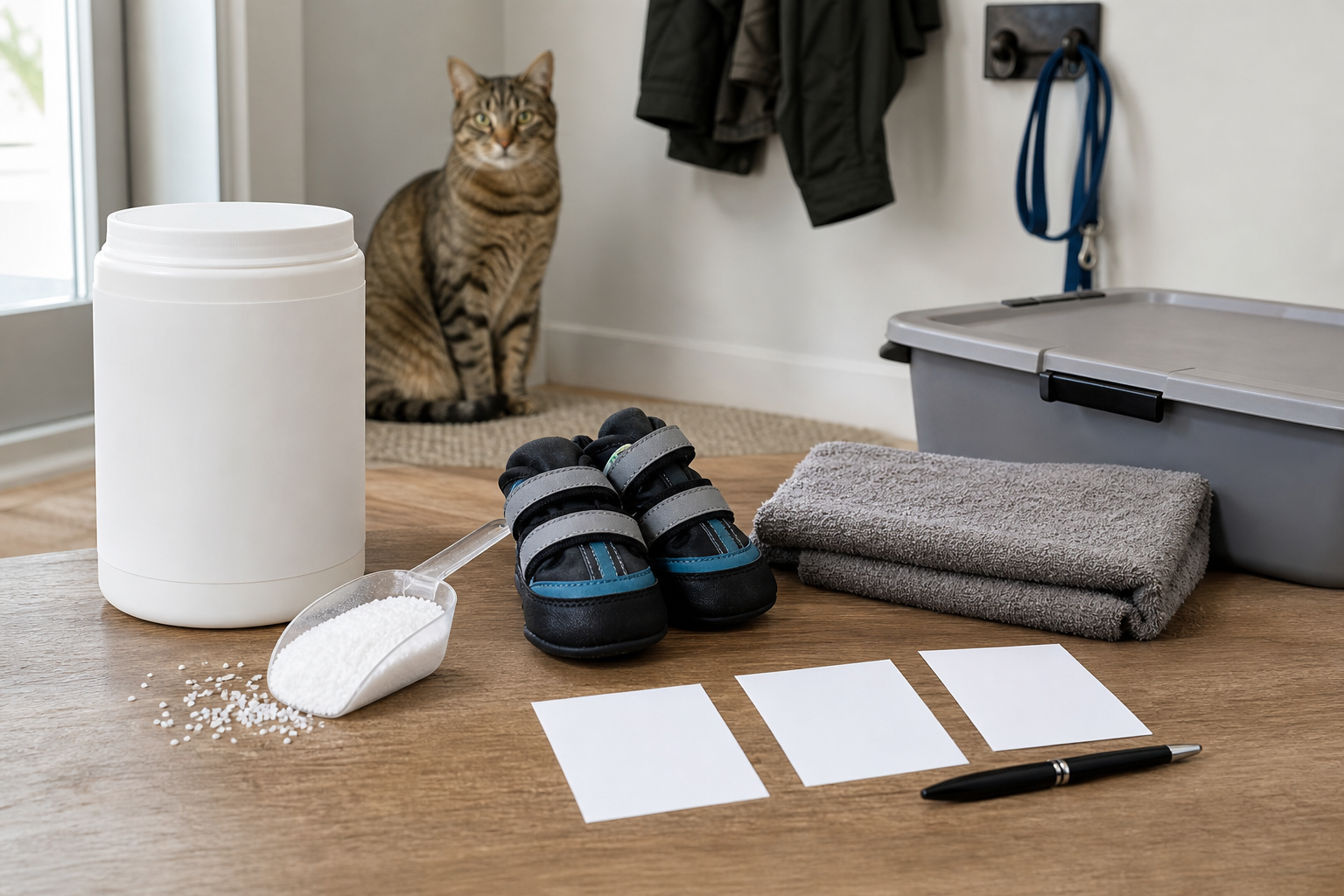
Before checkout, make sure your cart includes the boring extras that make the ice melt safer to use: a dedicated scoop, a lidded container if the original bag is flimsy, washable entry mats and towels or pet wipes for paws. Boots or paw wax may help some dogs, but they do not replace reading the ice-melt label or cleaning residue after walks.
Deal And Coupon Checks
Ice melt is heavy, so the headline price can hide shipping costs, pickup limits or a return that is not worth mailing back. If a retailer shows a sale badge, check whether the same formula is cheaper per pound in a smaller size that you can store safely. A bulk deal is weaker if the bag will clump, tear or sit open where a pet can reach it.
Do not assume a coupon applies to every winter chemical or every size. Read exclusions, pickup requirements and return terms before you add filler items just to reach a shipping threshold. If you are trying a new formula, a smaller first purchase can be the better deal because you can test spreading, cleanup and paw tolerance without being stuck with a huge bag.
What To Avoid
- Do not buy an unlabeled or marketplace mystery product because the listing says “safe for pets” in the title.
- Do not pour ice melt into an unmarked container. Keep the original label or photograph it so you know the ingredient and instructions.
- Do not let dogs eat treated snow or slush, even if the product was marketed for pets.
- Do not leave bags or jugs open in a garage, porch, laundry room or entryway.
- Do not skip paw wiping after walks through treated areas, including sidewalks you did not treat yourself.
Quick Answers
Is pet-safe ice melt completely safe?
No. It may be a better choice than plain rock salt for some homes, but ASPCA and Pet Poison Helpline both advise caution because residue can irritate paws or cause stomach upset if licked or eaten.
Should I choose boots instead of ice melt?
Boots can reduce paw contact for some dogs, but they do not make treated snow safe to eat and they will not help every pet tolerate winter surfaces. Use them as one layer, not the only safety step.
What should I do if my pet eats ice melt?
Call your veterinarian or a pet poison resource promptly, especially if you see drooling, vomiting, diarrhea, weakness, tremors or other concerning signs. Keep the package or a photo of the label available so the professional can identify the ingredient.
Sources
- ASPCA, Keeping Pets Safe during Winter: The Dangers of Ice Melts
- ASPCA, Cold Weather Safety Tips
- Pet Poison Helpline, Is there really a safe ice melt?
- Poison Control, Pets, kids, and ice melt products
- AVMA, Cold Weather Animal Safety
- FDA, Animal and Veterinary Recalls and Withdrawals
- AVMA, Recalls and Safety Alerts
- CPSC, Recalls
Sources last checked: August 26, 2026, 01:35 CEST, Europe/Rome.