
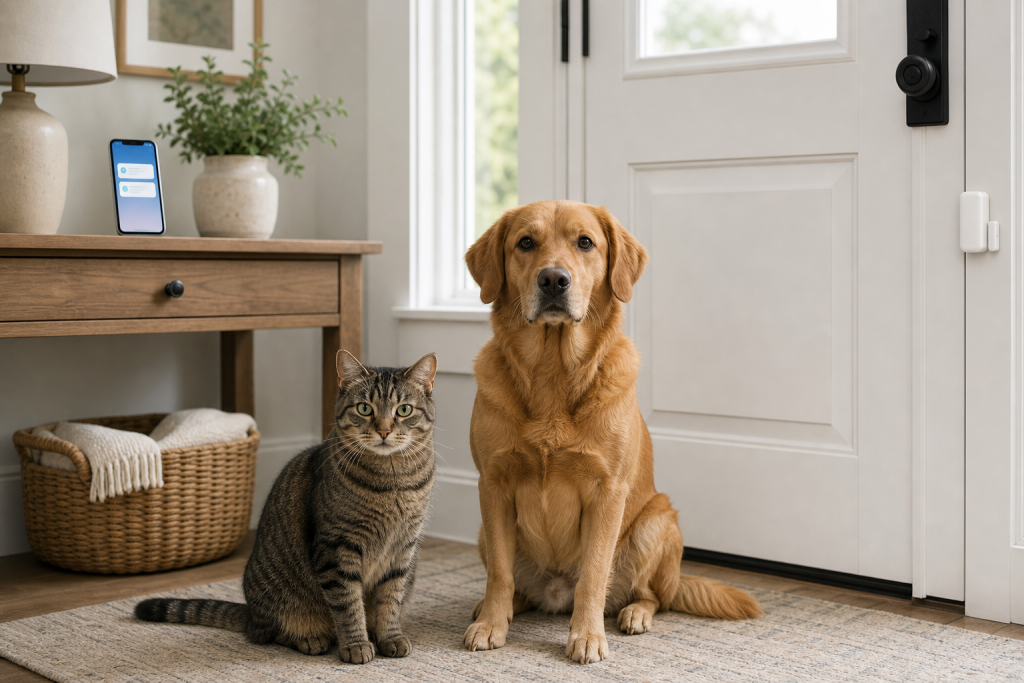
#pet escape alert
#pet safety
#pet tech
#smart door sensor
A smart door sensor can help you notice when a door, window or pet gate opens, but it does not actually stop a dog or cat from slipping out. The deal is only useful if the sensor works with your phone, hub, household routines and backup pet ID plan. Before buying one for pet escape alerts, check the app, alert delay, battery, mounting surface and who else needs access.
This matters now because pet owners are buying more connected home devices, while storm season, travel, contractors, sitters and back-to-school routines all create more open-door moments. A cheap contact sensor looks simpler than a GPS tracker or smart pet door, and sometimes it is. The mistake is treating a notification as a safety system instead of one layer in a broader pet plan.
Why a door sensor is not the same as a pet tracker
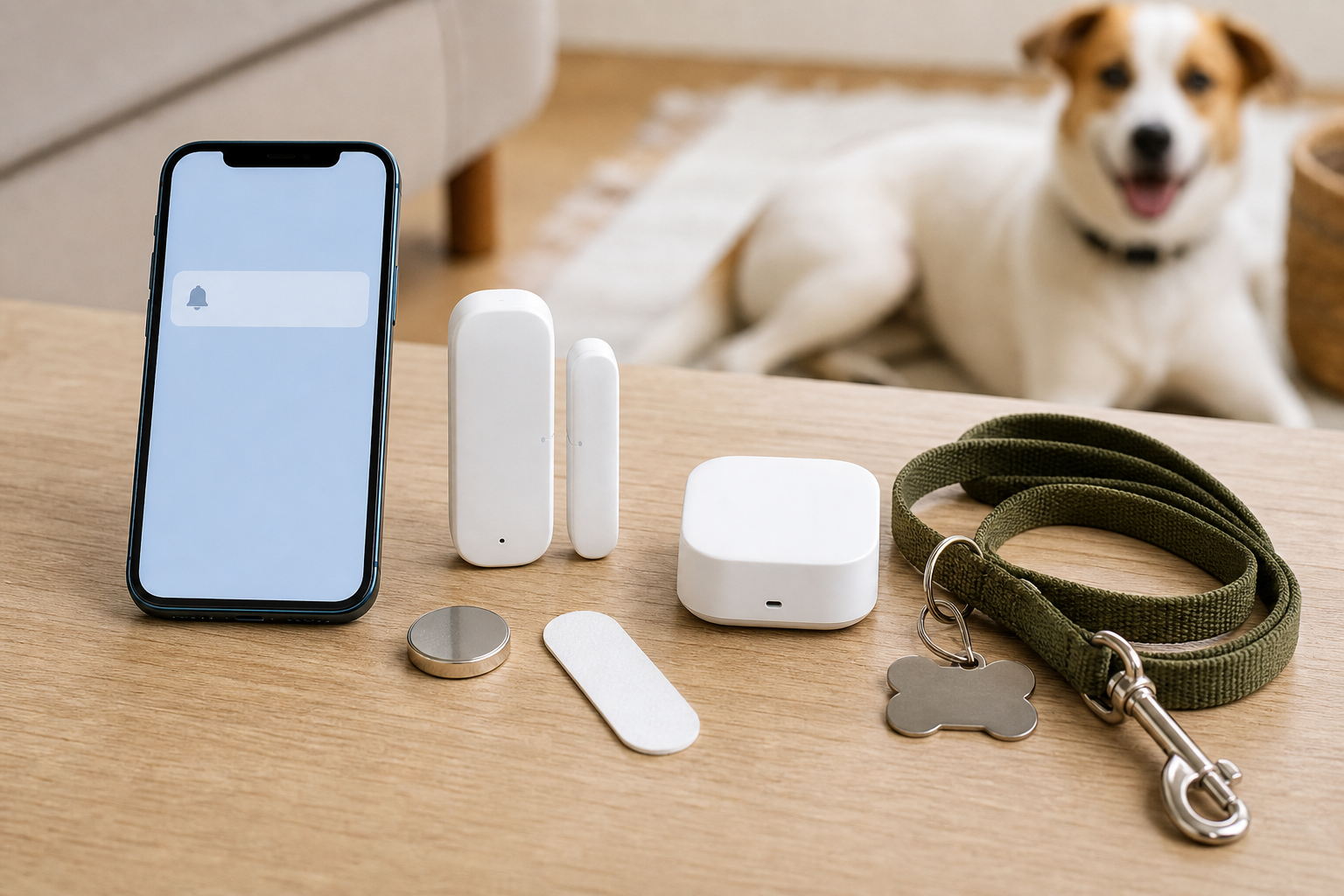
A door or window contact sensor usually has two pieces: one side on the frame and one side on the moving door, window or gate. When the pieces separate, the system can show the door as open and may send an alert. That is useful if your dog waits by the mudroom door, your cat slips into the garage, or a sitter sometimes leaves a gate unlatched.
The sensor does not know which pet went through. It does not show live location, update a microchip registry, replace a collar ID tag or make an open door close by itself. If you want location after the pet is outside, you still need a separate plan, such as current ID tags, an updated microchip registration, a secure fence, a leash routine or a true tracker.
The checkout details that decide whether the deal works
Start with compatibility. Some contact sensors need a specific alarm base station or smart-home hub. Others connect by Wi-Fi, Bluetooth, Zigbee, Z-Wave, Matter or a brand app. The cheapest sensor in the cart can become a bad buy if you need a separate hub, a paid monitoring plan or a smart-home system you do not already use.
Next, check alert behavior. You want to know whether the app sends push notifications instantly, only when the alarm is armed, or only through a specific automation. For pet use, the best setup is often a simple alert when a risky door opens and, if possible, a second alert if it stays open too long. Do not assume that “open/close notification” means both are available.
Battery type matters more than the listing makes it sound. A coin-cell battery can be cheap and easy to replace, but only if the size is common and the app gives low-battery warnings. A sealed rechargeable device may look tidy but can be less convenient if the sensor has to come off the door every time it needs charging.
Finally, look at the mounting method. Adhesive strips are easy, but they may loosen on textured trim, damp laundry rooms, cold garages, metal doors or painted surfaces that flex. Screws are more reliable in some locations, but they may not be acceptable in a rental. If your pet escape risk is a gate, sliding door or storm door, measure the gap before checkout. Contact sensors usually need the two pieces to sit close together when closed.
Where a sensor helps pet owners most
A contact sensor is most useful at the specific exit your pet is likely to use. That might be a front door used by deliveries, a back door used by children, a patio slider, a garage access door, a basement door, a cat room, or an indoor baby gate that keeps pets away from a hazard.
Keep the setup boring and specific. One useful alert on the right door is better than five noisy alerts that everyone starts ignoring. If your household has sitters, cleaners or relatives coming in, confirm whether they can receive alerts without sharing your main account password. Many smart-home systems support shared users or household members, but permissions differ by brand.
If you are using the sensor as part of storm or travel prep, pair it with the basics. ASPCA and Humane World both recommend current ID tags and microchips as part of pet preparedness, and AVMA stresses that microchip registration details need to stay current. A sensor can tell you a door opened. A chip and readable tag help someone contact you if your pet gets out anyway.
Deal and coupon checks before paying
Compare the total setup, not just the single sensor price. Add the cost of a hub, extra sensors, batteries, mounting accessories, a chime, a subscription if required, and any shipping or return fees. A two-pack can be a better deal if you have two risky doors, but it is wasteful if only one door matters.
Read the return policy before pairing the device. Smart-home products can be harder to return if they are registered, missing adhesive pieces, scratched during setup or bought from a marketplace seller with a shorter return window. Keep the box, QR code, manuals and spare adhesive until you know the alerts work on your phone and your home network.
Be careful with deal language like “no hub required” or “works with Alexa.” No hub required may still mean the sensor needs a brand app and 2.4 GHz Wi-Fi. Works with Alexa may mean voice status checks, not the exact pet alert routine you want. If the listing mentions a subscription, find out whether notifications, history, sharing or automations are limited without it.
What to avoid
Avoid buying a contact sensor from a listing that does not clearly name the app, wireless standard, battery type, hub requirement, notification behavior and return terms. Avoid assuming an alarm siren is good for every pet; a loud alarm may scare some animals and make a door event more chaotic. If your pet is fearful, reactive or likely to bolt, ask your vet or a qualified trainer about a broader safety plan.
Do not mount a sensor where a pet can chew it, knock it off, or swallow a battery. Keep coin batteries and loose adhesive pieces away from pets during setup. If a pet chews or swallows any electronic part, contact your veterinarian or a pet poison helpline promptly.
Also avoid using a door sensor as an excuse to relax the human routine. Doors still need to latch, gates still need to close, and guests still need instructions. The sensor should catch a missed step, not become the only step.
Quick answers
Is a smart door sensor worth buying for a dog or cat?
It can be worth buying if one door, window or pet gate is the weak point in your routine. It is not a replacement for a collar tag, updated microchip, secure latch, leash or tracker.
Should I buy a pet-specific smart door instead?
A smart pet door is a different purchase. It may control which pet can enter or exit, while a contact sensor only tells you that something opened. If you need controlled access, compare smart pet doors, chip or tag compatibility, installation work, locking modes and warranty terms.
What feature matters most before checkout?
For most pet owners, reliable phone alerts matter more than the lowest price. Confirm that the sensor can alert the right people, at the right time, without requiring a subscription you did not plan to pay for.
Sources
- Aqara Door and Window Sensor product information.
- Ring Alarm Contact Sensor support page.
- Samsung SmartThings Multipurpose Sensor product information.
- PetSafe SmartDoor Connected product information.
- ASPCA disaster preparedness guidance for pets.
- AVMA guidance on microchips and keeping contact information current.
Sources last checked: August 29, 2026, 01:42 CEST, Europe/Rome.