
#cat chew toys
#cat toy safety
#silvervine cat toys
A silvervine cat chew toy can be a smart little buy, but only if you check the stick, rope, feathers and packaging before your cat gets it. The deal goes wrong when owners treat “natural” or “dental” wording as a safety guarantee. Buy one small pack first, supervise the first sessions, and remove any toy that frays, splinters or sheds small parts.
This matters now because cat chew toys are showing up in deal roundups and new-release shelves alongside catnip toys, puzzle feeders and other indoor-cat enrichment products. The Strategist included Potaroma cat chew ropes in its August 2026 editor-bought roundup, and Amazon’s cat-supplies surfaces continue to show refillable catnip toys, chew ropes and feeder toys. That demand makes sense, but it also makes the checkout page easier to skim too quickly.
Why Silvervine Toys Are Getting Attention
Silvervine, also called matatabi, is a plant-based cat attractant that many cats respond to even when catnip does nothing for them. PetMD says silvervine can be offered as chew sticks, powders, sprays or mixtures with catnip, and it notes that some cats show energetic play while others relax after exposure.
That does not mean every silvervine toy is equally useful. A plain stick, a rope toy, a feather-topped stick and a refillable plush toy all create different risks. The plant may be the attraction, but the product design is what your cat chews, claws, licks and carries around the room.
The Checkout Mistake Is Trusting the Word “Natural”
Natural materials still break down. A chew stick can splinter, a rope can fray, feathers can detach and packaging can contain small parts. Cornell Feline Health Center advises owners to avoid cat toys with small pieces or strand-like parts that can separate and be swallowed, especially when a cat chews them.
Before buying, zoom in on the listing photos and ask whether the risky part is visible. If the toy has feathers, bells, glued caps, thin string, elastic, beads or tiny refill pouches, treat it as supervised play unless the manufacturer gives strong safety and use guidance. If the package warning is hidden, the deal is weaker than it looks.
What To Check Before You Buy
Start with your cat’s chewing style. A gentle sniffer that rubs on toys is different from a young cat that shreds cardboard, eats thread or chews plant stems into pieces.
- Stick thickness: avoid thin, brittle sticks for cats that bite hard or swallow fragments.
- Surface texture: rough bark can be interesting, but cracked or splintered pieces should be removed.
- Added parts: feathers, strings, bells and eyes can make a toy more exciting and less suitable for unsupervised chewing.
- Rope quality: loose cotton fibers can be chewed off, so check the weave after each play session.
- Packaging: discard twist ties, plastic tabs, silica packets and small parts before the toy reaches the floor.
- Replacement plan: a cheap multipack is not cheaper if half the toys are too flimsy for your cat.
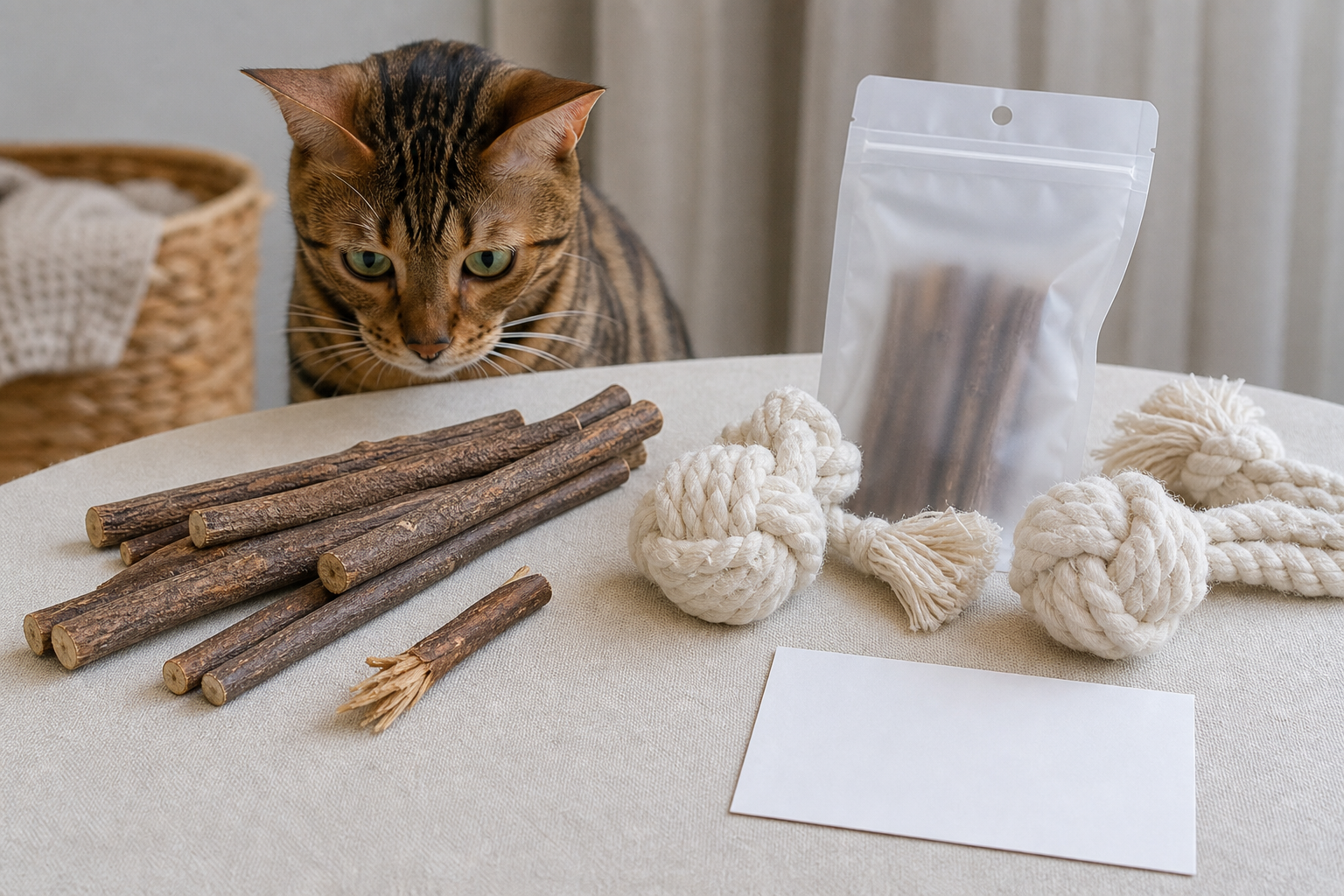
Generated generic checkout inspection scene for silvervine-style cat chew toys. Created with OpenAI Images 2 for editorial illustration, not a real product, retailer listing or coupon.
Be Careful With Dental Claims
Some silvervine chew listings mention tooth cleaning, plaque or dental support. That can sound useful, but it should not make the toy feel like a dental-care product unless the claim is specific, sourced and appropriate for your cat. Chewing may rub the surface of teeth for some cats, but it does not replace veterinary dental care, brushing guidance or a veterinarian’s advice about bad breath, red gums, drooling, pawing at the mouth or eating changes.
University of Wisconsin veterinary guidance makes the practical toy-safety point clearly: cats that chew aggressively may ingest parts of toys, and obstruction can be serious. That is the risk to keep in mind when a listing combines “chew,” “dental,” “catnip,” “silvervine” and “aggressive chewer” in the same tiny product card.
Deal And Coupon Checks Before Paying
A silvervine toy deal is usually a low-ticket purchase, which is exactly why owners add it without much thought. Slow down before buying a multipack, especially from a marketplace seller you have not used before.
Check the final cart price, seller identity, shipping cost, return window and whether the product page shows the actual package warning. If a coupon requires a larger cart, do not pad the order with extra toys your cat may not use. For recurring pet-supply orders, Chewy says Autoship offers a first-order discount with a maximum savings cap and a smaller recurring discount on select brands. PetSmart’s promotional terms also list eligibility rules, caps and exclusions. Those terms can be useful, but only after the toy itself passes the safety check.
Return terms matter too. Petco’s posted return policy says many items can be returned within 60 days, with receipt and timing limits. Always verify the current item-level policy before opening a toy, because chewed, damaged or third-party marketplace items may be handled differently.
What To Avoid
Avoid any cat chew toy that looks like a bundle of loose string with a silvervine stick attached. Avoid vague “teeth cleaning” claims that do not explain the material, size, warnings or age range. Avoid buying a large pack before you know whether your cat responds to silvervine at all.
Do not leave a new silvervine chew out overnight on day one. Watch how your cat uses it first. Remove it if your cat tries to swallow chunks, eats fibers, breaks off a sharp splinter, guards the toy aggressively or vomits after chewing. If you think your cat swallowed a fragment, string, plastic or packaging piece, contact your veterinarian. This article is shopping guidance, not emergency treatment advice.
Who Should Buy One, And Who Should Wait
A silvervine chew toy can be worth trying for an indoor cat that needs more scent-based play, a cat that ignores catnip or a cat that enjoys supervised chewing. It is also a reasonable small test purchase when you want to refresh old toys without buying another electronic gadget.
Wait if your cat eats strings, tears plush toys open, has known dental pain, is on a restricted medical plan or gets overstimulated around catnip-style products. Ask your veterinarian before using silvervine if your cat has health issues, unusual behavior changes or a history of swallowing non-food items.
Quick Answers
Is silvervine safe for cats?
PetMD describes silvervine as safe for cats when used appropriately, but the toy still needs inspection. The bigger shopping risk is often fragments, small parts or overexcited chewing, not the plant name alone.
Is silvervine better than catnip?
Not automatically. Some cats respond more strongly to silvervine, while others ignore it. Buy a small pack first instead of assuming a bulk deal will be used.
Can I leave silvervine sticks out all day?
Only if the specific toy stays intact and your cat does not chew pieces off. For a new stick, supervise first and inspect it after play.
What is the biggest buying mistake?
Buying the cheapest multipack because it says “natural dental chew” without checking thickness, added parts, package warnings, seller identity and return terms.
Sources
Sources last checked: August 31, 2026, 19:35 CEST, Europe/Rome.
- The Strategist, The 22 Best Things Strategist Staffers Bought in August.
- Amazon, New Releases in Cat Supplies, used as a current shopping-demand signal.
- Cornell Feline Health Center, Safe toys and gifts.
- University of Wisconsin School of Veterinary Medicine, Ask a UW Veterinarian: Safe Toys for Cats.
- PetMD, Silvervine Plant: An Alternative to Catnip.
- SmartyKat, Silly Silver Stix Silvervine Catnip Sticks Cat Toy, used as an example of product-page warnings and small-parts language shoppers should verify.
- Chewy, Autoship & Save.
- PetSmart, Promotional terms.
- Petco, Return policy.