
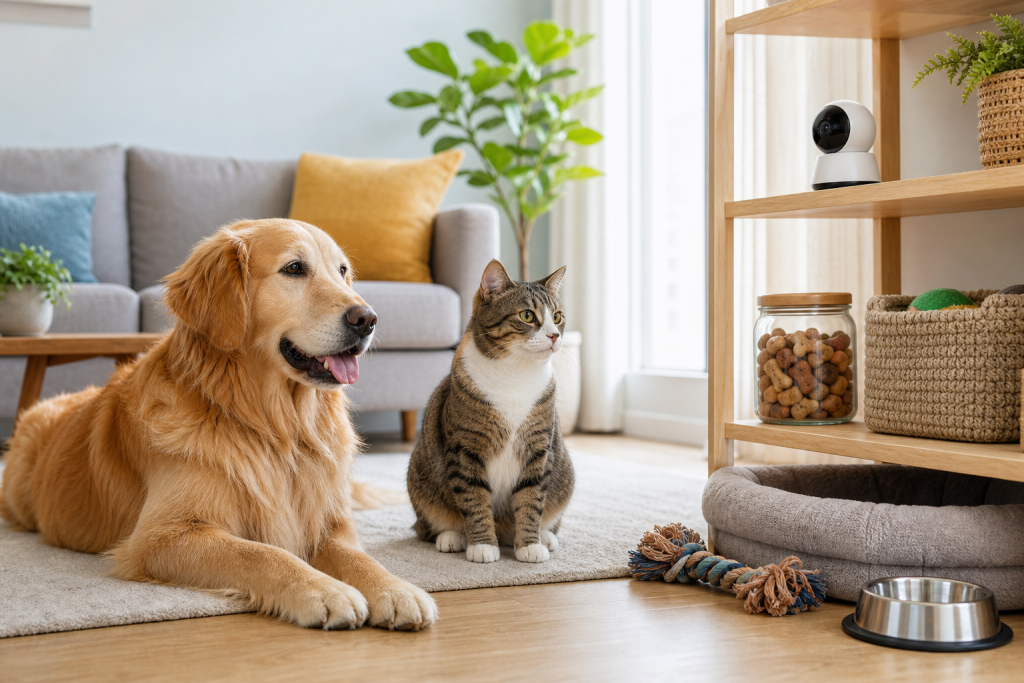
A pet camera deal is not automatically private just because the box mentions encryption. Ring’s September rollout of TAKE encryption is a useful reminder to check what the camera records, where clips are stored, which features require cloud processing and what you lose without a subscription. Before buying any camera to watch a dog or cat, compare the privacy setting, the monthly plan and the return policy together, not as separate details.
Why this matters now
Pet owners increasingly use ordinary indoor security cameras as pet cameras because they are cheaper than many treat-tossing or pet-specific models. The tradeoff is that the most useful features, recorded clips, person or pet alerts, video search and shared access, often depend on a cloud account.
Ring now says its TAKE system is rolling out gradually and will become the default encryption option once the rollout reaches all customers. Ring describes it as stronger default protection that still keeps cloud-powered features available, while optional end-to-end encryption gives the account holder sole key control but disables shared users and features that need cloud processing.
That is the exact shopping lesson: encryption, AI alerts and subscriptions are connected. A low sale price can be misleading if the feature you want for checking on a pet only works after a trial turns into a paid plan.
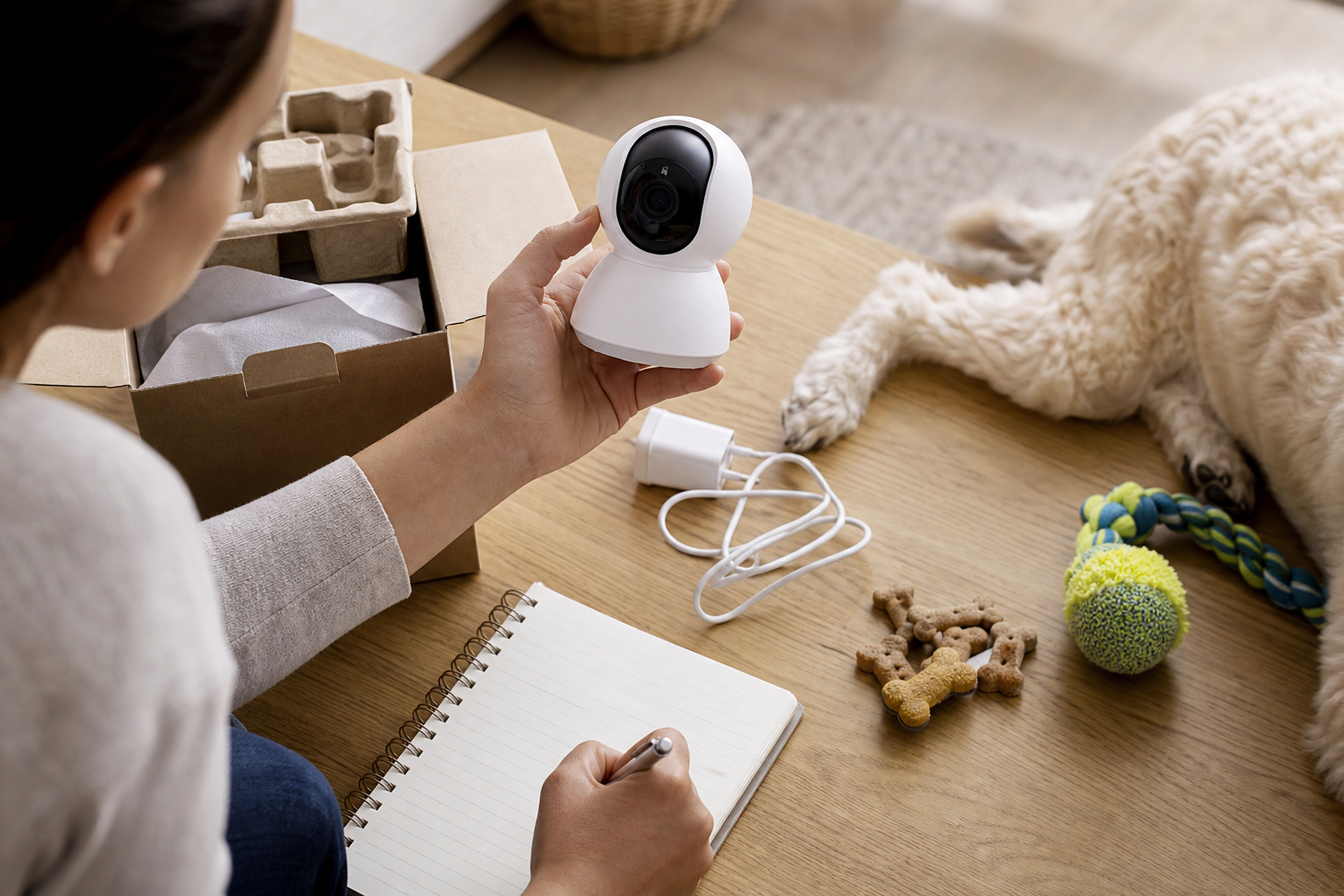
The checkout question most pet-camera shoppers skip
Ask this before you add the camera to the cart: will the camera still do the pet job you need if you do not keep paying after the trial?
For a pet owner, the answer depends on the use case. Live view may be enough if you only want to check whether your dog is sleeping on the sofa. Recorded video matters more if you need to review when a cat vomited, when a dog walker arrived or whether a pet sitter opened the door. Smart alerts matter if you need fewer false notifications during work.
Ring’s subscription support page says recorded video review requires a subscription, while users without a subscription can use live view and respond to alerts as they happen. It also says motion event videos may be stored in the cloud for up to 180 days when covered by a plan. That does not make Ring unusual; it makes the recurring-cost check obvious.
What TAKE encryption changes, and what it does not
Ring’s privacy page says TAKE keeps video encryption keys only temporarily so cloud features can work, then deletes those keys. The company also says customers who want sole control with no cloud feature access can enable end-to-end encryption where supported.
The important distinction is simple. TAKE is designed to improve the default cloud-camera setup. End-to-end encryption is the stronger privacy choice, but it can remove convenience features such as shared users and cloud processing. If the camera is pointed at a room where people walk around, children play or a pet sitter works, that tradeoff matters before checkout.
The Verge reported on August 26, 2026 that TAKE begins rolling out in September and is meant to limit what Ring can provide in response to legal process, while still preserving AI-powered features. Treat that as a current privacy upgrade, not a reason to stop reading the plan terms.
Pet owners should compare these details before buying
- Live view versus recorded clips: Make sure the unpaid tier actually covers your reason for buying the camera.
- Cloud storage period: Check how long clips are kept and whether the setting applies only to future recordings.
- Pet alerts and AI features: Look for whether animal detection, video search, familiar faces or summaries require a higher plan.
- Privacy mode: Prefer a real lens cover, mechanical shutter or clear disable control if the camera faces a private living space.
- Shared access: Confirm whether a sitter, roommate or family member can use their own login instead of your password.
- Local storage: If avoiding cloud storage is the goal, check whether local storage works without losing the features you need.
- Return window: Test alerts, app sharing and subscription settings before the retailer’s return period closes.
Deal and coupon checks before paying
Do not judge a pet-camera deal by the device price alone. Add the plan cost, cloud storage limits, extended warranty terms, mounting accessories, replacement cords and any higher-tier AI feature you expect to use.
Retailer terms can also change the real value of a discount. PetSmart’s promotional terms, for example, say some offers may have exclusions, require activation or be unavailable with other promotions. Its return policy also lists electronic merchandise among product types that require a valid receipt for returns or exchanges when valued at $10 or more. That is a practical reason to keep the receipt and test the setup early.
If a marketplace listing advertises “no monthly fee,” check what that means. It may mean live viewing only, local storage only, limited app alerts or a short trial. If the feature you need is recorded pet activity while you are away, verify it in the cart and in the app terms before relying on the claim.
What to avoid
Avoid placing any camera where it captures bathrooms, bedrooms, neighbors’ windows or private work screens. The pet may be the reason for buying the camera, but the footage can include everyone else in the home.
Do not share the main account password with a pet sitter. Use shared-user controls where available, then remove access when the job ends. The FTC’s consumer security guidance points owners toward stronger account, device and home Wi-Fi protections, which is especially relevant for always-on cameras.
Skip listings that hide the app name, storage policy, subscription terms, support page or warranty details. A cheap pet camera is not a bargain if the app is abandoned, the camera cannot be updated or the seller disappears before a privacy or firmware issue is fixed.
Quick answers
Is Ring’s TAKE encryption the same as end-to-end encryption?
No. Ring presents TAKE as its strongest default encryption while preserving cloud features. Ring says optional end-to-end encryption gives the user sole key control but disables shared users and cloud-processing features.
Can I use a normal security camera as a pet camera?
Yes, if the camera’s live view, alerts, storage, privacy controls and mounting setup fit the job. A dedicated pet camera may add treat tossing or pet-specific alerts, but those features can also add cost and complexity.
What is the safest deal test?
Price the first year, not just the camera. Include the subscription, storage plan, accessories and whether the return policy still protects you after opening and testing the device.
Sources
Sources last checked: September 1, 2026, 04:33 CEST, Europe/Rome.