
#new pet supplies
#pet adoption supplies
#Petco adoption
#starter pet cart
A Petco adoption event can make the first shopping cart feel urgent, but the smartest move is to buy only the supplies your new dog or cat must use in the first few days. Petco lists an “Adopt a pet” event for September 5 as part of its September in-store calendar, and participation can vary by store, so the mistake is treating the trip like a one-stop haul. Bring home the basics, confirm what the shelter or rescue has already been feeding, then add size-sensitive and preference-sensitive products after the pet has settled.
That matters now because September pet events, Labor Day store traffic and back-to-routine shopping can push owners toward bundle thinking. A bed, crate, carrier, litter box, leash and food all look reasonable in the aisle. The problem is that a newly adopted pet is still an unknown shopper: you may not know the exact diet tolerance, collar fit, chewing style, litter preference, sleeping spot or fear triggers yet.
Why This Petco Event Angle Is Really a Cart Check
Petco’s event page says its September calendar includes cat-themed events and an “Adopt a pet” date on September 5, with store participation varying. That is useful if you are already planning to meet adoptable pets or talk to a local animal welfare partner. It is not a reason to assume every supply on a display, every food sample or every add-on is right for the pet you may bring home.
The better shopping frame is simple: separate “must be ready today” from “can wait one week.” ASPCA’s dog supply checklist includes basics such as quality food, bowls, safe toys, grooming tools, collar with ID tag, leash, carrier for smaller dogs, crate, bed and toothbrush. American Humane’s cat adoption checklist similarly points to a litter box, litter, food and water bowls, food, scratching posts, safe toys, a bed, brush, toothbrush and nail clippers. Those lists are helpful, but they do not require buying every item in the largest size or most expensive version before you know the pet.
Buy These First, Then Slow Down
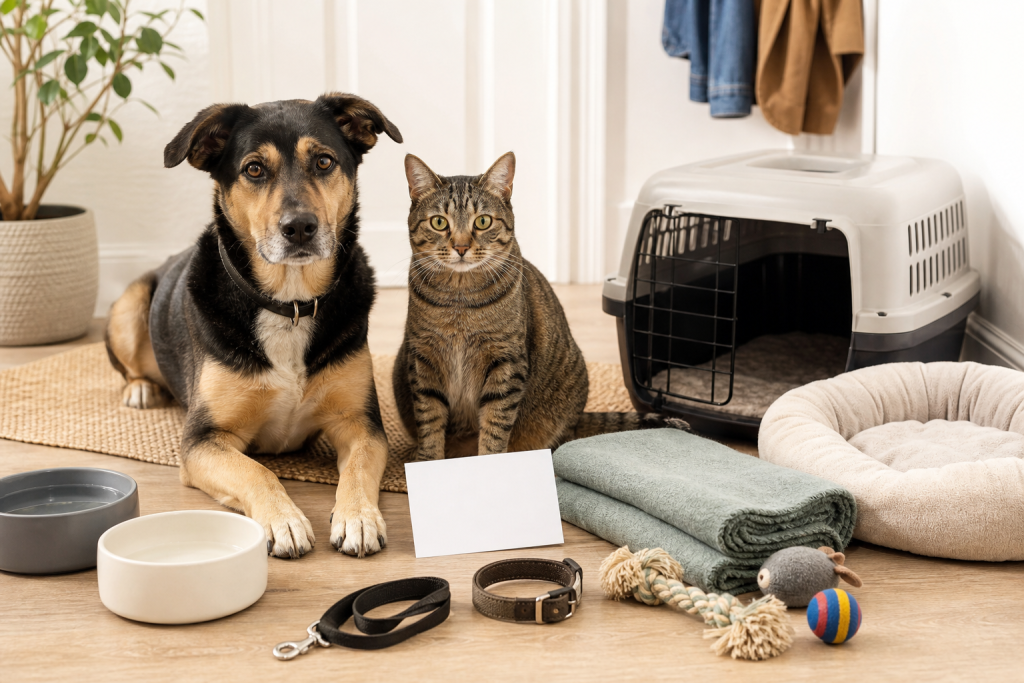
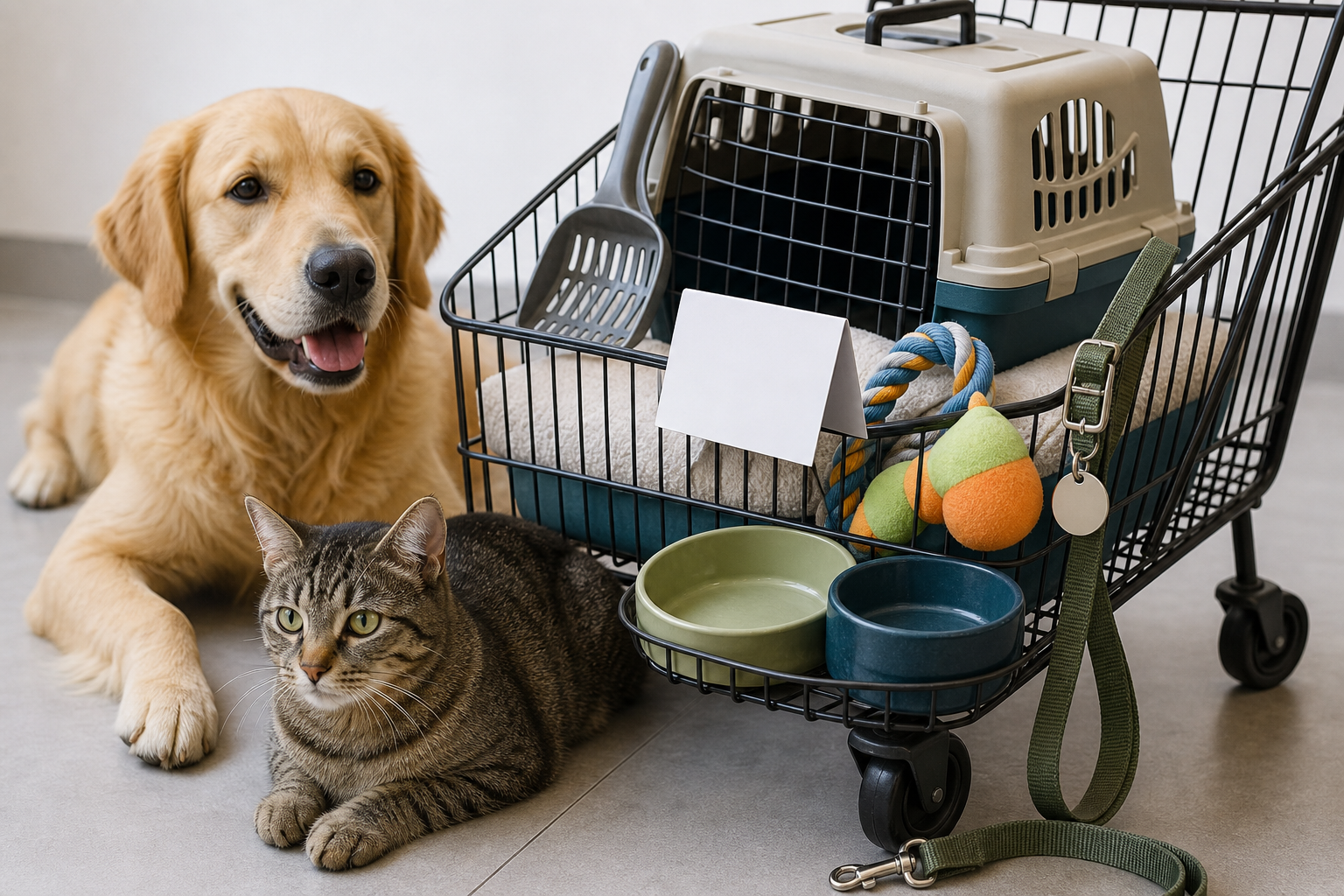
For a dog, the first cart should cover the ride home and the first quiet days: an appropriately fitted collar or harness, a leash, ID tag, bowls, poop bags, a modest starter bag of the current food if available, a washable bed or blanket, a safe chew or two, and a crate or gate only if you know the size and setup you need. If you are adopting a puppy, large dog or strong chewer, do not guess on crate dimensions, latch strength or chew durability just because a kit looks cheaper.
For a cat, prioritize a secure carrier, litter box, litter, scoop, food and water bowls, a scratching surface, a hiding bed or soft blanket, and a small number of simple toys. If the cat is older, large, timid or newly recovering from stress, avoid a high-entry litter box, enclosed furniture-style box or automatic litter box as the first experiment. Start with an easy, clean setup, then upgrade after the cat’s habits are clear.
Food is the item where patience saves the most money. If the shelter or rescue can tell you the current diet, buy enough to transition gradually instead of switching abruptly because a different bag has a better sale tag. If you cannot get that information, choose a small bag or a few cans that match the pet’s life stage and ask your veterinarian what to do if appetite, stool or weight changes after adoption.
The Checkout Mistake: Counting Every Starter Item as a Deal
A starter-cart deal is only a deal if the product survives the first week. A bargain bed is not cheap if the dog shreds it in two nights. A stylish cat bowl is not useful if the cat refuses the placement. A giant bag of new food can become waste if the pet will not eat it or your vet recommends a different plan.
Before paying, check five practical details. First, confirm the pet’s current weight or best estimate, because collars, harnesses, crates, carriers and beds are size-sensitive. Second, scan the return terms, especially for opened food, used bedding, crates and seasonal promotions. Third, avoid stacking products that solve the same problem, such as three beds, multiple calming aids or two different containment systems. Fourth, keep receipts and packaging until you know the product fits. Fifth, separate points, coupons and future rewards from today’s actual out-of-pocket price.
Food, Treats and Labels Need Extra Attention
AAFCO explains that pet food labels include required information such as species, quantity, guaranteed analysis, ingredient statement and nutritional adequacy statement. It also notes that treats and snacks are usually not intended to provide a complete and balanced diet unless labeled that way. That distinction matters after an adoption event, because a friendly sample or cute treat display can look like a meal solution when it is really a small add-on.
FDA’s animal food labeling page also says animal food labels should provide information needed for safe and effective use, and it cautions that disease-related claims can move a product into drug-claim territory. For owners, the practical takeaway is not to diagnose from a label. If a newly adopted pet needs urinary support, digestive support, weight management or another health-related diet, ask the shelter, rescue or veterinarian before a coupon chooses the food.
What to Avoid in the First-Week Cart
Skip the jumbo version of any product your pet has not tried. That includes food, litter, treats, chews, calming products, shampoos and puzzle toys. Trial sizes, small bags and washable basics reduce waste while you learn the pet’s real routine.
Be careful with anything that depends on behavior you have not observed. A high-energy dog may need durable enrichment, but you still need to know the chewing style. A shy cat may need hiding places and scratchers, but it may ignore a tall cat tree for days. A nervous pet may benefit from a crate or safe room, but a crate that is too small, hard to clean or poorly latched can create a new problem.
Do not buy multiple diet changes at once. New food, new treats, toppers and supplements can make it harder to know what caused a stomach upset or refusal. Keep the first week boring on purpose, then make one change at a time.
Deal and Coupon Checks Before You Pay
If a store promotion is attached to an adoption weekend, read it like a receipt, not a headline. Check whether the offer is in-store only, online only, members only, limited by category, limited by store participation or excluded from certain brands. Do not count a future points reward as cash in hand unless the checkout page or receipt shows exactly how it will be earned and used.
For food and litter, compare cost per ounce, pound or day, not just bag size. For crates, carriers and beds, compare the measured interior size, not the marketing size. For toys and chews, compare durability, supervision warnings and replacement cost. The cheapest adoption cart is often the one that leaves room to exchange or upgrade after you know the pet.
FAQ
Should I buy food at the adoption event?
Buy food only after asking what the pet has been eating and whether there are diet instructions from the shelter, rescue or veterinarian. If you need to switch, keep the first purchase small and transition gradually.
Is a starter kit worth it?
It can be, but only if the sizes and products match the pet you are adopting. Avoid kits that include several preference-based items you may replace immediately, such as the wrong litter box, toy type, crate size or food formula.
What should I postpone?
Postpone bulk food, bulk litter, expensive beds, advanced tech, automatic feeders, automatic litter boxes, subscription boxes and large toy bundles until the pet’s routine is clearer.
Sources
- Petco in-store events, including September adoption and Meow Market listings. Last checked September 1, 2026, 07:37 CEST, Europe/Rome.
- Petco pet adoptions. Last checked September 1, 2026, 07:37 CEST, Europe/Rome.
- ASPCA general dog care and dog supply checklist. Last checked September 1, 2026, 07:37 CEST, Europe/Rome.
- American Humane cat adoption checklist. Last checked September 1, 2026, 07:37 CEST, Europe/Rome.
- AAFCO reading pet food labels. Last checked September 1, 2026, 07:37 CEST, Europe/Rome.
- FDA animal food labeling and pet food claims. Last checked September 1, 2026, 07:37 CEST, Europe/Rome.