
#chew safety
#dog chews
#pet deals
#rawhide-free chews
A rawhide-free dog chew can still be the wrong deal if it is too small, too hard, too calorie-dense or easy for your dog to swallow in chunks. The label tells you what the chew is not, but it does not prove that the chew fits your dog”’s mouth, chewing style or diet. Before you buy a big bag because the sale looks good, check the size, texture, supervision rules, calorie load and return terms.
Why this matters now
Dog chew deals are easy to overbuy because they sit in the same shopping lane as treats, dental snacks, boredom busters and training rewards. Current deal pages show rawhide-free chews alongside ordinary treats and toys, which makes the ””rawhide-free”” claim feel like a complete safety answer. It is not.
Veterinary and pet-food safety sources give a more practical rule: any edible chew has to match the dog in front of you. A soft chewer, a senior dog with dental issues and a power chewer should not be shopping from the same checklist.
The claim owners misunderstand
””Rawhide-free”” usually means the chew is not made from traditional animal hide. It does not automatically mean the product is low-calorie, fully digestible, gentle on teeth, right for puppies or safe to leave with a dog while you are away.
That distinction matters because many rawhide alternatives are still designed to last. Some are edible compressed chews. Some are plant-based. Some are collagen, bully-stick style, yak-cheese style, rubber, nylon or mixed-ingredient products. Each type fails in a different way if the dog can crack it, swallow it whole, strip off pieces or consume too many calories.
What to check before checkout
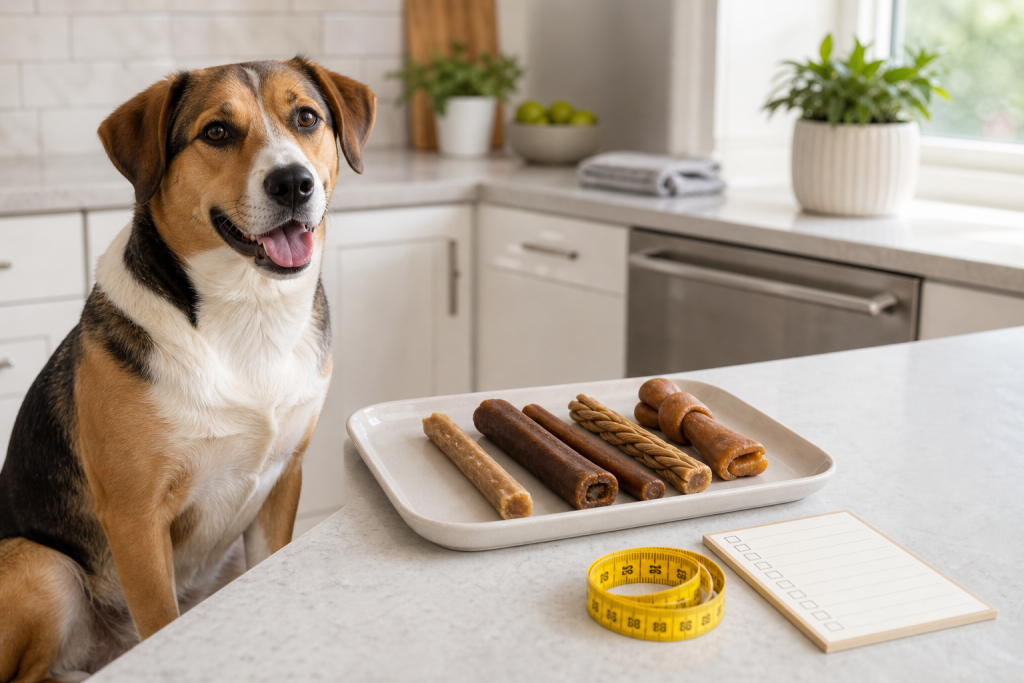
Start with size. A chew should be large enough that your dog cannot swallow it whole, and it should still be safe after several minutes of chewing. If the product only lists breed examples, measure your dog”’s mouth and compare the chew”’s actual length, width and shape.
Check hardness next. FEDIAF warns that excessively hard chews can raise tooth-fracture risk, especially when a chew does not bend, soften or give under pressure. If your dog has broken teeth, worn teeth, gum disease, a history of swallowing pieces or a very intense chewing style, ask your veterinarian before buying a hard chew bundle.
Read the ingredient list as if this were food, because edible chews count toward the diet. Look for the main ingredient, added sweeteners, colorants, flavorings, fat content and calories per piece. The ASPCA notes that treats should be adjusted so they do not push the overall diet out of balance.
Finally, check the use instructions. A chew that says ””supervise use,”” ””discard small pieces”” or ””not for aggressive chewers”” is not a set-and-forget boredom solution. If you need something for crate time, separation routines or work calls, choose a product made for supervised use only when you can actually supervise.
Deal math: why a value pack can backfire
A large bag is only cheaper if your dog can use the chews safely and consistently. Compare cost per chew, but also compare cost per safe session. A 32-count pack is not a bargain if half the pieces are too small, your dog finishes them in seconds or the texture upsets their stomach.
Watch Autoship and coupon terms closely. Chewy”’s current deal pages may show rawhide-free chew examples with price-per-unit information and returns messaging, while PetSmart”’s promotional terms say offers can be limited by eligibility, exclusions, supply, online versus in-store selection and whether a code or account activation is required. Treat those terms as part of the price.
Before paying, verify:
- the chew size for your dog”’s weight and mouth shape;
- the calories per piece and how often you plan to feed it;
- whether the first-order deal changes on future deliveries;
- whether the item is returnable after opening;
- whether your coupon applies to that exact flavor, size and seller;
- whether you are buying from the retailer or a marketplace seller.
Rawhide-free does not mean dental-care-free
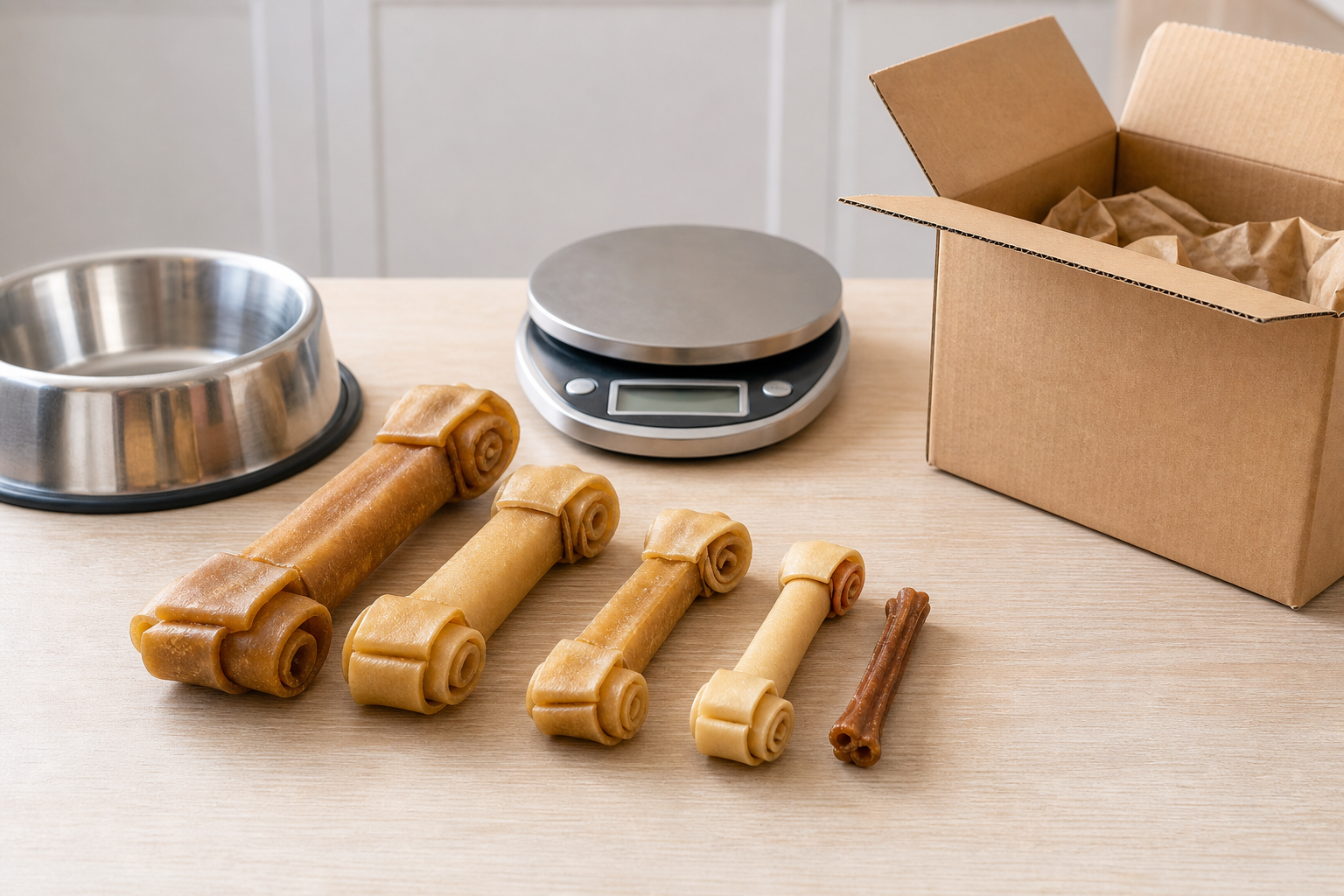
Some chews are sold with dental language, but shoppers should separate chewing time from proven dental benefit. If dental care is the reason you are buying, look for real efficacy support, not just ridges, mint flavor or a toothbrush shape.
For dogs with bad breath, bleeding gums, loose teeth, pain while chewing or sudden reluctance to eat, do not solve it with a bigger chew order. A chew may help occupy a healthy dog, but it is not a substitute for a veterinary dental exam or a treatment plan.
What to avoid
Avoid any chew that becomes a swallowable nub too quickly. Take it away before it gets small enough to gulp, even if the package says it is digestible.
Avoid chews that are much harder than your dog”’s teeth can reasonably handle. Antler-like, bone-like or very dense products can be a poor fit for dogs that crunch instead of gnawing slowly.
Avoid buying a multi-pack before you know your dog”’s reaction. New chews can cause digestive upset, and some dogs guard high-value items. Start small, supervise closely and stop if the chew creates tension between pets.
Avoid treating rawhide-free as a puppy shortcut. Puppies have changing teeth, changing chewing pressure and a habit of testing everything with their mouths. Choose age-appropriate products and ask your vet if you are unsure.
A practical buying framework
For light chewers, a softer edible chew or textured rubber toy may be enough. For moderate chewers, pick a chew that lasts but softens and does not splinter into sharp pieces. For aggressive chewers, prioritize size, durability and supervision over the cheapest count per bag.
For dogs watching their weight, count chews as treats. FEDIAF”’s treat guidance uses the common 10 percent calorie framework, and that can disappear quickly with rich chews. If the package does not clearly show calories per piece, choose another product or contact the manufacturer.
For multi-dog homes, buy by the strongest chewer, not the average dog. A chew that works for a small, gentle dog can become risky if the larger dog steals it later.
Quick answers
Are rawhide-free chews always safer than rawhide?
No. They avoid the traditional rawhide ingredient, but safety still depends on size, hardness, ingredients, digestibility, your dog”’s chewing style and supervision.
Can I leave my dog alone with a rawhide-free chew?
Only if the product is designed for that use and you know your dog does not break off or swallow pieces. Many edible chews should be supervised.
What is the biggest checkout mistake?
Buying the biggest discounted pack before testing one chew. Start with a small pack, watch how your dog uses it and then decide whether the bulk price is real savings.
Should I ask my vet before buying?
Ask your vet if your dog is a puppy, senior, power chewer, has dental disease, has a sensitive stomach, is on a restricted diet or has swallowed chew pieces before.
Sources
Sources last checked: September 2, 2026, 19:30 CEST, Europe/Rome.