
#dog treats
#human-grade dog treats
#pet deals
#treat calories
A human-grade dog treat deal is not automatically a better deal, safer treat or complete diet choice. The phrase can be meaningful when the maker meets the right handling and manufacturing standards, but shoppers still need to check calories, treat size, ingredients, freshness and price per ounce before buying a multipack. If the bag is meant for rewards, training or toppers, treat it as an extra, not as a shortcut around your dog’s normal food.
Human-grade language is showing up more often in dog treat listings, including current new-release and deal surfaces, because owners are comparing pet snacks the same way they compare food for themselves. That makes the claim easy to overvalue at checkout. A small bag can look premium and wholesome, then disappear in a week if the pieces are large or calorie-dense.
Why This Claim Matters Now
Pet food and treat prices still push owners toward trial bags, bundle deals and Autoship offers. At the same time, “human-grade” has become a shelf signal for fresher-looking, shorter-ingredient dog snacks. The problem is that the phrase does not tell you whether the treat fits your dog’s calorie budget, whether it is complete and balanced, or whether the pack size makes sense for how fast your dog should eat it.
AAFCO says its human-grade pet food standard and guidelines focus on how products making that claim should be manufactured and handled. FDA guidance on “complete and balanced” pet food is a separate issue: treats, snacks and supplements are often not intended to be a pet’s sole diet. Those two points are easy to mix up when a product page uses clean photos, short ingredient lists and premium language.
The Checkout Math To Do Before You Buy
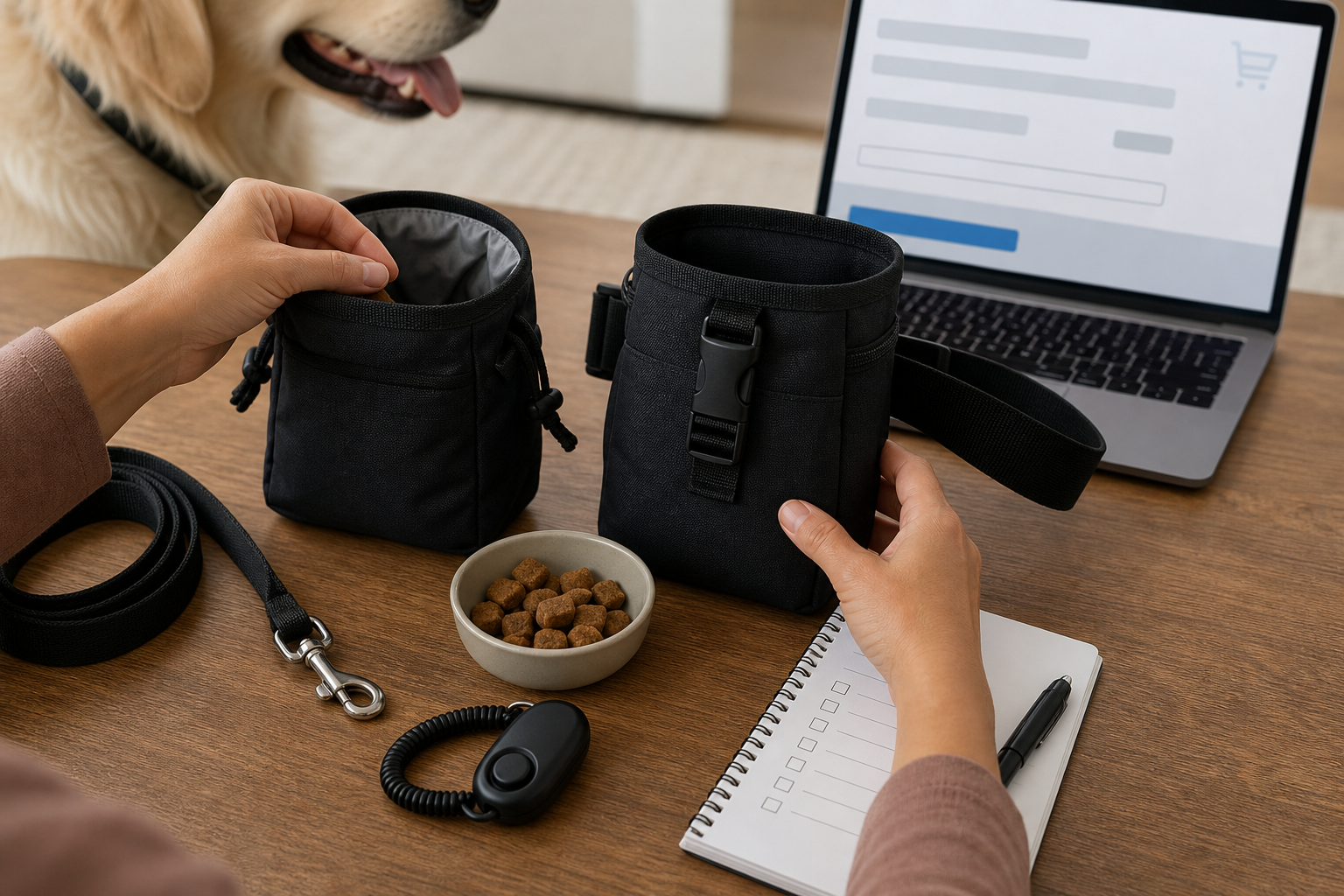
Start with calories, not the front of the bag. AKC’s current treat guidance explains that the common 10 percent rule refers to calories, not the number of treats. If a small dog has only a small daily calorie allowance, a few rich pieces can use up the treat budget quickly.
Then check the serving size. Some soft sticks, jerky pieces and breakable bars are sold as if they are easy training rewards, but one piece may be too large for frequent use. If you plan to use the treat during walks or classes, ask whether it can be broken cleanly into pea-size rewards without crumbling into oily dust at the bottom of the pouch.
Next, compare price per ounce and price per usable reward. A three-ounce bag can be fine for a trial, but it is rarely a value pack if your dog needs many tiny rewards. A larger bag can be wasteful too if the treats dry out, smell odd after opening or exceed your dog’s calorie budget before you finish them.
Human-Grade Is Not The Same As Complete And Balanced
This is the biggest label mistake. “Human-grade” is about qualifying the ingredients, manufacturing and handling claim. “Complete and balanced” is the nutrition statement that tells you whether a pet food is intended to meet a dog or cat’s needs as a sole diet.
Most treats are not designed to replace normal food. That is not a flaw by itself. It simply means you should not let premium wording convince you to feed the snack like a meal topper every day unless your veterinarian has helped you account for calories and nutrition.
When shopping, look for clear calorie information, an ingredient list your dog tolerates and feeding directions that make sense. If the product has a nutritional adequacy statement, read it carefully. If it says the item is for intermittent or supplemental feeding, that is a sign to keep it in the treat lane.
What To Check In The Deal Terms
Do not judge a dog treat deal by the promo badge alone. Check whether the discount applies only to a first Autoship order, whether there is a maximum savings cap and whether future shipments drop to a smaller discount. Chewy’s Autoship page, for example, describes a first-order percentage discount with a maximum dollar savings, followed by a smaller ongoing discount on select brands.
PetSmart’s promotional terms also warn that exclusions, quantity limits, online-versus-store differences and non-combinable offers may apply. That matters with premium treats because a small price difference can vanish if you add shipping, miss the eligible size, or buy a flavor your dog refuses and cannot return easily after opening.
Before paying, check these five details:
- Calories per treat or per piece, not just calories per package.
- Bag weight, number of pieces and whether pieces are easy to split.
- Autoship renewal price, first-order cap and cancellation controls.
- Return policy for opened food or treats, especially for picky dogs.
- Best-by date, storage directions and whether a bulk pack will stay fresh.
Ingredients Still Matter
A short ingredient list is useful only if it works for your dog. If your dog has a known food sensitivity, pancreatitis history, kidney disease, obesity, diabetes or a prescription diet, ask your veterinarian before treating a new premium snack as harmless. The risk is not that every human-grade treat is bad. The risk is assuming the claim makes fat level, calories, texture and individual tolerance irrelevant.
For everyday shopping, avoid treats with vague feeding guidance, missing calorie information, unclear country or company details, or dramatic health promises. A treat can be high quality and still be the wrong choice for a dog that needs low-fat, low-calorie or limited-ingredient rewards.
When A Small Bag Is Actually The Better Deal
A trial-size bag can be the smarter buy when you are testing texture, smell and digestive tolerance. It is also better when the treat is rich, soft, refrigerated after opening or meant only for high-value rewards. Paying more per ounce can still waste less money than buying a value pack your dog should not eat quickly.
A bulk pack makes more sense when your dog already tolerates the recipe, the pieces are small enough for your use, the best-by date is far enough out and the per-ounce price beats the smaller bag after shipping. If the product page shows a coupon, verify that the coupon applies to the exact flavor and size in your cart.
What To Avoid
Avoid buying human-grade treats as a substitute for a complete diet. Avoid stocking up before one trial bag proves your dog likes the texture and tolerates the ingredients. Avoid choosing a treat only because it looks like people food, especially if the calorie line is hard to find.
Also avoid assuming a current new-release listing means the product is automatically better than established treats. New can mean interesting, but it can also mean fewer long-term customer reports, fewer flavor options and less certainty about restock timing.
Quick Answers
Are human-grade dog treats worth buying?
They can be worth buying if the ingredients fit your dog, the calories fit the daily treat budget and the price per usable reward is reasonable. The claim alone is not enough.
Can human-grade treats replace dog food?
Usually no. FDA explains that treats, snacks and supplements are often not intended as a sole diet. Look for a complete-and-balanced statement on actual dog food, and ask your veterinarian before changing meals.
What is the easiest deal check?
Divide the final cart price by the number of realistic treat pieces you will use, then check the calories. A cheap bag is not cheap if each reward is too large for training or too rich for daily use.
Sources
Sources last checked: September 2, 2026, 22:18 CEST, Europe/Rome.