
#dog deals
#dog leash coupler
#dog walking gear
#double dog leash
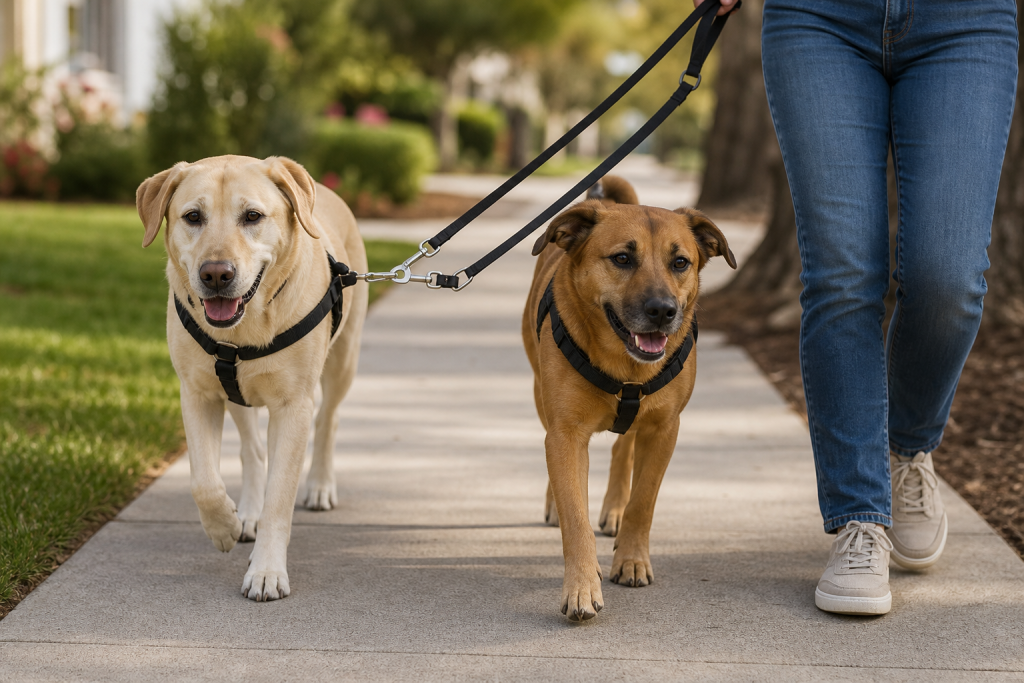
A double-dog leash coupler is only a good deal when both dogs can walk at a similar pace, stay relaxed near each other and use hardware sized for their combined pull. If one dog lunges, drifts, stops to sniff while the other surges, or needs more space, the coupler can turn one cheap walking upgrade into a daily tangle. Before checkout, check the swivel, clip strength, strap length, bungee stretch, return terms and whether two separate leashes would give you safer control.
Two-dog walking gear is easy to impulse-buy because it promises one handle, fewer knots and faster walks. The demand is visible on major pet retail pages, where double leashes and couplers are treated as a dedicated category rather than a niche accessory. The catch is that a coupler solves a hardware problem, not a training problem.
Why This Matters Now
September is a heavy walking season for many dog owners. Cooler evenings bring longer walks, school schedules push more owners into quick morning and after-work routines, and two-dog households start looking for shortcuts that make daily outings easier.
Retailers make the shortcut look simple: buy a splitter, clip both dogs to one lead, and stop juggling two handles. That can work for compatible dogs, but the American Kennel Club notes that double leashes are not right for every pair. The most important checkout question is whether your dogs already walk politely enough to share one system.
The Compatibility Check
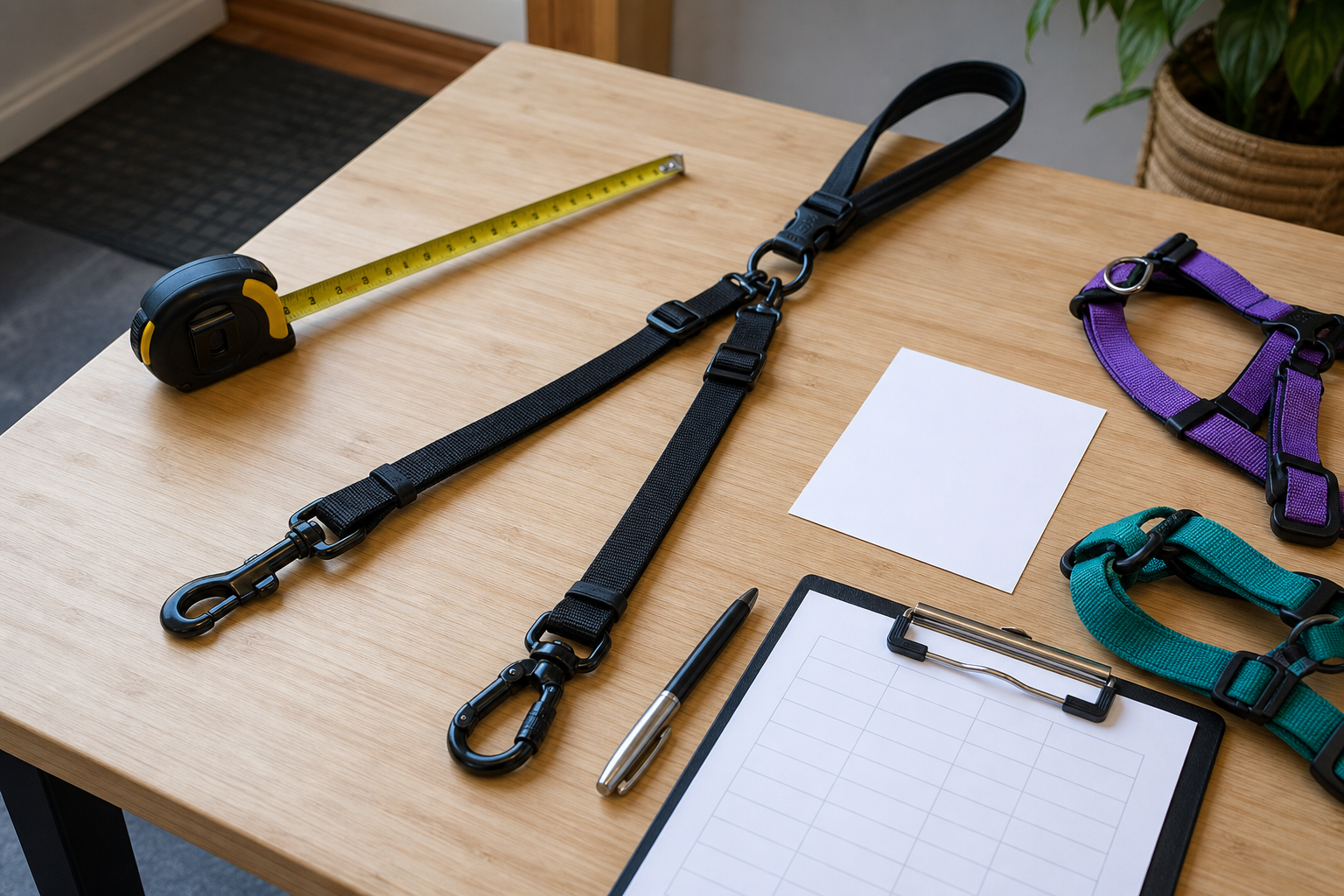
Start with the dogs, not the discount. A double leash is best suited to two dogs that know each other, walk without constant pulling and have similar walking goals. Two dogs that both like steady sidewalk walks are very different from one dog that wants to sprint and another that wants to stop every few feet.
Size matters too. A small dog paired with a much larger dog can get dragged sideways if the coupler is too short or stretchy. A senior dog can lose the chance to slow down. A reactive dog can pull the other dog into a stressful situation because the pair has less room to separate.
Do one test before buying anything: walk both dogs together on separate fixed leashes and ask whether each dog can stay calm, respond to cues and move at the same pace for a short route. If that walk already feels barely manageable, a coupler is likely to hide the problem until a squirrel, cyclist or loose dog appears.
What To Check Before Checkout
- Swivel: Look for a real rotating connector at the split point. A fixed ring may be cheaper, but it can twist when dogs cross paths.
- Length: Short couplers keep dogs tidy, but too little distance can create shoulder pressure and frustration. Adjustable sides are useful when the dogs are different heights.
- Clip size: Tiny clips may be fine for small dogs. Larger dogs need hardware that matches their weight, harness ring and pulling strength.
- Bungee: Stretch can soften sudden movement, but too much bounce can reduce precise control. Avoid treating bungee as a substitute for loose-leash training.
- Handle setup: Some products are full double leashes with one handle. Others are couplers that attach to a leash you already own. Check which one is in the cart.
- Reflective detail: Evening walks are easier to manage when the gear is visible, especially if your dogs walk on opposite sides of the path.
- Cleaning: Mud, slobber and treat dust build up fast. Smooth webbing or coated straps are easier to wipe than fuzzy fabric that traps grime.
When The Deal Is Not Really A Deal
A low price is not useful if you need to buy a second leash, replacement clips or a different harness after the first walk. Read the product listing carefully for total length, each side’s adjustment range, maximum recommended dog size and whether the coupler is meant for collars, harnesses or both.
Also check the return policy before opening the package outdoors. Petco says online returns within 30 days can receive a refund to the original payment method, while later eligible returns may move to merchandise credit. PetSmart’s policy includes receipt requirements for some higher-value collars, fencing and training items, so keep the order confirmation until you know the gear works for your dogs.
If a retailer shows a sale badge, confirm that the final cart still includes the discount after shipping, tax and any coupon exclusions. Do not compare only list price against sale price. Compare the cost of the actual setup you need: coupler, compatible leash, harnesses, poop-bag holder, reflective add-ons and any return shipping risk.
The Treat And Training Add-On
Many double-leash buyers also add treats or a pouch because multi-dog walks require fast rewards. That part can be useful, but it adds a second checkout trap. VCA Animal Hospitals warns that training treats can add extra calories quickly if they are not measured against the dog’s daily allowance.
For a two-dog walk, carry tiny training treats separately for each dog if they have different diets, allergies or calorie limits. A coupler does not mean both dogs should receive the same snack. If one dog is on a veterinary diet, has a medical condition or needs weight management, ask your vet what treats fit before using food rewards heavily.
What To Avoid
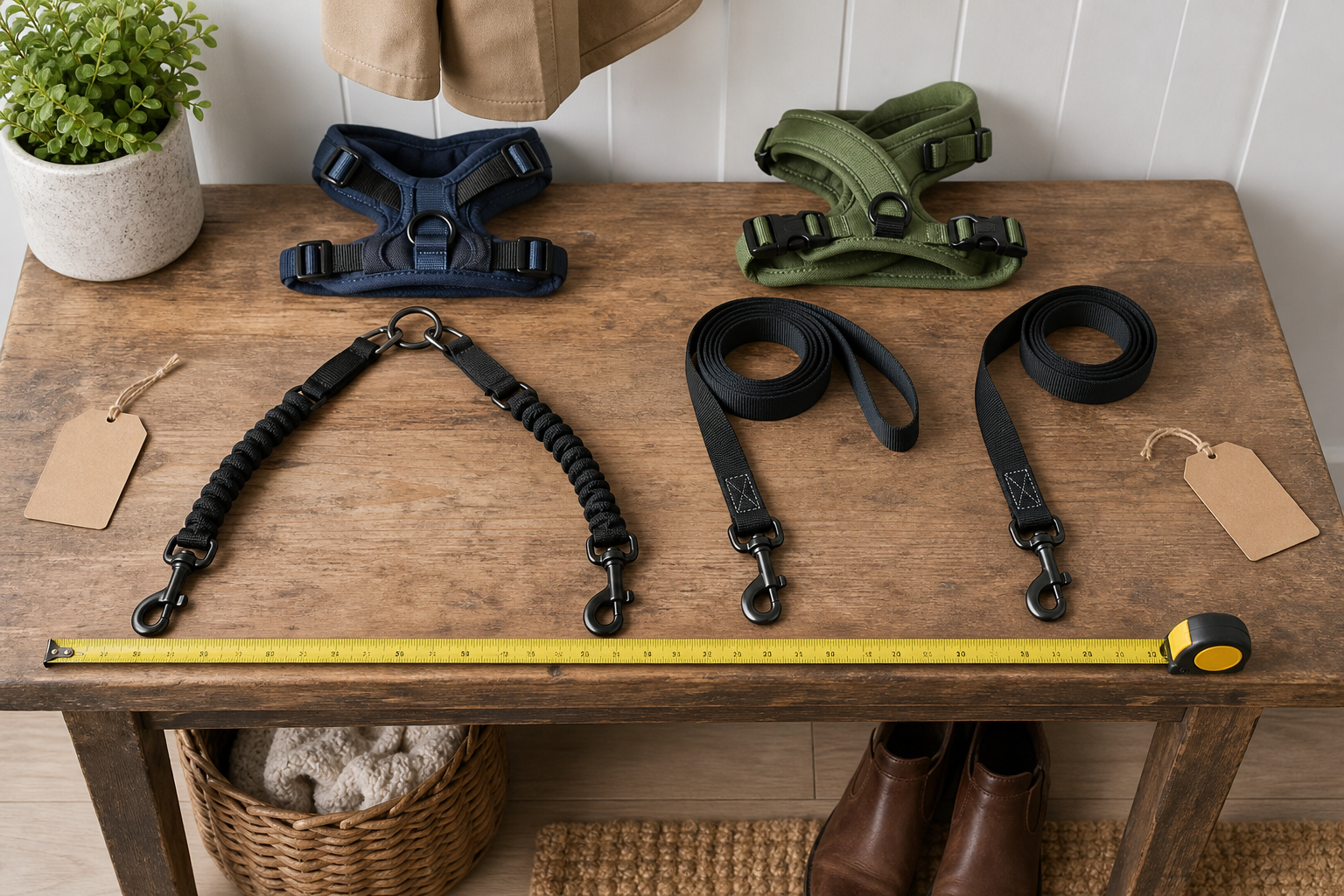
- Do not use a coupler to manage two dogs that already pull hard on separate leashes.
- Do not pair dogs that guard space, redirect frustration or only tolerate each other.
- Do not clip two very different-sized dogs together without testing short, quiet routes first.
- Do not use a retractable leash as the main handle for a coupler unless the product and trainer guidance specifically support that setup.
- Do not assume “no tangle” means no training, no supervision or no risk around traffic.
- Do not keep using frayed webbing, sticky swivels, bent clips or cracked plastic buckles.
A Better Buying Framework
Choose the simplest setup that gives you control. For two steady dogs of similar size, that may be a short adjustable coupler with a strong swivel and a comfortable fixed leash. For mismatched dogs, a waist leash with one dog on each side, or two separate fixed leashes, may be the better value even if it costs more upfront.
Buy from a retailer where you can verify sizing, return terms and product photos before paying. Then test the gear indoors or in a quiet yard before walking near traffic, crowds or other dogs. If either dog seems stressed or one dog controls the other dog’s movement, stop using the coupler and go back to separate walks while you work on training.
Quick Answers
Is a double-dog leash worth buying?
It can be worth buying for two compatible dogs that already walk calmly together. It is usually a poor shortcut for dogs that pull, react, fight over space or move at very different speeds.
Is a coupler better than two leashes?
A coupler reduces hand clutter and tangles, but two leashes give more individual control. For training, busy sidewalks or mismatched dogs, separate leashes may be safer and less frustrating.
Should a double leash attach to collars or harnesses?
Many owners prefer harness attachment because it avoids neck pressure during sudden movement. Check your own dogs’ fit, walking style and trainer or vet guidance, especially if either dog has breathing, neck, mobility or behavior concerns.
Sources
Sources last checked: September 3, 2026, 19:35 CEST, Europe/Rome.
- American Kennel Club, Double Dog Leashes: When and How to Use Them Safely
- American Kennel Club, How to Walk Multiple Dogs at Once
- Amazon Best Sellers, Dog Double Leashes
- Chewy, Double Dog Leashes and Couplers category
- VCA Animal Hospitals, Using Food and Treats for Training Dogs
- PetSmart Return Policy
- Petco Return Policy
- FDA Animal and Veterinary Recalls and Withdrawals