
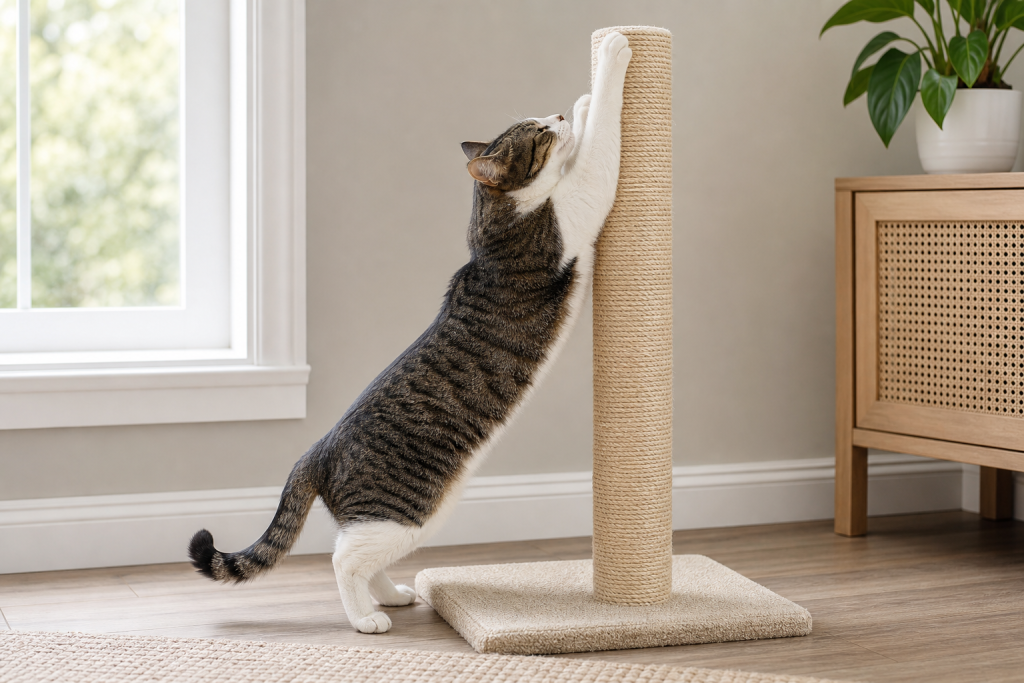
The cheap scratching post is usually a bad deal when it is too short, too light or covered in a texture your cat does not actually use. A cat needs to stretch, grip and feel stable while scratching, so a wobbly bargain post often sends the cat straight back to the sofa. Before checkout, match the post to your cat’s scratching style, not just the sale price.
This matters right now because pet owners are refreshing indoor enrichment, summer shedding tools and cat furniture while retailers rotate seasonal home deals. Scratching posts look simple online, but the wrong size or material can waste money and make furniture damage worse.
Why the bargain post fails
Scratching is not a bad habit to eliminate. Cornell Feline Health Center explains that scratching is normal behavior tied to marking, claw-sheath removal and stretching, and it recommends choosing posts that match a cat’s preferred orientation and texture. The American Association of Feline Practitioners also describes scratching as normal cat behavior and notes that many cats prefer vertical posts, while some prefer horizontal options.
The problem is that many checkout pages sell a generic tube as if every cat uses the same scratcher. A short post can stop a full stretch. A narrow base can wobble. A carpeted surface may feel wrong to a cat that prefers sisal, cardboard or wood-like texture. If the cat avoids it, the discount did not solve the problem.
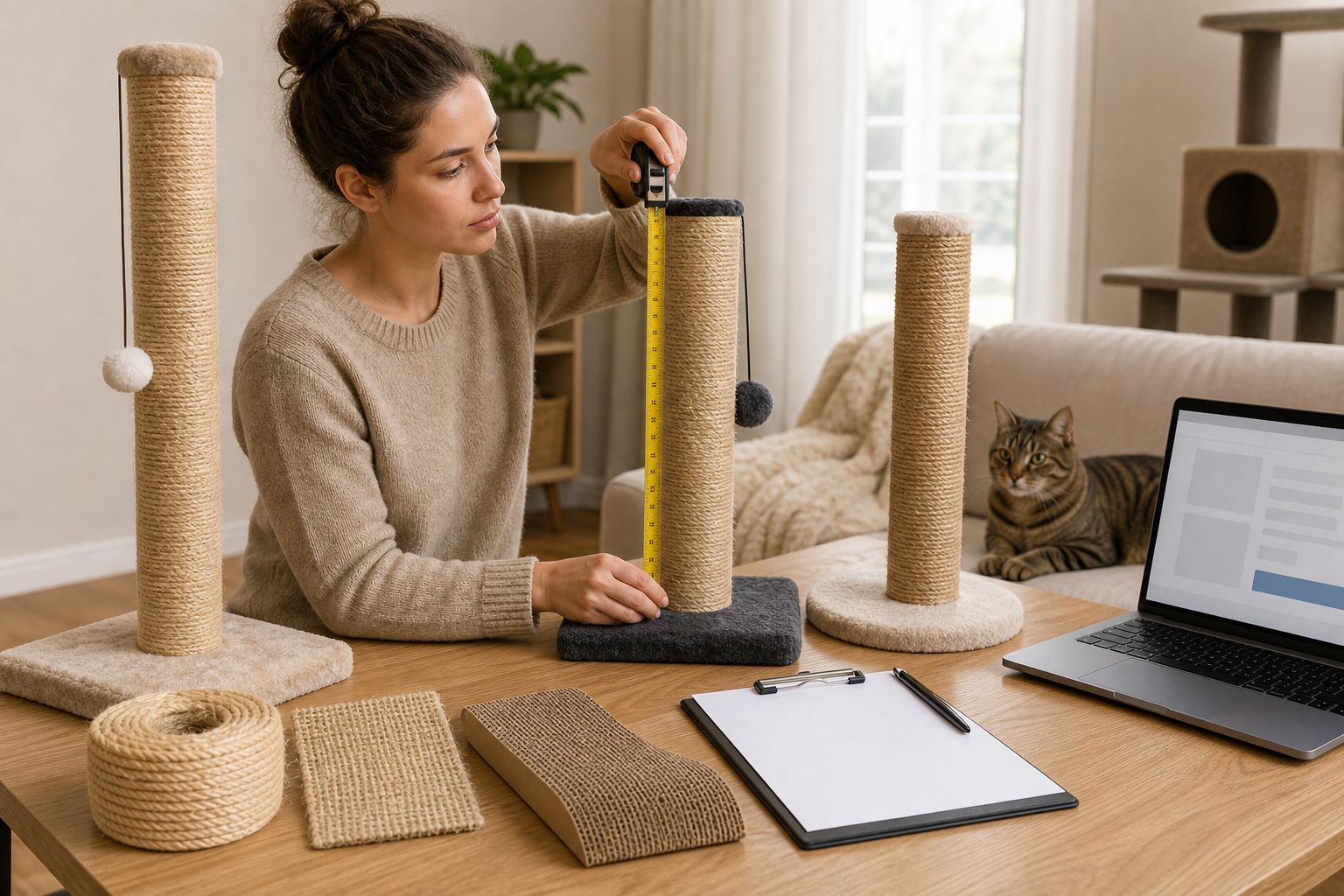
Measure before you buy
Check full-stretch height. Cornell says a scratching post should be at least as tall as the cat standing on the hind legs with the front legs outstretched. Ohio State University’s Indoor Pet Initiative gives the same practical warning: vertical posts should be tall enough for a cat to stretch up to scratch.
Match vertical, horizontal or angled scratching. Watch what your cat already uses. Sofa arms and curtains point toward a vertical post. Rugs and carpet edges often point toward a horizontal scratcher or mat. Some cats need both.
Prioritize stability over extras. A dangling toy does not fix a weak base. The post should not tip when a cat leans, climbs or pulls down with both front paws. If you are buying a tall scratcher, check the base size, weight, assembly hardware and whether it can sit flat on your floor.
Choose texture from evidence at home. Cornell recommends matching the material and orientation your cat already prefers. Sisal can work well for many cats, cardboard can work for horizontal scratchers, and carpet may make sense only if your cat already seeks that feel.
Plan the location. A perfect post hidden in a spare room may fail. Cornell recommends placing the post near the area your cat likes to scratch, then gradually moving it if needed. Posts near sleeping spots can also help because many cats scratch after waking.
Deal and coupon checks before paying
A scratching post coupon is useful only if the final product is tall, stable and returnable. Before you pay, check these details:
- Does the listing show the actual height, base dimensions and assembled weight?
- Can the scratcher survive normal pulling without tipping?
- Is the surface sisal, cardboard, carpet, wood or a vague “fabric” label?
- Are replacement pads, sisal rope or refill cardboard inserts sold separately?
- Does the retailer allow returns after assembly or only while the item is unused?
- Will oversize shipping make the sale price less attractive?
Chewy says eligible items can generally be returned within 365 days, but exclusions and condition still matter. Petco’s return policy also depends on product type, timing and proof of purchase. Always read the current retailer policy in the cart because bulky cat furniture can be more annoying to return than it looks.
What to avoid
Avoid buying the shortest post because it fits a corner. If your cat cannot stretch, the furniture may remain more satisfying. Avoid flimsy posts for large cats or cats that scratch with force. A post that falls once can teach a cat not to trust it.
Avoid treating scratching as spite. Cornell notes that cats are not destroying furniture as revenge. They are meeting normal behavioral needs. If scratching changes suddenly, if claws look painful, or if your cat seems stressed, ask your veterinarian before assuming the product alone is the answer.
Also avoid connected or app-enhanced scratchers unless the smart feature solves a real problem. If a scratcher includes cameras, sensors or app tracking, apply the same smart-device caution you would use for any connected product. The FTC has warned that shoppers often struggle to find how long smart devices will receive software updates.
When the deal is worth it
A scratching post deal is worth considering when it matches your cat’s existing scratching style, has enough height for a full stretch, stays stable under pressure and can be placed where your cat already wants to scratch. It is even stronger when the surface can be replaced instead of throwing away the whole item.
For many cats, a plain tall sisal post plus a cheap horizontal cardboard scratcher beats a decorative mini tower. The better buy is the one your cat will use every day, not the one that looks most impressive in the product photo.

FAQ
How tall should a cat scratching post be?
It should be tall enough for your cat to stretch fully on the hind legs with the front legs extended. For many adult cats, that means avoiding very short tabletop-style posts as the main scratcher.
Is sisal better than carpet?
Sisal is often a strong choice, but the better material is the one that matches your cat’s preference. Watch whether your cat scratches rope-like textures, cardboard, carpet, rugs or wood-like surfaces.
Should I buy one scratching post for multiple cats?
Usually no. Multi-cat homes often need more than one scratching location, especially near favorite resting areas or previous scratching targets.
Can a scratching post stop sofa damage immediately?
Not always. Place the post near the sofa or target area, reward use and make the old target less appealing. Sudden or severe behavior changes should be discussed with your veterinarian.
Sources
Last checked: June 3, 2026, 07:32 Europe/Rome.
- Cornell Feline Health Center, Feline Behavior Problems: Destructive Behavior
- Ohio State University Indoor Pet Initiative, Scratching
- Oregon Veterinary Medical Association, Cat Behavior: Scratching
- American Association of Feline Practitioners, Feline Behavior Guidelines
- Chewy, Return Policy
- Petco, Returns
- FTC Consumer Advice, How long will your smart device get software updates?