
#air purifier deals
#pet dander
#pet tech deals
#smart air purifier
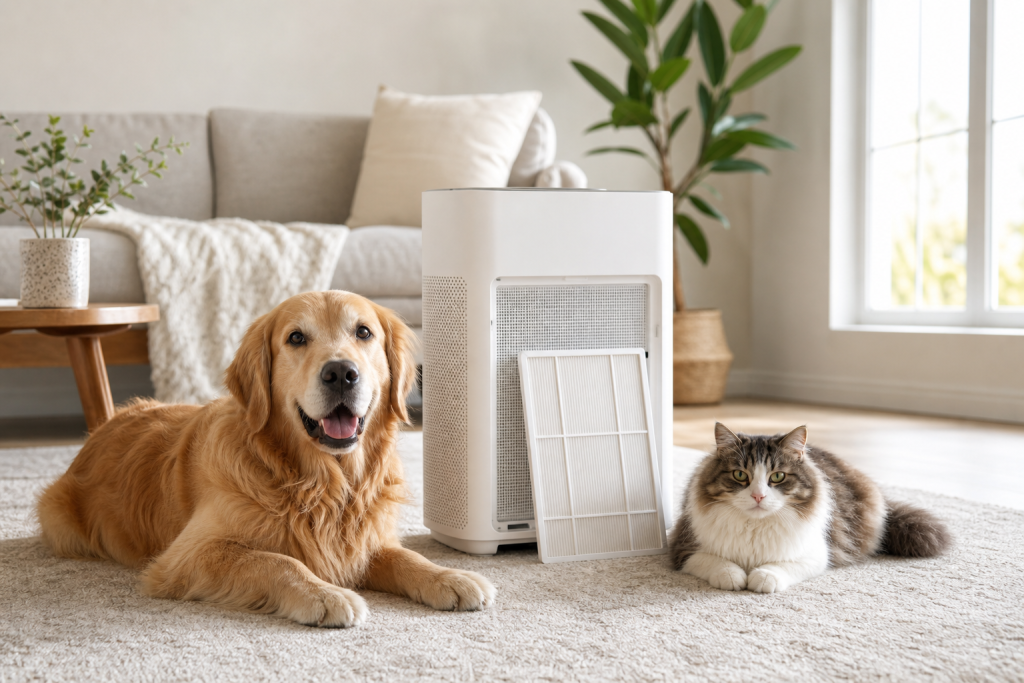
A smart air purifier deal is only useful for pet homes if the unit can actually clean the room where your dog or cat spends time. The number to check before checkout is CADR, not just app controls, “pet mode” or a huge square-foot claim. If the purifier is undersized, it may still look busy on the app while dander, dust and odors keep building up.
That matters right now because August shoppers are seeing air purifier deals alongside back-to-school cleaning, wildfire-smoke prep, allergy content and pet-hair cleanup products. Smart models can be convenient, but the pet-owner mistake is buying the cheapest connected unit for a living room, litter room or open-plan space without checking the verified room rating, filter cost and what the sensor actually measures.
Why the pet mode claim is not enough
“Pet mode” can mean different things from one brand to another. It may adjust fan speed, run a schedule, change sensor sensitivity or simply appear as a marketing label. It does not automatically prove that the purifier is sized for your room, strong enough for the amount of pet dander in the air, or able to reduce odors from litter, bedding and damp dog towels.
The U.S. Environmental Protection Agency says portable air cleaners should be chosen with a Clean Air Delivery Rate, or CADR, large enough for the room or area where they will be used. ENERGY STAR describes CADR as a measure of how quickly a room air cleaner delivers filtered air. AHAM Verifide also tells shoppers to match the room size and CADR on the label, not just the product’s category name.
For pet owners, that means the bargain purifier for a bedroom may be the wrong buy for a family room where a shedding dog sleeps, a cat tree sits near a window and the litter box is around the corner. Open layouts and high ceilings make the job harder. So does placing the purifier behind furniture, next to a blocked intake or across the room from the main pet zone.
The checkout math to do before you buy
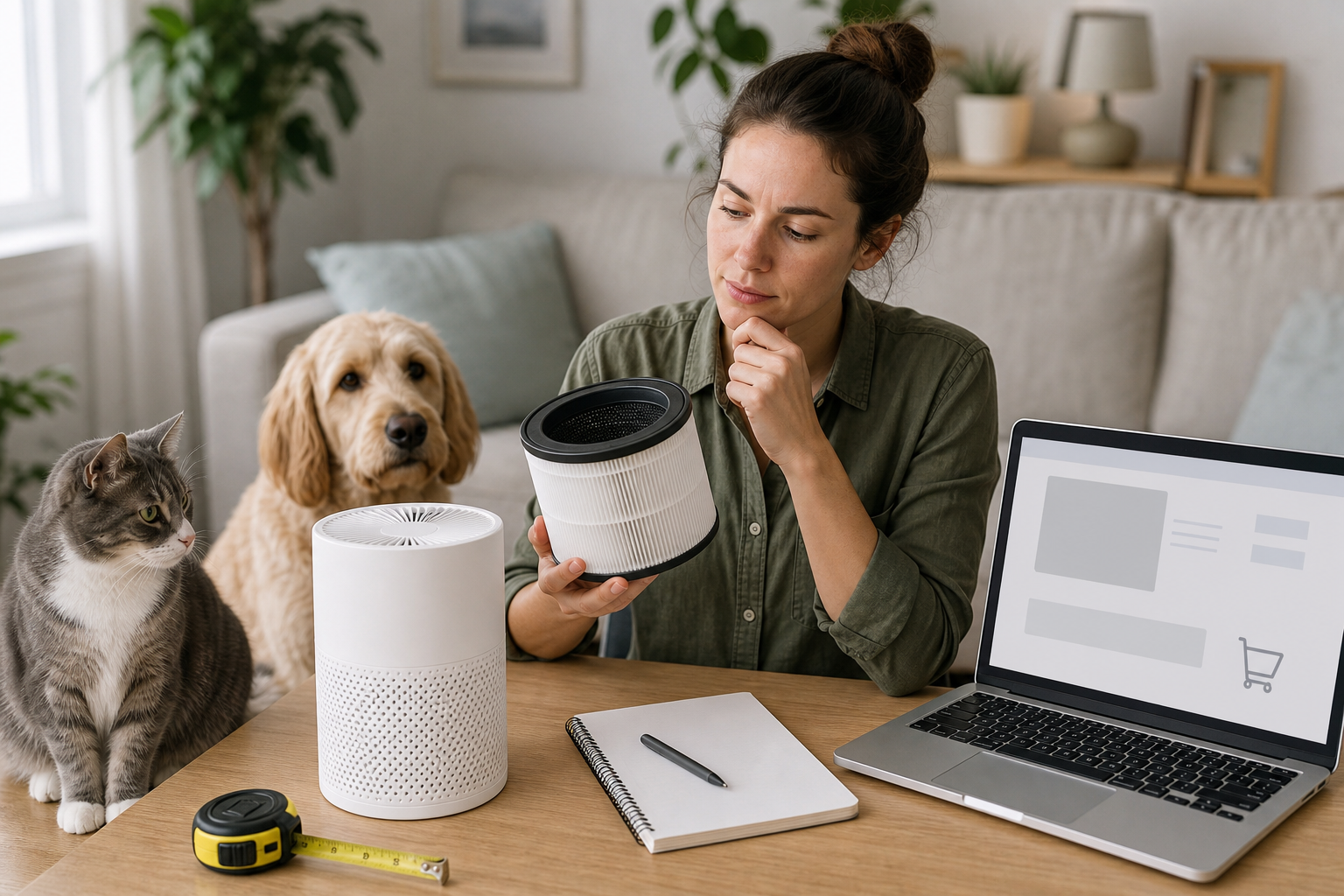
Before you add a smart purifier to your cart, measure the actual room. Multiply length by width to get square feet. If the room opens into a hall, kitchen or dining area, treat the whole connected space as the area the purifier has to serve. If the ceiling is higher than a normal 8-foot ceiling, assume the purifier needs more capacity.
Then look for the CADR and recommended room size from the product listing, product manual, ENERGY STAR listing or AHAM Verifide directory when available. A vague “covers up to” number is less helpful if it does not explain the air-change rate, ceiling height or testing basis. Very large square-foot claims can be especially misleading when the CADR looks modest.
Pet shoppers should also check which pollutant the claim is about. CADR labels commonly list tobacco smoke, dust and pollen as reference particles. A purifier with a good particle CADR may help with airborne dander and dust, but odor control depends heavily on activated carbon and airflow through that carbon. A thin carbon sheet may not be the same thing as a meaningful odor filter.
Smart features worth paying for
The app is useful when it helps you run the purifier consistently. Good smart features include schedules, filter-life reminders, fan-speed controls, child or pet lock settings, and clear alerts when a filter is seated incorrectly. Shared household access can also matter if a sitter or family member needs to change a setting while you are away.
Do not pay extra only for a colorful air-quality graph. Some consumer sensors are better at detecting fine particles than pet smells, litter-box odor or damp bedding odor. A room can smell stale even when a particle sensor says the air looks fine. That does not mean the purifier is broken, but it does mean the app should not be treated as proof that the room is clean enough.
Noise is another hidden cost. A purifier that only meets its room claim on its highest setting may be too loud for the room where your pet actually rests. If you plan to run it near a crate, bed, cat tree or litter area, check decibel information, return rules and user feedback about high-speed noise before the sale price wins.
Deal and coupon checks before paying
Air purifier discounts can be real, but the deal is incomplete until you price the filters. Check the cost of the main filter, pre-filter, carbon filter and any proprietary replacement pack. If a subscription is offered, compare the recurring price with one-time replacement pricing and confirm whether you can skip, pause or cancel without losing app features.
Look for exclusions in retailer coupons. Some promo codes exclude major appliances, marketplace sellers, subscription items, refurbished units or limited-quantity deals. If the purifier is sold by a third-party seller, verify the return address, warranty support and whether replacement filters are sold by the same brand or only by unknown compatible-filter listings.
For a smart purifier, also check the app requirements before buying. Confirm 2.4 GHz Wi-Fi support if needed, account sharing, firmware update history, manual controls on the device and what happens if the app is unavailable. A purifier should still turn on, change speed and run safely without making the app the only practical control.
What pet owners should avoid
Avoid ozone generators and any purifier setting that intentionally produces ozone for occupied pet spaces. Ozone is not a pet odor shortcut. If a listing uses aggressive odor-removal language, read the manual and safety notes before you buy, especially if cats, birds, senior pets or pets with respiratory issues live in the home.
Be careful with fragrance cartridges, essential-oil trays or purifier bundles that include scented add-ons. The ASPCA warns that essential oils can be a concern for pets, especially cats, and recommends avoiding them in areas pets can access unless supervised or approved by a veterinarian. A purifier should reduce airborne particles and help manage odor sources, not mask a litter box or damp bed with scent.
Also avoid treating an air purifier as a replacement for cleaning. It will not remove fur from upholstery, clean a litter box, wash bedding, fix damp carpet or solve a ventilation problem by itself. In pet homes, the purifier works best as one part of the system: washable bedding, vacuuming, litter maintenance, grooming and enough airflow.
A better way to choose one
Start with the room your pet uses most, not the room where the purifier looks nicest. A cat household may need a unit near the litter area or favorite sleeping room. A dog household may get more value from a stronger living-room purifier than two tiny app-connected units in corners.
Choose a unit with a verified CADR that fits the space, a washable or easy-clean pre-filter for pet hair, realistic filter prices, manual controls and a return window long enough to test noise and placement. If odor is a major issue, prioritize a meaningful carbon filter and fix the odor source first. If allergies or breathing symptoms are involved for a human or pet, use the purifier as a home-improvement purchase and ask a qualified professional for health guidance.
Quick answers
Is a smart air purifier better for pets?
Not automatically. Smart controls help with schedules and reminders, but CADR, room size, filter design, noise and replacement costs matter more than the app.
Can an air purifier remove pet smells?
It may help, especially with the right carbon filter and steady airflow, but it cannot replace litter-box cleaning, washing bedding, grooming or fixing damp areas.
Should I buy the cheapest purifier on sale?
Only if it fits the room and the filters are affordable. A cheap undersized unit can become an expensive fan with an app.
Where should I place it?
Put it in the room where the pet dander or odor problem actually happens, with intake and outlet areas unblocked. Avoid hiding it behind furniture or placing it where a pet can chew the cord.
Sources
- U.S. Environmental Protection Agency, Guide to Air Cleaners in the Home.
- AHAM Verifide, How to choose the best air cleaner for your home and certified room air cleaner directory.
- ENERGY STAR, Air Cleaners.
- ASPCA, Pet Poisons: Be Mindful of these Household Products and Cleaning Agents.
- TechRadar, The best air purifier: 8 powerful purifiers, tried and tested by experts, used only as a current shopping-demand signal.
Sources last checked: August 9, 2026, 01:36 Europe/Rome.