
#pet deals
#pet talking buttons
#pet tech
#smart pet devices
Pet talking button kits can be worth trying, but a cheap starter deal can go quiet fast if the buttons are unsafe for your pet, the batteries are awkward, or the app-connected hub does not fit your home setup. Buy the smallest kit that lets you test your dog or cat’s interest first. Then check battery access, 2.4 GHz Wi-Fi needs, app logging, warranty limits and return terms before paying for a larger soundboard.
Why this pet-tech deal matters now
Soundboard buttons moved from viral videos into normal pet-tech shopping. UC San Diego researchers have studied button-trained dogs, and a 2024 university summary reported that trained dogs in the study responded appropriately to specific soundboard words. That does not mean every pet will hold conversations, and it does not make a button kit a must-have product.
The shopping problem is simpler: many kits look inexpensive until you add extra buttons, mats, a connected hub, batteries, shipping and the time it takes to teach one useful word. If you want the fun of trying it, treat the first purchase like a test kit rather than a full smart-home buildout.
The hidden checkout mistake
The mistake is buying the biggest button bundle before checking whether your pet will use one button reliably. Dogs and cats already communicate with body language, routine, vocal sounds and movement. Buttons may add another cue, but they are not a replacement for observing your pet or asking a qualified professional when behavior changes suddenly.
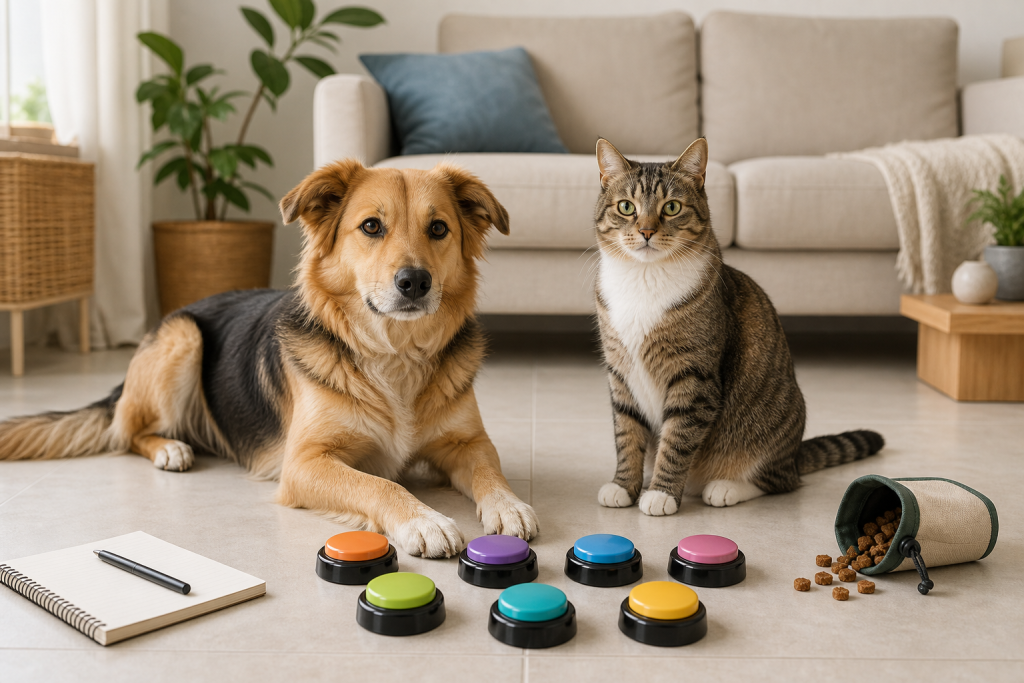
Start with a small set if you are new to soundboards. Choose words tied to repeatable routines, such as outside, food, play or water. If your pet ignores the buttons, chews them, panics at the sound, or only presses them by accident, a larger kit will not become a better deal just because the per-button price is lower.
What to check before buying pet talking buttons
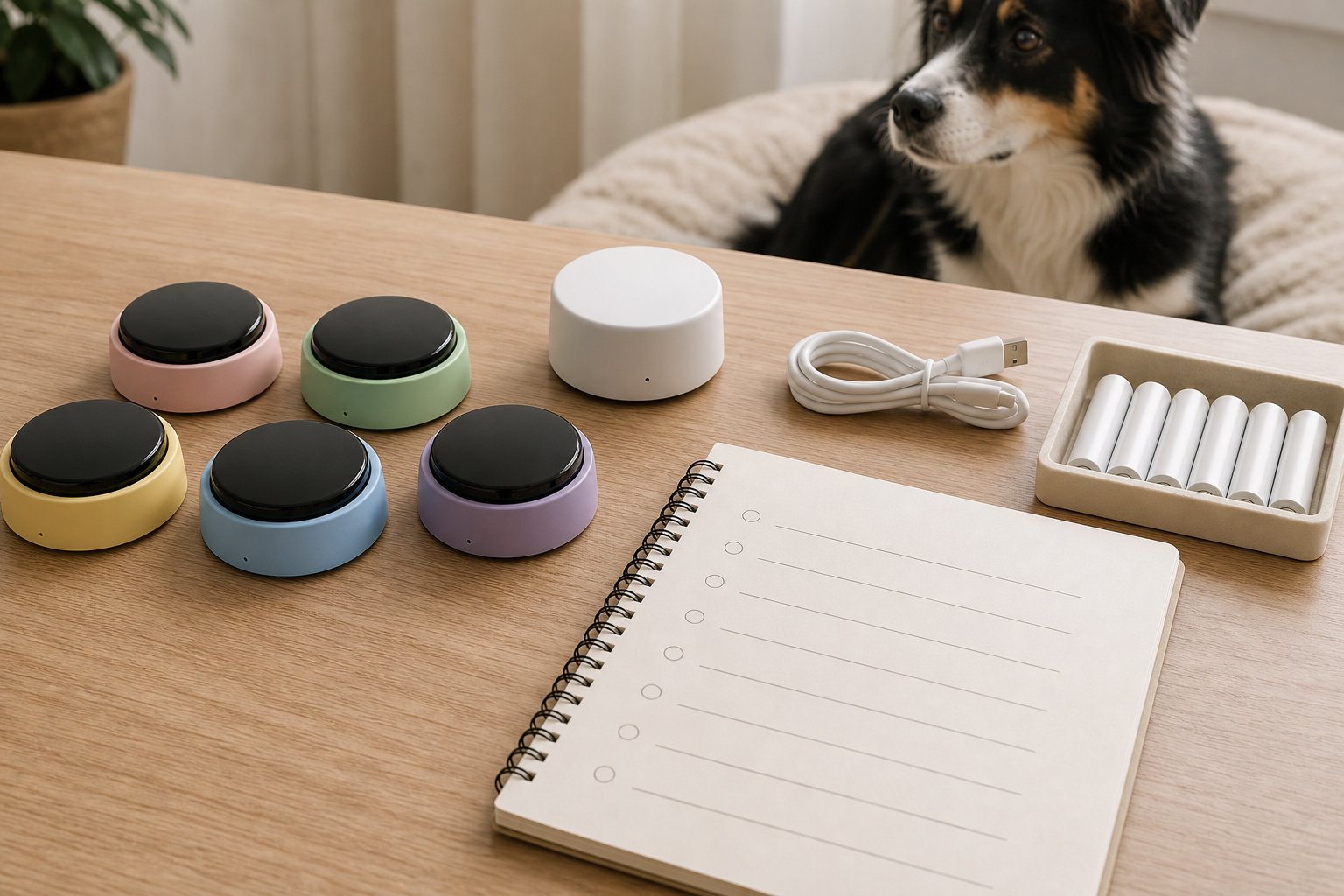
Battery type and access: Some sound buttons use coin or button cell batteries. CPSC warns that button and coin batteries can cause serious injury if swallowed, and compartments should be secured. For pets, also check whether the product maker warns against use with animals likely to chew.
Chewing and supervision: FluentPet’s safety guidance says sound buttons and related parts can break apart if chewed and should not be used with pets likely to chew them. That is a practical shopping filter, not just fine print.
Plain buttons or connected buttons: Basic recordable buttons are simpler. Connected systems can log presses, send notifications or organize data, but they may need a hub, an app account and internet access.
Wi-Fi requirements: FluentPet’s Connect setup guidance says the base should be prepared for a 2.4 GHz Wi-Fi network. If your router combines bands or your pet’s board will sit far from the router, confirm setup before assuming the smart features will work.
App dependency: FluentPet’s app FAQ says the app is required for the Connect system and that button press notifications depend on the internet connection and the company’s servers. If you only want buttons that play a recorded sound in the room, a simpler non-connected kit may be enough.
Warranty limits: Check whether the warranty covers manufacturing defects only, and whether damage from biting, liquid exposure or rough use is excluded. Those exclusions matter more for pet gear than for a gadget that sits on a desk.
When a bigger bundle is actually useful
A bigger kit can make sense if your pet already uses a few buttons consistently and you know where the board will live. More buttons also help when several words need distinct positions, or when you want separate tiles so your pet can find a word by location.
It is less useful when the extra buttons are only there to hit a free-shipping threshold. If the sale pushes you into buying a connected base, expansion mats and a large pack of buttons all at once, pause and price the setup as a complete system. Include spare batteries, replacement buttons, taxes, shipping and any return restrictions.
Deal and coupon checks before paying
- Compare the starter kit price with the cost of individual add-on buttons, because the cheapest bundle is not always the cheapest path if your pet only needs a few words.
- Check whether a coupon applies to connected hardware, replacement buttons and accessories, not just the smallest starter pack.
- Confirm whether open-box, chewed, damaged or used buttons can be returned.
- Read the warranty language before buying secondhand, especially if the original order details are needed.
- If buying from a marketplace, verify that batteries, mats, hubs and chargers are included. Missing accessories can erase the discount.
What to avoid
Avoid any listing that claims buttons will prove your pet can speak like a person. The research is interesting, but a shopping page should not turn it into a guaranteed result. Also avoid kits with loose battery compartments, unknown battery types, no safety information, no return path or vague claims about app features.
Do not leave buttons with a pet that chews hard, guards objects or destroys toys. If your pet swallows part of a button, battery, mat or packaging, contact your veterinarian or an emergency animal hospital. This article is shopping guidance, not veterinary care instructions.
Quick answers
Are pet talking buttons only for dogs?
No. Dogs are the most visible examples online, but some products are marketed for both dogs and cats. Cats may need different placement, quieter training sessions and more patience.
Do you need an app-connected kit?
Not necessarily. An app-connected kit is useful if you want press logs or notifications. For a simple first trial, recordable buttons without a hub may be cheaper and easier.
Are button batteries a reason to skip the product?
They are a reason to inspect the product carefully. Look for secured compartments, supervise use and avoid button kits for pets that chew or pry at plastic parts.
What is a good first word?
Choose a routine your pet already understands and that you are willing to respond to consistently. Food, outside, play and water are easier to test than abstract words.
Sources
Last checked: 2026-06-06 19:33 Europe/Rome.
- University of California, “Dogs understand words from soundboard buttons, study reveals”: https://www.universityofcalifornia.edu/news/dogs-understand-words-soundboard-buttons-study-reveals
- UC San Diego Comparative Cognition Lab, Pet Cognition and Communication: https://cclab.ucsd.edu/pet-cognition-communication/
- CPSC, Button Cell and Coin Batteries: https://www.cpsc.gov/Safety-Education/Safety-Education-Centers/Button-Cell-Coin-Battery-Information-Center
- FluentPet Help Center, Important Safety Information: https://support.fluent.pet/en/articles/9442101-important-safety-information
- FluentPet Help Center, Onboarding: Setting Up Your Connect Base: https://support.fluent.pet/en/articles/6882009-onboarding-setting-up-your-connect-base
- FluentPet Help Center, Connect FAQ: App: https://support.fluent.pet/en/articles/6881999-connect-faq-app
- Federal Trade Commission, How long will your smart device get software updates? It’s hard to know: https://consumer.ftc.gov/consumer-alerts/2024/11/how-long-will-your-smart-device-get-software-updates-its-hard-know