
#cat bowls
#cat feeding
#cat supplies
#whisker fatigue
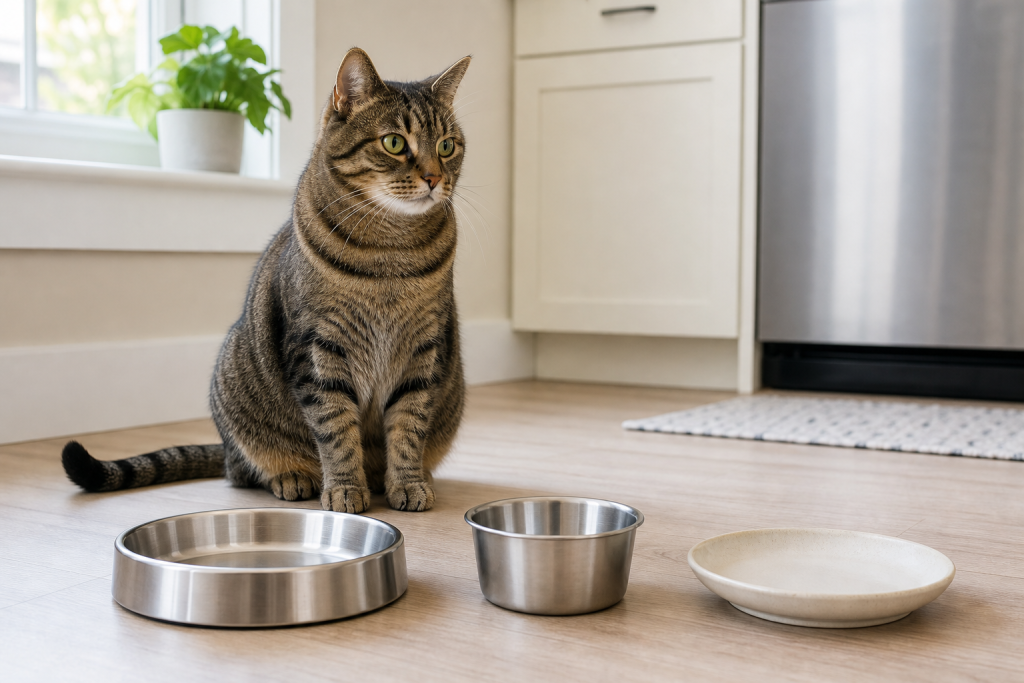
A whisker fatigue cat bowl can be worth trying, but it should not be treated like a proven medical fix or an expensive must-have. The smarter buy is usually a wide, shallow, easy-to-clean dish that your cat actually uses, especially if your cat pulls food out of a deep bowl or avoids the edges. If your cat’s appetite changes suddenly, skip the bowl experiment as the main answer and ask your vet.
Why this bowl claim is getting attention now
Cat bowl listings increasingly use phrases like “whisker friendly,” “stress free” and “anti-whisker fatigue.” That makes the category easy to overspend on, because the claim sounds more clinical than the evidence really is.
The basic idea is simple: a cat’s whiskers are sensitive, and some cats may dislike having them brush the sides of a narrow food or water bowl. PetMD notes that whisker fatigue is not a disease and remains debated in veterinary circles. A small study cited by PetMD found no clear difference in eating time, food eaten or food dropped when cats used a whisker-friendly dish, although some cats did appear to prefer the alternate dish.
That is exactly why shoppers should treat this as a comfort and preference purchase, not as a guaranteed health solution.
What to check before paying extra
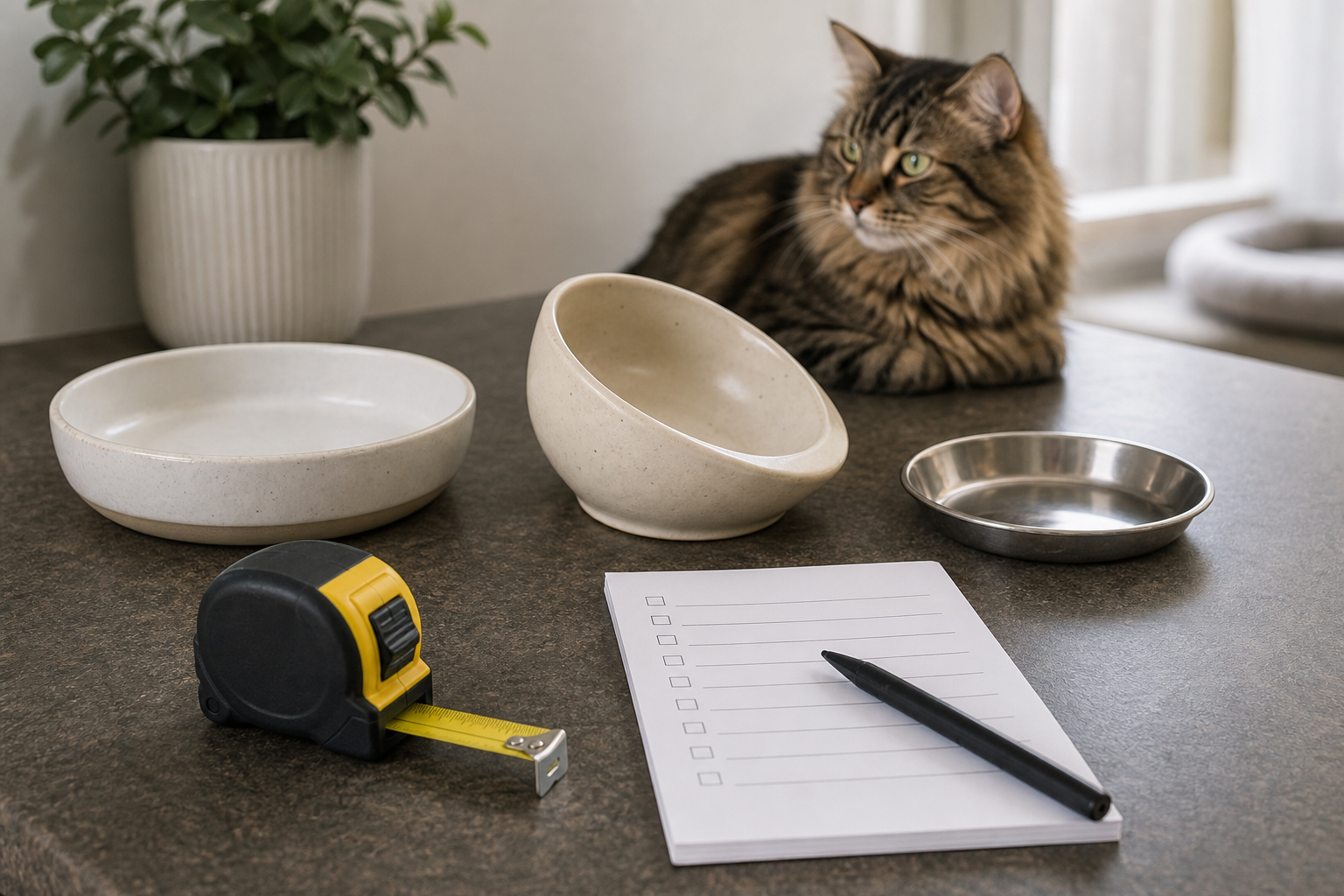
Start with shape, not the marketing name. A useful cat bowl for this problem is wide enough that your cat can reach the food without pressing both sides of the whiskers into the rim. Low sides matter more than a dramatic tilted stand.
- Width: pick a dish wider than your cat’s muzzle and whisker spread, not just a tiny saucer with a premium label.
- Depth: shallow is usually easier to test than deep, narrow or high-sided bowls.
- Material: stainless steel, ceramic or glass are easier to clean than scratched plastic.
- Stability: a non-slip base helps, but check whether the silicone ring traps food, hair or water.
- Capacity: a shallow bowl still needs to hold the meal without pushing wet food over the edge.
- Cleaning: dishwasher-safe is useful only if the full bowl, including the base, can actually be cleaned well.
If a listing leans heavily on “whisker fatigue relief” but hides the diameter, depth, material or cleaning details, it is not a strong deal. You are buying a bowl, not a diagnosis.
The cheaper test before the premium bowl
Before buying a specialty bowl set, try one meal on a clean flat plate, saucer or wide shallow dish you already own. Watch calmly from a distance. If your cat eats more comfortably, leaves less food around the rim or stops dragging food onto the floor, a better bowl shape may be worth buying.
If nothing changes, the problem may be food texture, bowl location, competition from another pet, stress in the room or an actual health issue. PetMD and Oklahoma State University both caution that eating changes can overlap with dental disease, gastrointestinal problems and other concerns. A bowl swap should not delay veterinary care when appetite, weight or behavior changes are significant.
Deal and coupon checks
Whisker-friendly bowls often look cheap until shipping, multipacks and accessories change the cart. Before paying, compare the final price against a plain stainless or ceramic shallow dish with similar dimensions.
- Check whether the coupon applies to one bowl, a set or only a first-time order.
- Do the math per bowl if a listing bundles mats, stands or extra dishes you do not need.
- Read the return policy, especially for used feeding items that may not be returnable after food contact.
- Avoid paying more for a claim if the product page does not list measurements.
- For elevated or tilted bowls, check whether your cat can eat naturally without stretching, crouching awkwardly or pushing the dish around.
A real deal is a bowl that fits the cat, cleans easily and costs less after shipping. A sale badge on a vague “stress-free” bowl is not enough.
What to avoid
Do not trim your cat’s whiskers. They are sensory tools, and multiple veterinary sources warn against cutting them. Also avoid bowls that solve one problem by creating another: fragile ceramic for a cat that pushes dishes, rough plastic that scratches, stands that tip, or deep decorative bowls that look good in photos but make the food harder to reach.
Be careful with “anti-vomit” or “digestion” claims on tilted bowls. Some cats may prefer a certain height or angle, but that is not the same as a proven treatment. If vomiting, weight loss, drooling, mouth pain, food refusal or sudden pickiness appears, call your veterinarian.
Quick answers
Is whisker fatigue proven?
Not conclusively. It is a debated explanation for some cats’ bowl behavior, and a small study did not show clear eating improvements across the group. Individual cats may still prefer a wider dish.
What bowl should I try first?
A wide, shallow, stable stainless steel or ceramic dish is the safest first purchase for most shoppers. It does not need an expensive label if the dimensions and cleaning design are right.
Should I buy a tilted cat bowl?
Only if the angle and height suit your cat. A tilted bowl can help access for some cats, but it can also spill wet food or make the cat eat in an awkward posture.
When is this not a shopping problem?
If your cat suddenly stops eating, loses weight, drools, paws at the mouth, vomits often or seems painful, treat it as a vet question first. A new bowl should not be the main plan.
Sources
- PetMD, “Whisker Fatigue in Cats: What It Is and How To Help”.
- Oklahoma State University College of Veterinary Medicine, “Whisker Fatigue in Cats”.
- dvm360, “Whisker fatigue: Did pet bowl companies invent a feline malady?”.
- Journal of Feline Medicine and Surgery Open Reports / PubMed Central listing, “Evaluation of whisker stress in cats”.
- The Spruce Pets, “The 5 Best Whisker Fatigue Bowls”, used for current retail category context and testing criteria, not as a medical source.
Sources last checked: July 13, 2026, 19:41 Europe/Rome.