
#dog bowls
#dog feeding
#elevated dog bowls
#pet deals
#raised dog bowl
A raised dog bowl deal can backfire if you buy it because the listing suggests it is automatically better for digestion, bloat prevention or every large dog. The safer checkout move is to treat an elevated feeder as a fit and medical-context purchase, not a universal upgrade. For large, giant or deep-chested dogs, ask your veterinarian before switching from a floor bowl, especially if the product page makes health claims that sound too broad.
Raised feeders keep showing up in pet-supply sales because they look tidy, photograph well and promise less bending at mealtime. That can be useful for some homes, but it also makes the product easy to oversell. The important question is not whether the stand is discounted. It is whether the height, bowl shape, cleaning design and health context actually match your dog.
Why this matters now
Pet owners are shopping more carefully in 2026 as the pet category keeps growing and household costs stay under pressure. APPA reports that U.S. pet industry spending reached $158 billion in 2025, and current retailer deal pages continue to push bowls, feeders, beds and accessories as easy add-ons. Amazon’s 2026 Pet Days page, for example, listed discounts across feeders and fountains, while PetSmart and Chewy continue to promote autoship and coupon-driven shopping.
That deal environment is exactly why raised bowls deserve a pause. A feeding stand is not just decor. It changes how your dog eats and drinks, how easily you can clean around the bowls, and whether the setup makes sense for a dog with breed, age or mobility considerations.
The claim to question before checkout
The common claim is that a raised bowl is simply more comfortable or better for digestion. Sometimes a dog may need a different feeding position for a specific reason, but that is not the same as saying every dog benefits from elevation.
The American Kennel Club’s 2026 dog bowl guide notes that many large and giant breed owners buy elevated bowls because they assume bending is uncomfortable, but it also warns that some studies have linked elevated bowls with increased bloat risk. Veterinary Evidence reviewed the raised-feeder question and found limited, conflicting research, with one study finding increased GDV risk in large and giant dogs fed from raised feeders. Cornell’s Riney Canine Health Center lists using a raised food bowl among factors that may increase GDV risk, alongside large breed size, deep chest, eating too quickly and feeding large meals.
That does not mean every raised feeder is dangerous or that every floor bowl is right. It does mean a product page should not be your medical source. If your dog is large, deep-chested, older, very fast-eating or already under veterinary care for feeding or mobility issues, get veterinary guidance before buying an elevated stand for daily meals.
What to check on the product page
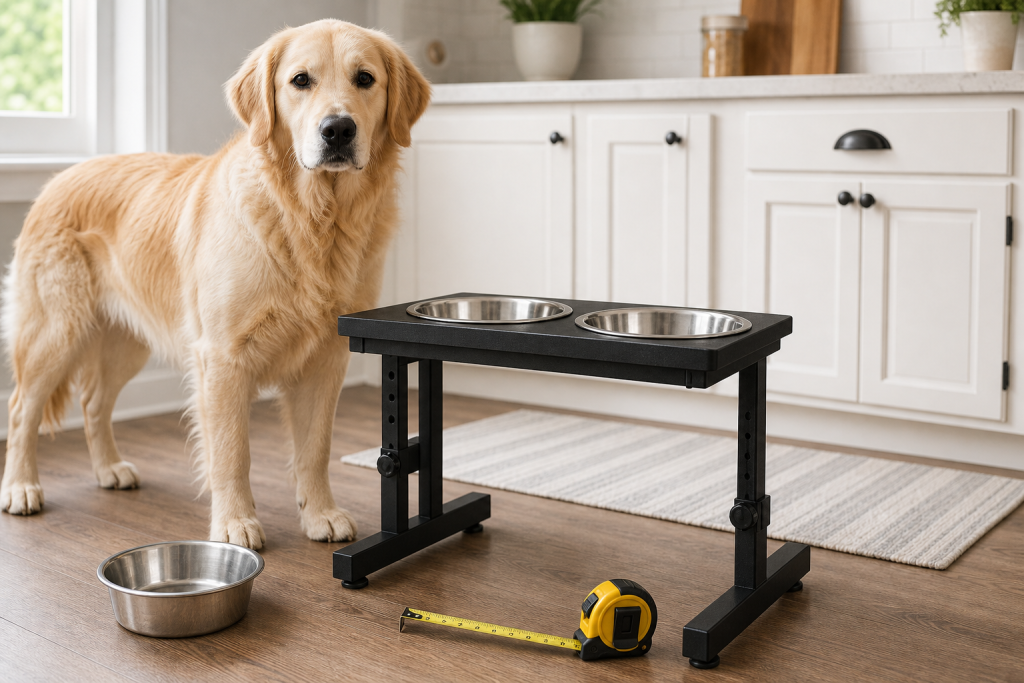
Start with height. Adjustable stands are usually less risky than a fixed-height stand that forces your dog to reach up or twist down. Look for real measurements, not only breed examples. Your dog should be able to eat with a relaxed neck and steady footing, and the product should not make you guess from staged photos.
Check bowl size next. A deep or narrow bowl can be awkward for a broad muzzle, while a shallow bowl may spill water constantly. Stainless steel bowls are often easier to clean and inspect than plastic inserts, but the stand itself matters too. Avoid designs with grooves, trays or hollow channels that trap wet food, drool and kibble dust.

Stability is another deal breaker. A lightweight stand that slides, rattles or tips can make mealtime more stressful and messier. If the listing does not show non-slip feet, bowl locks, replacement bowls or cleaning instructions, the discount may be covering a product you will replace quickly.
The buying checklist
- Measure the intended feeding height instead of shopping by breed name.
- Confirm that the bowls are removable and dishwasher-safe if that matters to your routine.
- Look for stainless steel or another easy-clean bowl material, especially if your dog eats wet, raw or soaked food.
- Check whether replacement bowls fit standard sizes or only the brand’s own inserts.
- Read low-star reviews for wobble, rust, cracked plastic, loose legs and water pooling.
- For large, giant or deep-chested dogs, ask your veterinarian before changing feeding height.
Deal and coupon checks
Do not judge a raised bowl by the first percentage you see. PetSmart’s promotional terms say some offers are not combinable, exclusions may apply, quantities may be limited and recurring autoship orders are charged at the online price on the ship date. Chewy’s Autoship help page says changing frequency does not change the next order date, and changes take effect after that date. Those details matter if a feeder is bundled with food, bowls or recurring supplies.
Before paying, check the final cart total after tax, shipping and membership requirements. If the stand is bulky, confirm the return window and whether you would have to pay return shipping. A cheap raised feeder is not a bargain if the bowls rust, the height is wrong, or the retailer will not make returns practical after assembly.
What to avoid
Avoid listings that promise to prevent bloat, fix digestion or solve joint pain without a clear source and a reason that applies to your dog. Avoid fixed-height stands sold only by vague size labels such as “large dog” or “XL breed” with no inches listed. Avoid plastic bowls that scratch easily, painted bowls with unclear food-contact information, and stands that cannot be wiped under or around the bowl openings.
Also avoid buying a raised bowl as a substitute for a slow feeder if your real problem is speed eating. AKC describes slow and puzzle feeders as a separate category from elevated bowls. If your dog gulps meals, the shopping question may be bowl design, meal size and veterinary guidance, not simply raising the food off the floor.

When a raised bowl can still make sense
A raised bowl can still be reasonable when it solves a specific, observed problem and the height is chosen carefully. Some owners may find it easier to keep a feeding area clean, reduce splashing or help a dog that has a veterinarian-guided reason to eat from a different position. The key is to buy for a defined need, not because a sale page makes elevation sound universally healthier.
If you are unsure, keep the purchase reversible. Choose an adjustable stand, keep the original packaging until your dog has tried it, and avoid drilling, gluing or altering the product until you know the height and stability work in your home.
FAQ
Are raised dog bowls always bad?
No. The problem is the blanket claim that they are better for every dog. For large, giant or deep-chested dogs, the bloat-risk discussion is serious enough that veterinary input is worth getting before a daily feeding change.
Is an adjustable raised bowl better than a fixed one?
Usually it is the more flexible purchase because you can match the height more closely. It still needs to be stable, easy to clean and appropriate for your dog.
Should I buy a raised bowl for an older dog?
Not automatically. If age, arthritis, neck pain or another condition is part of the reason, ask your veterinarian what feeding height and bowl style make sense.
What is the biggest checkout mistake?
Buying the stand for a health claim instead of fit, stability, cleaning and return terms. If the claim would affect your dog’s health routine, treat it as a vet question before treating it as a deal.
Sources
Sources checked on 10 June 2026 at 04:33 Europe/Rome.
- American Kennel Club, Finding the Right Dog Bowl for Your Dog
- Veterinary Evidence, Are Dogs That Are Fed from a Raised Bowl at an Increased Risk of Gastric Dilation Volvulus Compared with Floor-Fed Dogs?
- Cornell University College of Veterinary Medicine, Gastric dilatation volvulus or bloat
- American Pet Products Association, Industry Trends and Stats
- Amazon, Amazon Pet Days 2026 deals
- Chewy, Autoship and Save help page
- PetSmart, Promotional terms and coupon policy