
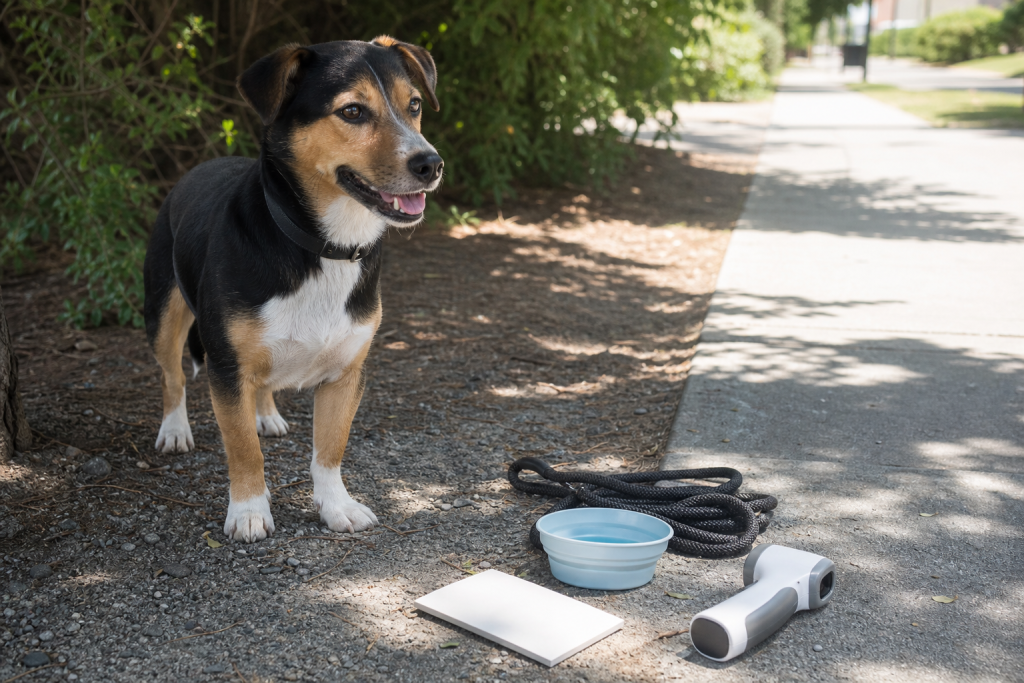
#dog paw safety
#hot pavement
#infrared thermometer
#pet tech deals
An infrared pavement thermometer can help you spot a dangerously hot sidewalk, but it should not be the only reason you decide a summer walk is safe. The mistake is treating a cheap laser reading like a complete paw-safety system. You still need shade, timing, the seven-second hand test, water, proper boot fit and a plan to skip pavement when conditions are wrong.
That matters now because summer heat makes the ground far hotter than the number on a weather app. AAHA updated its hot-pavement guidance in June 2026, and recent local heat coverage has repeated the same shopper problem: owners buy gadgets and boots after the first hot walk instead of checking the surface before they leave.
Why a pavement thermometer sounds useful
A small infrared thermometer is tempting because it gives a fast surface reading without making you press your hand onto hot asphalt. For dog owners who walk on city sidewalks, parking lots, patios, sand or artificial turf, that can be useful. It turns an invisible risk into a number you can compare across sun, shade and different surfaces.
But the number can also create false confidence. The FDA’s general guidance for non-contact infrared thermometers says improper use can produce inaccurate measurements, and it specifically points users back to the manufacturer’s instructions for distance, positioning and conditions. A pavement thermometer is not a pet medical device, and it does not tell you whether your dog is overheating, whether a boot is rubbing, or whether the next block will be hotter.
The checkout mistake: buying the cheapest laser pointer
Before adding a discount infrared thermometer to the cart, check whether it is built for surface temperature readings. Some inexpensive devices are marketed mainly for human body readings, food checks or household use. That does not automatically make them useless, but it does mean you should read the manual, the temperature range, the stated accuracy and the recommended measuring distance before trusting it on pavement.
Look for these details before you pay:
- Surface mode: The listing should make clear that the device measures surface temperature, not only body temperature.
- Distance-to-spot guidance: A reading taken too far away may average a wider area than you think.
- Readable display outdoors: A dim screen is frustrating in bright sun.
- Replaceable batteries: Check whether it uses common batteries or a built-in rechargeable cell.
- Return terms: If the readings seem inconsistent, you need enough time to return it.
How to use it without trusting it too much
Use the thermometer as one check in a layered routine. Measure the surface where your dog will actually walk, not a shaded patch beside it. Take readings from the distance recommended by the manual, point straight at the surface, and compare sunny asphalt, concrete, grass and shade before choosing a route.
Then do the low-tech check too. AAHA and FOUR PAWS both describe the back-of-hand test: place the back of your hand on the surface for seven seconds. If you cannot comfortably keep it there, it is too hot for your dog’s paws. The hand test is not fancy, but it keeps the decision tied to touch, not only a gadget display.
Also remember that surfaces change block by block. A driveway, blacktop parking lot, metal dock, artificial turf strip or beach path can be hotter than the sidewalk you tested outside your door. If you see limping, paw lifting, licking, refusal to walk or unusual distress, get off the surface and contact your veterinarian for guidance.
What to buy instead, or alongside it
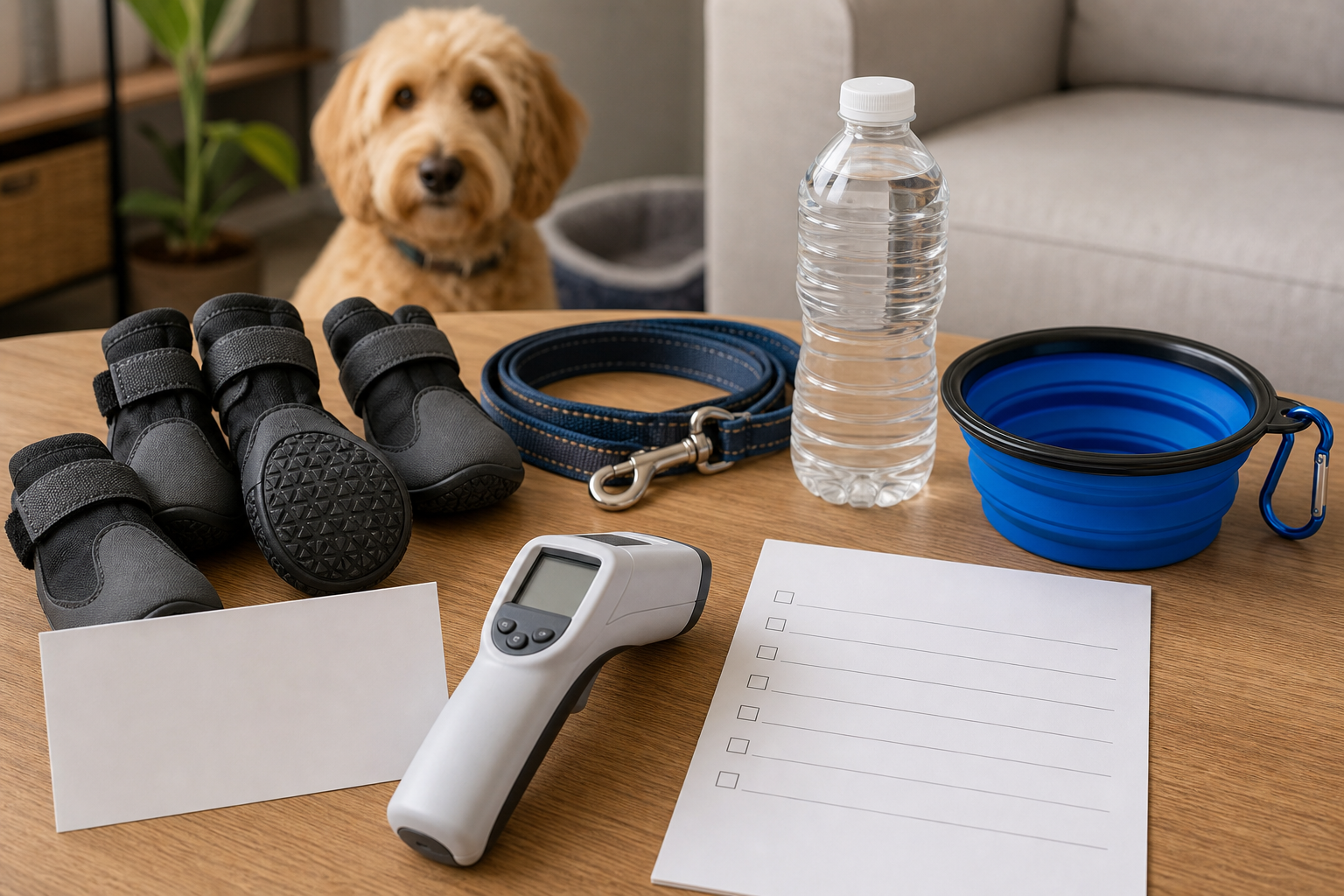
If your dog has to cross hot ground, a thermometer does not replace protection. Well-fitted dog boots can help on short unavoidable pavement stretches, but they need training before a real hot walk. Put them on indoors first, check the strap placement, and watch for slipping or rubbing. A boot deal is not useful if your dog throws one off halfway across a parking lot.
For many dogs, the better buy is simpler: a collapsible water bowl, a shaded route, a lighter leash setup, a cooling mat for rest breaks at home, and a schedule that moves walks to early morning or late evening. ASPCA guidance emphasizes fresh water, shade, avoiding over-exercise and keeping walks short when it is extremely hot. That is more important than owning a gadget you only use after the pavement is already baking.
Deal and coupon checks before you pay
Infrared thermometers often show up in marketplace deals, hardware sales and seasonal pet-safety roundups. Do not judge the deal by the sale badge alone. Check the final cart price after shipping, whether batteries are included, whether the seller accepts returns after opening, and whether the manual is available in clear English.
If you are buying boots at the same time, do the sizing work before using a coupon. Many boot returns fail because the soles are dirty after one outdoor walk. Measure paw width, read the size chart, confirm whether front and back paws need different sizes, and check whether the retailer treats opened or worn boots differently from unopened supplies.
What to avoid
- Do not buy a thermometer because a listing says “laser” without explaining the surface temperature range.
- Do not use a pavement reading to justify walking during peak heat if your dog is flat-faced, elderly, overweight, very young or has heart or lung concerns. Ask your vet about heat limits for higher-risk dogs.
- Do not test one shaded patch and assume the whole route is safe.
- Do not rely on paw balm as a heat shield. It may help dry pads, but it is not a substitute for avoiding hot surfaces.
- Do not keep walking if your dog starts lifting paws, limping or trying to leave the pavement.
Fast answers
Is an infrared thermometer worth buying for dog walks?
It can be worth it if you often walk on pavement, asphalt, patios, sand or artificial turf in summer. It is less useful if you mostly walk on shaded grass and already avoid hot parts of the day.
What temperature is too hot for paws?
There is no single safe number for every dog and surface. AAHA notes that surface temperature can run much hotter than air temperature, and FOUR PAWS lists asphalt examples that rise sharply as the air warms. Use the thermometer, the seven-second hand test and your dog’s behavior together.
Can dog boots solve hot pavement?
Boots can help when they fit well and the dog accepts them, but they are not a license for long midday pavement walks. Train indoors first, check for rubbing, and keep hot-surface exposure short.
Should I use a human fever thermometer on pavement?
Only if the manual clearly supports surface readings and the range covers hot ground. Many non-contact thermometers are designed around body-temperature use, so read the instructions before trusting the number.
Sources
Sources last checked: 2026-07-22 22:34 Europe/Rome.