
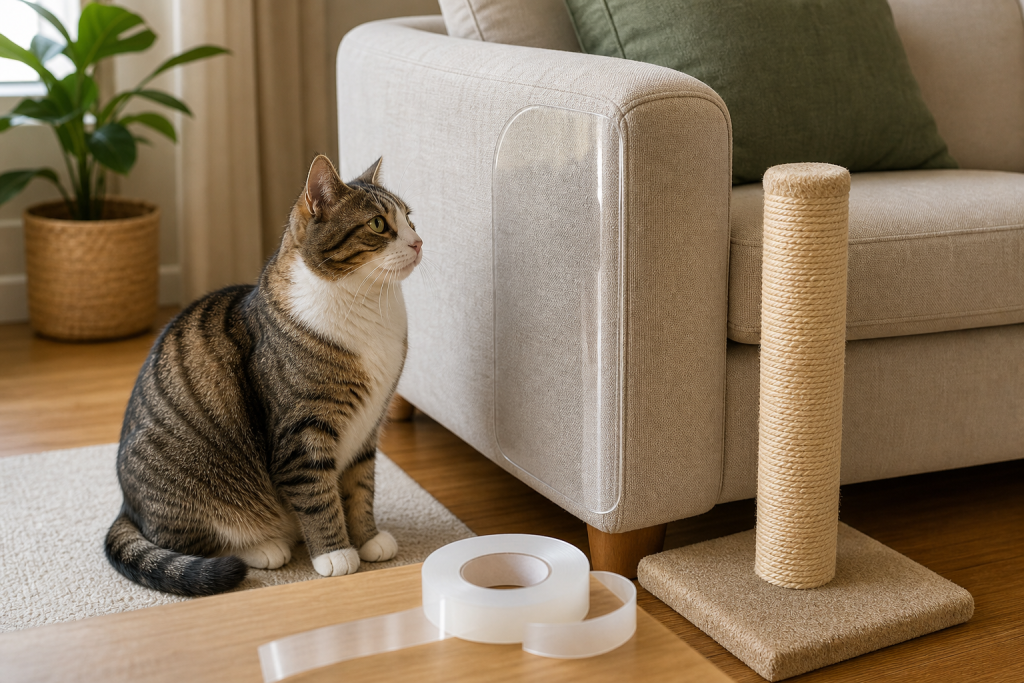
#cat scratch deterrent
#cat scratching
#furniture protector
#pet supply deals
Cat scratch-deterrent tape can protect a couch, but it is not a fix by itself. The deal only makes sense if the film is safe for your furniture finish, hard for your cat to chew, and paired with a better scratching option right beside the target spot. If you skip those checks, a cheap roll can become residue, peeled fabric, or a cat that simply moves to the next chair.
Sticky furniture protectors are getting renewed attention because cat owners are shopping for low-cost home fixes while summer travel, guests, and longer daylight can change a cat’s routine. Amazon’s current pet-supply trend pages also show furniture deterrents and cat scratching products competing with litter, grooming, and feeder items. That does not make every roll worth buying. It means the checkout page deserves a closer look.
Why this deal is tempting now
A roll of clear tape or a pre-cut protector panel looks cheaper than replacing a couch arm, and it feels less complicated than training. The problem is that scratching is normal cat behavior, not a defect. Ohio State’s Indoor Pet Initiative explains that cats scratch to stretch, shed claw coverings, sharpen claws, and leave scent marks. The ASPCA and International Cat Care both recommend making the protected area less appealing while giving the cat a legal alternative nearby.
That last part is where many carts go wrong. If the product listing sells the tape as a stand-alone cure, but your cat has no stable post in the same location, the barrier may only redirect the scratching to a rug, speaker, curtain, or another couch corner.
The checkout mistake: buying the tape before checking the surface
Before you pay, check the listing for the surfaces the adhesive is meant to touch. Some protectors are designed for fabric upholstery. Others are made for smooth leather-like surfaces, painted wood, door frames, or carpet edges. A clear film that works on one couch can pull fibers, leave shine, or refuse to stick on another.
Use the deal only after you have answered these questions:
- Does the seller say it is safe for your exact surface, such as woven fabric, microfiber, leather, faux leather, wood, or carpet?
- Does the package include enough strips or panels to cover the actual scratch zone, not just one neat product-photo square?
- Can you test a small hidden area first and still return the unused portion if it damages the finish?
- Will the adhesive collect pet hair and dust quickly in the spot where you plan to use it?
- Is there a sturdy scratcher beside the protected area before the tape goes on?
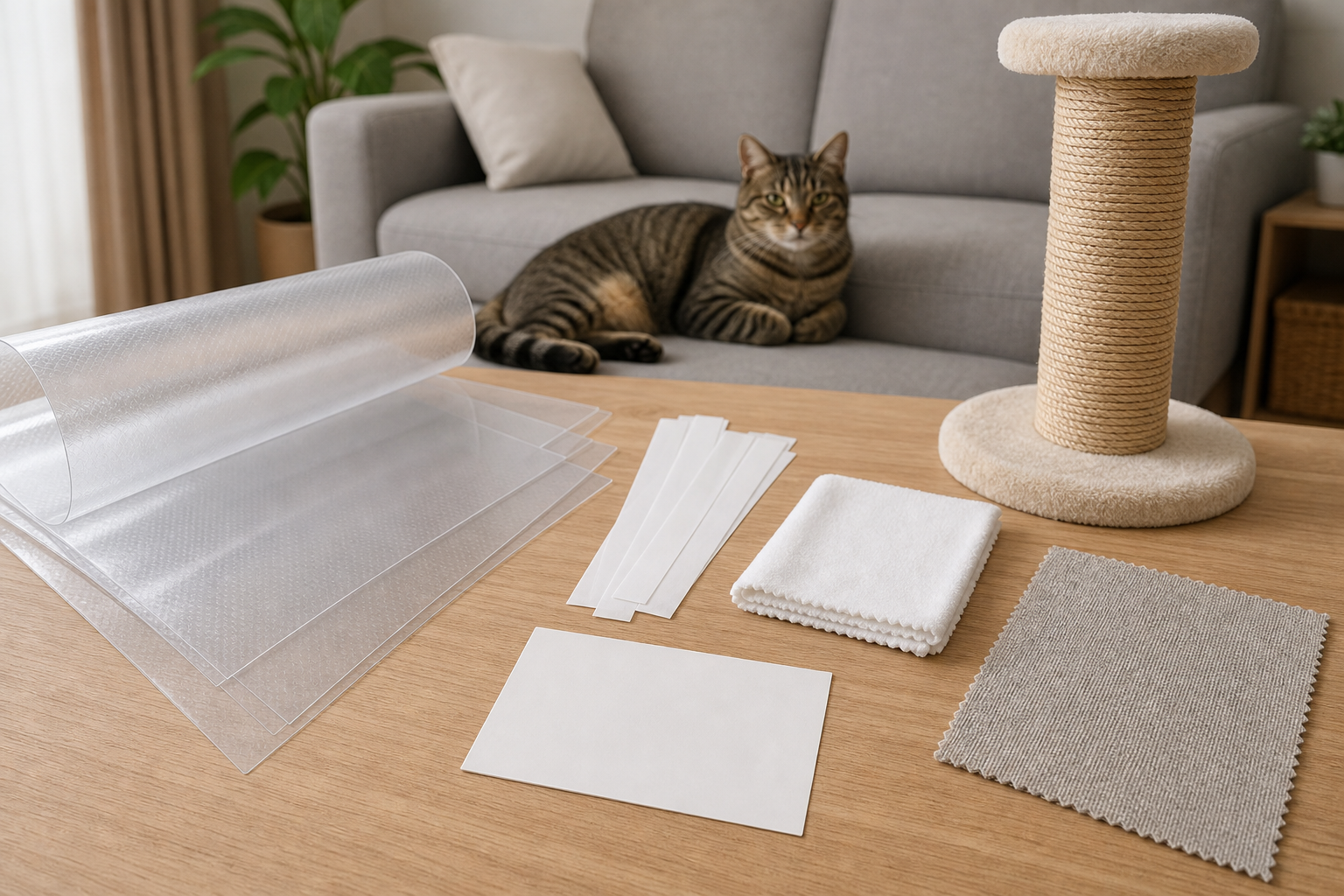
What to buy with the tape
The better shopping basket is usually a deterrent plus a replacement scratching target. Ohio State suggests thinking about your cat’s current scratching preference and substituting a similar object. If your cat scratches a vertical couch arm, a tall vertical post is more logical than a flat cardboard pad across the room. If the damage is on a rug edge, a horizontal scratcher near that edge may be more useful.
Look for a scratcher that is stable, tall or long enough for a full stretch, and covered in a texture your cat already likes. Sisal rope, sisal fabric, cardboard, carpet, and wood can all appeal to different cats. The deal is not the cheapest tape roll. It is the combination that makes the furniture less rewarding and the scratcher easier to choose.
Deal and coupon checks before paying
Do not judge these products by roll length alone. A long roll can still be wasteful if it is too narrow for the couch arm, curls at the edges, or needs frequent replacement. Pre-cut panels can cost more upfront, but they may cover a flat area more cleanly and avoid odd patchwork.
Before using a coupon or bundle discount, verify:
- the number of sheets, strips, or square feet actually included;
- whether replacement strips are sold separately;
- the return window after you open or trim the product;
- whether the discount requires a subscription or add-on item you do not need;
- whether the same seller has recent complaints about residue, odor, curling, or damaged upholstery.
If the offer is on a marketplace listing, read the most recent reviews for your surface type. A five-star review from a leather couch owner may not help if you have loose-weave fabric, and a photo review with peeled upholstery matters more than a generic claim that the tape is “furniture safe.”
Safety and what to avoid
Avoid any deterrent that relies on punishment, startling, or pain. The goal is to protect furniture while giving your cat a better outlet, not to make the room frightening. Also avoid strong scents unless the product is clearly labeled for cats and you have checked with your veterinarian when your cat has asthma, skin sensitivity, respiratory issues, or a history of chewing non-food items.
Watch the first few days after installing tape or film. If your cat licks, chews, swallows, or pulls at the adhesive, remove it and switch to a safer barrier such as a heavy cover, a different scratcher placement, or behavior guidance from your vet or a qualified feline behavior professional. Cornell’s feline behavior guidance notes that destructive behavior is often manageable with an appropriate plan and patience, which is another reason not to expect one sticky product to do all the work.
A practical setup that usually works better
Start by cleaning the scratched area according to the furniture maker’s care instructions. Test a small hidden patch of protector or tape. Place a scratcher next to the problem spot before you cover the furniture. Then use treats, play, catnip if your cat responds to it, or praise to make the scratcher more interesting than the couch.
Keep the setup easy to use. A scratcher hidden in a hallway is not a fair substitute for a couch arm in the living room, especially if that couch is where your cat stretches after a nap. If the cat chooses the new scratcher, leave the barrier in place long enough for the habit to settle before slowly reducing it.
Fast answers
Is cat scratch-deterrent tape humane?
It can be, when it simply makes a furniture surface less appealing and you provide a nearby scratching alternative. It should not trap fur, injure skin, or create panic.
Will sticky tape stop scratching permanently?
Usually not by itself. It is a temporary barrier that works best with a suitable post, pad, or scratcher placed where the cat already wants to scratch.
Can it damage furniture?
Yes, especially on delicate fabrics, peeling finishes, leather-like surfaces, or older upholstery. Test a hidden area and read the surface warnings before applying a large panel.
Should I buy spray instead?
Spray and tape solve different problems. Tape changes texture, while sprays rely on scent. Many cats ignore sprays, and scent products need extra caution around sensitive cats. A scratcher placement plan matters either way.
Sources
Sources last checked: 2026-07-23 01:38 Europe/Rome.